The Hellenic World
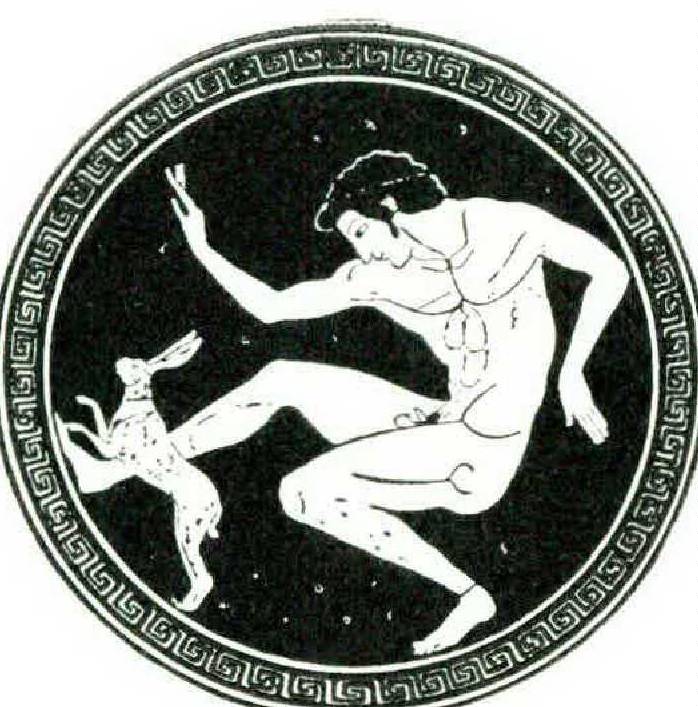
The Hellenic world emerges in our dream half history, half fable.
How the great names rise, passionless as marble, bathed in cloudless noon!
Plato, Leonidas, Pericles, Phidias, Homer —
strained by time of all color and turmoil into the white simplicity of stone.
How the great names rise, passionless as marble, bathed in cloudless noon!
Plato, Leonidas, Pericles, Phidias, Homer —
strained by time of all color and turmoil into the white simplicity of stone.
The Hellenic world . . . the Helios-hour of man,
when man lived in the here-and-now,
and heart and mind, meeting in equilibrium, drew order out of chaos,
giving the western world its darling dream:
we are the heirs, we boast, of marble men.
when man lived in the here-and-now,
and heart and mind, meeting in equilibrium, drew order out of chaos,
giving the western world its darling dream:
we are the heirs, we boast, of marble men.
And the men were shaped by their land and its marvelous light,
a land saturated with light, where the rocks give light back
in floods of laurel, myrtle, ilex, pine,
and the sea tosses light back into the wind as if blue wells of fire
fountained beneath the waves.
A country defined by its own form and texture —
horizons intimate and lacking mystery,
bony hills, dry plains sparkling like goldstone, savage brooks
whose little journeys the eye can follow in a glance,
thrusting headlands whose naked stones make pedestals for the column of natural man.
That earth blossomed in man’s image:
rivers tangled the pale hair of naiads among their cresses,
bay leaves rustled on the feet of dryads, goats played on pipes.
Even the gods were hardly more than men, coming down from their accessible heavens
to mate with herdboys and kings’ daughters in water gap and fuming cave,
amazed and ravished as any mortal by their world’s wonder.
The gods’ houses stayed close to their worshipers, rooted like trees
in the common soil — even the Parthenon, synthesis of body and mind made visible,
keeps, in its marble posts, the shape and sturdiness of oaks. We forget now that the marble cast a shadow: we forget
the painted boys, the treadmill slaves, the oracles
with their glib puns and shoddy miracles.
We remember only the cities blond as honey among holy olives,
caryatids poised like jonquils on the shrines,
calm foreheads of philosophers.
We forget the haggling on the wharves, the quicksilver lying.
We remember only the horse-wild helms of heroes.
a land saturated with light, where the rocks give light back
in floods of laurel, myrtle, ilex, pine,
and the sea tosses light back into the wind as if blue wells of fire
fountained beneath the waves.
A country defined by its own form and texture —
horizons intimate and lacking mystery,
bony hills, dry plains sparkling like goldstone, savage brooks
whose little journeys the eye can follow in a glance,
thrusting headlands whose naked stones make pedestals for the column of natural man.
That earth blossomed in man’s image:
rivers tangled the pale hair of naiads among their cresses,
bay leaves rustled on the feet of dryads, goats played on pipes.
Even the gods were hardly more than men, coming down from their accessible heavens
to mate with herdboys and kings’ daughters in water gap and fuming cave,
amazed and ravished as any mortal by their world’s wonder.
The gods’ houses stayed close to their worshipers, rooted like trees
in the common soil — even the Parthenon, synthesis of body and mind made visible,
keeps, in its marble posts, the shape and sturdiness of oaks. We forget now that the marble cast a shadow: we forget
the painted boys, the treadmill slaves, the oracles
with their glib puns and shoddy miracles.
We remember only the cities blond as honey among holy olives,
caryatids poised like jonquils on the shrines,
calm foreheads of philosophers.
We forget the haggling on the wharves, the quicksilver lying.
We remember only the horse-wild helms of heroes.
But how can we claim descent from these people of high noon?
They turned their backs on all that dazzle us —
antiquity, the faraway, the sky, the dissonances of personality.
We are soul-probers, star-mappers, wood-walkers, scalers of Everests,
pursuers of tomorrow and tomorrow and tomorrow:
how can we understand a people without clocks?
They turned their backs on all that dazzle us —
antiquity, the faraway, the sky, the dissonances of personality.
We are soul-probers, star-mappers, wood-walkers, scalers of Everests,
pursuers of tomorrow and tomorrow and tomorrow:
how can we understand a people without clocks?
They were sailors, but of narrow seas,
poets, for ages without an alphabet,
artists, whose pigments had no green,
seekers of truth, to whom the mask was all the man,
masters of numbers, without zero —
(for how could Nothing take a sculptured shape?)
poets, for ages without an alphabet,
artists, whose pigments had no green,
seekers of truth, to whom the mask was all the man,
masters of numbers, without zero —
(for how could Nothing take a sculptured shape?)
How can we know them, whose word for slave was thing?
O lost Hellenic world, small steady sun around which civilizations circle!
Your way was not our way nor your day our past.
To us, the children of the gothic woods, cold fogs and yearning spires,
you are our darling dream, our marble fable!
And from this raveling age, when the ground you stood so firm upon
trembles in all its atoms at our feet,
we send our thanks to you, for what we never could create and barely understand.
the white honey of your broken comb
caught in the bronze fingers of a charioteer,
in the rondure of a cup unearthed at Delos,
in scattered Sapphic lines. . . .
Your way was not our way nor your day our past.
To us, the children of the gothic woods, cold fogs and yearning spires,
you are our darling dream, our marble fable!
And from this raveling age, when the ground you stood so firm upon
trembles in all its atoms at our feet,
we send our thanks to you, for what we never could create and barely understand.
the white honey of your broken comb
caught in the bronze fingers of a charioteer,
in the rondure of a cup unearthed at Delos,
in scattered Sapphic lines. . . .
We are not your sons, only your lovers.