Mexico. Ii
MEXICO with its many isolated half-concealed pockets of culture— Indian, Spanish, and mestizo —remains almost unknown to the traveler. It is not, like Europe, neat ly mapped and plotted tourist ground. Nor is it, essentially, a country of highlights, of tourist attractions. What lies behind and inside the flamboyant geography must be searched out at leisure.
There are two regions, each a grouping of three or four states, each centered on two or three characterful towns, with good roads and good rail service; and these regions contain concentrations of all the country’s essential elements, as well as excellent accommodations and facilities for recreation. The first is the western region made up of the states of Jalisco, Nayarit, Michoacán, and Colima, with Guadalajara and Morelia as principal bases. The second is the long crescent-shaped Gulf-to-Isthmus region east and south of Mexico City, consisting of the states of Puebla, Veracruz, and Oaxaca, with the tow ns of the same names as focal points.
Each of these areas could he effectively surveyed in a week by air, air service being frequent in both; or each could easily till a month or more of intense exploration. Thrv arc strongly contrasted, and together they contain the whole spectrum of Mexico’s color and design. If more time is available, Chiapas and Yucatán should be added to enrich the mixture; both are made readily accessible by air in spite of their remoteness.
The National Museum
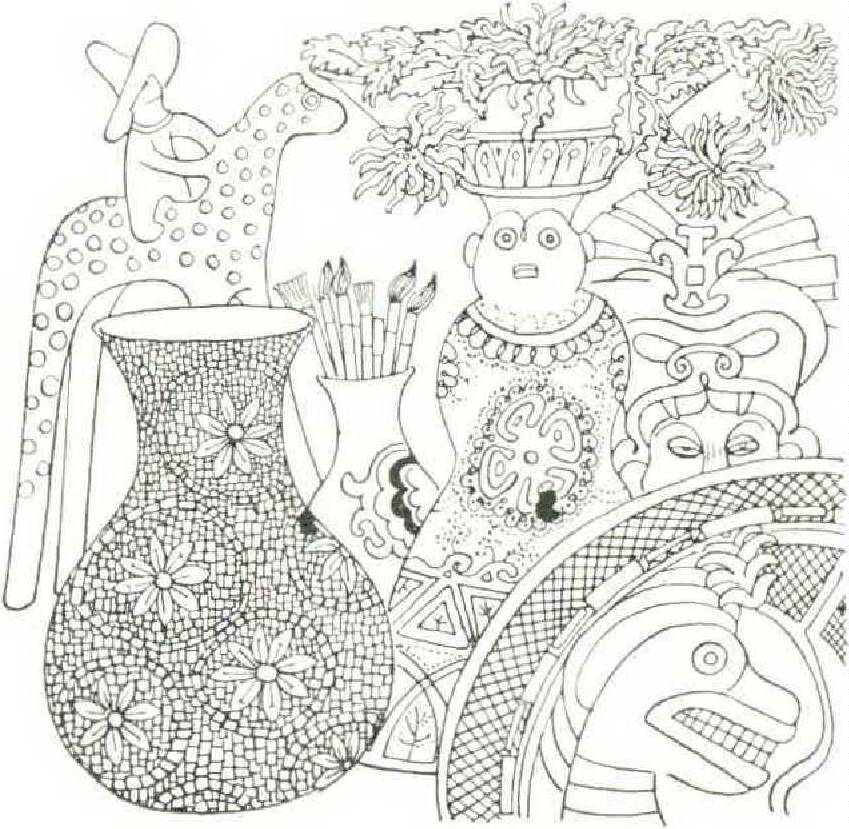
The National Museum of Popular Arts and Crafts in Mexico City is much more than a museum. It is the artificial, but warm and effective,
heart ol Mexico. It contains, in the small shell of a graceful old church, samplings of the best of the native crafts of Mexico: the baskets of Lerma, the glass of Guadalajara, pottery from Puebla and Guerrero, lacquer from Olinala.
For the shopper, certainly, the Museum is a rare opportunity, both as a source of the best and as a guide to it. Its influence extends to three regional museums in Tlaquepaque,
Uruapan, and Chiapas Corzo, and beyond them to a number of workshops and a great many individual craftsmen to whom it supplies money, tools, materials, advice, and an outlet. In six years this nonprofit museum and shop has perhaps made the difference between life and death for the native crafts, counteracting the corrosive bad taste of Mexican and foreign shoppers.
The traveler who looks closely and asks questions (the saleswomen are intelligent and helpful) will find it a true guide; for where the craftsmen are, there too, almost always, are the interesting markets, the bestpreserved traditions, the most spirited fiestas, the most characterful towns, and often, perhaps coincident ally, some of the most important of the archaeological sites. Some of the best modern work does, in fact, derive from the oldest artifacts; the old techniques and designs are still in use in hundreds of Indian villages.
The Museum, then, confirms the choice of regions, suggesting primarily the vitality and integrity of Michoacán and Oaxaca, the two most significant states. It guides one first to the dense colonial-lndian complex of Jalisco, Nayarit, Michoacán, and Colima.
Jalisco
The beginning is the l½-hour flight from Mexico City to Guadalajara, the capital of Jalisco. If one travels by road, the 425 miles are as satisfying a slice of Mexico as one will find: the huge market of Toluca, the thousand peaks above the high plateau, the forested mountains of Michoacán, and then down to the bronze and green hills around Lake Chapala, which is larger than till the northern Italian hikes together.
Guadalajara is a big, comfortable town, colonial and modern, wit h great green squares around the cathedral, and many fine craftsmen and small shops. It also has good hotels, a golf course, some good restaurants, and other conveniences. In workers’ housing projects, supermarkets, and in new buildings of steel and glass, here is one version of the new Mexico. 15Lit the significance of Guadalajara for the traveler lies in its strategic location as a base: it is the most important road, air, and rail center in the west, the center of this rich travel region. It leads to the following important cities and states.
Nayarit
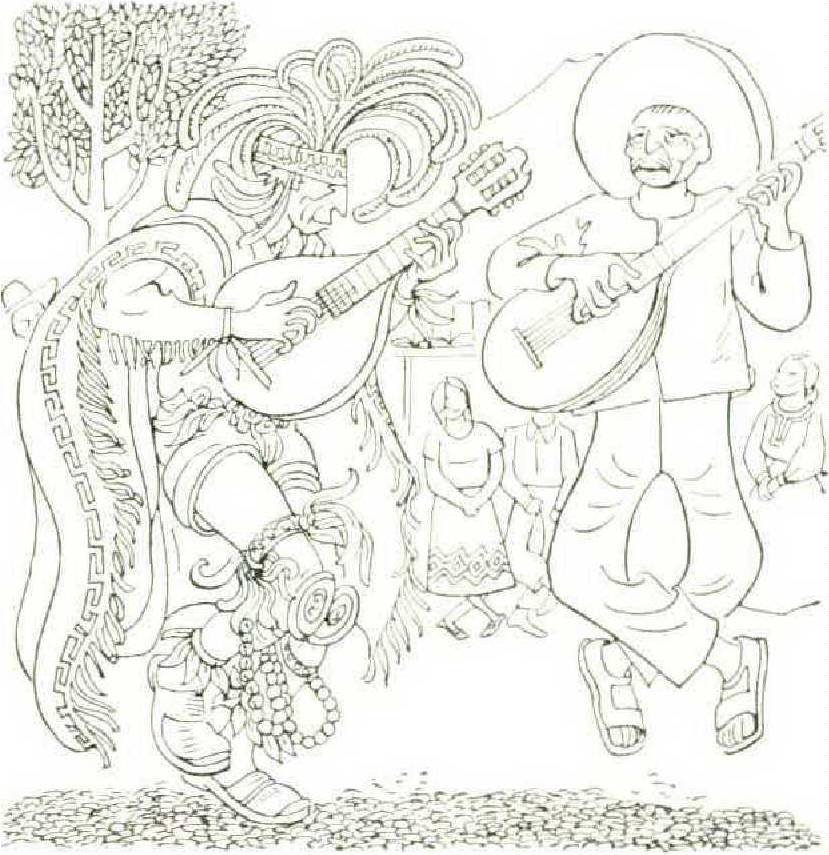
A one-hour flight from Guadalajara is Tepic, capital of Nayarit. This is a small colonial-provincial city, graced with arcades around the plaza and alive with birds, strolling musicians, and tropical flowers. To its Sunday market come the mountain people, Cora and Huichol Indians in colorful dress, sometimes bringing some of their fine textiles to sell. These are some of the rarest preconquest styles.
Northeast of Topic, in the Sierra de los Huicholes, the hunter will find a great abundance of game. Packhorse trips can be arranged through the hotels—there are three presentable ones — or with the advice of airline officials. Equipment can be rented, but the serious hunter will do well to bring his own guns; the prohibition against importation of arms has been lifted in the past two years.
North of Tepic is the well-paved side road leading through luxuriant jungle to San Blas, full of thatched huts and tail palms and with inns of real character—like the Posada del Bucanero — much to be preferred, all along the Pacific coast, to the more modern hotels.
Along Nayarit’s 300 miles of undeveloped coast there are little-known tropical beach villages like Los Corchos; small offshore islands; and well out at sea, the fascinating group of larger islands called Las Tres Marías, where there are superb beaches and fishing, completely unspoiled — a good destination for a sport-fishing excursion out of San Blas or Puerto Vallarta. Twin-screw cabin cruisers, sleeping four, with crew and equipment cost $4 an hour maximum, or $50 a 24-hour day. During October and November and again in the spring, important fishing tournaments are held successively at Manzanillo, La Paz, and Guaymas; quick air connections make it possible to compete in all of them. There are equivalents at the Gulf sport-fishing centers of Tampico and Veracruz.
Nayarit has its fairs and fiestas in attractive towns like Acaponeta (February 2); Compostela, on the new all-weather road from Tepic to Puerto Vallarta (December 1-8); San Blas (January 30-February 8); and Tepic (July 25).
Michoacán
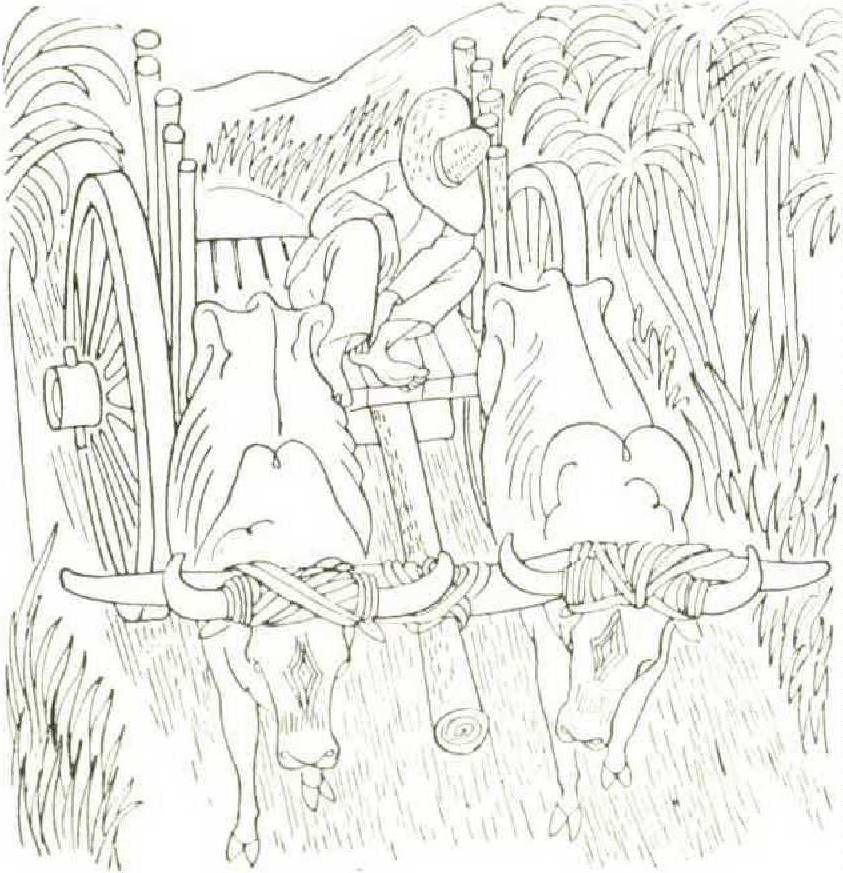
A short flight (or 225 miles of unsurpassed scenic highway) from Guadalajara is Morelia, the loveliest and most integral of the colonial cities, located in a green valley at 6200 feet. This is a countryside of lakes, waterfalls, and great fertile valleys between forested mountains; it is one of the two or three richest regions for the popular arts and the center of the highly developed civilization of the Tarascos, a proud and intelligent people still very much alive. This is the old Mexico: the remains of huge haciendas; Indians plowing wit h oxen; donkey trains on t heir way to market. Morelia is well preserved, a town in which to stroll, to pore over baroque details of old palaces, mansions, churches, and patios with carved stone columns. It is a city of high culture and energy, good music and food, and an interesting market and state museum. A fine hotel here, called the Virrey de Mendoza, was once a magnificent colonial mansion.
All around Morelia are easy drives to delightful villages such as Cuitzeo and Yuriria and their lakes, located along the short way to beautiful Guanajuato. C lose by, in complete contrast, is the Indian life: fishermen on Lake Pátzcuaro, the lacquer craftsmen, and the Friday market in Patzcuaro.
The state is known for its serapes and rebozos, lacquer, pottery, and copper; these things do not often travel beyond the Pátzcuaro market. See the potters of Patamba and Tzintzuntzan (site of the ruins of the Tarascan capital) and he woodworkers of Paracho. Pátzcuaro, in the Tarascan language, means the Place of Delight. Here Indians come to the market along cobbled hilly streets; women talk at the old wells, water jars balanced on their heads.
A fifteen-minute drive to El Estribo provides a long view of the town, lake, valley, and mountains. All around the lake and its islands are delightful primitive villages, each with its own handcraft. Hotels will arrange for boats to tour its thirteenmile length. See Janitzio, Iguatzio (a fiesta with dances on October 4), Jaracuaro, Erongaricuaro and its Sunday market, and the dancers of Cucu CLINCHLI; then, on two or three-hour drives, Santa Clara del Cobre (coppersmiths), Tacámlmro, Tupataro, and Juancito (pottery).
Cruapan, in the heart of wooded mountains, is a place to stop and stay. Accommodations are excellent. The netives’ famous lacquer work has degenerated, as has that of Quiroga, but in the Museum of Popular Arts are examples of what it can be at its best.
In Michoacán, the National Museum of Popular Arts has begun two significant experiments: at Patzcuaro, in an old convent, a schoolworkshop whore young painters and seulplors can work at and learn from the old crafts; at Tzintzuntzan, a new open-air market in a plaza, with craft wares only of the best, to encourage local craftsmen to create their purest work.
This is an area noted for the spirit and fantasy ol its folk dances. There are important fiestas in Tzintzuntzan in the week before Lent, and in Patzcuaro from December 8 to 11, when the market is especially good. The Indians bring ritual and ceremonial objects for sale, which remain pure even in those areas where other craft products have become commercialized. The Fiesta for the Day of the Dead (November 2) is especially moving on the island of Janitzio. Morelia holds a fiesta on September 80 and a carnival from February 13 to 18; Urunpan has two regional liestas, September 29) and October 4.
The fishing in t he lakes and st reams of Michoacan, as in many other parts of Mexico, is worth noting: trout in the rapids and pools below the lovely Tzarhraeua Falls near I ruapan and in the Las Rosas, Puruato, and Santa Catarina Dams; black bass near Villa Jiminez; other good lake fishing on Patzcuaro, Zirahuen, Zacapu, and Tizapanilo, all accessible by good roads. Closed season on trout is November through February; on lake fish, July through August 15. (See the Pemex booklet, Fishing in Mexico.)
Colima and the sea
This small final segment of the Jalisco-Navarit - Michoacán-Colima region is luxuriantly beautiful and the least visited. The cily of Colima, a gay, languid, sixteenth-century colonial town, is a place of gardens and palm groves and guitars, where vendors sell the refreshing milk straight from the coconut, and where one glimpses the high peaks — one of snow, the other fire — of two huge volcanoes.
It is an hour by plane from Guadalajara, but much boiler is the unforgettable daylong journey by train that continues on to Manzanillo and the sea. Colima makes a good base for explorations of this part of the coast, and a new airline, Aeorlincas Mexicanas, makes possible some original and highly rewarding itineraries, flying from the beautiful Zihuatanejo, which is above Acapulco, up through Colima, Uruapan, Morelia, and Guadalajara. An interesting sidetrack can be made by linking this service with that of the Lagosa line, which flics from Oaxaca to Poehutla and then up through a series of small towns as far as Acapulco. Still another extension can be added by way of the small line called Lausa, which flies another off-track route from near the west coast to Mexico City and then on, with interesting slops in the interior, as far as Tampico on the Gulf.
If the Jalisco-Nayarit-MirhoácanColima quadrangle is rich, the PucblaVeracruz-Oaxaca triangle is richer still. Those three main cities together with their environs offer as full a cross section of the wonders of Mexico as the oneor two-week visitor might hope for. Puebla, Veracruz, and Oaxaca should also be the choice of visitors who have a full month to spend in Mexico but want to explore only one region.
Veracruz
The port of Veracruz is gay, spiced, sensuous, slow, and easy; there is the exotic mood of the Caribbean in it. Behind the grand boulevards of the harbor front are winding streets worth exploring if only for the wonderful small restaurants. Here, as in Puebla and Oaxaca, one eats very well indeed.
No city of Mexico offers more captivating excursions on good roads in all directions: the road along the ocean to Papantla, where the fiesta with the living pole dancers on Corpus Christi lasts ten days; the road to the Tuxtlas in the mountains, where there is good hunting; the road or railroad down to the musical fishing village of Alvarado, to the ruins of Tres Zapotes, and to beautiful Lake Catcmaco; and everywhere the fragrance of flowers and orange groves. Take the bus and cable car from Orizaba through marvelous country to the Indian village of Tuxpango.
Puebla
The road to Puebla from Veracruz leads past haciendas and hill villages through charming old Jalnpa (they call it the Mexican Athens), its steep narrow streets overhung with balconies. The city of Puebla is more sedate, more solid, producing its excellent pottery, eating well such dishes as mole poblano, chalupitas, tinga, and muéganos. It is one of the handsomest colonial towns, with a sweeping view of the four great volcanoes, a marvelous cathedral, a large market, and good hotels.
From here it is a short trip to the state of Tlaxcala, where there are fine wool textiles from the mountain villages. See the markets of San Martin and Huejotzingp, where the most spectacular carnival in Mexico is staged; visit Santa Ana for scrapes, Amozoc for toys, and Acallan for pottery. Look for the rare preconquest styles of textiles from the mountain interior of Puebla in the markets of Huachinango (Saturday) and Acaxochitlán (Sunday), especially the closed cape called the quechquemill.
Throughout Puebla and Veracruz the roads are many and good, the distances short.
Oaxaca
In another direction is another world altogether. Take the mail boat from Alvarado up the broad and busy Papaloapan River to Tlacotalpan and Tuxtepec in Oaxaca, past sugar and banana plantations and many atmospheric old towns like Cosamaloapan. There are comfortable hotels in Tlacotalpan and Alvarado. Follow the river to the completely new city of Ciudad Aleman, the heart of the Papaloapan Basin Project which is Mexico’s TVA. The city has a good hotel and makes a convenient base for exploration.
The state of Oaxaca is the heart of the traveler’s Mexico. It is incomparable in the way in which it combines a vigorous and varied Indian life with colonial grace and serenity; and it offers some of the best craft products, markets, fiestas, and archaeological sites. The city itself is unique in its close integration of the Indian and white cultures.
Not far away, in the three linked valleys of Oaxaca, are the craft villages: Quiotepec, Ocotlán, and Atzompa, which make pottery; and Toolitlán, a community of weavers. In Oaxaca itself arc the shops of the town weavers, like Cervantes and Aldifredd. The hotels are very comfortable, especially the inns like Los Molinos and the Posada del Ray, where the food is good.
Come to Oaxaca in the week before Christmas, a time of great public festivity, or in mid-July to see the dancers and costumes from all over the state at the huge fiesta Lunes del Cerro.
Fiestas
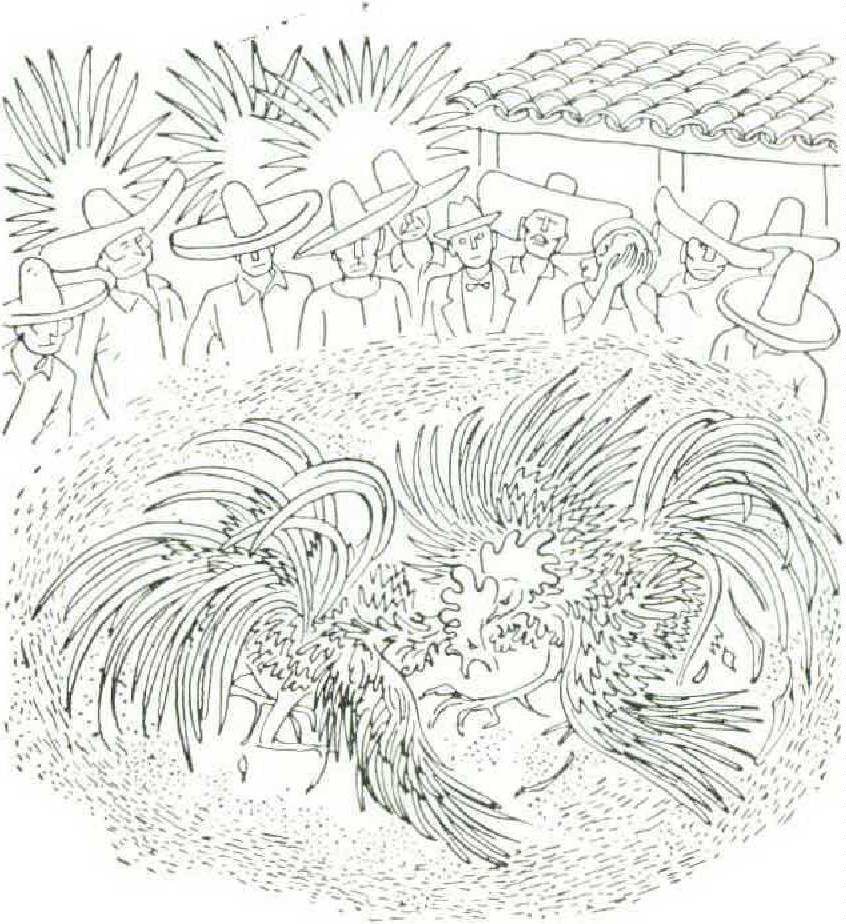
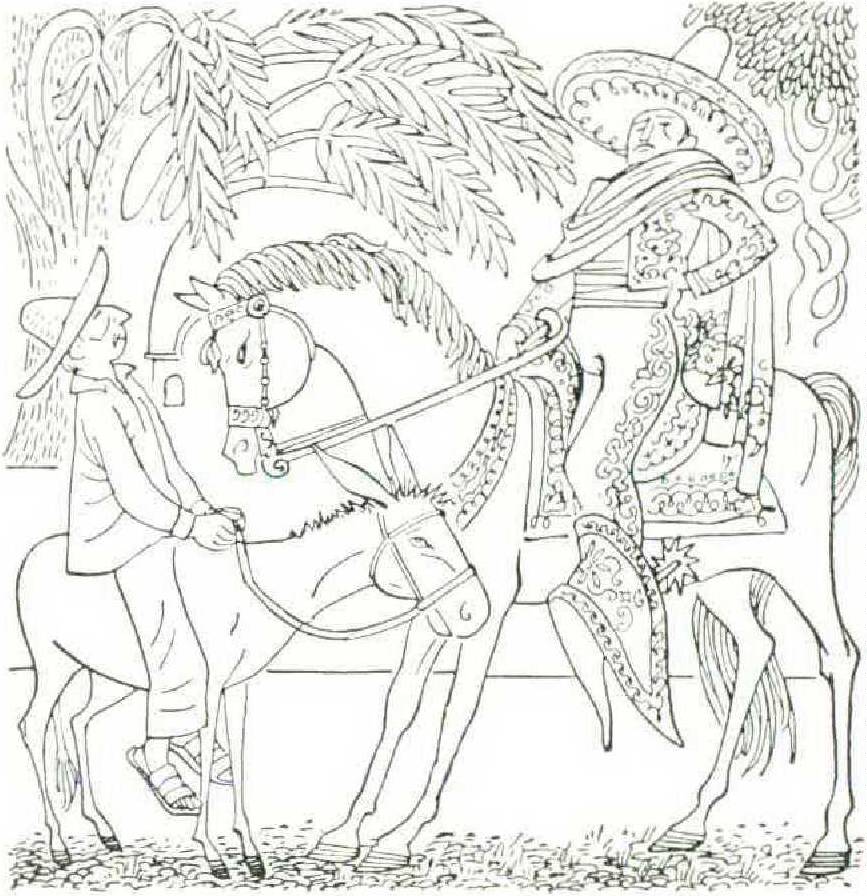
With barely a glance at the tourist, the explosive Mexicans every year stage about 1200 large and small fairs and fiestas. In and among these the Charreria, the recklessly exciting competitions of the elegantly dressed horsemen called charros, are the most neglected by travelers. This is the true national sport. Throughout the year, but especially on September 29, one sees them all over Mexico; the best are in Jalisco. For color and daring they rank with the bullfights.
Seek out the exuberant celebrations of Juchitán and Tehuantepec on the Isthmus, especially in May, August, September, October, and January. The carnivals of Veracruz, Mérida, Tampico, and Mazatlán are the most exciting; but perhaps that of Las Casas, with its many primitive Indians, is the most interesting. (Sec the excellent free 142-page guidebook of the National Travel Office, Calendario de Fiestas en Mexico.)
Shopping, crafts, markets
The native markets of Mexico are widespread; to sample them all would take months. The shop of the National Museum of Popular Arts is a godsend for the short-run traveler. The fixed prices here are about 25 per cent higher than at the source, but in the markets the foreigner will be asked about double the real price; unless he knows how to bargain, he will pay a penalty of more than 25 per cent. There are other advantages: there are no “seconds” to be wary of, or materials whose colors will run. And the Museum does a competent job of packing and shipping, something unknown in the markets.
But since there is nothing like the act of discovery, here are some other sources worth exploring. Begin with the larger regional markets like those of Toluca (seethe Museum of Popular Arts there, too), Oaxaca, Patzcuaro, Mérida, Texcoco, Las Casas, Puebla, Querétaro, Celaya, Guanajuato, Uruapan, Iguala, Culiacán, and Tepic, and workout from these to the village markets and to the craft villages themselves. All through the Toluca Valley, for example, there are groups of craft villages accessible by car.
Through certain specialty shops like that of Richard Hecht (Imperial) in Guadalajara, and Cervantes in Mexico City and Oaxaca, it is still possible to gather a collection of preColumbian sculpture at very little cost, of a kind that has not been seen since the findings in Greece and Italy one hundred years ago.
Cooking
There is one place in the capital, a kind of culinary equivalent of the Museum of Popular Arts, that will serve as a guide to good eating in Mexico. It is an inn-like establishment at Liverpool 166 called Fonda El Refugio, known to the true connoisseurs of Alexico City and not to many others. Most of its recipes date from the eighteenth century. About $1.50 to $2 will ensure anyone his fill.
Ot her towns known for t heir cuisine are Puebla, Oaxaca, Veracruz, Morelia, Tampico, and Mérida. Mexican food is not all chili and pepper; with that prejudice set aside, one can eat well. The beer, bread, soups, seafood, and coffee are often superb.
Costs
Inflation over the last two years has more or less negated the traveler’s gain through devaluation of the peso. But prices measured in dollars remain very low, especially outside the capital. The smaller, and much more pleasurable, west coast places like Puerto Vallarta still cost about $4 a day, American plan. A Coke costs — basically— 2½ cents, a bottle of beer 8 cents, and a good meal less than a dollar, a good hotel room $2 (single), a fine embroidered blouse $3, gold filigree earrings $4. The cost of handcrafts is unbelievably low.
A plane ticket in a circle from Mexico City, stopping at Oaxaca, Ixtepec, Tapachula, Tuxtla Gutiérrez, Minatitlán, and Veracruz, costs only about $45 (air fares are approximately 40 per cent lower than in the U.S.).
But on the luxury level, where special (and completely unnecessary) catering is done for Americans — “You’d never know you were in Mexico” seems to be the slogan — costs are not much different from those in the United States.
MITCHELL Goodman