Contemporary Japanese Art: Some Examples of Its Various Tendencies
by CHISABUROH F. YAMADA and JAMES LAUGHLIN
1
THE magnificent exhibition of classical Japanese painting and sculpture which toured the United States two years ago amazed the American museum public with its revelation of a tradition comparable in vigor if not in range to that of the more familiar European art heritage. But the most modern of these national treasures was dated only 1837 and the public was left with a tantalizing curiosity about the art of Japan today which has been only partially satisfied by occasional reproductions in magazines, the San Francisco show of 1952 and a few one-man displays at New York galleries.
Has Japanese art been able to maintain the technical virtuosity of its great past? Have its basic concepts remained entirely Oriental in character, or, as with music and technology, have importations from the West been so enthusiastically adopted as almost to obliterate the native strains? The reproductions which follow, chosen by the editors with the guidance of Dr. Chisaburoh F. Yamada, who has also most graciously supplied the background for these notes, may perhaps provide some tentative answers to such questions — tentative assuredly because Japan today, its social structure, its culture, the very character of its people, is in transition, moving with a rapidity for which there appears to be no precedent in history toward new patterns of which we cannot yet discern the final form.
Before we look at this little collection of pictures, a word about the artistic climate which has produced them. It is really no very gross sentimentalization to say that almost every Japanese is in some degree an artist. Japanese girls are taught the art of flower arrangement, by their mothers and even the poorest home will have its tokonoma niche where flowers are displayed beneath a cherished painting. Japanese gardens are perhaps the most beautiful in the world, an integral part of the architectural setting in which not profusion of bloom and color but subtle contrasts of green shades and carefully planned relationships of green shapes are the keynote. And nowhere has nature produced landscape more lovely, more poetic, than in Japan.
The calligraphy which Japanese children learn in school is in itself a discipline in line, its effect evident in the pleasing appearance of the simplest designation over a shop doorway. The austerity and functionalism of Japanese domestic architecture is a lesson in the use of space. And while the annual excursions to see the cherry blossoms may often be the occasion for some very cheerful sake-bibbing, the custom of moon viewing is still practiced with a deep sincerity of feeling.
To a visiting artist Japan must seem too good to be true. In what other country will he find that department stores compete for customers by mounting weekly exhibitions of the best art in handsome galleries, or that newspapers vie with each other to sponsor the most elaborate and comprehensive survey shows of contemporary painting? To be sure, the viewers who crowd these galleries all day, pausing earnestly before each picture as if the very fact that the artist had intended a work of art could command their respect, come more to look than to buy. These are not the counterparts of the prosperous shoppers in New York’s 57th Street but more the housewives or working people to be found in Macy’s or Woolworth’s. Yet their number, and their eagerness, must certainly give the Japanese painter a sense of public acceptance, of importance in the community, such as few American artists can ever enjoy. Probably no more Japanese artists than American win through to economic security, achieving the fame that brings big prices from rich collectors, but at least the hardships of a career in art are balanced by a general respect and appreciation.
2
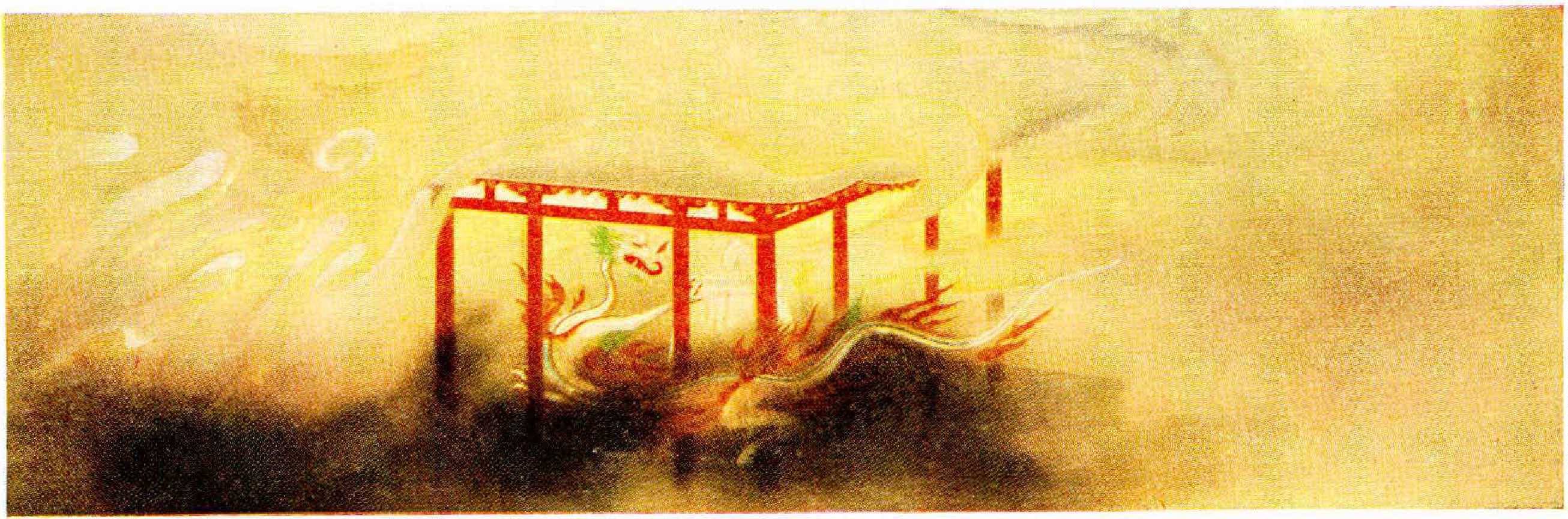
OF THE paintings reproduced in our collection perhaps the one which most plainly shows the vitality of the classical tradition is the section of Kokei Kobayashi’s scroll The Tale of Dojoji (Plate 1) which tells again the old legend of a young Buddhist novice who took refuge in the Dojoji monastery to escape a lady who had fallen in love with him. She changed herself into a dragon and the novice hid under a great bronze bell. The dragon-lady could not get him out but her passion was so burning that it melted the bell and with it the unfortunate novice. In the final scene of the scroll the artist has painted cherry trees blooming peacefully many years after the flames of passion have consumed themselves.
Japanese scroll paintings are done on long strips of paper, usually about twelve inches high, which are rolled from one spindle to another. The composition develops continuously from right to left, telling, as the scroll is unrolled, a story which moves through time and which may be seen from several points of view so that there is no fixed, inclusive use of space. Kobayashi, now a man in his seventies, goes back in this type of painting to the Yamato-e style which flourished from the Heian through the Kamakura Period (794 to 1333); he is also inspired by old Chinese masterpieces.
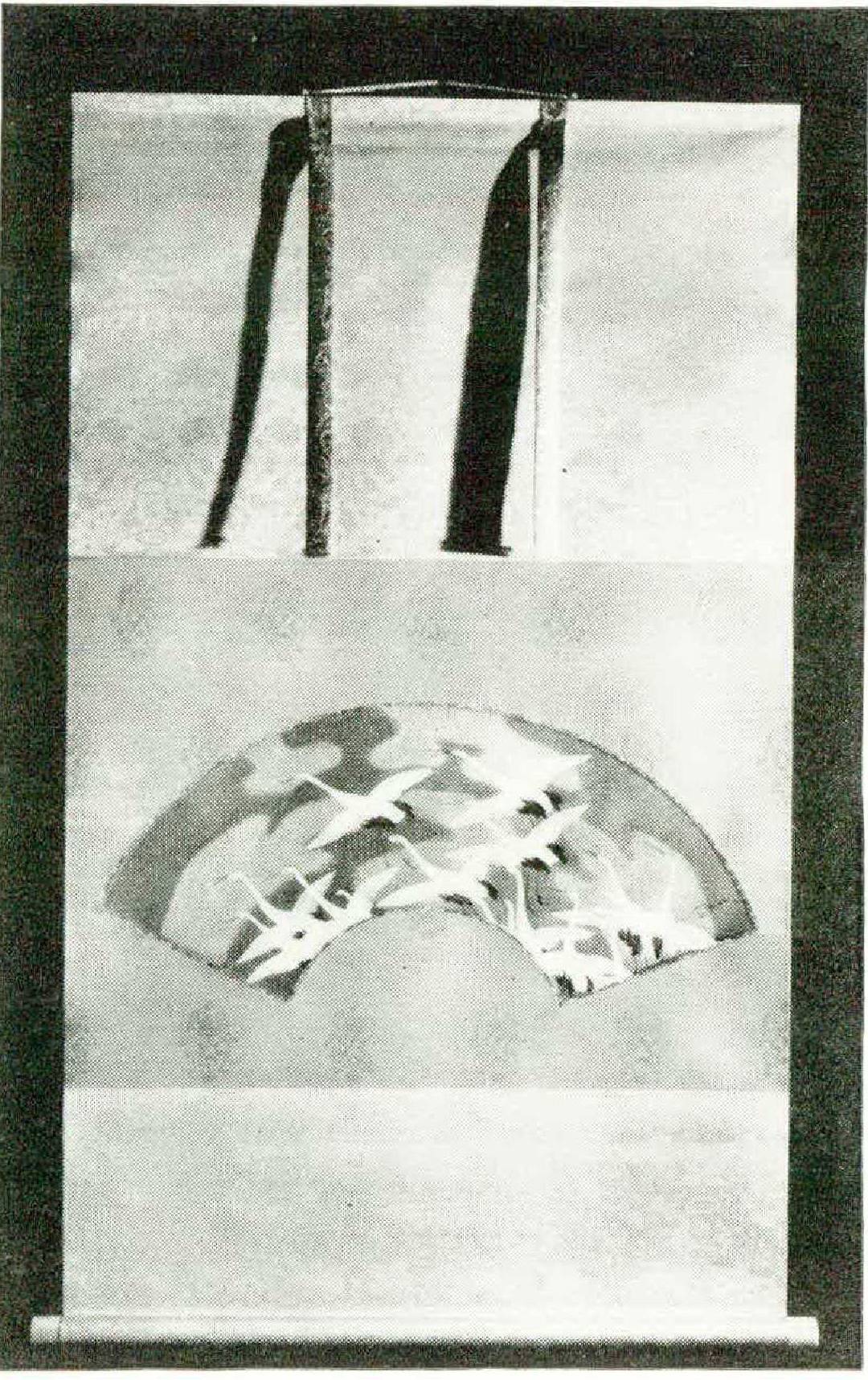
A second painting by Kobayashi, Cranes (Plate 4), illustrates another of the characteristic physical forms of traditional Japanese art — the Kakemono, an oblong silk hanging shaped to fit in the tokonoma niche of the living room. The present Kakemono form was brought to Japan from China about the 13th century and little is known about the original function of the two cloth strips which hang from the top of it, but they are still retained, their placement being a calculated part of the proportion of the whole mounting. Classic Kakemono paintings were usually vertical but here the artist has used the horizontal shape of a folding fan which has an auspicious meaning in Japan. Kobayashi did this picture for a friend’s anniversary — the white cranes signify long life. The clouds are done in platinum dust sprinkled over a gold background.
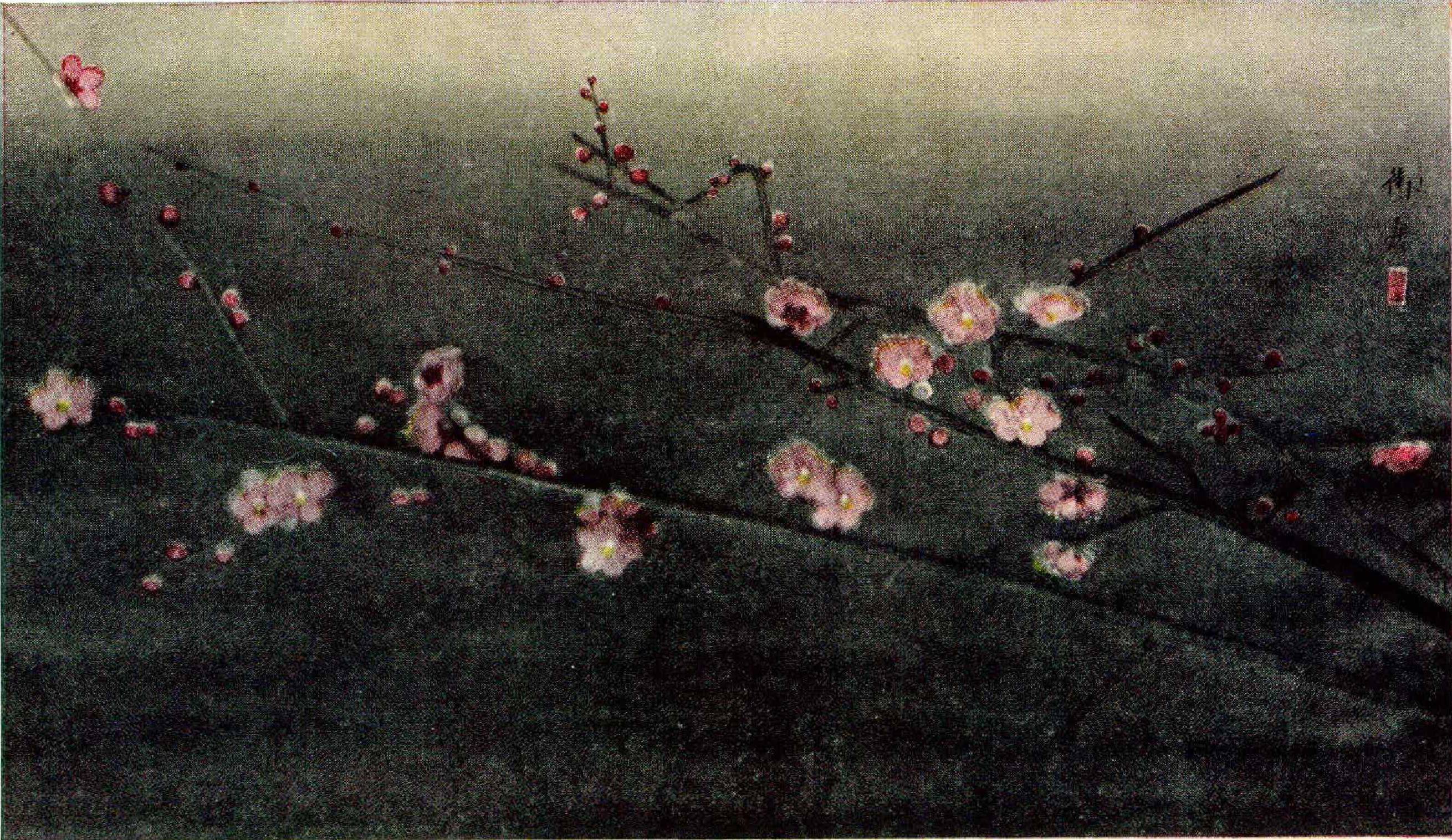
The traditional technique for scroll and Kakemono painting uses either Chinese ink or opaque water color applied on silk or paper with a deft, unerring brush stroke which cannot be painted over with another color, as can oil on canvas. The artist must know his form before his hand moves and hundreds of sketches may precede the final work. Paintings are classified as “Japanese style” or “Western style” by the kind of paint and surface employed rather than by stylistic treatment. Gyoshu Hayami’s delicate rendering of cherry branches in flower, Scent in the Dusk (Plate 2), is not only “Japanese style” in technique but in its decorative stylization is characteristic of the classic treatment of forms in which the beauty of nature was represented through highly subjective vision. To the Occidental “subjective naturalism” may seem a contradiction in terms, but, as Dr. Yamada points out, it follows inevitably from the Japanese conception of man’s relation to the outer world.
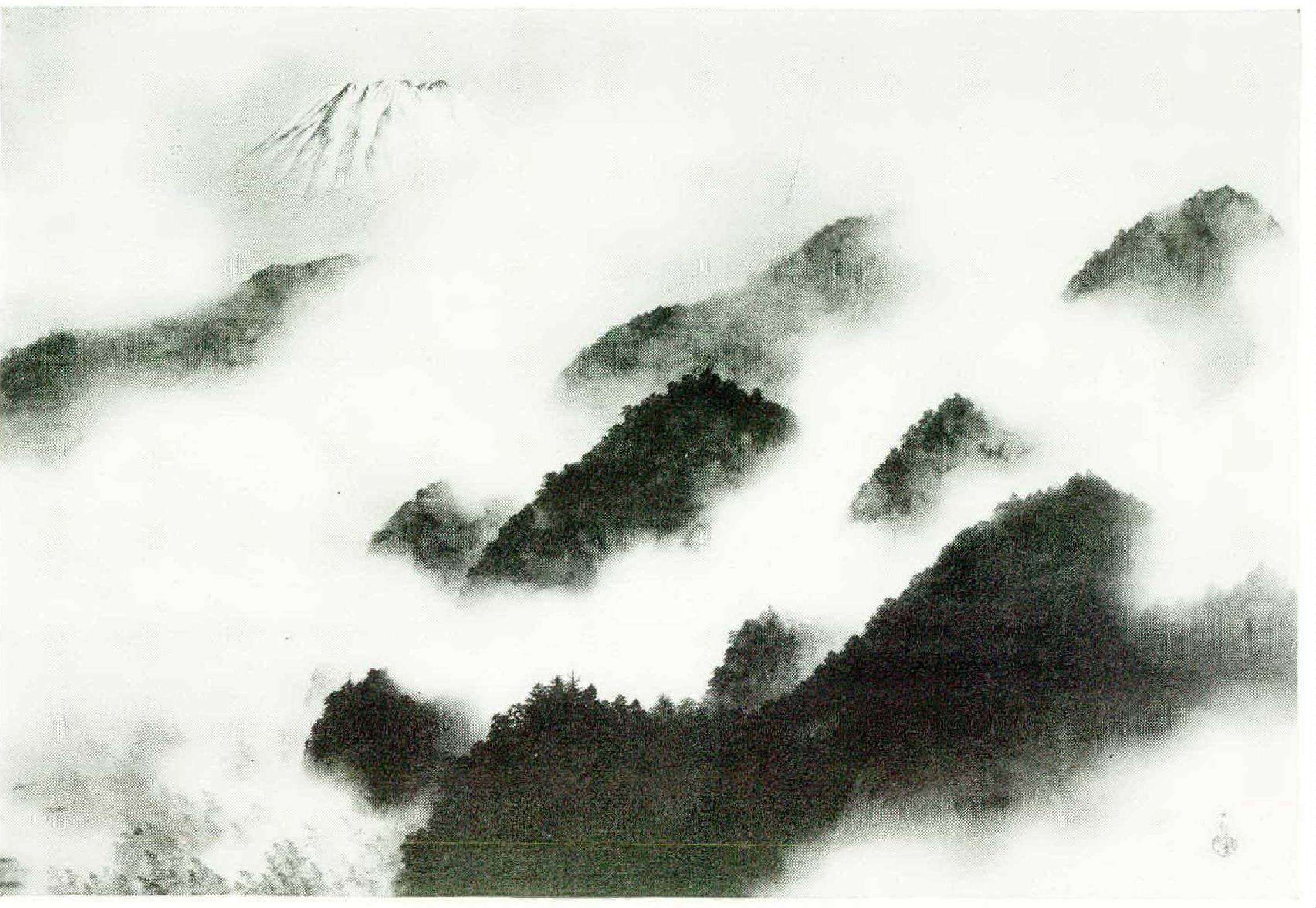
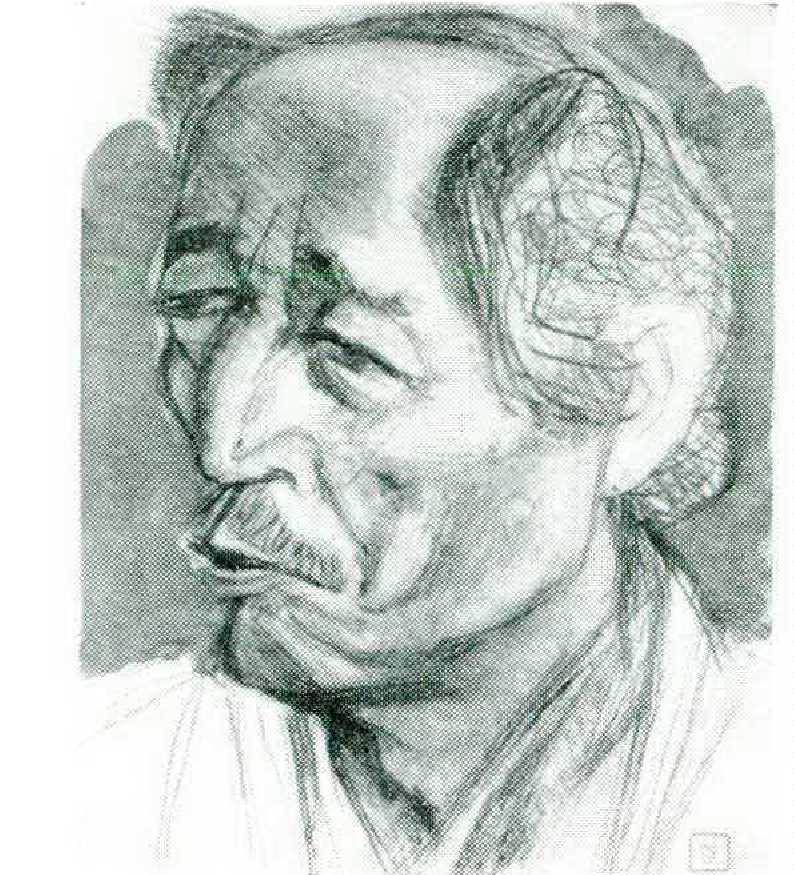
The venerable Taikan Yokoyama (whose portrait sketched by Sotaro Yasui we see in Plate 6) is one of the immortals of contemporary Japanese art. He has idealized the sacred mountain, Fujiyama, in scores of different moods and perspectives. With astonishing virtuosity he has combined water color and ink in a personal technique which permits him in one painting to please the many with a scene of romantic beauty and the few with an abstract patterning of space and volume. From Hayami’s cherry flowers to Yokoyama’s Mt. Fuji After Rain (Plate 3), we have moved from the minute to the monumental, yet both are examples of subjective naturalism. Dr. Yamada explains it thus: “Japanese art of the past was based on the typical Japanese attitude of perceiving the outer world not in opposition to the self, but regarding the self as part of the universe. The world was apprehended intuitively. This attitude did not foster empirical natural science in our history but created art of unique beauty — an art with no conflict between image and perception, an art of complete empathy and at the same time of abstraction.” For the Japanese public today Yokoyama’s work is a reassuring link with the past.
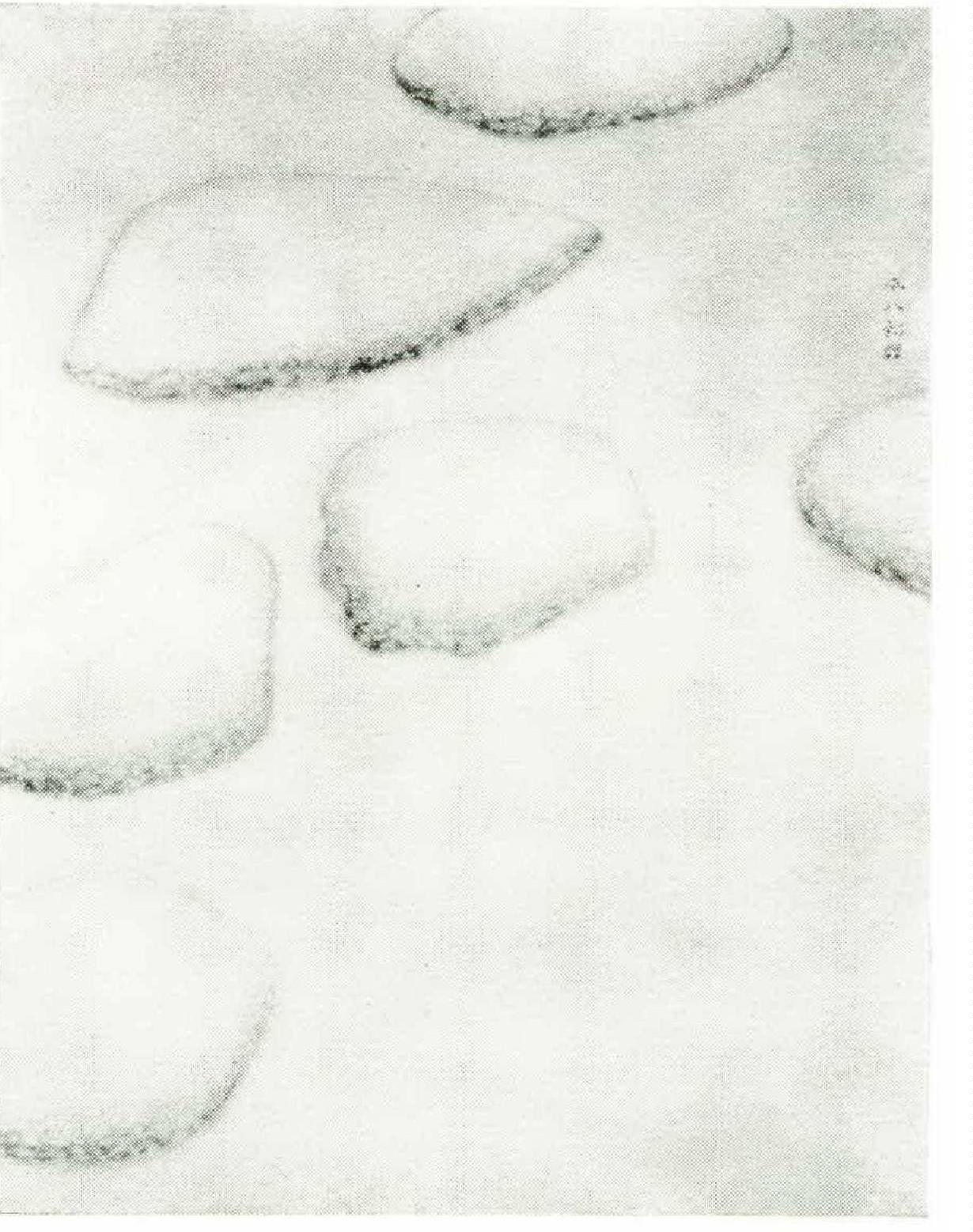
Another contemporary artist who has successfully linked the old and the new is Heihachiro Fukuda, a painter now in his early sixties. His First Snowfall (Plate 5) is a good example of what Dr. Yamada means by “the world apprehended intuitively.” In this simple picture of steppingstones in a garden thinly covered with snow, Fukuda is trying to present the intrinsic beauty revealed in a small section of nature in an abstract form which is in itself beautiful and at the same time symbolic. By the most severe elimination of what is not essential — and we can imagine how many sketches must have preceded the final selection of shapes and placement of the stones in relation to each other — he has expressed a whole complex of emotion. In the same way a Japanese poet uses the austere, highly disciplined Haiku form of only 17 syllables to convey themes rich in implications of profound meaning.
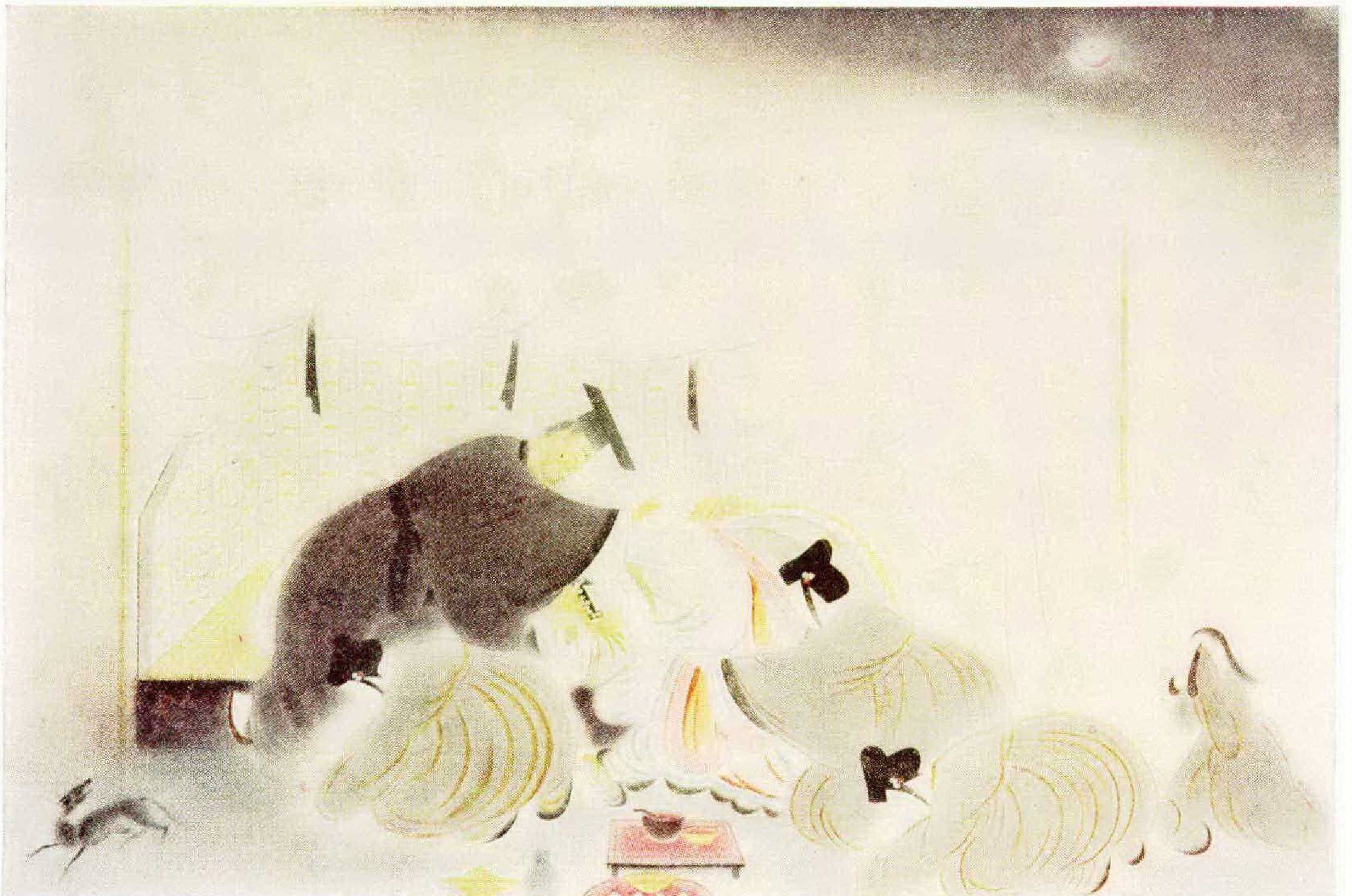
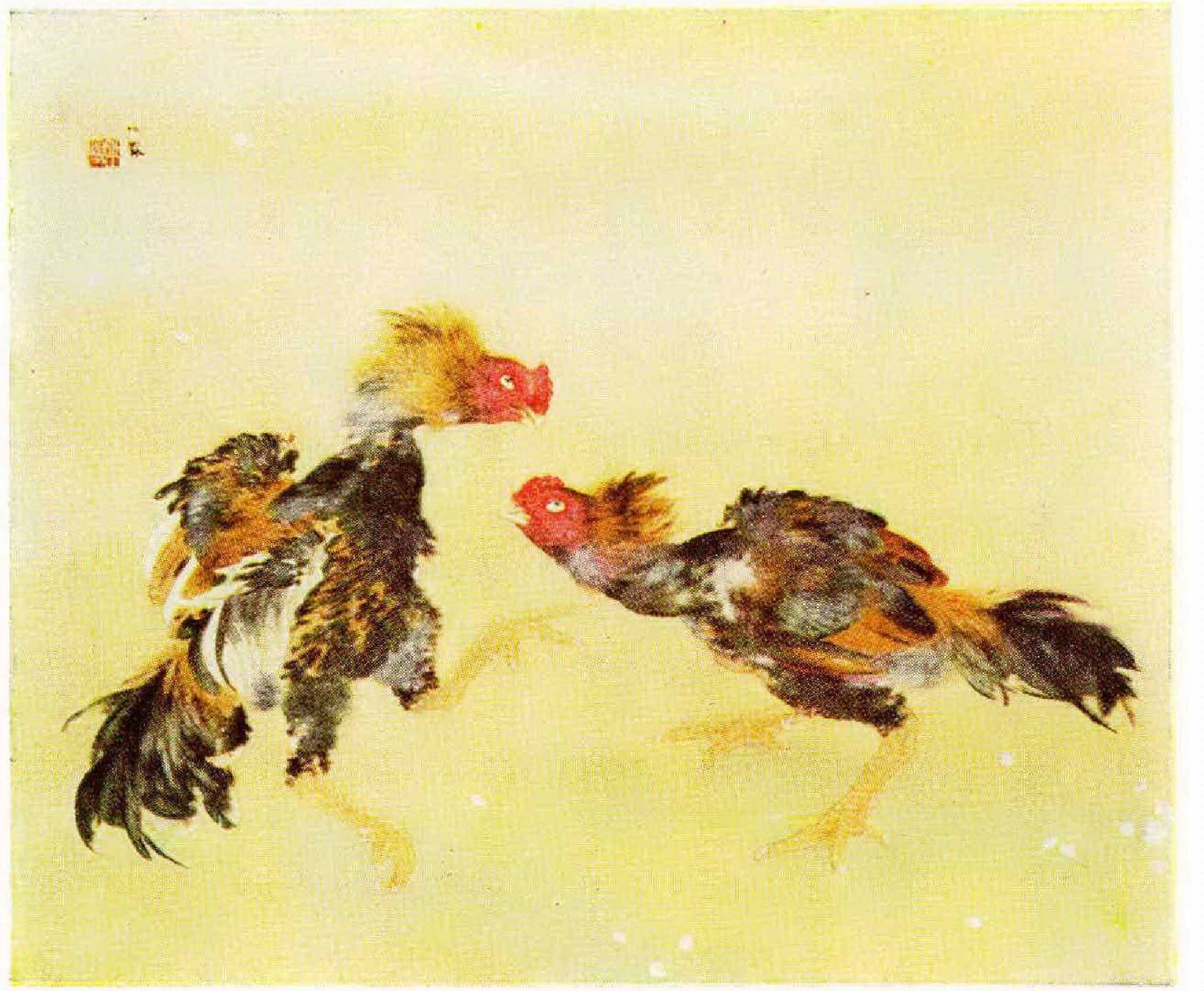
In describing the subjective vein in Oriental art, Professor F. S. C. Northrop speaks of “immediately apprehended aesthetic factors” which override the “three-dimensional, common-sense, external object.” The painter must represent his own inner image of what to him is real. And he places it, so to speak, in a void. We see this concept fused with our familiar Western concept of a storytelling picture in one of the outstanding masterpieces of contemporary Japanese art, Yukihiko Yasuda’s Eclipse (Plate 10). Painted in 1926, when the artist was 42, it re-creates the tragedy of a Chinese emperor whose death was foretold to his favorite mistress by a solar eclipse. The emperor is tending the girl, who has fainted from the shock. Notable in this painting, as in the Kobayashi Dojoji scroll and in Takeuchi’s Fighting Cocks (Plate 11), is the classic Oriental treatment of space. A Chinese bedstead is faintly indicated but its background is obscure. An Italian painter of the Renaissance, retelling a comparable legend, would surely have filled in a detailed background of “deep space” landscape or architecture in the tradition of “frame painting” which presupposes a frame or border separating the spectator from the pictured world, a concrete space like a stage scene. But for the Oriental artist the subject is placed in an expanding space which has no sharp boundaries and with which even the time element is merged in the unfolding scroll. Dr. Yamada calls this “internally apprehended space. ”
In the Edo Period an element of realism was brought into Japanese painting by the 18th century Maruyama school, perhaps in response to the taste of the rich mercantile class which, as it rose to power, began to patronize the arts. The wonderfully colored Fighting Cocks (Plate 11) of Seiho Takeuchi (1864-1942) are in this tradition. And they are typical of the countless pictures of animals, birds, and fishes which one sees everywhere in Japan. The Japanese are deeply fascinated by such living forms. In bad art they become sentimentalized — one sees many “cute” little kittens done in a sugary, though always delicate, style — but at their best, as with Takeuchi, they are as strong as European still-life painting, with subtleties of composition which give them the power of abstraction.
The art of Japan which is perhaps best known to the West is the colored wood-block print which also developed in the Edo Period, under the patronage of a rising bourgeois class. Its two chief types were the Ukiyo-e pictures of human figures and, later, a new kind of landscape, best exemplified by Hiroshige (1797-1858.)1 Both were more objective, more realistic, than the “inner visions” of the older schools, but they remained, in a different way, extremely stylized and so produced, in the landscapes at least, a new vein of visual poetry. Ukiyo-e is translated “pictures of this fleeting world,” and took its motifs from the daily life of the middle and lower classes: scenes on the streets and in the amusement quarters, portraits of famous Kabuki actors and beauties of the demimonde, illustrations for stories such as Saikaku Ibara’s sketches for his Samurai Tales in this collection.
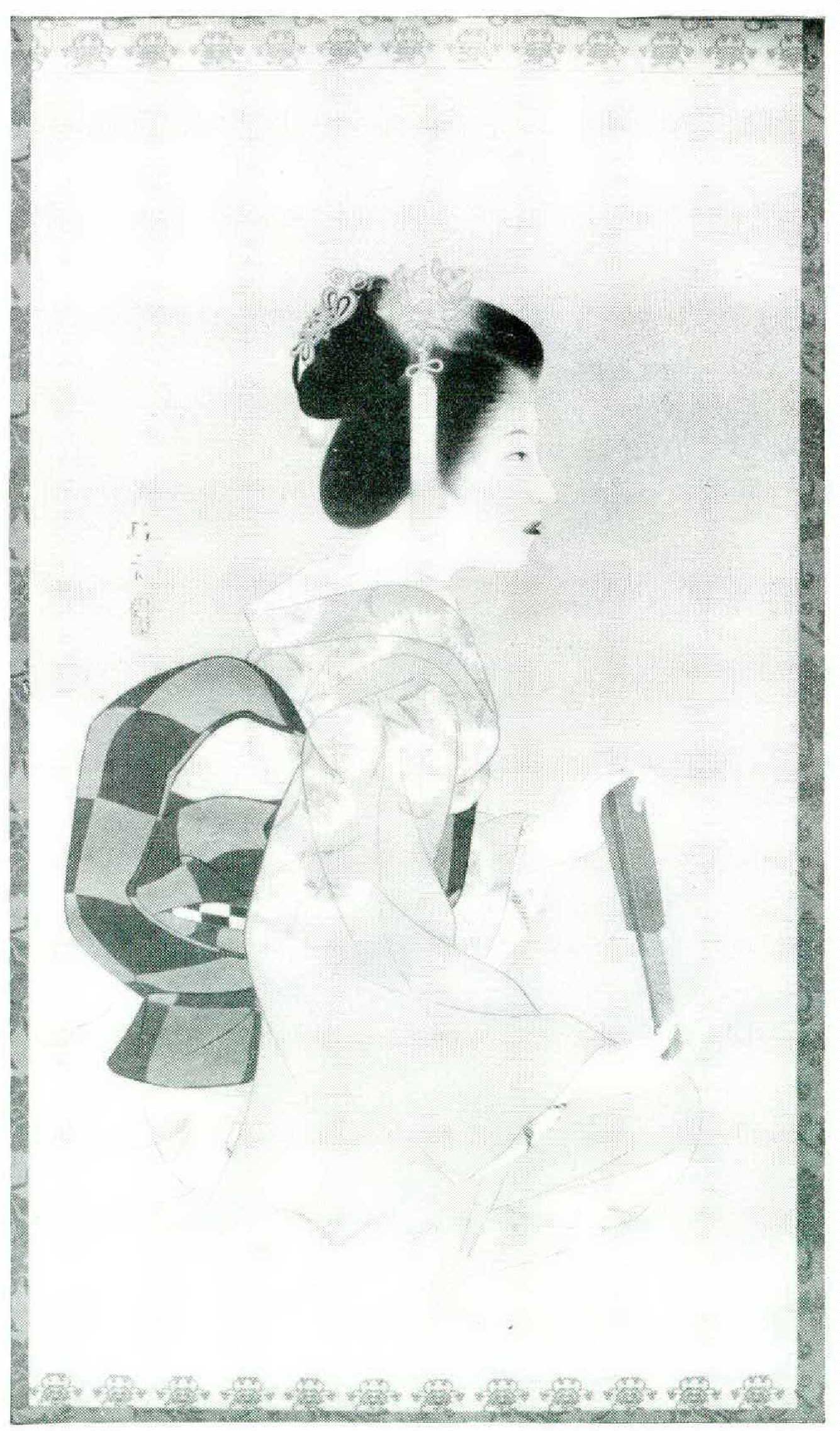
As Nyozekan Hasegawa tells us in his essay, Ukiyo-e prints and picture books were produced in enormous quantity, becoming an important medium of popular education. They were so cheap and plentiful that exporters used old ones to wrap products sent for sale in Europe. Thus they were discovered by 19th-century Impressionist painters in France who sent for more, starting a vogue which strongly influenced modern Western painting. As we shall see, the most interesting contemporary work in wood block has taken other directions, but the Ukiyo-e tradition survives vigorously today in the work of painters such as Kiyokata kaburagi, who blends it with a touch of Western realism. His Grass of Summer (Plate 7) portrays a young girl dressed in dance costume: flowered summer kimono, an obi sash, flowers in a raised coiffure, and the fan used for gesturing in dance.
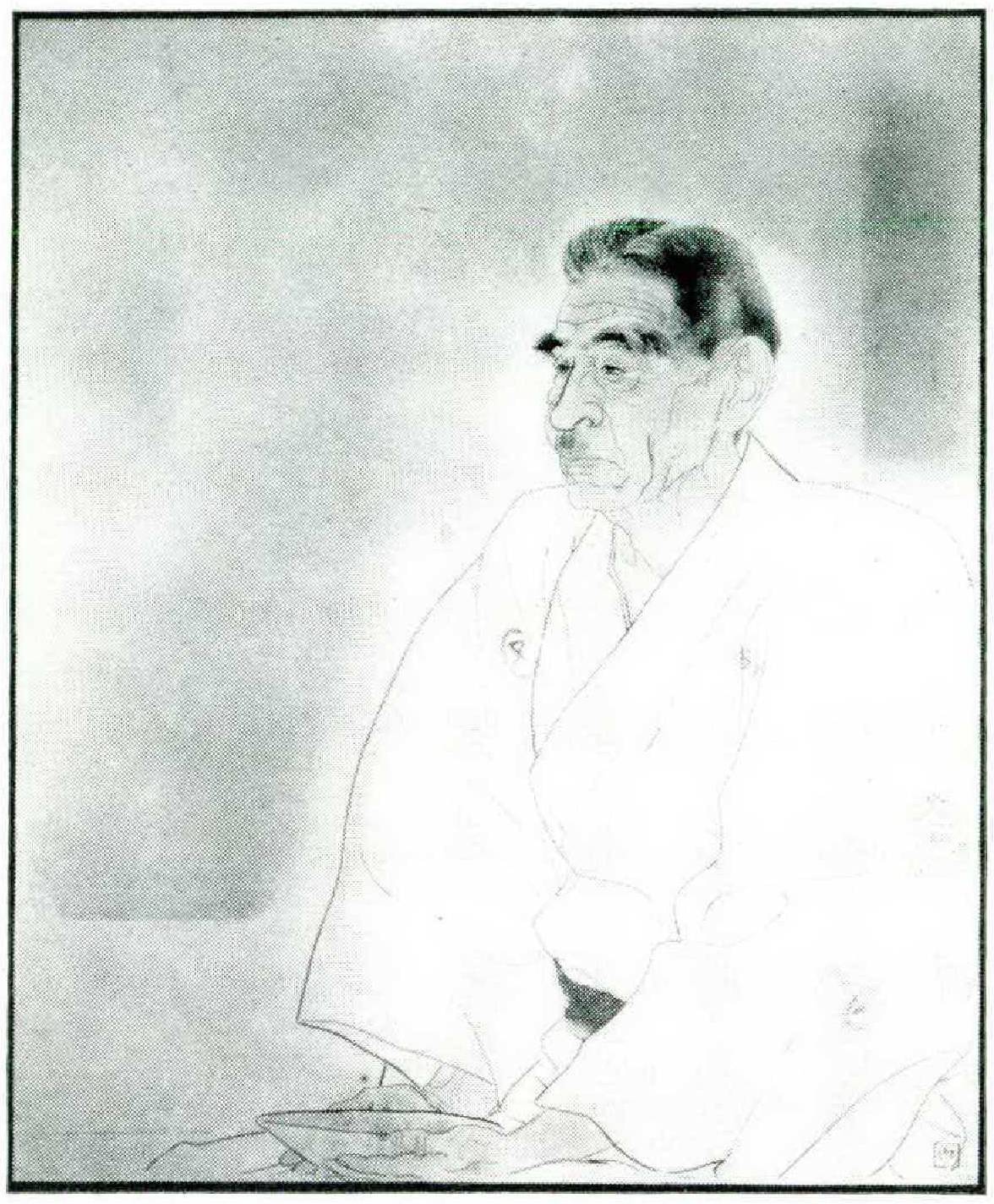
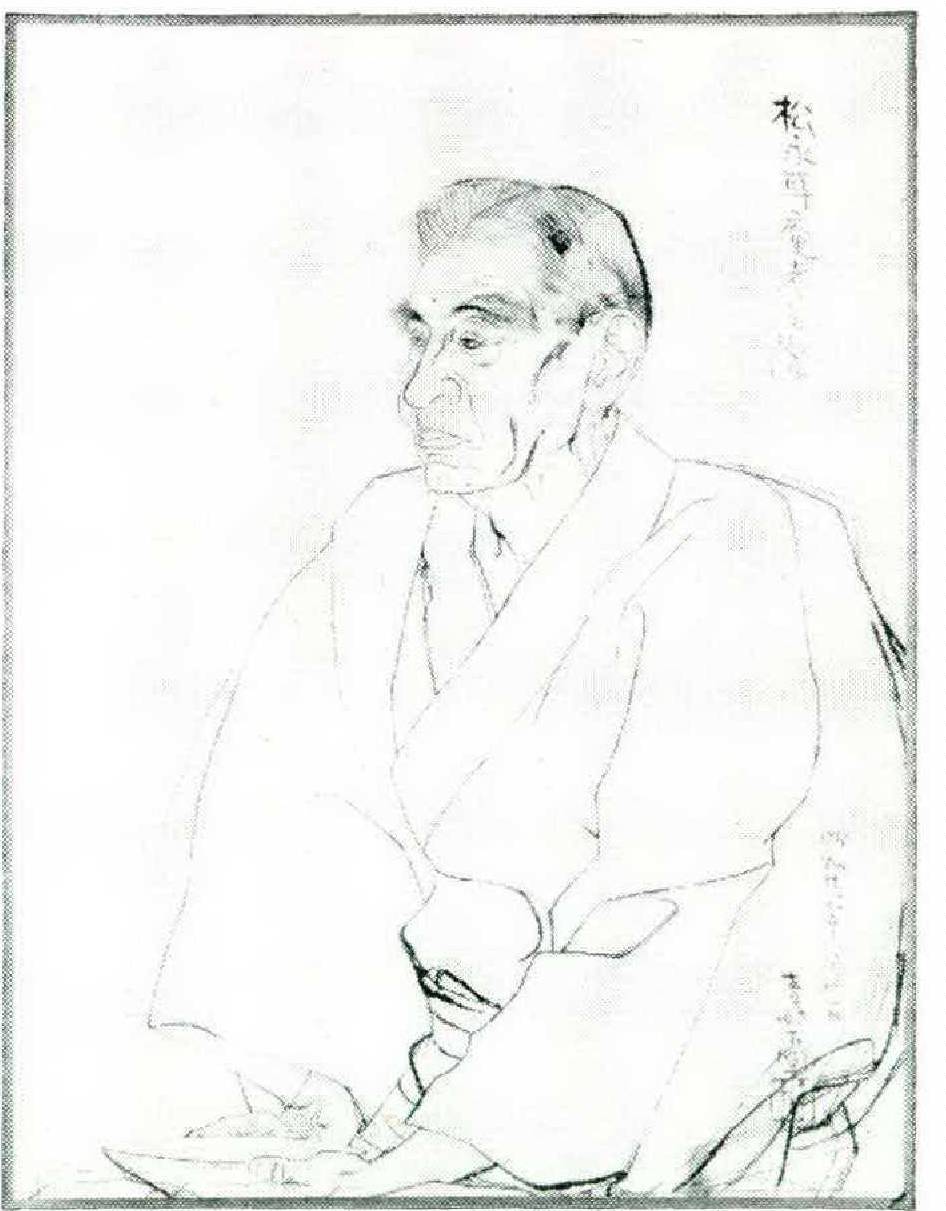
Japanese portraiture has a long and rich tradition which goes back to the art of China and Korea. One of the best “Japanese style” portrait painters today is Seison Maeda, born in 1885, who has also done some remarkable scroll paintings in the old Yamato-e style. His subject in the expressive character study we reproduce, Mr. Yasuzaemon Matsunaga, is a retired industrialist. Plate 8 shows the completed portrait and Plate 9 is the final preliminary sketch for it.
3
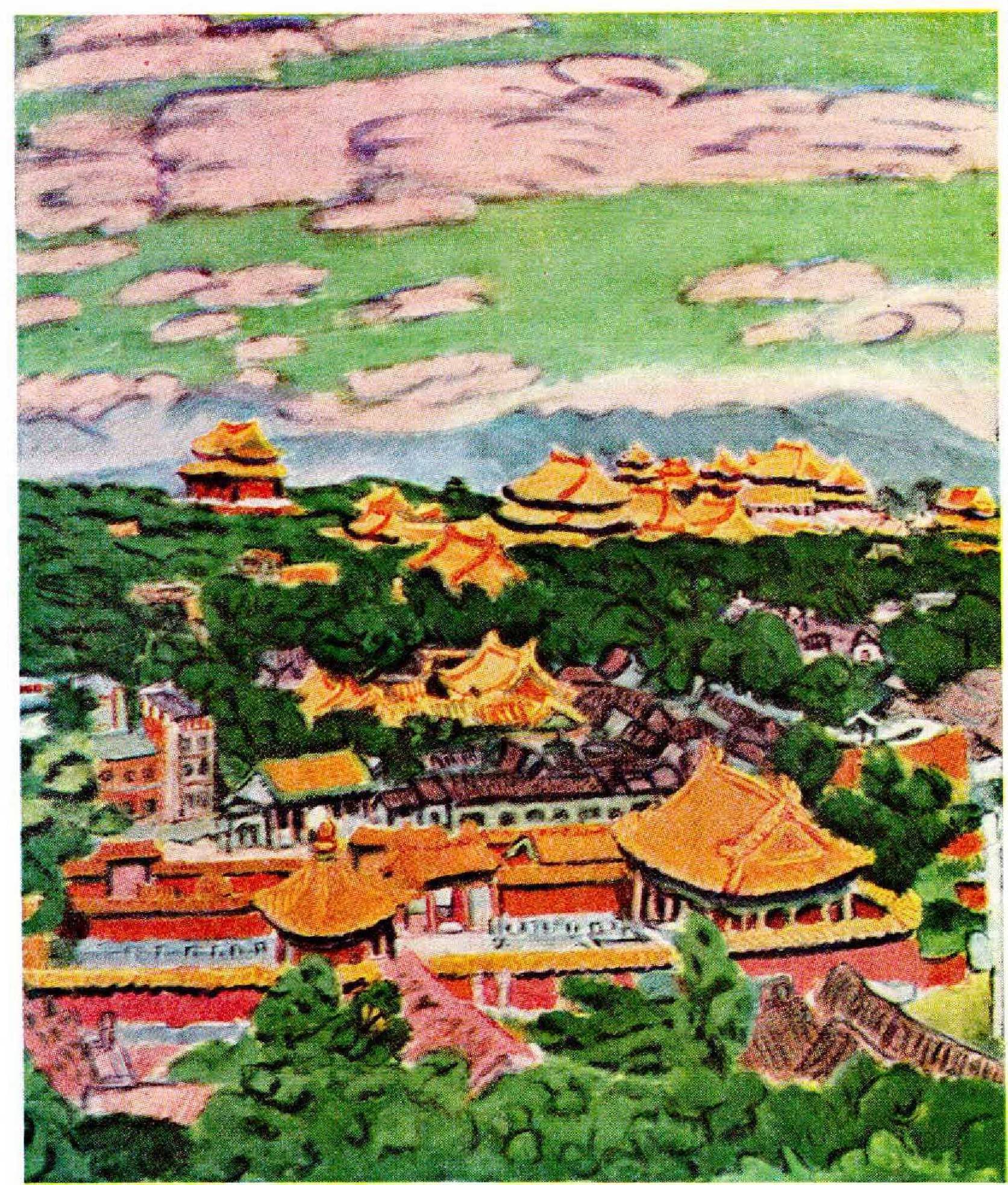
WE TURN now from pictures done in “Japanese style” with ink and water color to those in “ Western style”, or oils. In the wave of Western influence which swept Japan in the Meiji and Taisho Periods art forms were absorbed along with technology and it is safe to say that today two thirds of the professional painters in Japan are working in oil. Their various styles are similar to those found in Europe and the United States, ranging from naturalistic realism to non-objective abstraction. Among the most interesting are those who seek to use European technique in a Japanese way. Ryuzaburo Umehara’s Palace in Peking (Plate 12) is such an attempt. Umehara, born in 1888, studied with Renoir in France and was later influenced by Matisse, before perfecting his own style.
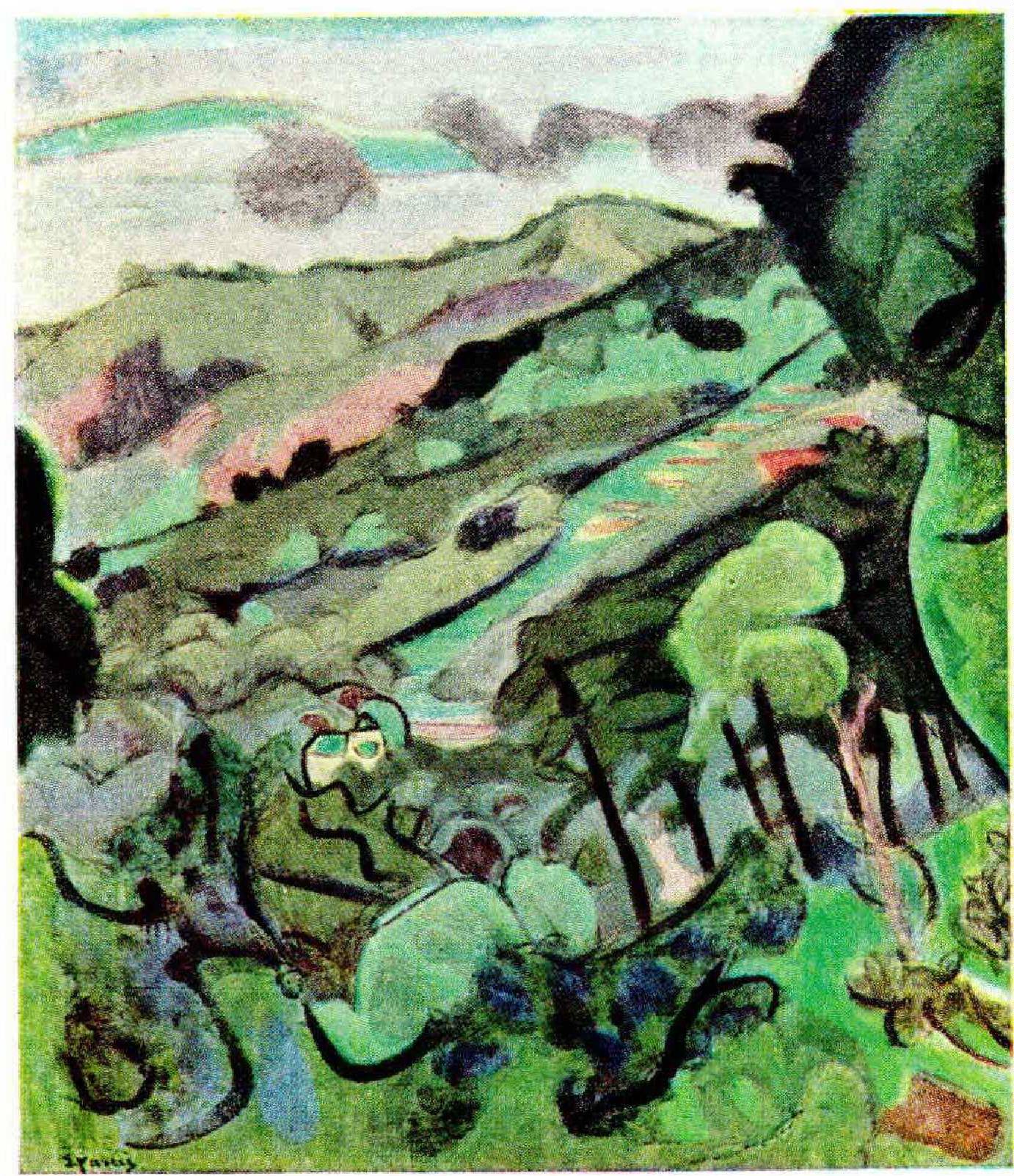
Another of the elder Japanese oil painters who studied in France is Sotaro Yasui who was attracted to Cezanne’s method of representing space and volume through color values. Yasui excels in landscape, using distortion and expressive line to capture the beauty of nature, as in Landscape near Atami (Plate 13), but he is also a gifted portraitist, as witness our Plate 6, his sketch of Yokoyama.
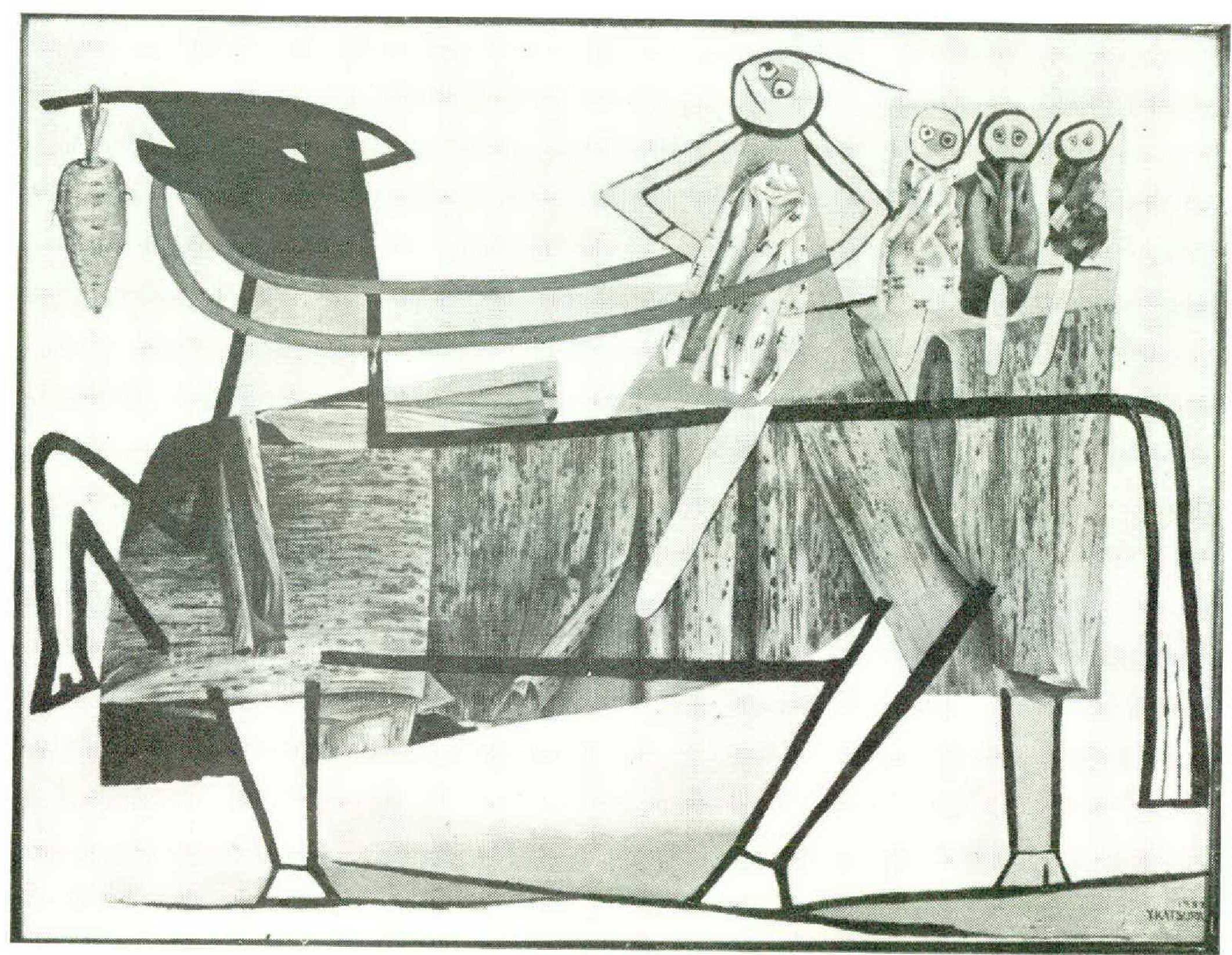
Among the younger painters, Miss Yukiko Katsura applies a surrealist, approach to purely Japanese motifs in a cartoon-like style that is most effective for satire. In “Giddap!” (Plate 14), which uses bamboo leaf and textile motifs, her politicians might well be urging the Japanese donkey to pursue the carrot of the American dollar.
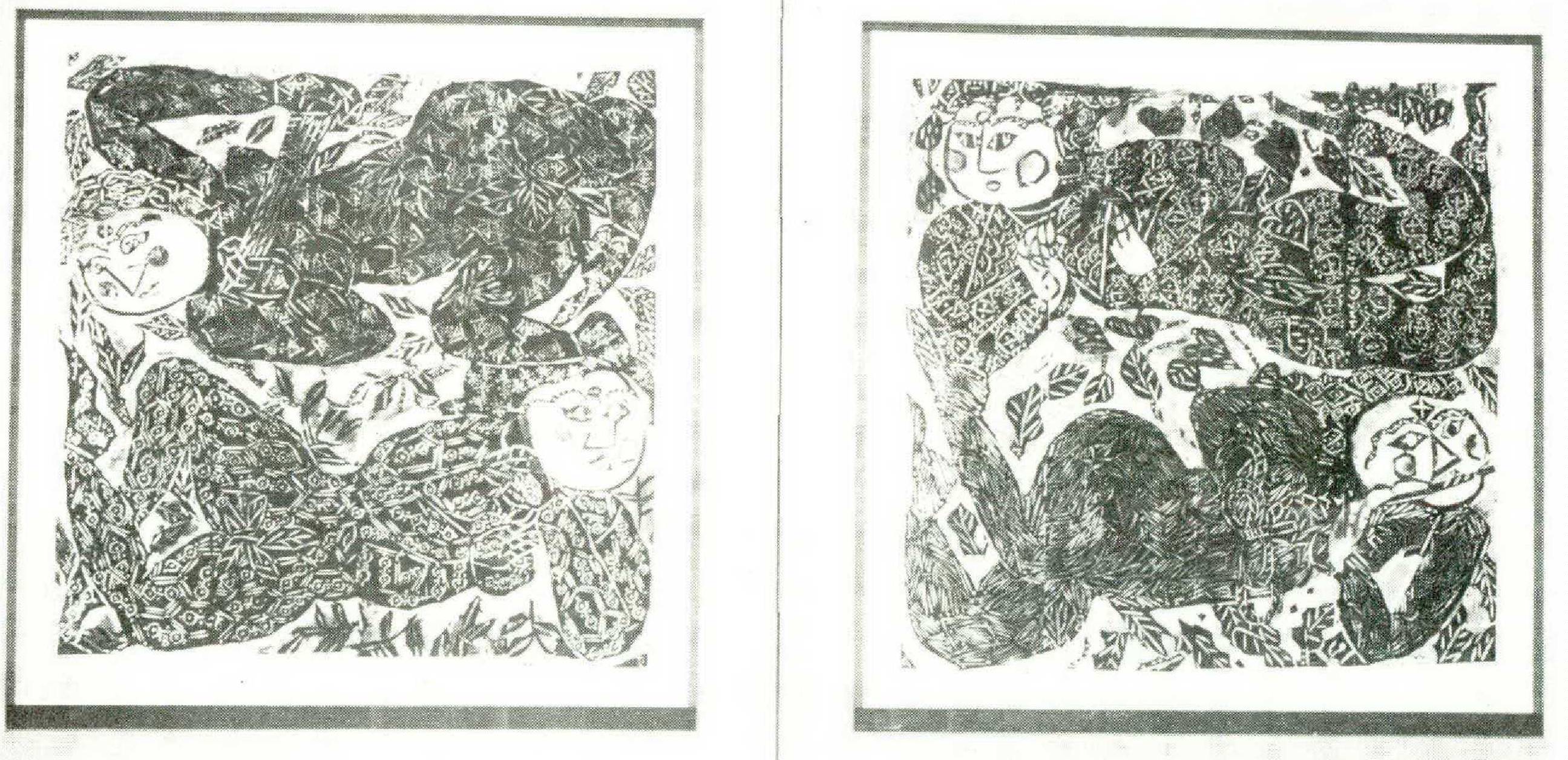
One of the most popular forms of Japanese art has always been the decorative folding screen. While few “Western style” artists find its shape congenial, Shiko Munakata has boldly composed in his Sky, Wind, Fire and Water (Plate 15) a two-fold screen with two very large wood-block prints tinted with color applied to the back of thin paper. He has given an almost whimsical modern treatment to the Four Elements of Chinese cosmology.
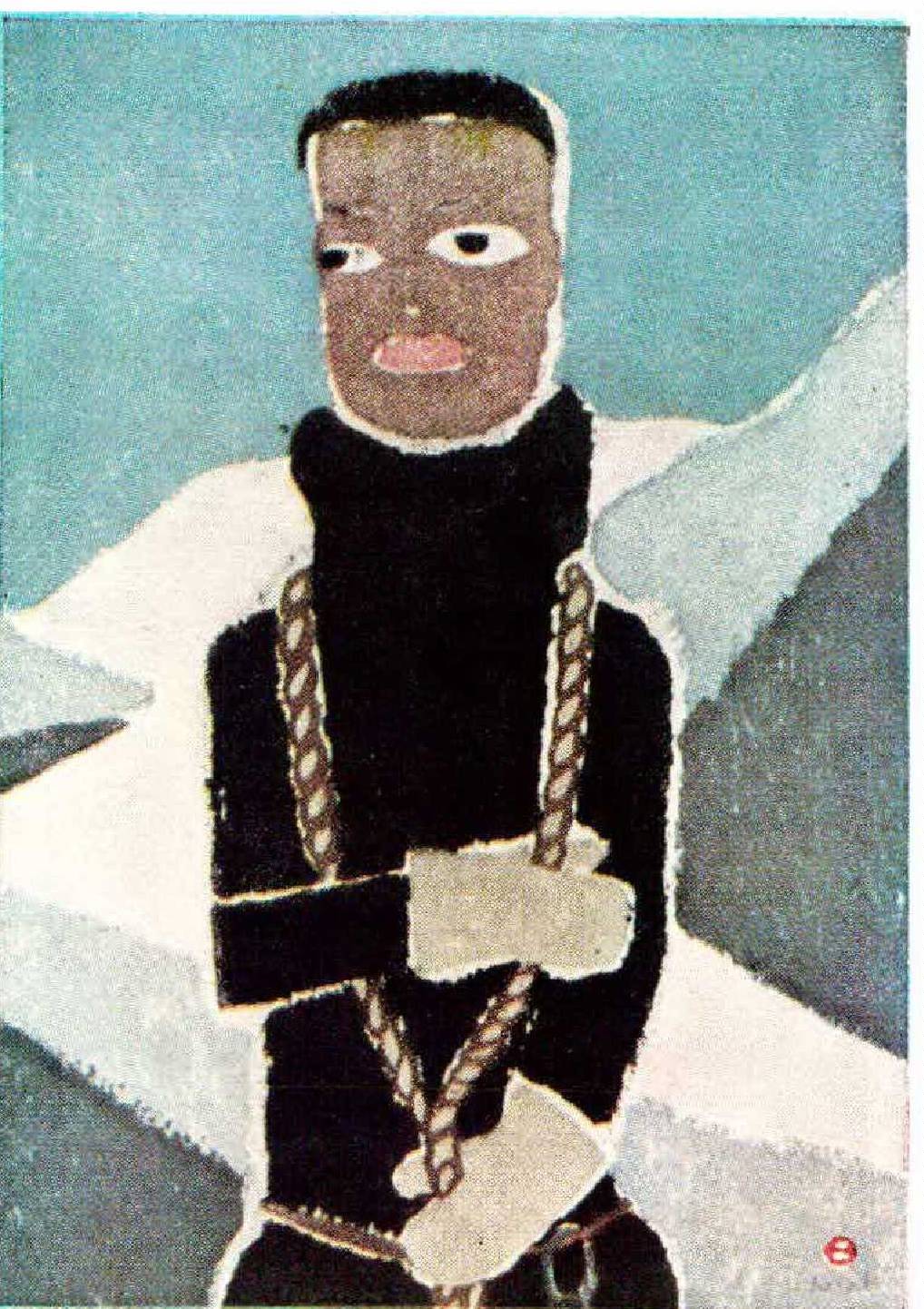
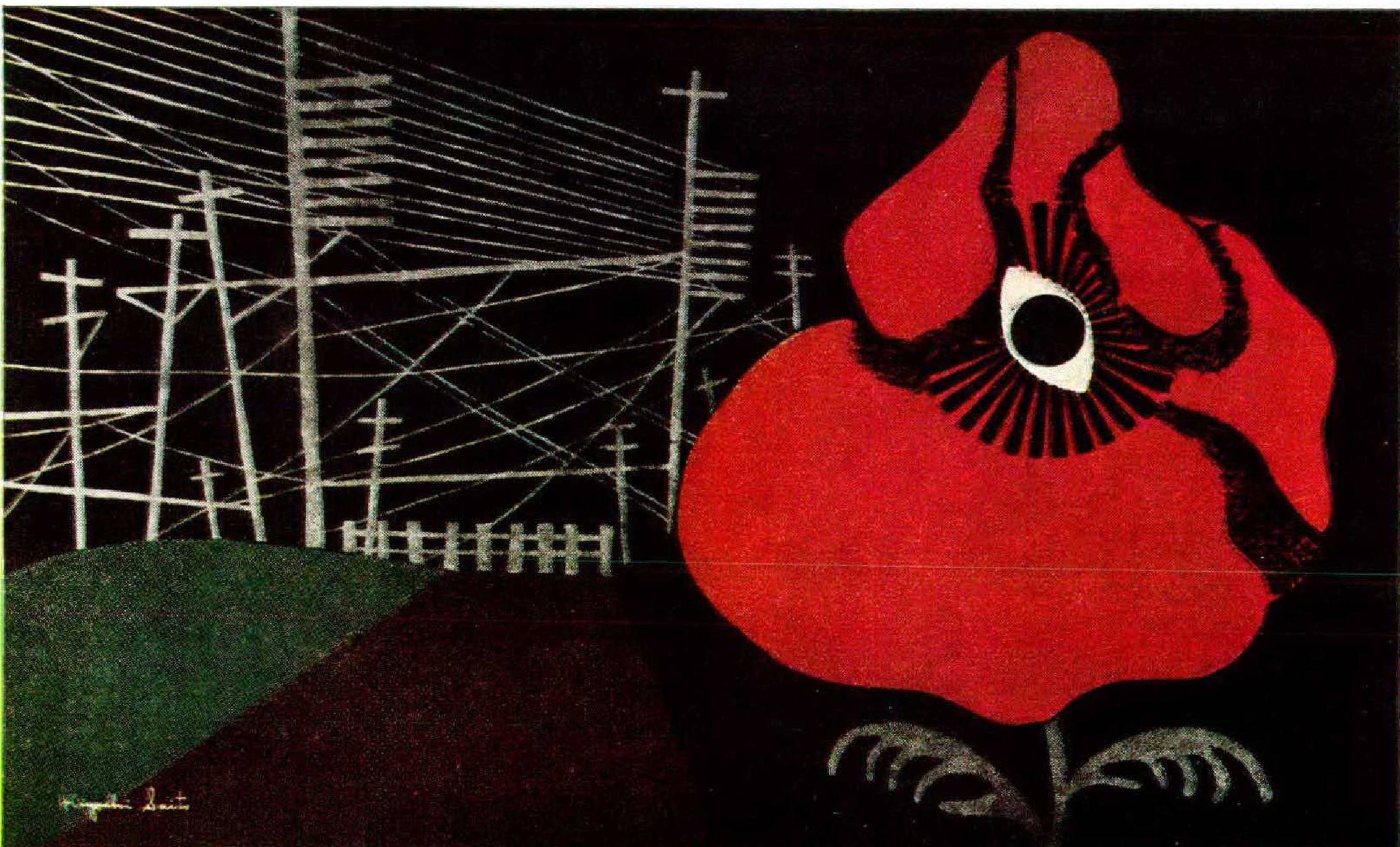
The early work of another print-maker, Kiyoshi Saito, born in 1907, suggests the influence of Vuillard, but his Red Flower (Plate 23) is typical of his more recent work which displays sure command of a highly individual idiom. Umetaro Azechi’s Mountain Climber (Plate 21), one of a series on Alpine subjects, gives us further proof of the vitality of the wood-block technique today.
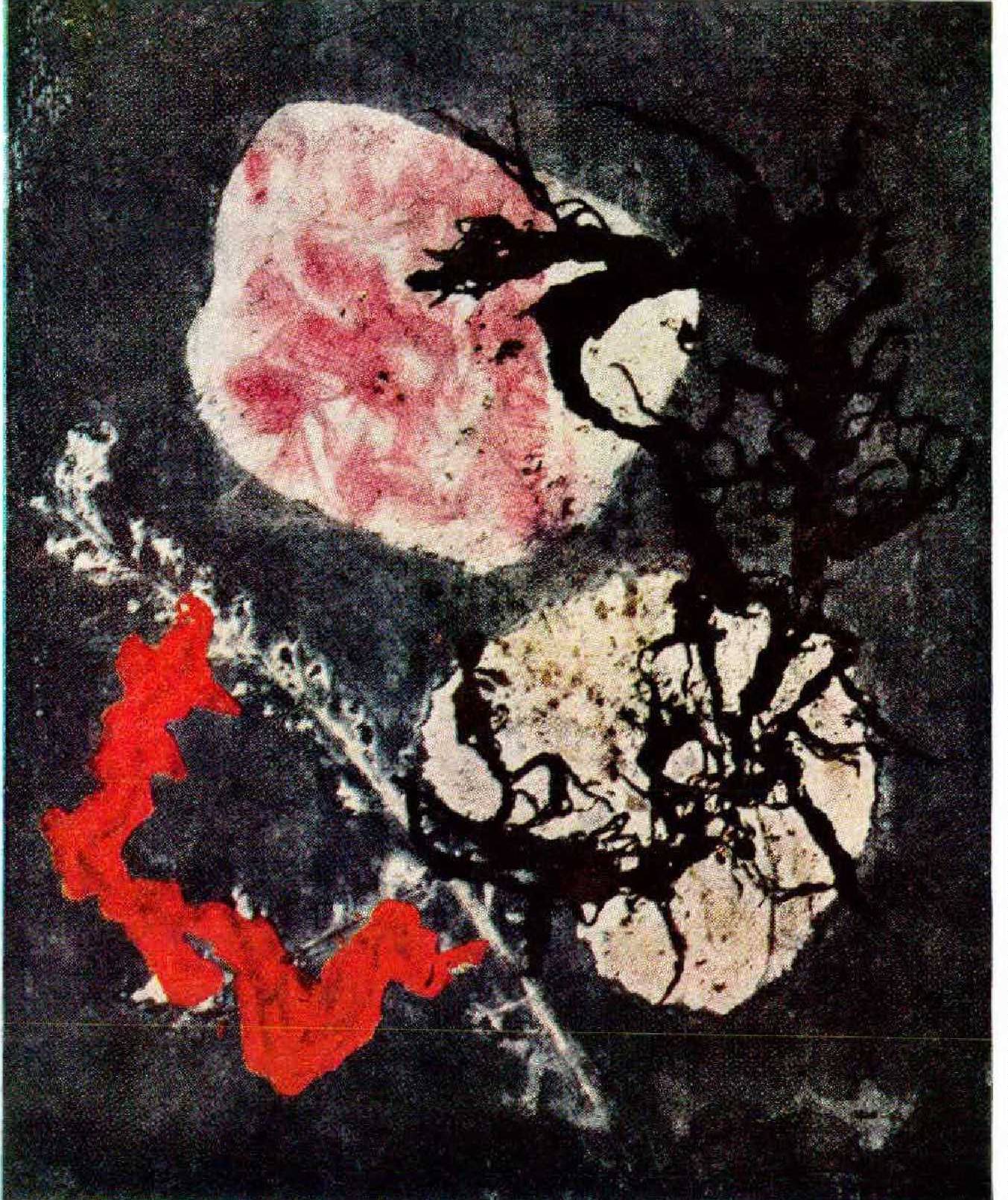
Koshiro Onchi, born in 1892, ingeniously combines actual materials from nature with wood blocks in his distinctive color prints. Inspired perhaps by European collage and frottage, or Chinese rubbings, he made his Things Japanese (Plate 22) by applying color to pieces of seaweed (a staple of the Japanese diet), two pond-lily leaves and a flowering branch from his garden and then pressing his paper against them.
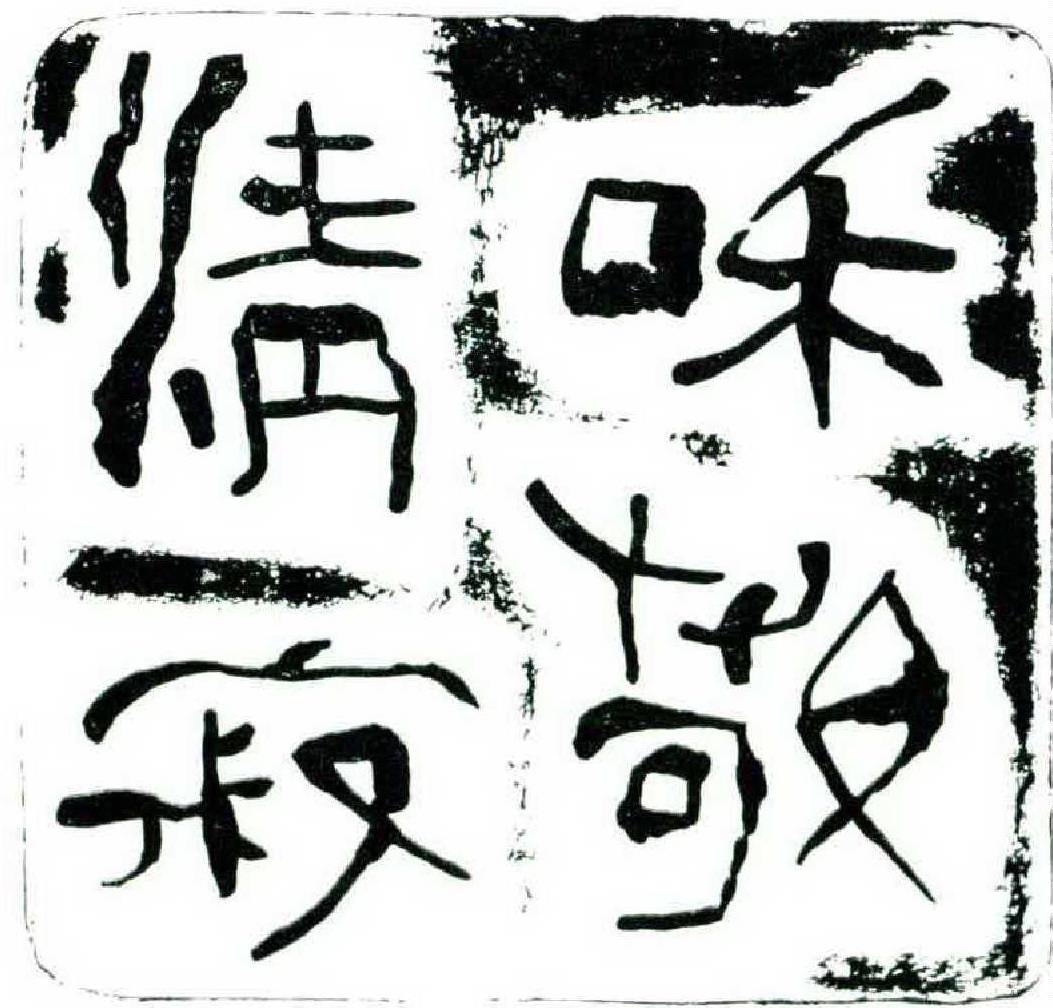
We represent Sabro Hasegawa with a lithograph but he is also a leading painter of the younger generation, who, like Saito, has had shows in Yew York. Born in 1906, Hasegawa is prominent in the school which is adapting traditional Japanese calligraphy to modern abstract design. His Symbols of the Tea Ceremony (Plate 18) makes a formal pattern of the ideograms for Harmony, Respect, Cleanliness and Tranquillity — principles which are the very essence of the Tea Ceremony and all that it means in Japanese life.
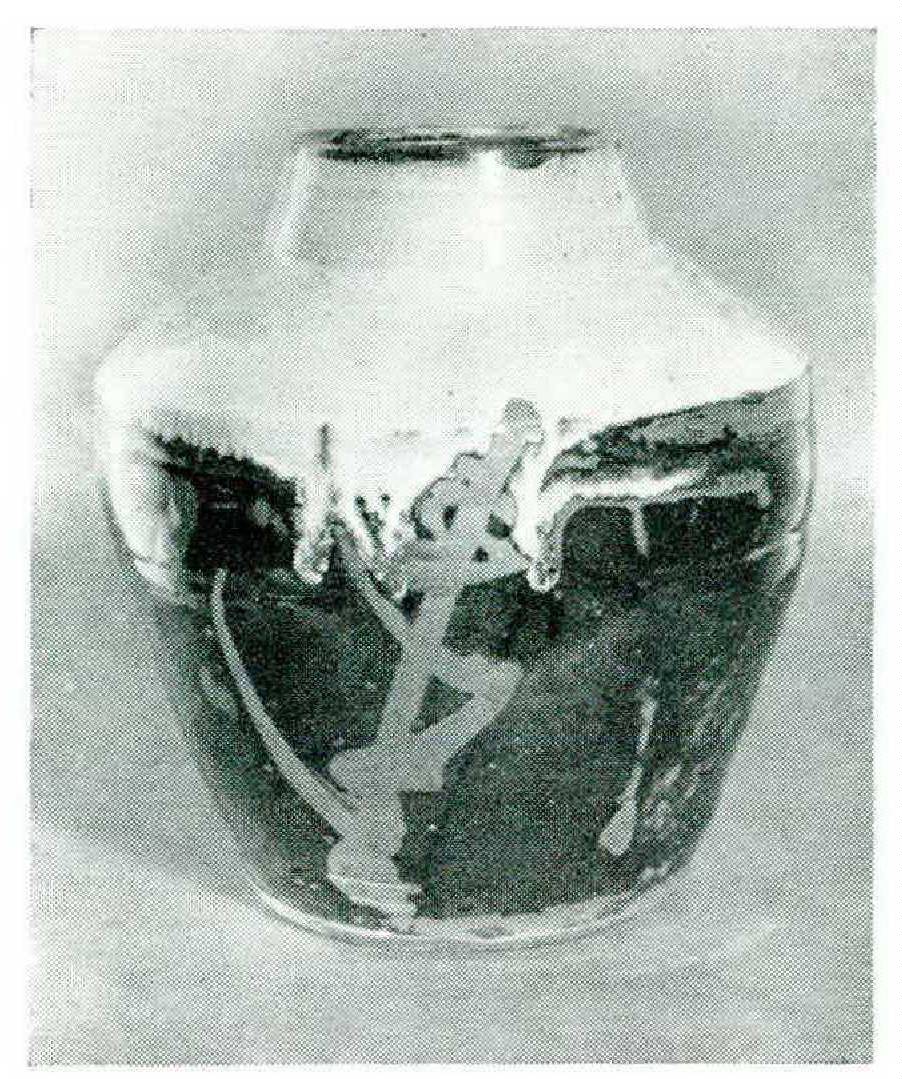
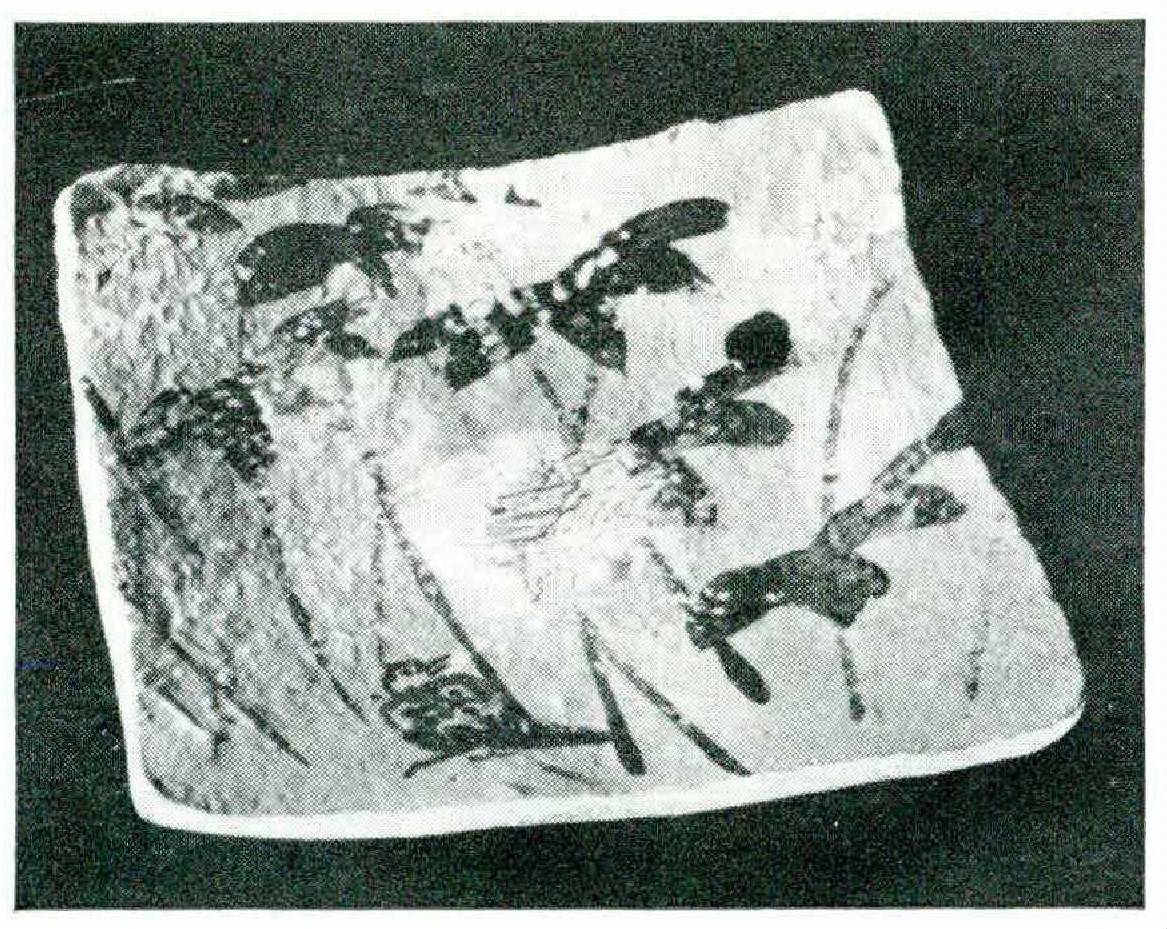
Mr. Morita has more to tell us about the Tea Ceremony in his essay on architecture. For this ritual a Japanese always reserves his most precious ware. Usually the tea bowls will be heirlooms, but remarkably beautiful pottery is being produced today in the kilns of Japan for those who need new pieces. The work of village craftsmen has received fresh inspiration from Soetsu Yanagi, Director of Tokyo’s Folk Art Museum, and artist-potters such as Kanjiro Kawai, Shoji Hamada and Rosanjin Kitaoji. Hamada’s vase (Plate 16) and Kitaoji’s Shino Ware plate (Plate 17) show how these men are blending in pottery traditional elements of calligraphy and decorative line with interesting glazes and a modern abstract sense of design.
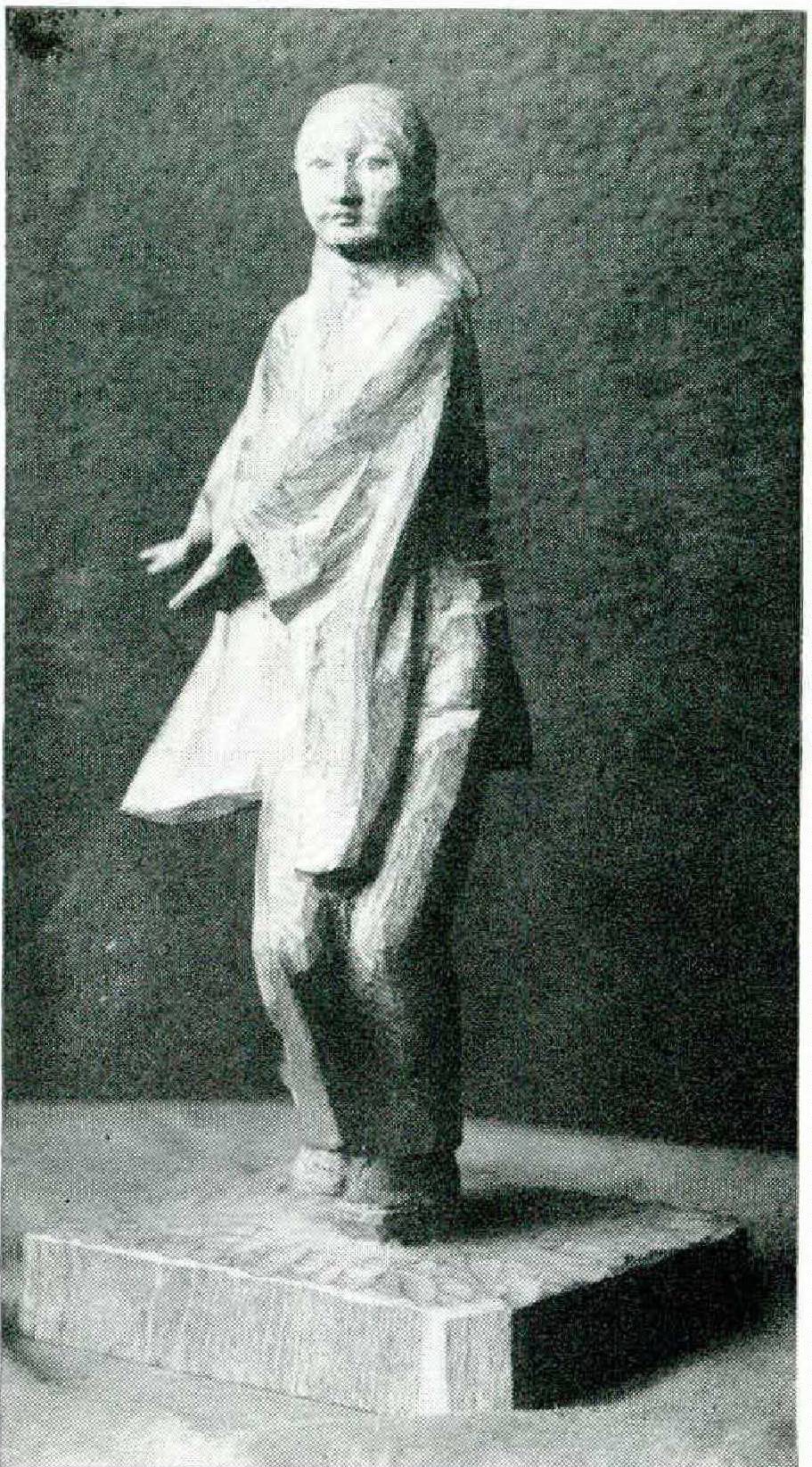
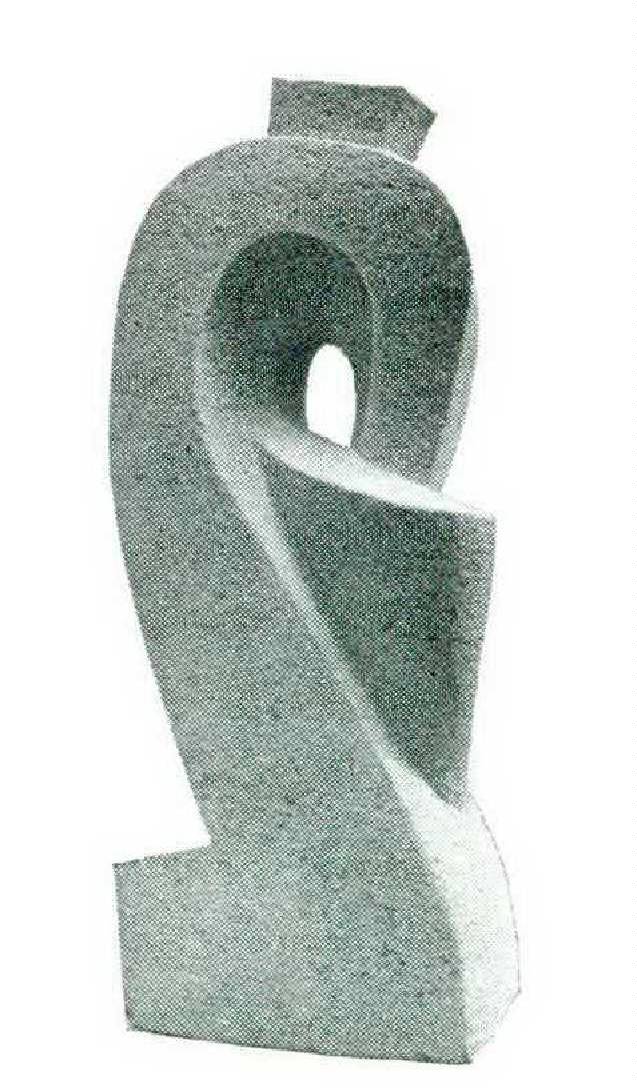
Among the greatest glories of Japanese classical art are the carved figures of the early period when Buddhism first flourished in Japan. But today, perhaps because the religious inspiration is less strong, or perhaps because there is little market for it among collectors, sculpture lags far behind painting both in quality and quantity. Some good work is being done in the field, however, and Tsuruzo Ishii’s wood carving of a Dancing Girl (Plate 19) is typical of the more traditional styles, while Sueo Kasagi’s Abstraction (Plate 20) reflects the modern Western influence on the younger sculptors.
Contemporary Japanese art is in a transitional phase. Western styles and techniques are being assimilated, sometimes with too great a degree of imitation. But when the new forms have been mastered and digested, an art will surely emerge which will again be thoroughly Japanese in character. The public climate is propitious and an incomparable heritage inspires the artist in Japan to live up to the achievement of the past.
- TheAtlantic’s cover tor January is reproduced from Hiroshige’s print,Miya, Station Number.ft, which depicts a palanquin station on the road between Tokyo and Kyoto.↩