Weasels in the Corn Meal
Thin is the second of JOSEPH HENHY JACKSON’S memoirs of Marta. The first was “All Up in a Heaval,” published in September, 1951.
by JOSEPH HENRY JACKSON
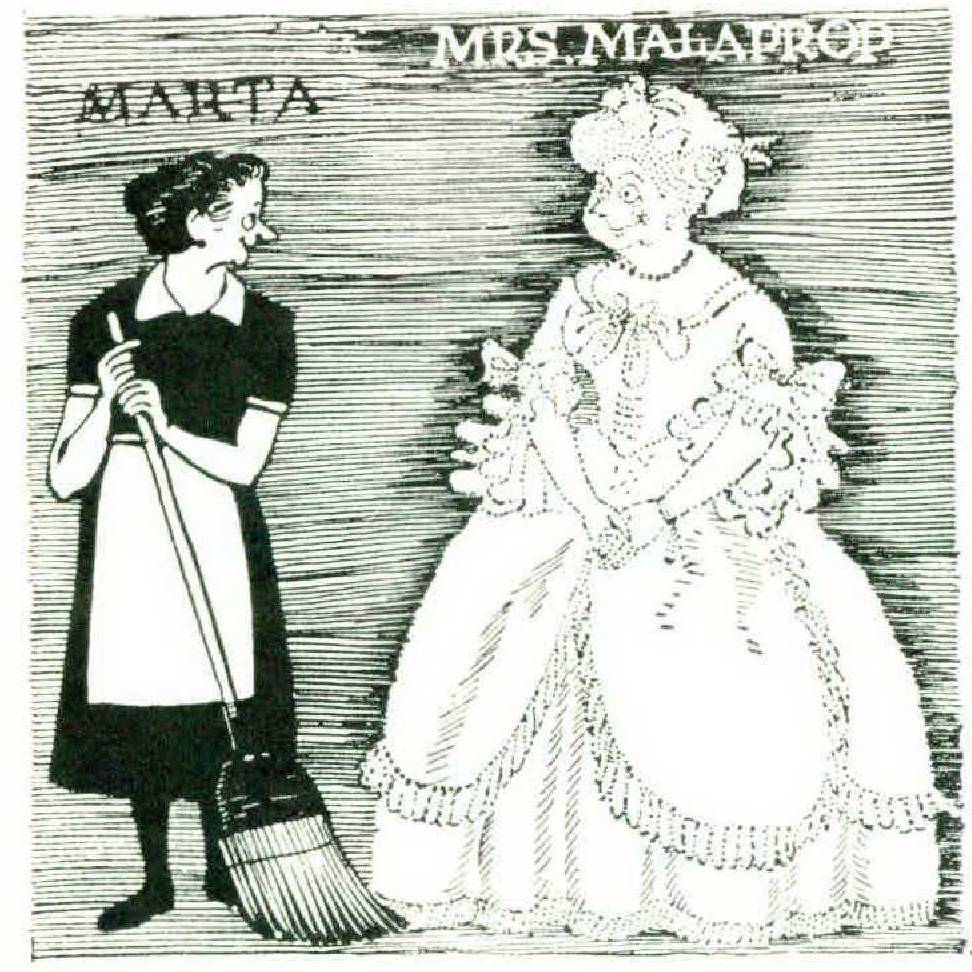
WHEN Mart a came fo us, complete with impeccable letters, we knew we had a treasure. Her graying hair was neat; it framed a pink, plump, confident face. Her china-blue eyes, wide like a doll’s, were clear evidence of physical health. One child in the house, she said comfortably, was nothing; she took to our cat instantly, and it took to her.
There remained one small worry. My mother-in-law, who had said, “I’ll never be found with my feet under a son-in-law’s table!” and meant it, lived down the block in her own bungalow. It would be part of Marta’s duty to clean for her once a week, my wife taking over in our own house on that day. And on Tuesdays and Fridays Marta was to see that good, really nourishing dinners were cooked t here. The old lady liked to do for herself she insisted, but far too often she ate out of cans.
Marta was easygoing and she seemed the soul of tact. But, well, my mother-in-law had her ideas, one of them being that she didn’t like people she didn’t like. It was never wholly certain what governed her in the views she took, dim or otherwise, but there was never any doubt what those views were.
For a day or two the problem did not arise. It was evident at once that Marta could cook, though she liked to go her own wav. The aspect of the kitchen was immediately changed, spices and staples rearranged according to a mysterious pattern that suited her. My wife began to adjust herself to Marta’s conversation, too, and was not as startled as she might have been when Marta told her that she had found weasels in the corn meal. It was good to know they had been discovered and promptly dealt with. “I got rid of ‘em,” Marta said briskly, “every single sanitary one!”
Then the first Tuesday arrived, and the first dinner Marta would cook for my mother-in-law. My wife took her to the bungalow, introduced her, and left. It would workout or it wouldn’t. Next night after dinner, she told me how it had gone.
Marta had come back smiling. She was frank about the little shingled bungalow: it was a kind of old rambleshack, she said. Hut the old lady was sweet; she put Marta in mind of that famous painting of Hitler’s Mother. It was nice to do things for people who didn’t mind lending a hand; my mother-in-law had helped Marta wrench out the cups after the coffee, which showed she had her heart in the right end.
They had talked a good deal, too, Marta reported, and it was a pleasure to discuss things with her; she never went off on a tandem the way so many ladies did. It was plain that they had much in common, for Marta had mentioned my mother-in-law’s science trouble. It was the fog, Marta explained; some people were just septic to it. They shared another idiosyncrasy, too: strawberries gave them both whelps all over their arms.
One thing had bothered Marta. The old lady ought to eat more. They had talked this over, and although Marta’s chubbiness made their agreement fantastic, they had concluded that both had the same difficulty: neither of them assumed their food properly.
After that first day, Marta took to carrying special dishes over to the bungalow. The second week she slipped out for ten minutes at dinnertime on the Friday. When she came back we learned why. She had taken over to my mother-in-law the dessert in which she took the greatest pride — her Baked Elastic. She never claimed to be a better cook than the old lady, however. The two had exchanged secrets from their store of kitchen tricks, and Marta admitted they had come out nick and tuck.
As it worked out, it turned into a close friendship; but while this was pleasant in its way, wc found that we were getting loss and less of Marta’s time. She was always just stepping over to see how things were; she said firmly that the old lady had told her to drop in for a snag whenever she felt like it. In the end, it all added up: we lost our treasure.
It began when mv mother-in-law gave Marta an old evening dress. Marta was enormously pleased with its style — black velvet, covered with Seagram’s. And the gift led directly to evening dances at Oakland’s most popular Social Ballroom. There, properly introduced by the ladymanager, Marla met a man, and from that moment romance had the upper hand. She hadn’t known him from Adams, she told us, but he had met her once before in Southern California. They agreed that they really liked Los Angeles better, and he was returning to his old job there. He said The Bight Things, and he wanted Marta to go with him as his wife when he left. She would have liked to stay with us, particularly with my motherin-law. But anybody knew that it was silly to cut off your nose in spite of your face.
Perhaps it was just as well; for, as Marta told my wife with a selfconscious giggle, he was a man who liked to step out; he was a great one for burning the camel at both ends.
It may have been this propensity of his that eventually parted them. Marta had admitted that he was the kind that carried things to the inch degree. Whatever the reason, she was her own woman again in six short months. Shesenl us a postcard telling us she had gone back to work for her old employers, a family named Trolt. She thought of us often, though, especially my mother-in-law, who had been a garden angel to her.
We passed on the message, and it was only then that we realized how really close the two women had been. For my mother-in-law made it quite clear that we had been a pair of simpletons to let Marta go. She was the best cook we’d ever had or w ere likely to have, the old lady said, and for a simple reason: Marla had been taught right; she knew the principles of homey comics.