Mexico With a Car
Facilities for motor travel in Mexico continue to improve, and here are several itineraries for the visitor who rents a car or brings his own. An authority on the art and architure are of Mexico, MACKINLEY HELM is the author of Modern Mexican Painting and of the motorists’ guidebook, Journeying Through Mexico.
by MACKINLEY HELM
MORE than 400,000 freshly vaccinated Americans went to Mexico last year by plane, train, and motor. They spent an estimated 150 million dollars on the other side of the border and presumably got a lot for their money. Mexican travel and the spoils of travel have remained consistently cheap since the 1949 devaluation of Mexican currency.
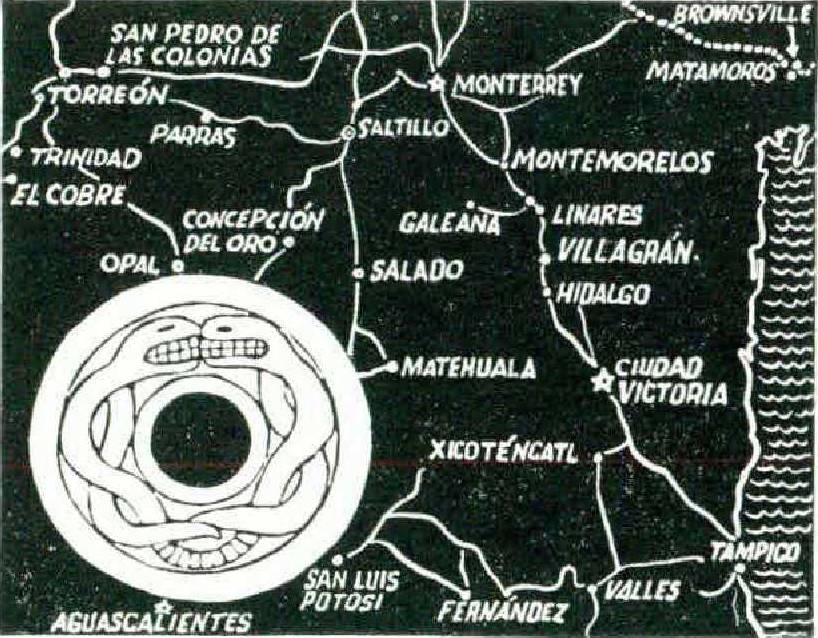
The 1951 tourist can reach Mexico City, the lofty center of Mexican life, from Nogales, El Paso, or Laredo by rail; by plane, east or west, nonstop from Monterrey to the capital; or by motor from Brownsville, McAllen, Laredo, El Paso. The last is the gateway to the new Central Highway.
There are so many comfortable overnight stopping places on the wellknown Pan-American Highway to Mexico City that the trip no longer requires any considerable foresight beyond booked-up Monterrey. You have only to choose between two grinding days of climbing from Monterrey to the capital and three leisurely days with time to see the interior heart of the country and to ensure arrival at the high altitude of the Valley of Mexico without undue fatigue. Night driving is not recommended because of the late heavy rains from June to October and stray cattle on all roads at all times.
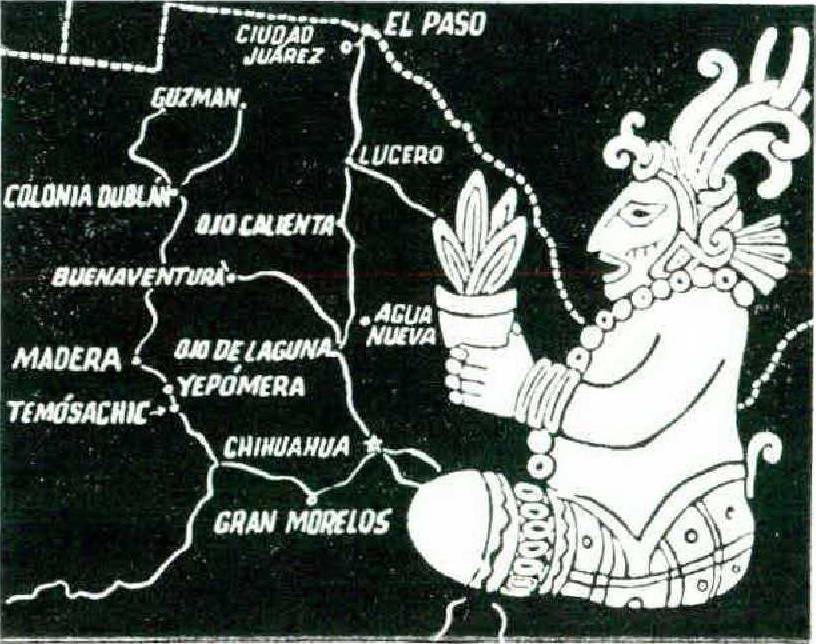
Motorists from the West are now regularly driving the Central Highway from Ciudad Juárez, the Mexican opposite of El Paso, Texas. There are as yet few hotels on this highway, however, and overnight stops should be planned somewhat as follows: —
1. Chihuahua, 234 miles from Ciudad Juárez. Advance reservations are practically mandatory at the handsome resort Hotel Victoria and the Palacio Hilton.
2. Durango, 450 miles south of Chihuahua — Hotel Casablanca and a well-appointed tourist court amusingly called Pancho Villa. Luncheon and gas can be taken aboard at Parral, 190 miles out from Chihuahua; and from Durango, the second day’s destination, you can fly to Mazatlán, on the coast, in less than an hour.
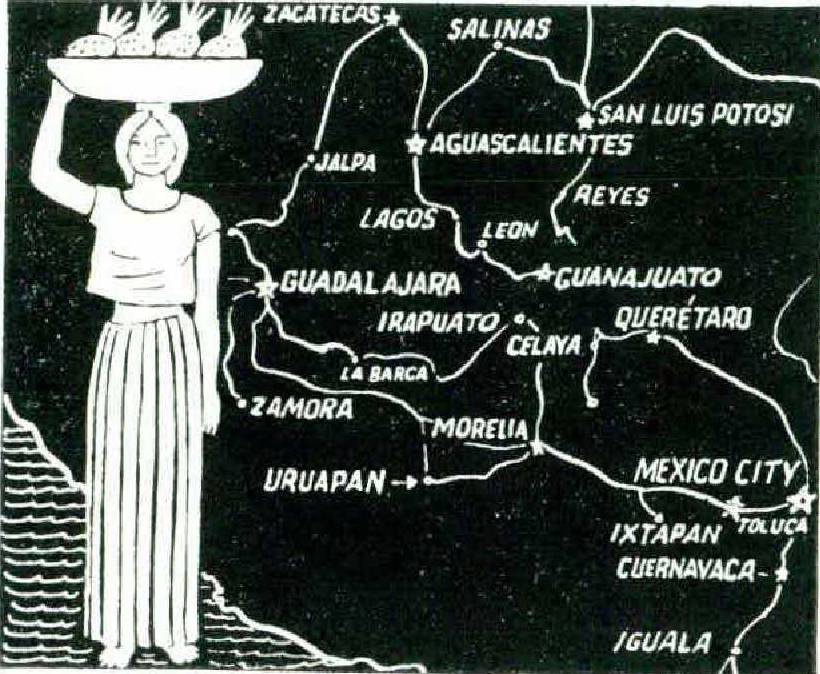
3. Motorists planning to visit the lovely lake of Chapala and the newly face-lifted city of Guadalajara (Hotel Guadalajara for good cooking, Hotel Morales for atmosphere) will perhaps take lunch the third day with the Fresnillo Chinamen and spend the night (Hotel Paris) at Aguascalientes, famous for hot mineral baths and weird catacombs. Otherwise you can go on to busy León, a regional shopping center (Hotel León), or to the baroque hillside city of Guanajuato, 15 miles off the Central Highway and just about 400 miles from Durango (Hotel Santa Fe on a silvery plaza and Hotel Orozco out in the suburbs).
From Guanajuato the way into Mexico City is easy. You pass through the native architect Eduardo Tresguerras’s twin cities, Celaya and Querétaro, from the latter of which you can make a 40-mile side trip to San Miguel de Allende on pavement. From Querétaro into the capital, take the route through Huichapan and Colonia. Some of my correspondents have reported that a can of American gas may be put to good use on the northern section of the new Central Highway.
People who have neither the time nor the desire to go over the road — there are 765 miles of tropic and mountain road from Laredo to Mexico City and 1335 miles from El Paso — may take comfort in hearing that a party of four can go touring out of Mexico City in a hired car with chauffeur for something less than the price of four railway and Pullman fares in the States. You pay approximately one peso for one kilometer of travel, plus a small bonus. The beneficent institution of the turismo, which every hotel porter understands thoroughly, furthermore provides limousine transportation at very low cost between Mexico City and the fabulous towns, while fares on good buses to everywhere can be computed in pennies.
THE HIGH PLATEAU
If you are affected by high altitudes, you may want to retreat from Mexico City (some 7400 feet above the sea) to mile-high Cuernavaca, a town which enjoys the most salubrious climate in this whole hemisphere. In springlike Cuernavaca it obligingly rains, when it must rain, at night. There is also ample amusement right there for a time: swimming in the orchid gardens at Hotel Marik; picnics at the sixteenth-century Augustinian convents on (or near) the road to Cuautla; dove shooting at Lake Tequesquitengo, Mexico’s newest resort; a day at the ingratiating Tepoztlán pueblo; and music and dancing through the whole balmy night in the plaza.
Mexico City, when you get back to it, can be almost as expensive as an American cily, although low-priced accommodations, weekly or monthly, may be found through Esta Semana, a fortnightly publication available everywhere free of charge and indispensable as an up-to-date guide to concerts and restaurants, to art exhibitions and regional festivals. The so-called “provincial” cities are cheaper by more than half, with full pension in clean, modern hotels at $4 a day, sometimes less. The typically tourist places, like Fortín, Taxco, Acapulco, and San José de Purúa, will obviously be more expensive.
ON TOUR OF THE COLONIAL CITIES
I should count a visit to Mexico, even a brief one, disappointingly planned if it did not include a week’s tour of the central colonial cities, some of which the motorist from our western states has encountered en route: Querétaro, San Miguel de Allende, Guanajuato, Morelia—the last the seat of the Western Hemisphere’s oldest music conservatory. Each of these towns has its own local color and its individual surface, often transposed from Spain and invariably ornamented with indigenous splendor. One or two of my friends, in printed reviews and the like, have intimated that I do not take the perils of eating and drinking with the gravity due them.
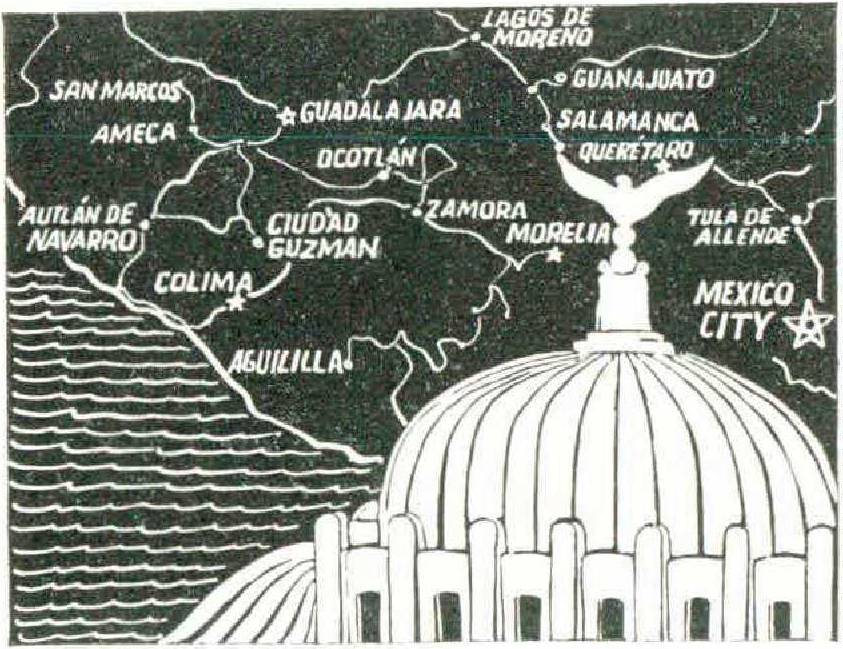
San Miguel and Querétaro are on the railway from Laredo; or a turismo will take you cheaply from Mexico City to Maximilian’s Querétaro, and buses or hired cars will complete the choice circle. A little white road, somewhat rough and scarcely frequented, that runs south to Morelia from the dazzling convent of Salamanca, en route from Guanajuato back to the capital, discloses memorable monuments of the old Spanish days: the Convent of San Pablo at Yuririapúndaro, a few miles east of the traveled road, and the Convent of Santa Magdalena at Cuitzeo.
With two weeks to spare, you can fill out this number-one side trip with a swing around to Guadalajara, a colonial city enriched in our time by the frescoes of José Clemente Orozco. You can go out by way of Querétaro, San Miguel de Allende, Guanajuato, and Lagos, and return past Lake Chapala to Pátzcuaro and the garden city, Uruapan, near the new volcano. A paved highway westward from Guadalajara to Topic has lately opened up the legendary state of Nayarit to tourist travel, while one of the most spectacular stretches of road in the whole country lies just east of Morelia, on the return to the capital. A celebrated spa, Ixtapan de la Sal, also known only lately to tourists, lies 50 miles south of Toluca, a bustling market town 160 miles east of Morelia. There you can bathe as often as three times a day in radioactive waters and live well and cheaply at Hotel Lolita.
Another week of delight can be spent on the 368-mile trip from Mexico City south to Oaxaca, a colonial city in the green valley from which Hernán Cortés took his title. You take your lunch in a basket and leave the capital right after breakfast. Over the mountains, at Texmelucan, you might make the side trip to Tlaxcala to see the Sanctuary of Ocotlán and buy tweeds and striped cowboy fabrics in the village plaza. At Huejotzingo, back on the highway, there is an extraordinarily well preserved Franciscan convent, worth a half hour’s visit. Then you go on to Cholula, with its cluster of churches, and so to Puebla, the City of Angels. Puebla’s churches and convents and environs are well worth a whole afternoon, and you can eat a good dinner at the shabby old Ritz. The most spectacular ornament of the next breath-taking day out of Puebla is the convent of Yanhuitlán, a Dominican house founded twenty years after the Conquest. The pueblo of Yanhuitlán may not be on your map; it is in a colorful valley al Kilometer 427.
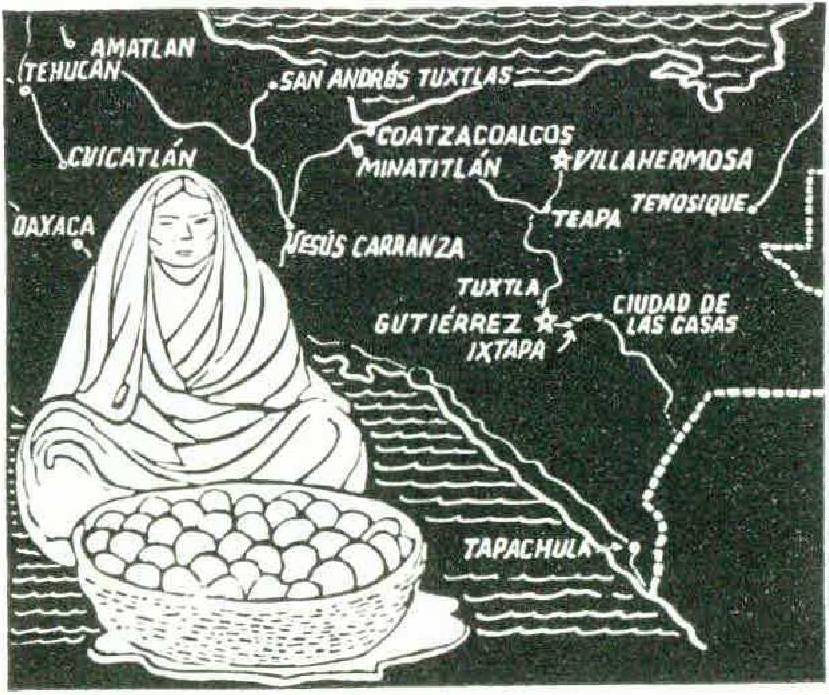
Oaxaca itself (Hotel Marqués, Hotel Monte Alban, or Roy Jones’s homelike Oaxaca Courts) is an architectonic poem in the green stone of the region, and near at hand, at Monte Alban and Mitla, lie the imposing remains of two ancient cultures. The Christopher Columbus section of the Pan-American Highway is paved as far as Tehuantepec, but the motor trip to the Isthmus cannot be comfortably made in midsummer. In cool weather, however, nothing is more beguiling than a tour of the Isthmus and the state of Chiapas to take in Juchitán, San Jerónimo Ixtepec, Tuxtla Gutiérrez (by plane from Ixtepec), and the drive from Tuxtla through Maya villages like Chiapa de Corzo to the mountain town of San Cristobal de las Casas. In summer, I recommend only the DC-3 trip from Oaxaca to Tuxtla Gutiérrez and the drive by bus or hired car to Las Casas, where hand-woven fabrics and Maya hats and embroideries are available, still, for the proverbial song.
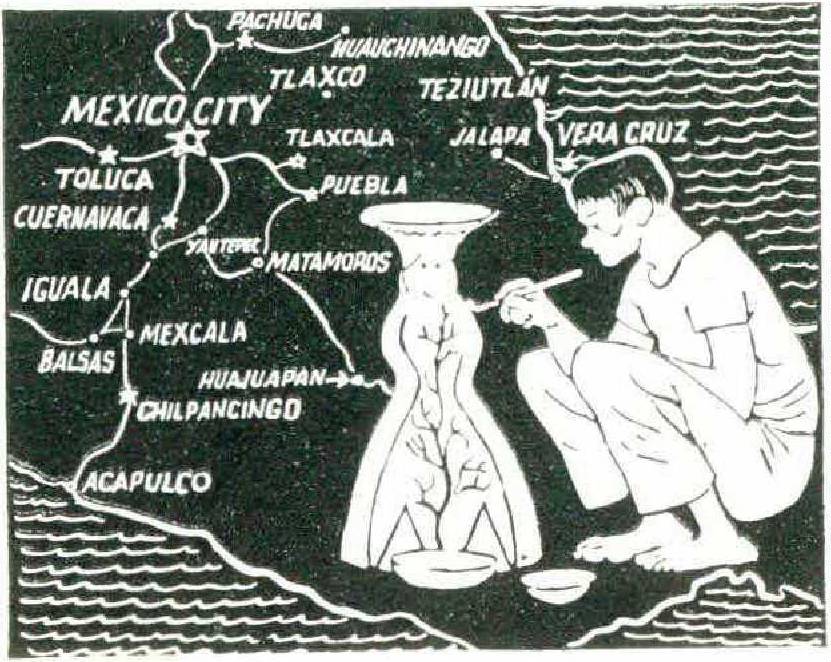
The seashore excursions to Mazatlán, Manzanillo, Acapulco, Tampico, Veracruz, are most agreeable in the winter and early spiring seasons when there is fresh weather, warm enough water for bathing, and miraculous fishing. Yet even in summer, tourists and Mexicans are going in increasing numbers to bathe in Acapulco’s warm cobalt waters. You reach Acapulco by plane or by motor. The uneven descent to the ocean by road, from the mountains of Taxco, involves an unforgettable passage through lurid canyons and the crossing of tropical rivers in the steaming lowlands.
Perhaps the most enjoyable motor trip involving just a taste of the tropics in summer is a circular tour which begins on Route 2 at Mexico City, passes through Puebla, and picks up the lakeshore drive which bears left from Route 2 at Zacatepec. Past Teziutlán and down the mountain, you reach the hot country and the blue Gulf of Mexico at a village called Nautla. At Tecolutla, just north of Nautla, there is an endless white beach with a sufficiently comfortable inn, the Hotel Tecolutla.
At Papantla, on the return by way of Pachuca, you can make arrangements to visit El Tajín, a famous Totonae pyramid 10 miles from the town. At the fiesta of Corpus Christi, which occurs this year during the last week of May, you can see at Papantla almost the last manifestation of the Voladores, the birdlike male dancers who perform their ritual dance on a tiny platform at the top of a pole a hundred feet high. The dancers tie themselves to bound ropes, at the climax of a sacred aerial circus, and leap into the air from their perilous perches. They weave in and out through the air in ever widening circles until they touch ground. It takes quite a good stomach to watch them. From the old mining town of Pachuca, on Route 77, you can find your way to the Pan-American Highway and so back to the capital.
FOOD AND DRINK
It is true that many tourists in Mexico pick up a troublesome touch of the dysentery — and also true that most cases are cured in a matter of hours by such a remedy as EnteroVioformo, which can be procured in any botica without a prescription. The absolute question is, what brings on any given attack of the tourists’ complaint?
My own view, the result of quite a good many years of not wholly detached observation, is that most of us eat and drink too much at night, given the altitude, and through overindulgence become prey to omnipresent bacteria. It has seemed to me that moderation in eating and drinking in the late hours is more often effective than abstinence, say, from green salads. It is a good rule, however, to eat only in first-class hotels and restaurants and to resist dishes of uncertain origin temptingly purveyed in the markets and plazas. While table water in good hotels and restauranls is usually safe, it is probably wise for the casual visitor to drink only bottled water or beer. Mexican beer, light or dark, is delicious, with every well-known brand supported by regional partisans.
Among the scores of fine restaurants in Mexico City (there are others in Esta Semana), I like the Jena, the Ambassadeurs, the Del Prado, Paolo’s downtown Bar, the Papillon, the Ritz, the Majestic roof, and very especially the plain-looking Prendes, where my idea of a memorable two o’clock lunch — the best meal of the day — would consist of French-fried caterpillars (gusanos) with purée of spiced avocado (guacamole); cold prawns (langostinas) with a stiff mayonnaise, or baked oysters (ostiones al gratin); and a filet mignon (bifstek Prendes), not too ripe, with crisp rings of sweet onion. The steak is a dollar. The rather unadventurous Sanborn’s and Lady Baltimore specialize in plain, wholesome food for homesick Americans.
SHOPPING
Many tons of wrought silver were imported by tourists last season, much of it fine but more of it badly designed and imperfectly wrought. While Mexican silver is cheap, by comparison with American and British prices, once you understand the fixed price for the ounce of wrought silver you will not find any relative “bargains” within local markets. You get what you pay for. Variations in price between superficially identical pieces are accounted for by corresponding variations in weight or technique.
If you want to get the best values in silver, stick to the best places— the three or four outstanding shops in Taxco, their branch stores in Mexico City, and reliable Sanborn’s. Many shopkeepers display cast silver at hand-wrought silver prices. Among these people you can, to be sure, make bargaining offers; and if cast silver suits your purpose, and you can get what you want by way of shape and design, well and good: just see that you get it at cast silver prices.
Arts and crafts from every region in Mexico, except perhaps the far south, will be found in shops in Mexico City, particularly along downtown Avenida Madero and Avenida Juárez and uptown Insurgentes. Yet there is surely great pleasure, not to say greater economy, in the discovery of sandals and baskets and blankets and silver or whatnot at source. The Oaxaca market is noted for handwoven stoles of bright-colored wool, the scarlet of cochineal the most typical color. The silversmiths of Oaxaca copy the antique gold jewelry of Monte Alban in silver and gild it to order.
To the south of Oaxaca, the women of Mitla make lace among the mathematical ruins while native potters in near-by pueblos cook black glazed vessels in out-of-door kilns.
Veined white onyx is worked into boxes and book ends and idols on sale in the central plaza in Puebla. At Texmelucan, on the Puebla highway, lengths of hand-woven fabric and shaped table linens are made on antique looms while you wait. Each town produces its own handmade scarves (rebozos) and sandals (huaraches). In addition to these, in Querétaro, you will see unset opals; cambric skirts and embroidered blouses and wrought tin in San Miguel de Allende; pottery galore at Tlaquepaque, near Guadalajara; ceramics and lacquer at Uruapan and Pátzcuaro. If you go to Pátzcuaro, be sure to be at the lake at ten o’clock on a Friday to see the red-skirted female traders arrive at the shore in hollowed-out logs.
The Tarascan potters and lacquer makers also show their traditional wares in a shop fronting the highway in the town of Quiroga, at the point of intersection of Route 4 from Morelia and the road to Pátzcuaro. And 2 miles west of Quiroga — and in not more than two minutes — you can drive north off the highway, if you look sharp for the signpost, into a perfectly alien world. This is the plaza of Santa Fe de la Laguna, a town lost in the past. There your car will be swiftly surrounded by smiling women and children, and you have only to smile back and cry out “Barro! Barro!” to be led to the workshops of the world’s drollest potters.