Getting Around Europe
Musician, journalist, and novelist, JOSEPH WECHSHERG has been spending the winter in Britain and on the Continent. This latest of his travel articles comes to us from Italy.
by JOSEPH WECHSBERG
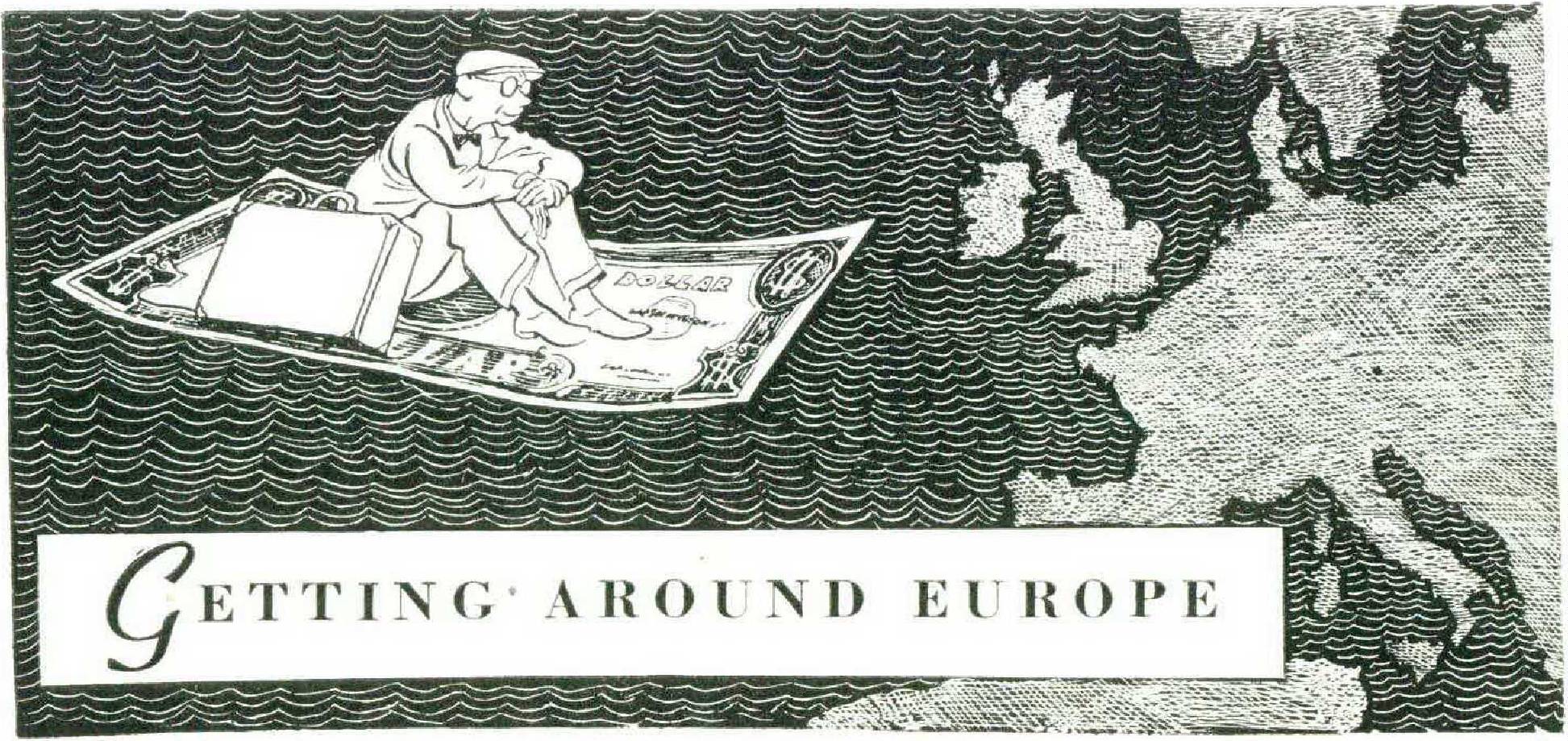
ASSUMING that Thomas Fuller was right when he said, “The fool wanders, the wise man travels,”a great main Americans must be getting wiser these days. Hall a million of them are expected to go to Europe this summer. The dark political outlook has stimulated rather than discouraged America’s tourists who want to take a last look at the doomed Old World before it’s too late. Last year the outbreak of the Korean war threw Europe’s hotel and travel people into despair. American residents of Western Europe began to load extra jerry cans of gas into their cars and to look for Spanish and Portuguese visas. But the optimists from America kept coming, and the sweet sound of fountain pens scratching on travelers’ checks helped to re-establish the morale of jittery Europe.
Fortunately, it now takes more than a war to keep Americans from going places. For a long time the Paris edition of the Herald Tribune has assured its readers, every few days, that “Nearly 4400 Arrive on Three Liners" or “Thousands More Reach Le Havre on America and He de France.” The Tribune never bothers to note the depart ure of thousands of Americans, creating the impression of continuous one-way traffic toward Europe—an impression confirmed m certain quarters of Paris, Rome, Venice, Cap d’Antibes, Capri, Salzburg. Florence, Garmisch, Reauville, where even the natives are beginning to talk with an American accent, and Coca-Cola signs, Chesterfield cigarettes, and various facsimiles of Hamburg steak have become part of the local scene.
Paradoxically, more Americans are traveling overseas while the open world is shrinking. Almost one third of the globe is already off limits for the bearer of that once universal sesame, the American passport. There are other countries where Americans are still permitted to go, but rarely care to do so, having been frightened off by rumors of food shortages, hotel trouble, secret police activities, and the necessity of taking along DDT. The unorthodox traveler going to Yugoslavia, Berlin, Greece. Turkey, this summer will be rewarded for very minor hardships by meeting some fascinating people and learning more about the troubles of Europe than he could from a hundred books and lectures by self-styled experts.
However, chances are that you will go to Britain, France, Italy, Austria, Switzerland, Belgium, or the Netherlands, which were the most popular countries last year, following a limehonored time schedule, making your first stop in London or Paris. (Personally, I’ve always been a conservative though not conventional traveler. If I like a place, I go back to it; rediscovery is often more exciting than first acquaintance. I like to travel in the off-season times when roads are uncrowded, rooms plentiful, and service is more personal, and I keep away from fashionable places. Your favorite society columnist will tell you which places in Europe happen to ho fashionable at the moment; last year it was Deauville, the year before Gap d’Antibes and the Lido; at this writing the Ali Khans and David Windsors haven’t made up their minds.)
If London is your first stop, be sure to make room reservations way ahead. I have noticed that the harassed and regretful expression of many of the room clerks in London’s West End hotels has engraved deep lines on their smooth faces. Neither fast talk nor outright bribery will shake those last remaining pillars of a civilized world into surrender; their impeccable “No!" would frighten a Fuller Brush man. If your reservation is for five days only, out you go on the sixth. (On the Continent, the French adage. On s’arrange, still goes.)
Everything about traveling in Britain must smack of platitude by now. Americans rarely come to England in the mood of explorers. They may have never been there but they know exactly why they visit England: family ties, a sentimental attachment grown out of reading t he British novelists, British institutions, schools and universities, shopping in Old Bond Street, the noble landmarks of British history, London’s clumsy-looking yet so comfortable taxis (always tell the driver your destination before getting in!), cathedrals and quaint houses. For me England has always been synonymous with its people, warmhearted in spite of their shyness to reveal emotions, and with its countryside. A slow walk past the gardens and hedges of Surrey on a misty morning in spring when the rain slowly trickles from the branches on the deep-green grass below (it also Irickles in summer, fall, and winter) could make an Anglophile out of Colonel McCormick of the Chicago Tribune.
Business in England is still conducted at the leisurely pace of the Disraeli era, which may be charming or exasperating, depending on whether you are an onlooker or a customer.
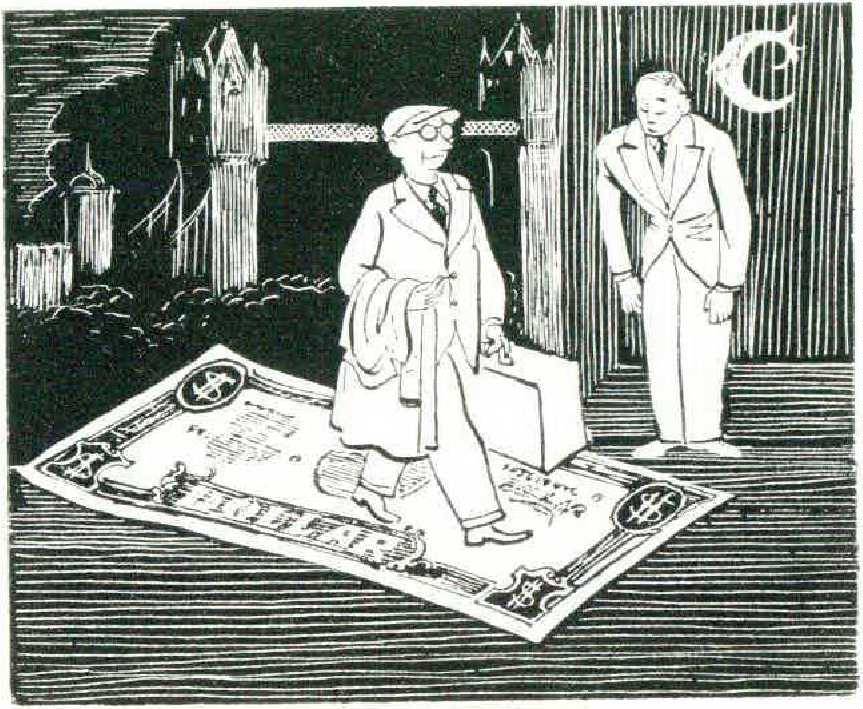
I remember cold, rainy nights in London when all taxis passed by with their flaps down and you had to queue up at ihe bus stop. Finally the bus would appear but there would be no shuffle. The conductor, as dictatorial aboard his vehicle as the master aboard his ship, would decide that it was “full up” and drive off. The people of London don’t believe in the always-room-for-one-more philosophy of the New Yorker. I was the only person to voice an audible protest and it was not received with sympathy by the natives. Patient and herdlike, they kept standing there another ten minutes, no doubt secretly pleased at having proved to the foreigner that there will always be a you-knowwhat.
Prices are going up steadily and the standard of life goes down at the same rate. Poverty and shabbiness will shock you in London, but you’d better not mention this to your English friends unless they bring it up themselves. They are getting poor and just beginning to realize it. For people with dollars many goods are cheaper than in New York. Dollar-buyers are exempted from the British purchase tax, which in some cases amounts to 100 per cent. Custom-tailored Saville Row men’s suits and topcoats cost 31 pounds ($86). Handmade shoes sell for $15. There is an abundance of woolens (tweeds, cashmere sweaters, and such), leather goods, linens, chinaware, silver, pipes, pottery, cosmetics, all of them good “dollar-earners.” (The word is beginning to irk English patriots.) All goods purchased under the purchase-tax exemption must be delivered to the plane or boat on which you leave the country, and are handed to you by the customs official upon departing from England, The linest British goods, however, are not being sold in London, but in the hardcurrency shops of New York, Lisbon, and Zurich, where they earn dollars.
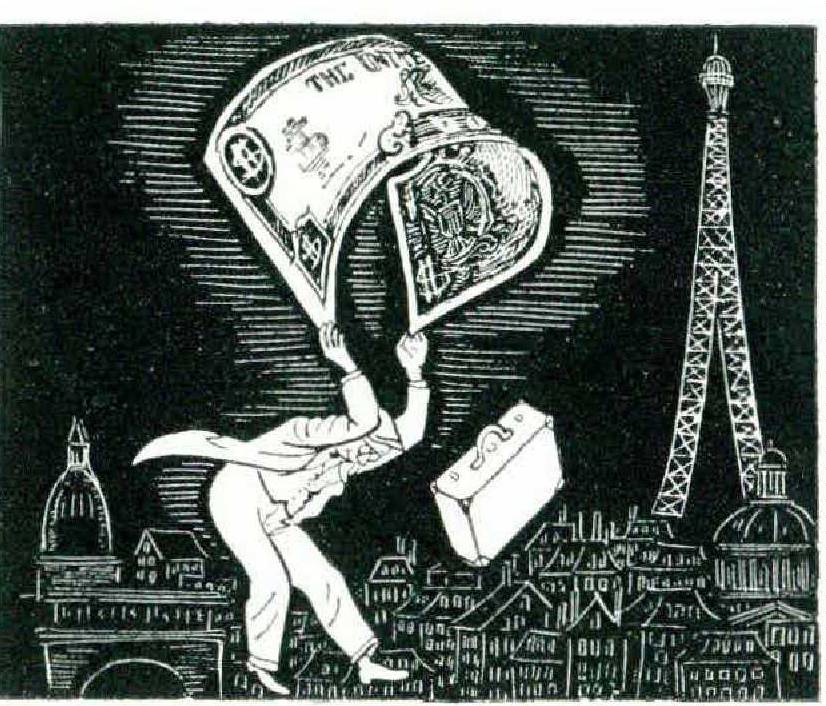
Plane service is excellent and reasonable now between London and Paris; Air France has an off-hour rcturn rate of 9800 francs ($30). Heaven alone knows why no American would leave Europe without having stopped over in Paris, but after talking to so many of them I know that it’s not Montmartre. Somewhere I read a French statistic that only I per cent of all American tourists go to Montmartre. But French statistics are traditionally unreliable and I hope this one is too. It would be too bad for the remaining 96 per cent of Americans. Montmartre is no mere combination of Sodom and 42nd Street burlesque where the sucker is always losing. There a re liftle people in Montmartre, people with daytime jobs, families, and debts who never go near the Rue Pigalle, where a bottle of dubious champagne costs 4000 francs ($12). That sum is the better part of a man’s weekly salary. If you like champagne, why not drink a good brand in a decent restaurant in town, where it costs only 1200 francs?
A word about prices. Paris is expensive, and so is France, and so is Europe. No longer can you buy anything for a song and a carton of Americancigarettes. There are still a few bargains, but even they become expensive by the time you add the cost in time, transportation, and effort to get. them, (A lot of husbands spend more money in “bargain cities” than in expensive places where iheir wives are cautious and content with window shopping.) Instead of looking for bargains, why not look for specialties, so that you will at least get the genuine article: silks in Milan, glass in Venice, embroidery in Vienna, china ware in England, laces in Brussels. Last year the Economic Cooperation Administration conducted a poll among 700 Americans homeward-bound from Europe. The leading shopping country was France, where '■240 bought perfumes, 74 bought wines and liquors, 24 shopped for women’s clothes, 16 for paintings and art; Italy came next with leather goods (122), linens (22), silks (65), glo\es (33); 100 tourists bought watches in Switzerland; in Germany it was cameras, chinawarc, leather goods; in Belgium, embroidery and linen; in Sweden, glass and kitchenware.
Most stories about the very cheap or very expensiv e places are exaggerated. Almost everywhere in Europe you can get a simple meal with a little wine for the equivalent of a dollar, and full board in a modest hotel for $3, excluding ext ras. From thereon, the sky is the limit. Lunch for two at the restaurant La Tour d Argent in Paris can easily run up to $20, and it’s worth every cent of it. At Claridge’s in London they have a few dirt-cheap single rooms for a shade under 4 pounds ($10.85) but most rooms are much, much higher. If you have to have whiskey in some big Italian hotels, you will have to pay 1500 lire ($2.50) for a tumbler of ihe stuff, which serves you right.
Such prices seem to indicate that Europe is more expensive than America. The contrary is true. People who disagree and quole some outrageous prices of European de luxe establishments probably never go to similar places in America. Once in Europe, however, they want the best of the best and afterwards complain about ihe bills. Taxis in the big cities art; inexpensive; transportation, second class, on the Continent is about the same as coach fare in America.
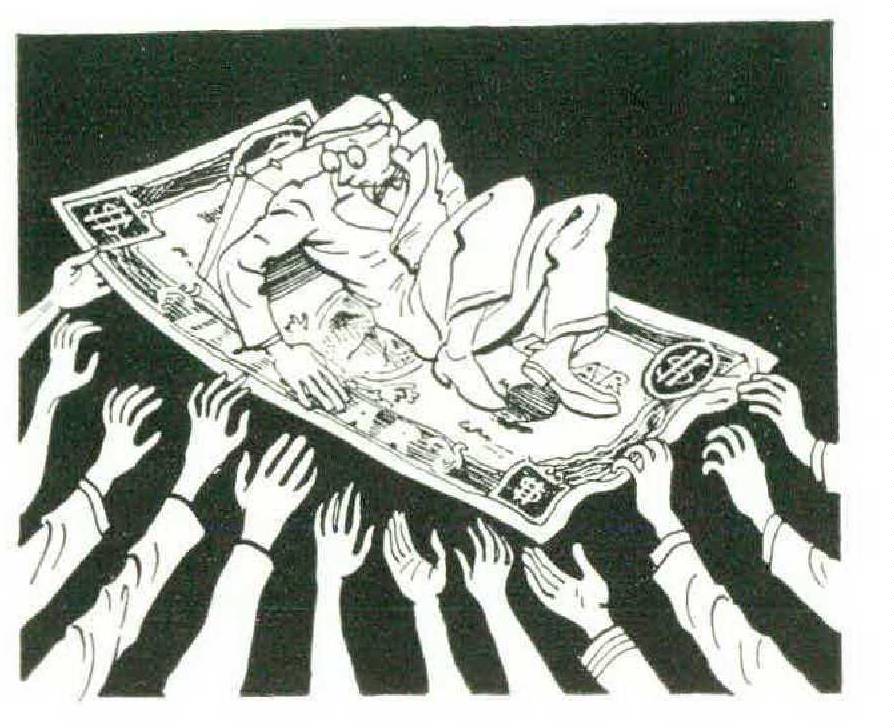
Gypping is still practiced everywhere by the international brotherhood of hotel and restaurant people, chauffeurs, porters, chasseurs, postcard and souvenir peddlers, uninhibited ladies, and other characters whose only purpose on earth seems to be the painless extraction of cash from the pockets of the Innocents Abroad. Some American tourists, however, are partly to blame for this. They proclaim that they will pay anything for the best (“What the hell, it’s probably the last time were here anyway!”), which makes it tough for the loss pecunious traveler. More than ever all Europeans consider every American a rich man. until proved contrariwise, and expect individual Marshall Plan aid coming from every tourist. It will lake a long time and patient education by the EGA and local European governments before the people of Europe will learn that teachers, students, white-collar workers, and other middle-class-income groups form the backbone of America’s tourist army.
Tipping, which has ruined many otherwise perfect memories, is still the old bogy. In most European countries a fixed percentage, usually 15 percent, is added to the bill, which is said to cover every sort of service, but you will be called a stiugy barbarian if you really tip only 15 per cent. Sooner or later you have to pass the Parade of the Outstretched Hands. In a restaurant you are supposed to leave “a little more” on the plate; in a hotel, you tip for “extra service.” I always tip for special services rendered but I will not capitulate before sheer impertinence. Aboard ship the total of all tips should amount to 10 per cent of the fare, divided among cabin steward, table waiter, headwaiter, library steward, deck steward, bath steward, and anybody else who has done something for you.
It’s wise always to inquire about the extras before you rent a room; extras may be considerable. In a hotel in Venice my wife and I were quoted 4000 lire ($0.50) fora beautiful double room with a sumptuous bath, which was fine. Actually we paid an extra 000 lire for heating, 15 per cent for service, 2 per cent imposta sull’ entrata (income tax), 2 per cent imposta soggiorno (sojourn tax), and something for bollo (stamp). What with individual tips, the room really cost us 0000 lire, and it would be probably 10,000 lire ($10) during the high season, vve were told.
Some people leave their pleasant homes with inner-spring mattresses, ice water, and ketchup and are disappointed, after three thousand miles of travel, if they don’t find inner-spring mattresses, ice water, and ketchup at the other end of the line. I always think of Shaw’s saying, “I dislike feeling at home when I am abroad.” While in Eranee, do as the French do, and try to struggle along with brass beds, Chateau Margaux 1028, and sauce Béarnaise with your steak if it has to be steak. Don’t expect a pleasant room with telephone, radio, bathroom, and hot water coming out of the hot-water faucet, and enough coat hangers. No amount of Marshall Plan aid will change the fact that you’re going to get a room the size of King Arthur’s banquet hall, a bathroom at the end of the corridor shared with twelve other people, neither hot nor cold but always lukewarm water, and the services of a cheerful, exasperating telephone operator who wouldn’t know the meaning of “efficient ” if you explained it to her.
The topic of French restaurants is always good for a heated discussion among Americans in Europe. Even Puritan natives from New England seem to change into Sybarites the moment they cross the Channel. No one arrives without his top-secret little list of addresses. Suffice it to say that the best restaurants in France are not in Paris, but in such places as Lyon, Bordeaux, Beaulieu, Mozae, Valence, Strasbourg. The best restaurant of France, and Europe, is the Restaurant de la Pyramide in Vienne (Isere), seventeen miles south of Lyon, owned by M. Fernand Point, one of the last great chefs of a bygone era which appreciated the good things of life and came to an end one day in 1917 when the Imperial German General Staff sent one Nikolai Lenin in a sealed railroad car from Germany through Sweden to Russia so that he would propagate Bolshevism. In the humorless, planned age of the collectivum. artists like M. Point are not appreciated. No visit to France is complete without a meal at M. Point’s gast ronomie. Pyramide. And no visit to France is quite complete without going to the sleepy fishing villages of Provence; the rugged Basque country near the Spanish border (“even the devil doesn’t go there because he’s afraid of the Basque language”); the castles of Bordeaux and the slopes of Burgundy; the coast of Brittany, where even the rain is beautiful; the villages and towns of Alsace, a happy synthesis of Gallic and Teutonic spirit, with Strasbourg, capital of the New Europe, which gave us the Marseillaise, a beautiful cathedral, and some fine restaurants; and the never-never world of Monte Carlo, where flowers, sunshine, air, ocean, people, and an eternal mood of peace conspire to make you forget the troubles of the present. Only Monte Carlo has a hotel like the Ermitage, delightfully old-fashioned and luxurious, with marble corridors and vast terraces which ; rcmble slightly when the Blue Train goes by, just below the hotel.
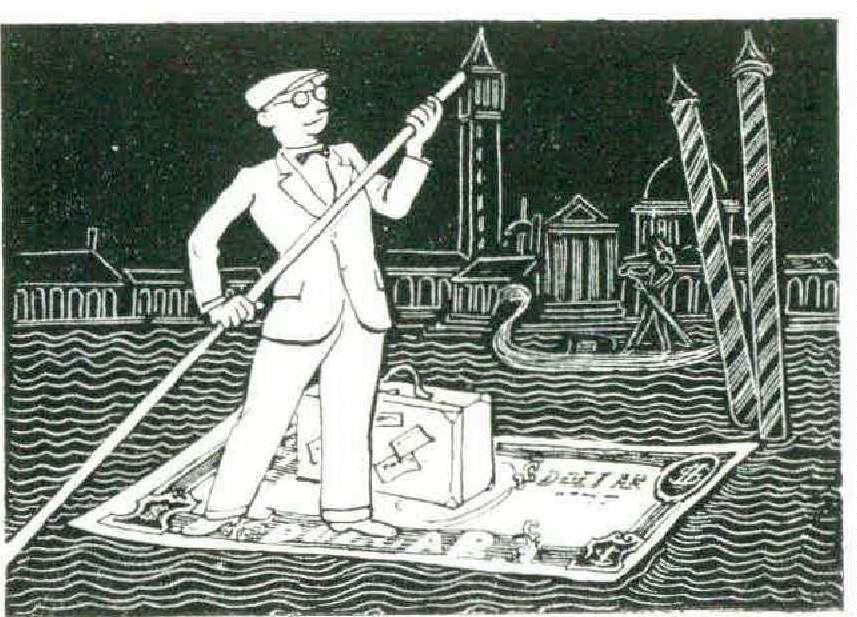
Across the French eastern border begins the zone of fortifications, as useless now as yesterday’s paper, and of military cemeteries of the last two wars. There are many graves with American names there, and manyliving people with the memory of brave Americans in their hearts, in Bastogne and elsewhere. There is Luxembourg, a cheerful little country, and Belgium, where everything smacks of America — men’s ties, automobiles. neon lights, city traffic, and prices. (Even in Belgium, however, there are hotels along the North Sea coast and in the Ardennes which give full room and board for $4.) Most people go to Brussels. Antwerp, or Ghent; my favorite city is the Dead City of Bruges, where you go to bed in 1950 and wake up in the charmed mood of the Middle Ages. From the historical sites of Belgium it is not far to the flower fields and the white houses of Holland, whose cities are as close to suburban America as any in Europe. Belgium is more expensive than France; the Netherlands are cheaper.
My favorite Continental country is Italy. I never get enough of its colors, the sound of music and tenor voices in the air, the graceful landscape that has been less tampered with by human hands than any other country in Europe, the ruins and sunshine and the narrow streets with their smells and crowds of people. Above all, the people. Somehow Italians have managed to salvage more warmth of heart and kindness of spirit than most other people in Europe. On the quotation board of Europe’s humanity exchange, where the decline has been steady since 1914, Italians are still blue chips. Although the poor people there are poorer than elsewhere in Europe, they are the only ones who show no greed, envy, or outright hatred at the sight of your American car.
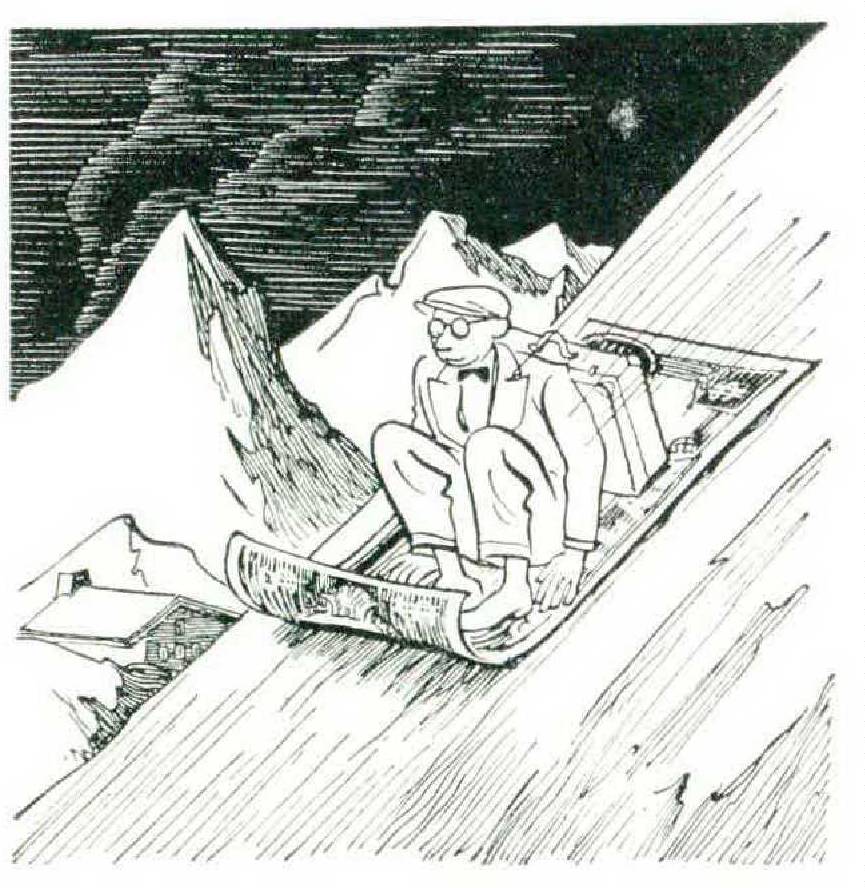
I didn’t want to take our car along, afraid it might be too expensive or presumptuous. My wife insisted and I’m glad she did. Although I grew up in Europe and have traveled there extensively by train, bus, boat, and plane, going by car was an exciting and entirely new experience. It was wonderful not to depend on train schedules, porters, and taxis; and there were small places, off the beaten track, which we wouldn’t have found without the car. In northern Italy we discovered the sleepy, romanlic towns of Ferrara, Mantua, Cremona, Verona, where the libretto of a Verdi opera seemed to have come alive (I never thought such nonsense could ever come alive). Farther south there is the beauty of Siena and Perugia, and in Sicily there is Taormina, whose strong colors are deeper even than those on the travel folders. It costs about $500 to ship your car to Europe (and ship it back again), and gasoline in Europe is twice or three times as expensive as back home. It isn’t the most economic way of travel although it pays its way for three or four people. You may rent (or buy) small European cars which are cheaper to operate and less comfortable. But unless you come for a very short trip, try to travel by car.
Switzerland, for instance. A motor ride through Switzerland is filled with never ending excitement. Although the country is still high on the must list of American tourists, its popularity has suffered owing to its high prices. Not only cowbells .jingle in Switzerland; the cash registers never stop moving. The Swiss are the most accomplished artists in taking away your money; everything from watches to chocolate to funiculaires to extras on the bill. It is a tough break for Switzerland’s hotel industry that the neighboring country is Austria, Europe’s cheapest. The Swiss themselves now spend their vacations in Austria. There are small hotels in Tyrol and the Salzkammergut which offer full board for 12 Austrian schillings (40 cents). But there are no such hotels in Salzburg during the Festival. Festivals have become excellent dollar-earners; they are as popular with Americans as book clubs, providing a dependable artistic and intellectual fare, and making excellent topics of conversation. This seems to be the reason why so many Americans cheerfully pay $10 for a black-market ticket in Salzburg to see a second-rate performance when they could see a first-rate performance at the Vienna State Opera for $1, five hours away. Vienna is an excellent place for addicts of good music, good food, baroque, and Third Man atmosphere. You can rub elbows with Russian soldiers there if you consider this an interesting pastime, and see how people live under four-power occupation. American women get dizzy at the sight of bargains in Vienna — embroidered blouses for $6.50, custom-made women’s clothes from $40 to $70, antiques, lent her goods.
These low prices do not apply to Germany, which is as expensive as the rest of Western Europe. Germany’s cities are still heaps of ruins (among which, incongruously, sometimes stands a well-run, ultramodern hotel) but the countryside with its villages, Autobahns (superhighways), small inns, vineyards, is untouched and worth seeing, especially Bavaria (where the presence of American soldiers and big American cars adds a louch of just-like-home), and the Schwarzwald, in the French Zone.
Time was, not long ago, when traveling in Europe was an irritating succession of red tape and border inspections. There are no visa difficulties now and few rationing problems (meals are unrationed in England; only in Denmark, Germany, Norway, Ireland, certain goods are rationed). Most countries limit the import of their own currencies (100 schillings into Austria, 60,000 francs into France, 10,000 lire into Italy, 100 florins into the Netherlands, and 5 pounds into Britain, with corresponding export limitations). They also limit the duty-free import of cigarettes (400 everywhere except France and Ireland, where 1000 are permitted). No country limits the import of dollars. Bring as many as you can the people in Europe will take care of the rest, and you won’t mind.
If readers who arc thinking of going to Europe would like a list of “Unfashionable Placesthe Atlantic will he happy to supply it, Address your request to the Travel Editor, The Atlantic Monthly. 8 Arlington Street. Boston 16, Massachusetts.