Banking in Tangier
RAOUL SIMPKINS is the pseudonym of a former British diplomat. He is now living in France, and we shall be publishing three somewhat peculiar articles from him, during the next few months, on the pleasures of life in the outskirts of Paris.
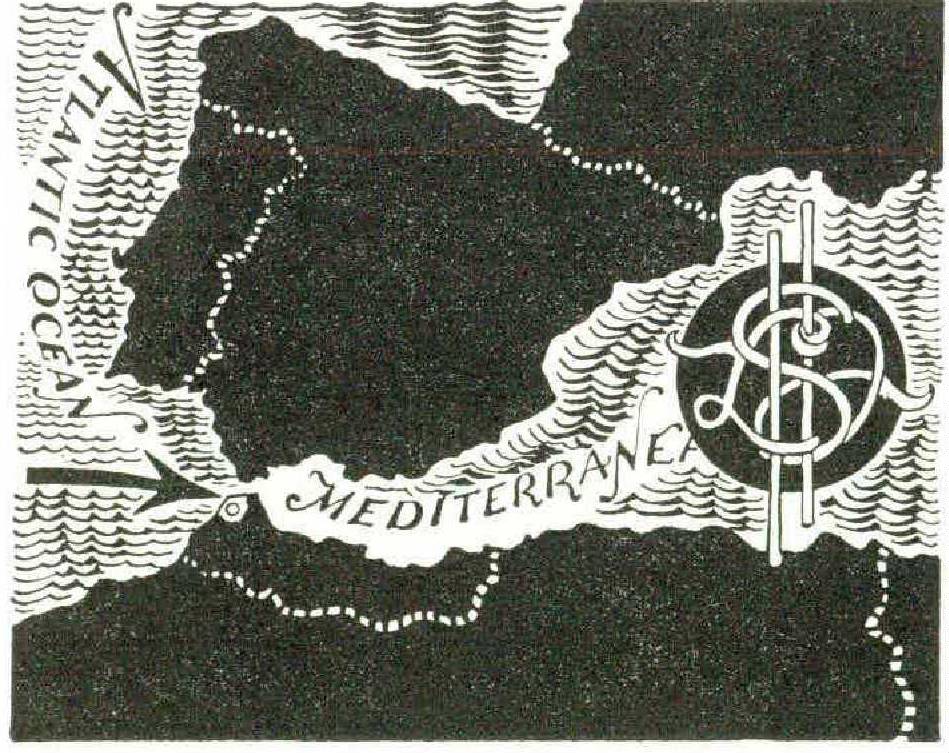
TANGIER has won the awe-stricken interest of the outside world by just not changing anything important about its arrangements for the past forty years. And what is so significant about that? This: that the financial prerogatives of the common citizen that were everywhere taken for granted back in 1910, and which almost everywhere else have now become major or minor crimes, are still in Tangier a matter of perfectly legal course.
What sort of prerogatives? Many of the young men and women on the campuses today have never even heard of them. The delightful Fifth Freedom, for example — the Freedom to Own Gold Outside of Fort Knox.
In 1910 the golden dollar, the gold sovereign, the louis d’or, and all the rest clinked encouragingly in the pockets of honest men. Today the very sight of gold means awful trouble. But not in Tangier, which economically remains a glorious “ Lost World,” high on its plateau of Victorian laissez faire.
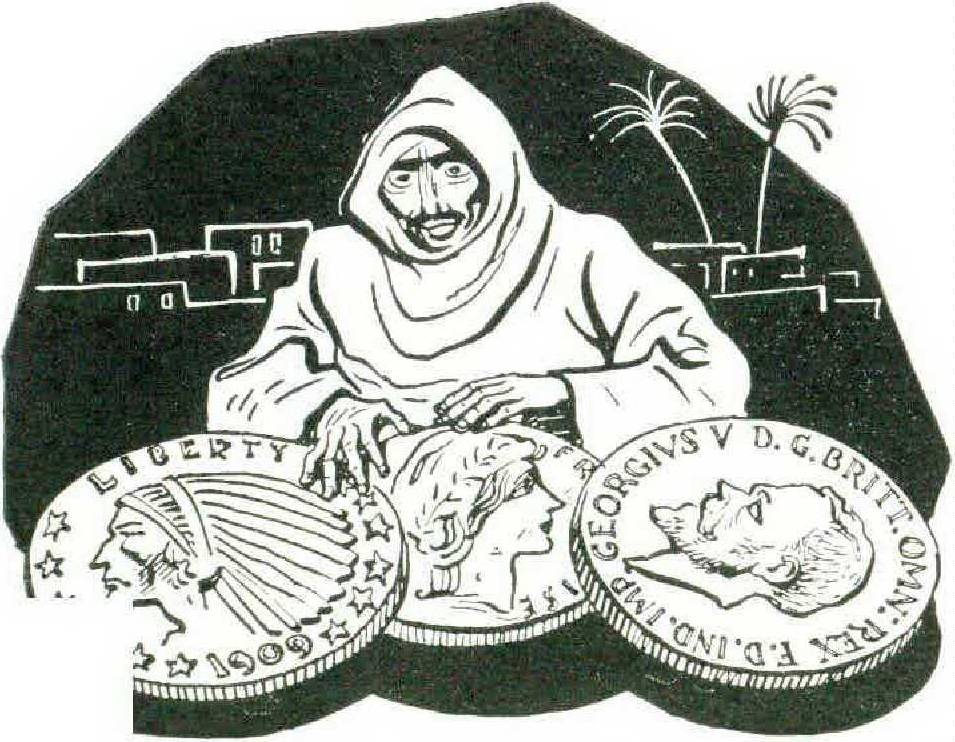
There in Tangier, where the donkeys bray beside the whopping great Cadillacs, and the Arab women squatting cross-legged in the market place try to make a fast dollar with some chopped nuts and saffron, next to the group of Belgian businessmen wearing inscrutable expressions and Savile Row suits, you can buy or sell gold in any quantity and with complete legality to your heart’s content. Bullion, specie, bar gold, ingots, what have you. Australian half sovereigns with Edward VII’s effigy benign upon them; Napoleon III 20-franc pieces; American eagles screaming mutely on the fabled stuff.
At first it is a shock to see the casual way in which the Fort Knox Special is handled. An Arab boy bounces up to you in the street with a jaunty leer. He holds a handsome green morocco case. The case is snapped open to reveal a gleaming mass of sovereigns.
“Best quotations here, sir. Compare my discounts.”
Indeed comparisons are easy. For in the narrow lanes the money men sit elbow to elbow, like British racetrack bookies, their slates (“Deal with Yussef, the gentleman broker”) above them. But instead of prices quoted against horses’ names, we see a neat chalked listing of the world’s main currencies — dollars, belgas, French francs, pesetas, Swiss francs, and the rest. And all sorts of fascinating subdivisions too, such as “One pound sterling Tangier account,” “One pound blue note” (quoted at a sharp discount because blue notes were not made, as are the present green ones, with a special streak through their middles to make easy the detection of counterfeits), “One pound cheque,” and so forth.
Good U.S. greenbacks, so coveted by the sad and regimented nonTangier world, are there in huge, careless piles. How many do you want? Buy or sell — no trouble. That fine old patriarch — who might well be Abd-el-Krim in person — will do a deal in a blasé pause between two coffees.
The Tangier setup is simple— the beautiful simplicity which has been red-taped and managed to death everywhere else. It is an International Zone — run, at the last count, by seven different countries, the United States, Britain, France, and Spain among them. There are no taxes in Tangier, and no tiresome restrictions on private enterprise. Just ponder that — no income tax, no supertax, no profits tax, no death duties or inheritance tax, no sales tax.
The only touch of austerity is a flat 12½ percent ad valorem customs duty on anything which you bring into the Zone (but you are welcome to bring as much as you want — there is nothing so offensive as an import quota). On gold and jewels the rate, considerately enough, is only 7½ per cent.
These customs duties, plus some monopolies of which tobacco is the most important, are sufficient to put Tangier’s finances resoundingly into the black year after year. But then Tangier can scarcely be called a welfare statelet. There is no unemployment insurance. No military expenditure (reason — no military). No health services. No hospitalization schemes. No free wigs for the Arabs. If you fall on evil days in Tangier you get shipped home by your local consul.
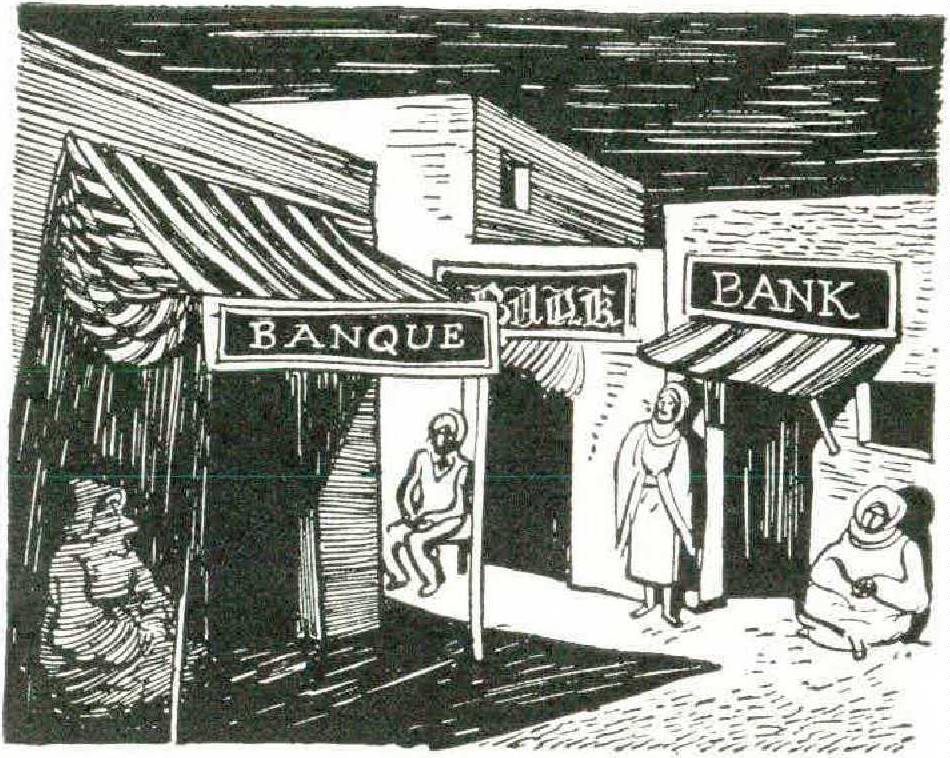
In 1939, Tangier was a city of 40,000 somnolent souls and possessed ten banks doing humdrum business. Today the population is 150,000 and darting upwards as fast as a fever chart graph. And there are eightyone banks.
There are two compelling reasons for this bank glut. (1) It is about as easy to start a legally watertight bank in Tangier as it is to get a driving license in the District of Columbia. (2) As rules and restrictions, quotas and forms, prohibitions and penalties, multiply all over the rest of the world, Tangier maintains its bland invitation to Business as Usual.
To become a banker in good standing in the Zone, you have to put up just $400. Then you pick a good title for your bank (and there are some very fancy titles at work right now). Then you incorporate yourself, with or without associates or your fatherin-law. And then you are required to find a sum averaging $28 a year for “renewal of patent.” From then on in, it is strictly up to you.
All over the world, oppressed capitalists see Tangier as a gleam of North African light amid the gloom of interfering governments. The result is that the amount of money that has passed through the Zone since the war is conservatively estimated at 100 million pounds sterling a year.
The Tangier banks are very discreet. If you prefer, for reasons of your own, to hold a safe-deposit box under a pseudonym or just a number, they understand perfectly. And if, although living in Amsterdam, you indicate that your personal eccentricity is to have telegrams concerning your account delivered in Antwerp, addressed to someone else, and written in code, they again understand perfectly.
No figures are ever published. There is nothing silly such as a yearly statement. The banks take the line that they are not there to satisfy vulgar curiosity. On this stand they are warmly applauded, in a great many languages, by their clients.
The banks vary considerably in their scale and style. You take your choice — anything from a solid establishment (probably one of the prewar ten) with impressive offices and plenty of capital-in-being, to a oneman operator sitting in a nine-by-live room on the fifth floor back of a walk-up. But this man in his grubby office, who probably started operations by borrowing the required $400 from a fellow Central European who preceded him to Tangier, is in just as good standing as the big outfit. “ You too can be a banker” is Tangier’s slogan.
The smaller banks don’t greatly resemble U.S. banks, even the ones in small American towns. Although they often handle vast sums of transient capital, you rarely see anyone actually inside them. Quite a few of them don’t bother with checking accounts— or checks. One man enterprisingly installed what looked like a conventional front office, with grills, a line of tellers’ windows, and the usual notices — “Deposit Accounts,” “Government Bonds,” “Foreign Exchange,” and so on. But it was all a dummy made of papier-mâché. There were no tellers. In a back room he, his wife, and a cousin transacted the real business — helping Belgians, Swiss, Swedes, Danes, Austrians, Spaniards, and anyone else, to ease their capital out of the country in which it lay locked, and get it safely to the United States by way of the Zone.
Real-estate prices have jumped thirtyfold since 1939, and new apartment houses rear upwards at an almost Texan tempo. Sometimes not so solid as Texas though. An American official told me: “If you’re thinking of buying a newly built house or apartment, it’s a good idea to wait for a rainy day before you sign anything. Then, if your house is still standing after the rain, go ahead.”
Down in the harbor, laughing Moors are busy heaving cartons of American cigarettes onto yachts bound for France, and cases of penicillin, streptomycin, cameras, and fountain pens for Spain. The yachts, as everyone knows, are owned by smugglers (often they are Britishregistered over in Gibraltar), and this is one of the most openly thriving contraband affairs anywhere in the world. No one interferes, for the Tangier authorities take the common-sense view that what leaves their pretty port is of no concern to them, and that they can scarcely be held accountable for what may happen on the other side of the Mediterranean.
But the most uproarious Tangier racket that has yet come to light was exposed when several of Scotland Yard’s top men flew, red-faced, into the Zone.
Ever since the International Zone was set up, Britain, in common with some of the other interested powers, has maintained a post office of her own in the city. It is run by officials of the highest integrity, and until recently its main interest was to philatelists (the stamps are of the reigning British sovereign, with “Tangier” overprints).
But about two years ago some of the boys in London suddenly realized the opportunity that was theirs. Since post-war austerity set in, no one in Britain has been allowed to export anything of value, except after exhaustive checking by the Treasury and special permits from the Bank of England.
In the past two years, however, about three quarters of a million pounds’ worth of diamonds has been openly exported from London to New York, via Tangier. There have been one or two legal deals, but nearly all of this traffic was without the blessing or indeed knowledge of either the British Treasury or the Bank of England. For since Tangier appears on official lists as “British Post Office,” it was treated by the post-office men as on a par with Bridlington, Brighton, or Bude. Why should they worry their heads over the circumstance that Tangier happened to be in North Africa? It was a British post office, wasn’t it ? And if you were sending parcels to a British post office, then there was no need for an export license. So the registered parcels of diamonds came thick and fast from London, reached Tangier all shipshape, and were then picked up and immediately redirected to New York.
Scotland Yard has stopped that one now. But everyone in the Zone is
waiting with heavy-lidded interest for the nexl stratagem.
And meanwhile old Abd-el-Krim will be happy to sell you excellent office space, all the needed bank documents— and lots of the stuff that bankers shovel across their counters.
Nice climate too.