Savory Seeds
by HELEN EVANS HROWN
HELEN EVANS BROWN is food editor of theCalifornian,and the author of several cookbooks and many articles on cookery.
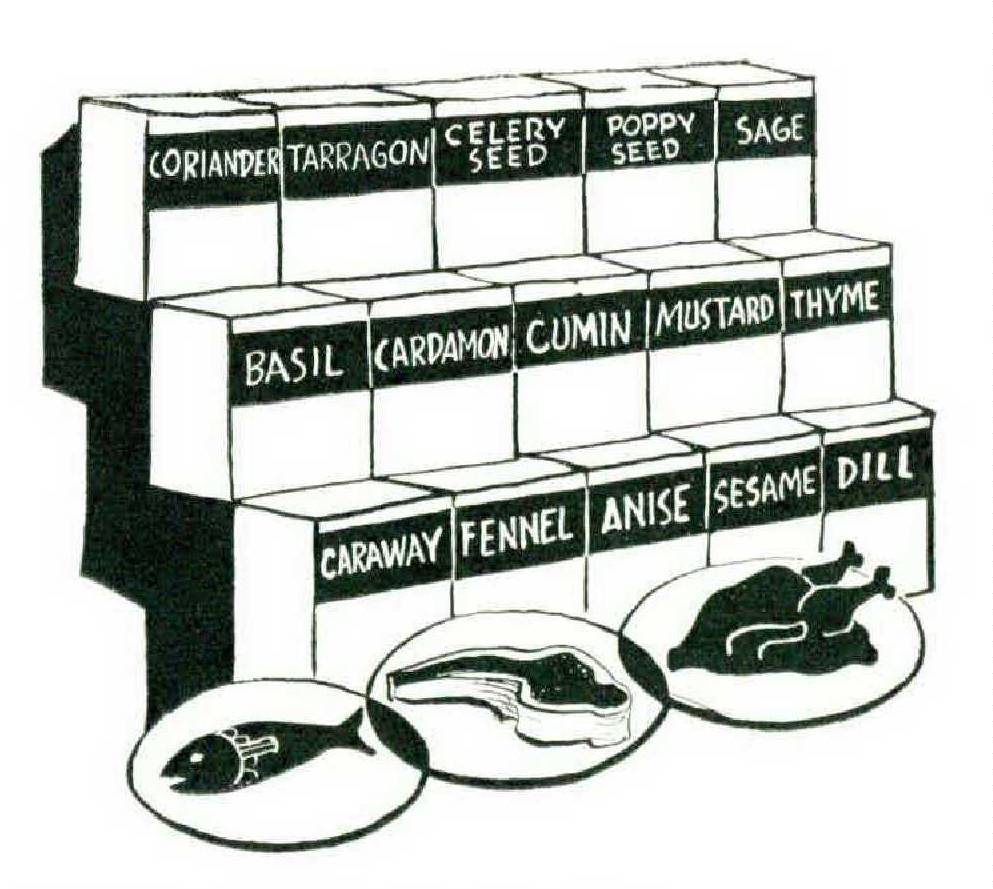
THERE is nothing surprising in finding a pickle flavored with dill or a dinner roll bedecked with sesame seeds, but when a lamb chop is sprinkled with dill seeds or when hashed brown potatoes have the added enchantment of sesame seeds, the average American will not only be surprised, he may be downright antagonistic. It’s not the flavor he objects to, it’s the idea of anything that is different.
When the use of culinary herbs was first revived by a few daring herb growers, many an American nose wrinkled in disdain at the thought of basil or tarragon, and even of sage and thyme save at turkey time. But before long, thousands of “good plain cooks” were sneaking pinches of marjoram into their stews, and soon the disuse of herbs was in danger of becoming a misuse—the growers had to warn that a touch of restraint was a necessary part of successful herb cookery.
Now it’s savory seeds: they are appearing in more and more dishes. We are beginning to accept the fact that those little specks in the salad are meant to be there.
That Americans like “good plain food,” and that (hey are not at all interested in seasoning and spices, is accepted by many as a fact. Why, then, do we consume more spices per capita than any other people in the world? Why is it that “good plain food” found on many family and restaurant tables is so frequently augmented with bottled sauces and condiments that are poured over everything? Why is it that food processors find the description “. . and rare spices’ such a magic selling formula? Why is it that the hot dog, the very symbol of American taste, is sapid with exotic spices — including, incidentally, several savory seeds: dill, coriander, sometimes cardamon and cumin? Of course we like seasonings, and we know them intimately by taste, if not by name.
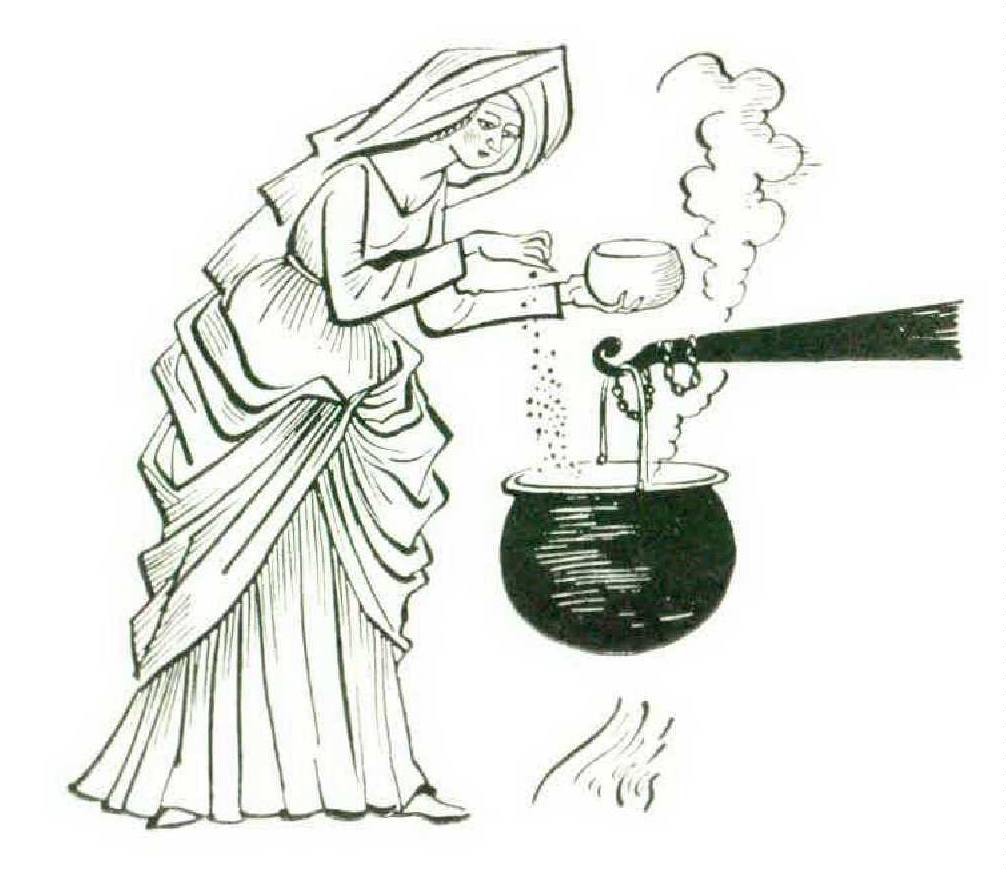
Apicius de re Coquinaria, said to be the world’s oldest cookbook, makes frequent mention of various seeds: anise, caraway, coriander, dill, fennel, poppy seed, and sesame. The ancient Romans made such lavish use of these seasonings that one suspects the purpose was to obliterate unpleasant tastes rather than to add flavor. If the spices did little toward preserving the food, they certainly helped disguise the fact that its freshness was but a memory. At any rate, the Romans used prodigious amounts of these pungent seeds—a practice remarked upon and defended many centuries later by Dr. Martin Lister in his edition of the ancient cookery book: “As we are able to bear the Bitterness of Hops in our Common Drink . . . we should not be averse to Rue, Cummin, Parsley seeds and Cardamoms strown promiscuously over our dinner when it comes to Table.” Today, though we certainly don’t want savory seeds sprinkled indiscriminately over our dinner, many of our common foods could do with a bit of variety — and of spice.
It was not strange that the ancients thought these culinary seeds had almost supernatural power—there is still something magical in the fact that so tiny an object can wield such flavoring power. The seeds were credited with all kinds of cures, as well as with causing various maladies. Some of these superstitions may have been based on fact —the use of poppy seeds for inducing sleep, for instance. “The garden poppic boyl’d into the thickness of honey profiteth into many griefs and the seed confected with sugar and eaten doe marvelously prevail in procuring the weake patient to sleepe soundly.”
Dill was said to weaken the eyes, so it was fortunate that fennel could restore the sight. Coriander was believed to bring on hallucinations, anise to cure epilepsy, and sesame seeds to end “soundings and ringings of the eares.” Mustard loosened the longue, and cumin was supposed to be a potent aphrodisiac, which perhaps accounted for its tremendous popularity. A brew of it when “drunk twice a day doth multiply and provoke lust.” In “The Vertues of Several Waters” mentioned by Gervase Markham (1615), it is stated positively that “water of fennel is goode to make a fat body small”; and one of “six most precious waters which Hippocrates made and sent to a Queen sometimes living in England" contained fennel along with numerous other ingredients, all to be kept in a vessel of gold or silver. The water, when drunk, “caseth the ach of the head, and if a man drink it, it maketh him look young even on old age, besides a world of other most excellent vertues.”
Fennel was used to drive away fleas, but anise was more powerful — it vanquished witches. Anise still seems to have bewitching powers, or it has a foxy odor about it. It seems that a pack of hounds can be neatly outfoxed by a bag of anise seeds that has been dragged over a course laid out for the pleasure of the hunters. The dogs will bay merrily on the scent until the chase is over. Today anise is used mostly for flavoring that nectarean liqueur anisette, and for cookies that make an appearance at Christmastime. That it is delicious with buttered carrots and in veal stew is not as well-known a fact, nor that it is superb sprinkled on pie made tart with green apples, rich in butter, sweet with sugar, and glorious with a slug of applejack.
Fennel used to be called “ meetin’ seed ” by our forefathers, who chewed it in church to alleviate the fidgets. It is at its best with fish and with all that goes with fish: cucumbers, sour cream, beets.
Caraway has almost buried its personality under the crust of rye bread — which is a pity, for it has many culinary uses. The Tudors well knew that it was delectable with apples — and it still is, especially if a bit of Gorgonzola is an added accompaniment. It is also surprisingly good with shrimps, when served cold with mayonnaise, and with clam chowder, roast pork, baked liver, turnips, and boiled new potatoes.
Cardamon, mentioned in Sanskrit manuscripts many years before Christ, is found mostly in pickles and Danish pastries, but its pungent and aromatic flavor is delightful in fruit jellies and, of all tilings, pea soup. Its flavor may seem familiar because it is often used in flavoring liver sausage, and always in curry powder, as are cumin, coriander, fennel, muslard, and poppy seeds.
Celery seed is used, for the most part, wherever the flavor of the fresh vegetable is desired. Like many of the savory seeds, it is of the parsley family, though hardly its most distinguished member. It is good with stewed tomatoes and in potato salad, and is used by some in dressing for fruit salad — why, it is difficult to imagine.
Coriander is more charming than the derivation of its name. It comes from the Greek koris meaning bedbug, and it was supposed to have the odor of that horrid insect. Coriander is a most versatile seasoning, being wonderful in a sauce for game, a compote of pears, or with pork or cream of almond soup. It even makes a rice pudding palatable. If the flavor is nostalgic it may he because it is an ingredient in gin, or it may be that it. takes you back to the days when you sucked long and blissfully on a huge ball of sugar candy and finally reached its center of goodness — a coriander seed.
Cumin seed, often used in chili powder, seems to have a particular affinity for cheese, but it does wonderful things for rice, deviled eggs, and for thick chicken or bean soup. Those with gastronomical daring may even want to try it as a flavoring for stewed fruit.
Dill goes well with many things other than the ubiquitous pickle: avocados, olives (green and ripe), cottage cheese, tomatoes, borsht, razolnik, string beans, and everything from the sea. Mustard (the name was derived from the fact that it was mixed with must) is used mostly in the ground form. Its functions need no introduction.
Poppy and sesame seeds, the least pungent but most useful of the savory seeds, have at last been recognized as a delightful adjunct to many foods other than breads and rolls. They may be used wherever chopped nuts are indicated: topping cookies or casserole dishes or cakes, sprinkled on canapés, sandwiched between buttered bread, coating balls of cheese. The famous Charleston Benue candy is a brittle made with sesame seeds, but poppy seeds are good in candy too.
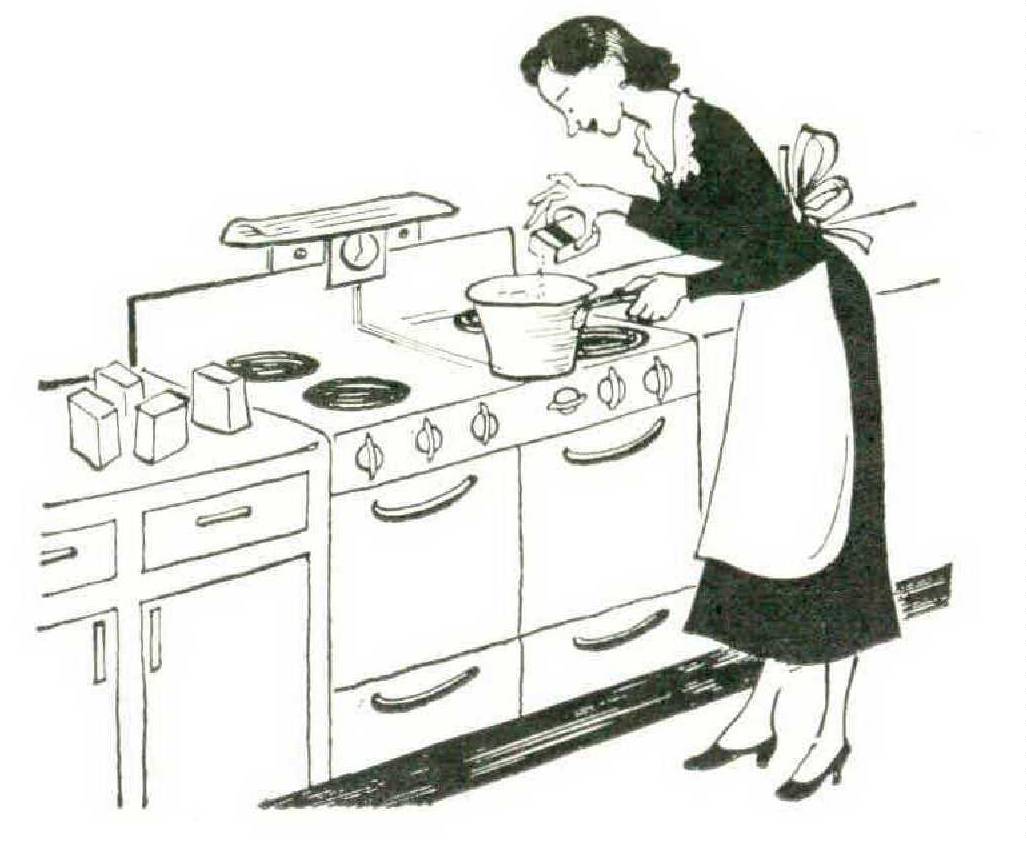
Best use of all for sesame and poppy seeds is on crackers or Melba toast: brush with melted butter, sprinkle with the seeds of your choice, and toast under the broiler until they are lightly browned and crisp. Serve these with drinks, soups, salads, cheese, or alone, just for the sheer joy of eating.