Reader's Choice
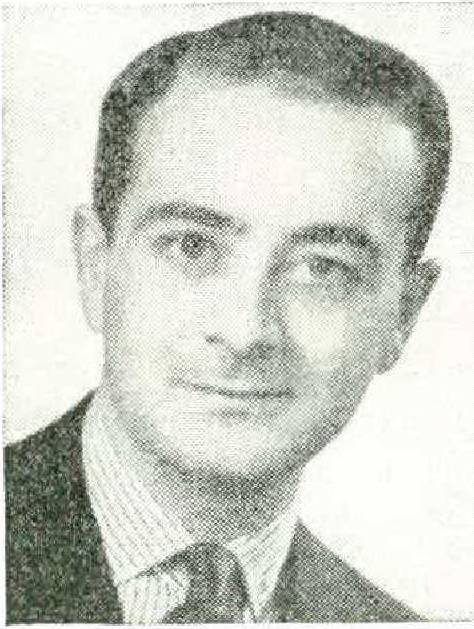
THAT busy biographer, Hesketh Pearson — he has done Oscar Wilde, Gilbert and Sullivan, Erasmus Darwin, Tom Paine, Conan Doyle, William Hazlitt, William Shakespeare, Shakespeare’s rival George Bernard Shaw, and others — now gives us a full-dress life of Charles Dickens. The choice was suggested by his previous subject, Shaw, who warned that “anybody but Dickens will be a comedown after Shakespeare and G.B.S.”
Mr. Pearson is in his element when he is narrating the facts. When he looks below the surface of Dickens’s personality, which he fails to do often, he does not look very far: in general, the complexion of his biography and of his critical judgments is decidedly conventional. Pearson is, however, a highly accomplished craftsman with a gift for realistic, eyefilling portraiture. Dickens: His Character, Comedy and Career (Harper, $4.00), though not a searching study, is engrossing from first page to last. Its special quality is fairly well summed up in the publisher’s claim that “Dickens, the man, as friend, lover, husband, father, actor, editor, reformer, entertainer, producer, critic, creator, lives again with the electric vitality which amazed his age.”
The great ambition of Dickens’s early life was to be a professional actor, and the great regret of his later life was that he had not been one. He did, as an amateur, write, direct, produce, and act in innumerable plays, and he liked to take as many parts in the same play as the plot permitted. In everyday life, too, he was a brilliant and incorrigible mime and mimic. On the lecture platform, he became “a super-Garrick”; his readings, which drew huge audiences in England and America and earned him fees fabulous even by today’s standards, used to touch off paroxysms of emotion.
Throughout much of his life, Dickens was also a busy editor and an extremely successful one. His formula was to reflect his own cheerful philosophy of life, to give his readers what he called “a vein of glowing, hearty, generous, mirthful, beaming reference in everything to Home and Fireside.”The impact of his novels on the readers of his day is a familiar story: even so, some of the incidents mentioned by Mr. Pearson are astounding. When Dickens made his second visit to America, in 1867, the publicity he received was enough to make it profitable for theater managers to stage hastily dramatized versions of his stories “in all the big cities.” Cowboys on the prairies and miners in California wept over the number of The Old Curiosity Shop which told of the death of Little Nell.
Few of Dickens’s novels ever had the benefit of a revision after the whole book was completed. They were published in monthly installments while they were being written. One day, when Dickens was in a bookstore, he heard a woman ask for the latest number of David Copperfield, and heard the shopkeeper tell her it would be out very shortly: Dickens had not yet written a word of it.
“One is tempted,” writes Mr. Pearson, “to define the work of a Dickens as a blazing volcano of genius almost surrounded by a morass of imbecility.” As Virginia Woolf once put it: “The rumour about Dickens is to the effect that his sentiment is disgusting and his style commonplace; that in reading him every refinement must be hidden and every sensibility kept under glass; but that with these precautions and reservations he is of course Shakespearean; like Scott, a born creator; like Balzac prodigious in his fecundity.”
Mr. Pearson suggests — this is his most interesting critical comment - that the stunning vitality of Dickens’s work and its glaring failings both stem from an inspiration that is essentially theatrical, He sees Dickens the writer as a “born actor” turned novelist: —
“ His comedy, his sentiment, are of the stage; he had the quick eye for human oddity, the photographic power of reproducing it and the love of repeating it, which is possessed by a Garrick or a Kean; he pours out his emotions as only an actor can; he describes a storm as a stage manager would like to produce it; his villains are melodramatic; his heroes and heroines are stagey; his scenes are of the theatre. . . . If he were alive today he would be the king of film writers, with Hollywood at his feet.”
Portrait of a master
The list of André Gide’s works available in English, though still fragmentary, is lengthening. The recent additions are The Journals of André Gide, Vol. III: 1928-1939 (Knopf, $6.00), superbly translated and annotated by Justin O’Brien: Gide’s Dostoevsky (New Directions, $2.50), a pioneer study; and his slender memoir, Oscar Wilde (Philosophical Library, $2.75). Several titles previously published in this country are again in print.
Volume III of the Journals is perhaps the most interesting. It covers Gide’s “honeymoon” with and repudiation of Communism (to which he was attracted “by sentiment” — a growing concern over social injustices). It dwells on Gide’s spiritual searching and researching as he moves into old age, and reaffirms his adherence to an intensely personal religion, which sturdily rejects the dogmas of any Church. It casts a glimmer of light on “the secret drama of my life,” Gide’s relationship with his wife (“I have never really loved anyone but her”), about whom the earlier volumes are extremely reticent.
As in much of Gide’s work, an unsympathetic strand runs through the Journals. The unremitting self-analysis sometimes grows wearisome; so, too, does the recording of trifling weaknesses, moments of ennui and vanity, passing physical discomforts. The periodic melancholy, self-disgust, and exaltation sometimes seem in excess of the circumstances. All this, though, is bound up with the striving for complete truthfulness which is the singular quality of the Journals; it seems fairly certain they will endure as one of the masterpieces of introspective literature.
Meanwhile, circumstances have given a new immediacy, an enlarged significance, to Gide’s outlook and doctrine. In Gide’s biography and in his work, we find mirrored all the tensions, uncertainties, and dilemmas of our time. He has penetrated more deeply than any other living writer into the sources of our distress.
Two years ago, a young Arab intellectual wrote to him: “If we can contribute anything to the present crisis, it is by remaining disquieted, restless, vigilant, alive. You have given us through your work the example of enlivening disquiet.” Gide, the connoisseur par excellence of disquiet — the condition we are doomed to live with — has outfaced the demon. His message to us (not fully expressed in any one of his books) is that there is an adventurous disquiet, which is, in effect, the state of grace.
The moral credo that Gide has wrenched out of disquiet is suggested by an entry in the Journals: “ The only drama that really interests me . . . is the debate of the individual with whatever keeps from being authentic, with whatever is opposed to his integrity.” Disquiet leads him to debate — the famous Gidean état de dialogue — and debate becomes a ceaseless exploration of alternatives. What guides the search? Certainly not reason, which is not the whole man. Gide, in effect, declares himself a democracy and lets every voice be heard; the Devil, too, has his vote, and Gide has frequently obeyed it. But the Devil’s course, all courses, eventually breed their own defeat, which serves as the springboard for a fresh experiment. The essential is to remain unattached, a free spirit.
What this amounts to is, as one critic has put it, “the vindication of experimental living against submission to authority ... a permanent research project in the field of human values.” The research is not mere restlessness: the researcher is finding while he is seeking. “To seek God is to know Him” is the core of Gide’s doctrine, which is, in the widest sense, Protestantism; and in secular terms, democracy. To the threat of anarchy, Gide opposes stringent self-discipline: “Perfect sincerity, of the motive as well as of the act, is to be won only with ceaseless striving.” In this striving and seeking, there is no room for “peace of mind.” But the disquiet is enlivening, not frustrating.
War and peace
Major George Fielding Eliot, whose Hate, Hope and High Explosives correctly gauged the turn of events in Palestine, has applied himself to the subject of peace and war with Russia, and has turned out a businesslike report. Most of the time, Eliot sticks closely to hard military facts and military logic; where he speculates, it is usually with sobriety. If Russia Strikes (Bobbs-Merrill, $2.75), in addition to being timely, is lucid, blunt, and informative.
There are strong reasons, Eliot believes, why Russia’s leaders may force a war this year, gambling on U.S. reluctance to launch an all-out atomic offensive: (1) Russia is losing the cold war; (2) Russia’s present overwhelming military superiority on land will decrease after 1950, as a result of the rearmament of Europe and Turkey. (The consensus of “educated guesses” is that Russia will not have the atom bomb until 1952.) Eliot proceeds to draw up a balance sheet of military power at the present moment, then systematically examines the probabilities, on all the likely fronts, in the event of war this year.
After detailing the problems involved in bombing the Soviet, Eliot concludes (and he has always discounted extravagant claims for air power): “Even if the initial attack does not produce a decisive knockout, it may certainly be counted on . . . to render impossible further prosecution of offensive operations. . . . The Soviet armies [deprived of supplies] can thereafter be dealt with by comparatively small forces or may even disintegrate altogether.”
If Russia does not risk war now, Eliot reasons, we must face up to the prospect that when it is ready to wage atomic warfare, “the Soviet leaders will be in a mood to confront the free world with the threat of atomic destruction as the alternative to a series of concessions.” If that eventuality approaches, “we must use our military superiority to support an ultimatum which would require the Soviet Government to enter at once into the atomic control system contemplated by the United Nations.”
Major Eliot’s terrifying belief that Russia will not balk at war, even if war promises disaster, rests on the premise that the Soviet leaders cannot afford to acknowledge defeat in the cold war and abandon their expansionist aims — this “would probably mean [their] extinction.” Here Eliot’s reasoning may have gone astray: recent history has proved that Russia’s leaders can sell their people any policy they choose to, and are in a position to forestall any attempts to displace them.
Playing down the bomb
Must We Hide? (Addison-Wesley, $3.00) sets out to show that the “real story" of the atom bomb “is not the sensational one which some have painted.” The author, R. E. Lapp, is a leading American physicist, now connected with the Development Board of the National Military Establishment.
Dr. Lapp presents a great deal of information about the bomb in terms readily intelligible to the layman. Where he sticks to factual exposition, his book is extremely informative and grimly fascinating. But he has a case to argue, which even his own version of the facts hardly warrants: he is dead set on reassuring the layman that he need not be alarmed about the bomb. “If this new weapon is brought into proper perspective,” says Dr. Lapp, “the people will be able to live with it . . . live sanely.” Here is a sample of the perspective which supposedly is conducive to equanimity: —
It is unlikely, Lapp concedes, that more than 20 per cent of an enemy bombing force could be intercepted. A single bomb dropped on Manhattan would, if there were no adequate alert and effective evacuation, result in 200,000 killed and 250,000 more injured — “these figures could run higher.” Any people caught in a tall building “would be [fatally] irradiated” - through the windows"like bees in a hive.” Full preparedness would reduce the casualties “sharply” - not sharply enough to prevent Lapp from concluding that the major populat ion centers of America are “cities of the past.” And he asks, “Must we hide?”
The author’s opening remarks give one to believe that he is thinking primarily in human terms, but it becomes apparent that he is really thinking in cold strategic terms: his chief concern seems to be to prove that a nation adequately prepared can “absorb” a good many A-bombs and remain a going concern, militarily.
Lapp’s estimate of the area of “ serious damage” caused by an atomic explosion is smaller than that of Blackett, who plays down the bomb. The author’s reassuring account of the duration of the radioactivity at Bikini and the possibilities of decontamination is sharply contradicted by Dr. David Bradley’s report. Lapp discounts an enemy’s chances to bring off an effective underwater burst (proved far more lethal, radioactively, than an air burst) in New York Harbor. He also discounts the alleged genetic effects of radioactivity.
Whether he is right or not on these issues the layman cannot judge. The point is that Bradley, Oppenheimer, Morrison, and other atomic scientists were reckoning the human cost, the blow to our civilization, when they said that for all practical purposes there is no real defense against the atom bomb. Dr. Lapp’s book, it seems to me, does not substantially diminish the force of this verdict.
What Lapp has to say about the sociological implications of the atomic weapon is sometimes really weird. For example: “ Radioactivity is just one more of the hazards of contemporary living. . . . Like taxes radioactivity has long been with us ... it is not to be hated and feared” (Dr. Lapp’s italics). This sounds like the logic of Alice in Wonderland, and there is more of the same order: “Much of the revulsion against the use of atomic weapons arises because the very newness makes it seem more horrible. A careful cataloguing of the injuries resulting from the use of the automobile would also be impressive but any proposal to outlaw the automobile would be considered ridiculous.”
Skeletons in cupboards
Two Worlds and Their If Ways (Knopf, $3.00)—the fifth of Ivy Compton-Burnett’s novels to be published in America - makes its appearance wrapped, literally, in praise. The dust jacket is a two-page anthology of ecstatic comment on the author’s work. “Probably the purest and most original of contemporary artists,”says Rosamund Lehman. “ Her books,” writes an English critic, “are as strewn with epigrams as a fakir’s bed with nails.”
In spite of such high-powered endorsements, Miss Compton-Burnett has so far had a limited audience. Some readers who have not yet hit upon her books would, I believe, find her austere brilliance exhilarating - especially the reader jaded by the sameness of so much current fiction. The point about Ivy ComptonBurnett is that she really is unique.
Her geography alone is familiar — the (departed) world of the English country gentleman, where no one works except the servants and there is never quite enough to keep up the estate, a sequestered world which recalls Jane Austen and Mrs. Gaskell. In Miss Compton-Burnett’s novels, the house and the people it shelters are in effect an island nation, steeped in isolationism: the family is the source of all value. But within the house, behind the ineffable self-possession of its people, there lurk jealousy, conflict, unfathomable nastiness — and there are skeletons in the cupboards.
The novels are conversation pieces, nearly all talk; and the characters masters and servants, children and adults — all talk alike, or nearly so. They are superhumanly articulate, and they say exactly what they think, all the things we normally take pains not to say. But for all their monstrous candor, some of them are hiding something. Eventually — the few decisive developments in the plot are usually melodrama — the whole unmentionable truth comes out. Wickedness, weakness, and hypocrisy are bared: illusions are shattered — “and that is enough. ”
Clearly, Miss Compton-Burnett’s is a highly stylized art, and its conventions may seem hard to swallow, but they yield extraordinary results. The author has created a world of her own in which the real and the absurd blend to produce a climate supercharged with irony, a continual fluctuation between tragedy and farce. A world in which the innermost recesses of the heart and mind are searchingly explored in terms of the daily exchange of trivialities. A world that is glacially sophist icated and whose language is indescribably witty.
Two Worlds and Their Ways is a less sinister, less heartless novel than its predecessor, Bullivant and the Lambs — the Shelleys’ conversation is far less terrifying than the Lambs’. It centers first on whether young Clemence and Sefton should be severed from their family and the admirable instruction of Miss Petticott for the questionable benefits of school. Eventually they are reluctantly sent off, and the conversation is carried on by an astounding collection of small children — this may suggest the vein: “It was Lady Shelley’s being a second wife that we wanted to talk about,”said Gwendolen (to a mistress). “I think that would have been fruitful, full of prying and a naughty sort of pity.” Clemence and Sefton are both caught cheating in class, and when the holidays come round, the conversation focuses on their fall from grace. At this point the plot intrudes, and circumstance blows the lid off discreditable truths concerning Lady Shelley and a pair of precious earrings, Sir Roderick and a startling illegitimacy. I suspect that readers will either be stopped short by the talkiness before page 50 or charmed by this singular virtuoso. Two Worlds and Their Ways goes down in my book as a dazzling performance.
The Doctor and the Bishop
It has become almost inevitable for any young writer with satiric pretensions to be compared by his publisher to “the early” Evelyn Waugh; if possible “the early” Aldous Huxley is thrown in for good measure. Both Huxley and Waugh are referred to on the jacket of The Melodramatists (Random House, $3.00), a first novel by Howard Nemerov; but in this case, it is pleasant to report, the much abused comparisons turn out to have definite point.
Mr. Nemerov, a young teacher at Bennington, is a remarkably polished and sophisticated writer, He is well educated and is not averse, fortunately, to putting his information to work in the conversation of his characters. He has an authentic gift for destructive comedy, and his range stretches all the way from verbal wit to astringent or extravagant portraiture and lunatic burlesque. His inventive power is both subtle and exuberant, and he stage-manages his appalling harlequinade with the technical skill of a veteran impresario. He is irreverent, slightly satanic, and resolutely bawdy. He is at the same time intensely serious-minded and highly entertaining.
The first chapters of The Melodramatists acquaint us with the household of Nicholas Boyle, an opulent Bostonian. Boyle’s son, Roger, is troubled with an adulterous wife; and Boyle’s two daughters, Susan (eighteen) and Claire (twenty-one), do not know what to make of themselves and are getting wrought up about it. I was starting to wonder whether The Melodramatists was merely another thrust at the “proper” Bostonians, when things began to hum-to a very different tune. Roger goes off to the war; Mr. Boyle, attended by his wife, goes off to an expensive home for lunatics, determined to spend his life in a bathtub; and the two daughters are left in possession of the household.
Susan becomes the unentluisiastic mistress of a seedy psychiatrist, a complicated charlatan, and is blackmailed by a rascally butler. The frigid Claire seeks out instruction from the Catholic Church, and is invited by the Bishop to put the empty mansion to charitable use; namely, the redemption of “fallen women.” From here on, fantasy takes charge and the novel whirls riotously to a conclusion that decidedly is “early” Waugh, but filled out by Suetonius.
Mr. Nemerov’s burlesque of contemporary life — of a distraught generation, with a lunatic past, turning now to psychiatry, now to the Church — has its limitations. It is a saturation bombardment which flattens every target in sight and leaves one wondering just what strategic purpose has been served. At any rate, the novel is often devastat ingly amusing, and it proves Mr. Nemerov to be one of the most gifted writers to appear since the war.