"My Only and Last Love": Byron's Unpublished Letters to Countess Teresa Guiccioli
Byron’s letters to Countess Guiccioli, held in private by her family for seventy-five years, have now been released. Sympathetically edited by MARCHESA IRIS ORIGO,the letters and the day-to-day account of tins extraordinary love affair will be published by Scribner’s in September under the title Byron: The Last Attachment. For permission to publish the letters, the Marchesa is indebted to Count Carlo Gamba and the Legal Personal Representative of Lord Byron’s estate. This is the third installment of the Atlantic’s abridgment.
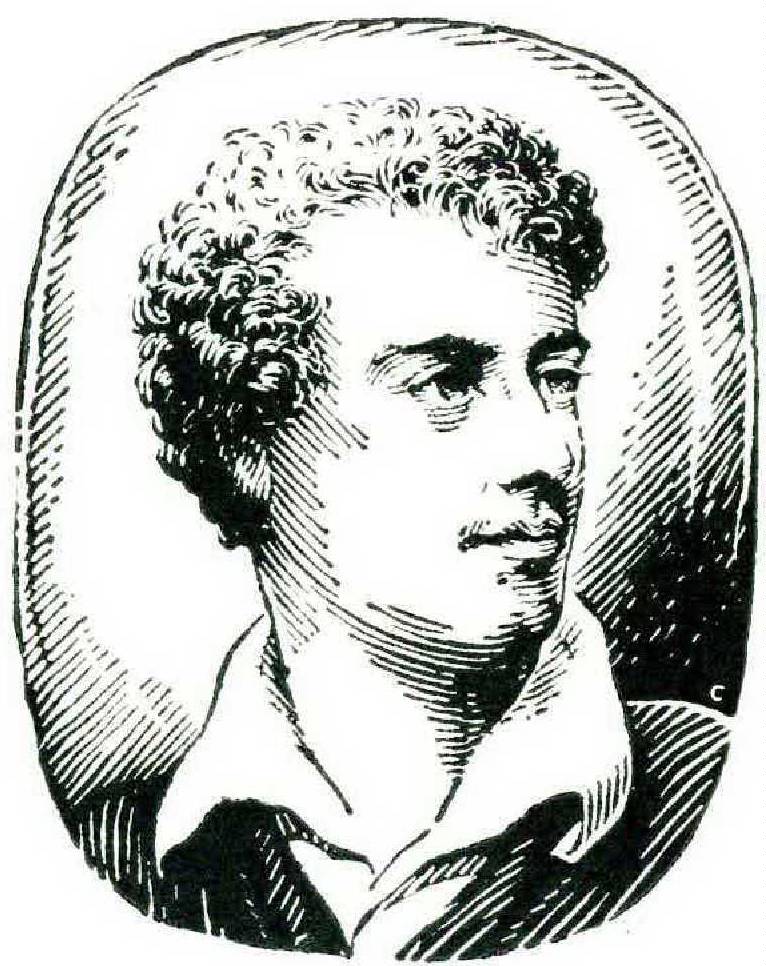
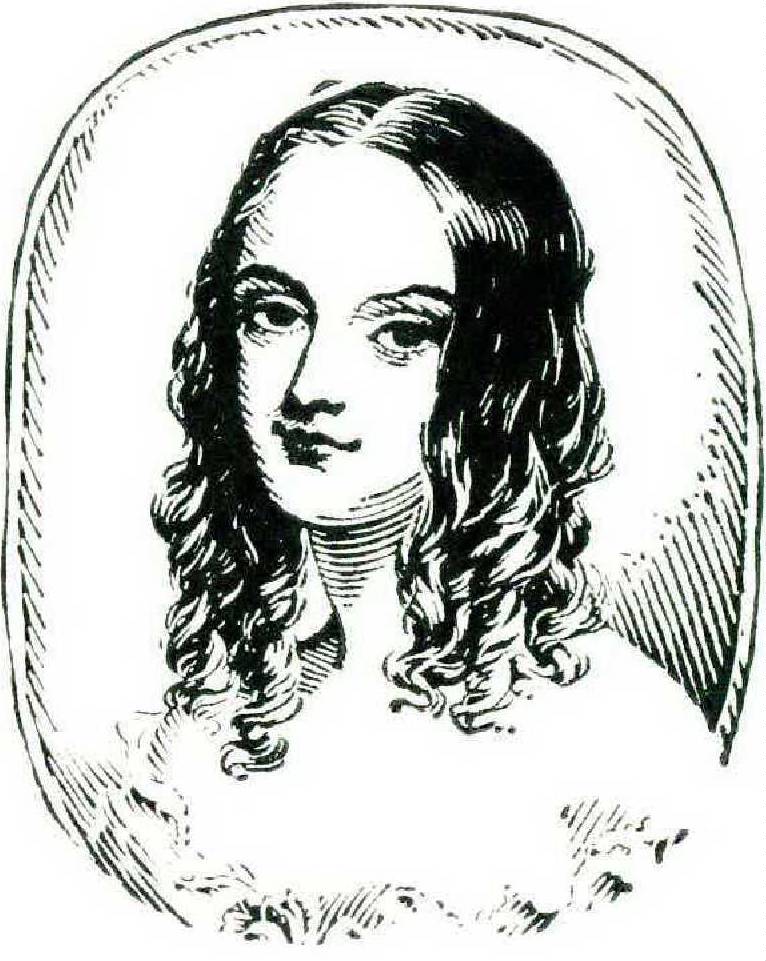
by IRIS ORIGO
IT WAS in the spring of 1819 that Byron and Contessa Teresa Guiccioli first met, in Venice. He was thirty-one, she nineteen and married to Conte Alessandro Guiccioli, an eccentric nobleman of Ravenna, forty years her senior. In a few days, Byron and Teresa became lovers. He followed her to Ravenna, then to Bologna. They spent six halcyon weeks together in Byron’s villa at La Mira. Then the storm broke. Teresa’s father protested, Conte Guiccioli came to Venice to fetch his wife, Byron yielded, and Teresa was sent back to her husband in Ravenna.
But soon after her return she fell seriously ill and wrote desperate appeals to her lover; and on his side, Byron felt little inclination to return to England, “a country where I neither like nor am liked.” So at last, on Christmas Eve, Byron returned to Ravenna.
I shall return and do — and be — what you wish. I cannot say more,” he wrote, after assuring her, “It will depend on you, whether I shall ever again leave you.”
Little did he know how true these words would prove. ”I have not decided anything,” he told Hoppner in January, “about remaining at Ravenna. I may stay a day, a week, a year, all my life; but all this depends upon what I can neither see nor foresee. I came because I was called, and will go the moment that I perceive what may render my departure proper. My attachment has neither the blindness of the beginning, nor the microscopic accuracy of the close to such liaisons; but ’time and the hour’ must decide upon what I do.”
Yet, however much he might try to preserve an illusion of freedom, Byron’s return to Ravenna had been a turning point. On his first public appearance in Ravenna, at a party on New Year’s Eve in the house of Teresa’s uncle, Marchese Cavalli, where there were between two and three hundred of the best company I have seen in Italy,” he found himself welcomed by the whole of Teresa’s family as one of themselves.
“The G.’s object appeared to be to parade her foreign lover as much as possible, and, faith, if she seemed to glory in the Scandal, it was not for me to be ashamed of it. Nobody seemed surprised; all the women, on the contrary, were, as it were, delighted with the excellent example. The ViceLegate, and all the other Vices, were as polite as could be; — and I, who had acted on the reserve, was fairly obliged to take the lady under my arm, and look as much like a Cicisbeo as I could on so short a notice.”
This mild provincial life was very entertaining — for a while. The cage was charmingly gilded, and now Teresa expected tier tame poet to sing in it He attempted to find lodgings but failed, so Count Guiccioli offered him the apartment on the first floor of his palazzo; the Guicciolis themselves remained on the ground floor.
“After some hesitation, and probably even encouraged and urged by the Countess, Lord Byron accepted. Certainly,”Teresa adds, “the offer might appear strange. It was so, indeed, but people were accustomed to consider the Count an eccentric, and after a few days they stopped talking about it.” But Teresa can hardly have believed this herself. People went on talking — and have been doing so ever since.
Daily life in the Palazzo Guiccioli was far from easy. Here they were again under the same roof, but how differently the time passed, compared with those golden autumn days at La Mira! Now they were dependent for their few snatched hours together on anxious stolen meetings during the Count’s siesta, or on the nights when he went to the theater or to a conversazione without his wife. Sometimes the Count was suave and courteous, sometimes curt and morose. But always in the background, his presence made itself fell — formidable, inscrutable, perpetually observant.
When the two lovers could not meet, they wrote to each other—hasty scribbled notes, carried from one floor of the palazzo to the other by Teresa’s maid or one of the Negro pages. Many of these notes concern a series of quarrels of which the causes, seen at a distance, are extremely slight: the dismissal of a maid, Teresa’s jealousy of Geltrude Vicari, Byron’s jealousy of an old friend or Teresa’s childish resentment because Byron failed to sit beside her the whole evening during her game of cards.
There are references, too, to disagreements between Byron and his host: on one occasion about some carriages and furniture which Byron had ordered from Florence; on another about the engagement of a celebrated prima donna at the opera. All this seems very trivial, but Byron’s letters to Teresa reveal something rather different from the usual reproaches, fair or unfair, of an angry lover. They show, first of all, a growing uneasiness about Teresa’s character. Byron was under no illusion about his own weaknesses — but disingenuousness was not one of them, and it is plain that Teresa’s lack of frankness caused him much disquiet. He complained that he could not “extract a word of truth” from her; he implored her to behave in a manner “unequivocal, even in appearances.” Her lack of sincerity distressed him so much that he tried to find excuses for it by considering it not an individual but a national trait. He wrote of “the sincerity that unfortunately cannot exist in the present conditions of Italian morals" —of “social morals fatal to a foreigner who loves an Italian woman.”
It was not only that he was, as Teresa herself admits, “a little ashamed” of his role of cavaliere servente. What must have been even more disquieting was something at which it is only possible to guess, and which the letters, though they hint at it, never explicitly state. This was leresas very curious relationship with het husband.
From the available evidence it would appear that in the early days of the liaison, when Guiccioli was still hoping to gain some advantages, in prosperity or prestige, from Byron s friendship, In gave Teresa every reason to believe that he would cause no trouble. She only gradually came to realize that her husband was playing a very tortuous game: on the one hand trying to see of how much use the English milord could be to him, and on the other, spying on the lovers, so that, if he decided that a separation would suit his books better, he would have the necessary evidence to get rid of her. As she began to realize all this, Teresa must have been in a very difficult position indeed. That she really loved Byron is indisputable, and that at any moment she would have been willing to throw everything else overboard for him. But this correspondence shows that she had every reason to doubt whether Byron wanted matters to come to that point.
In this dilemma Teresa must have attempted, at least in the first months of this year, to Conciliate her alarming, inscrutable husband, and in smaller matters she would sometimes give Byron an impression of complicity with Alessandro against him. This is, I think, the most probable explanation of the underlying note of tormented uneasiness in Byron’s letters. There must have been moments in which, in this foreign country, this strange society, caught up in these unfamiliar conventions, it must have seemed to him that Teresa, too, was out the other side.
2
MORE and more, in his rooms in the Palazzo Guiccioli, Byron began to feel himself alone. “A foreigner,”he had called himself, writing to Teresa in such a moment, “far from the moral customs and ways of thought and behavior of my fellowcountrymen”; and this sense of having come into a world entirely alien grew daily upon him.
“Their moral is not your moral, he told Murray, “their life is not your life. . . . The Conventual education, the Cavalier Servitude, the habits of thought and living are so entirely different, and the difference becomes so much more striking the more you live intimately with them, that I know not how to make you comprehend a people who are at once temperate and profligate, serious in their character and bufloon in their amusements, capable of impressions and passions which are at once sudden and durable.”
Was it of Teresa that he was thinking? She too had succumbed to a passion that was “sudden" and “durable.”Would he, her cuvaliere servente, be able to stay the course?
“Their system has its rules, and its fitnesses, and decorums, so as to be reduced to a kind of discipline or game at hearts, which admits few deviations, unless you wish to lose it. . . . They exact fidelity from a lover as a debt of honour, while they pay the husband as a tradesman, that is, not at all. You hear a person’s character, male or female, canvassed, not as depending on their conduct to their husbands or wives, but to their mistress or lover. And — and — that’s all.
Yes, that was all. So long as Byron had made love in Venice to women of no repute — to a gondolier’s daughter or a Fornarina the difference between the Italian background and his own had only given a touch of exotic color, of heightened intensity, to his adventure. For in superficial relations it is variety and brilliance that are pleasing. It is only when the heart is involved that the lover begins to seek not the alien and exciting, but the familiar and kind.
And this was precisely what, in Teresa, he did not find. She was pretty, she was passionate, she was, in spite of all her faults of taste, a lady. But she was not, as at first he had hoped, an animal of his own species. By the time he had fully realized this, however, a habit (which is responsible for more lasting ties than passion) had been formed.
But a sense of unease and mistrust was clouding their relationship. And they continued to quarrel. One may surmise that some of these storms were deliberately provoked by Teresa, who had enough Intelligence du cœur to know that tedium was, in Byron, her greatest enemy.
The emotional storms of the next few months only contributed to his intellectual fertility. Violent passions, even painful, gave him the enhanced sense of his own existence which is the spring of all creative energy. “The great object of life,”he wrote, “is sensation — to feel that we exist, even though in pain. It is this ’craving void’ which drives us . . . to intemperate, but keenly felt pursuits of any description, whose principal attraction is the agitation inseparable from their accomplishment.”
3
WITHIN the next few weeks the events that took place within the walls of Palazzo Guiecioli were sufficiently dramatic to satisfy even Byron’s need for sensation. On the morning of April 2, Teresa sent up an agitated note to Byron. Early that morning, she wrote, before she was up, her husband had forced open her writing desk and had read, one by one, all the letters it contained. Fortunately, she added, they held nothing which could provide him with weapons against Byron. She ended her letter with the declaration: “I will die, before I cease to be your true friend!”
And now the Count decided to change his tactics. For some time, according to Teresa, his illhumor and “strangeness” had been increasingly marked, and finally, one evening in the middle of May, when he returned home and found Mylord, as usual, in Teresa’s company, he made, for the first time, a violent scene.
“The Count went straight up to him [Byron] and said to him that the visits he had once allowed had now become displeasing to him, and that he begged him to discontinue them. Lord Byron had enough self-control to listen fairly calmly — and after replying, with noble pride, a few words signifying that he would defer to his host’s age and the fact that he was in his house, he went upstairs again. The scenes which took place after his departure upset and frightened the Countess so much by their violence that on the following morning she sent for her Father, and after confiding to him all that had occurred, she declared to him that it was impossible for her to live with the Count any longer, and begged for his permission to return and live under his protection.”
From the whole of Count Gamba’s behavior until now, it would have seemed probable that he would tell his daughter roundly to attend to her wifely duties and send Byron away. Instead, he at once agreed to her request and dispatched a formal petition to Pope Pius VII, asking that Teresa should be granted a decree of separation, on the ground that it had become “utterly impossible for her to live any longer with so exacting a husband.”
This petition was forwarded and recommended to the Pope by Teresa’s maternal grandmother, Countess Cecilia Machirelli Giordani — “a iady of the highest merit,”says Teresa, “for whom the Pope had a very great friendship.” The Pope, Gregorio Chiaramonli, was in fact an old family friend; he had officiated, as Bishop of Imola, at the wedding of Teresa’s parents, and had stayed with her grandmother at the family palazzo at Pesaro. He was therefore naturally prepossessed in favor of the family, and — according to Teresa — remarked on receiving the petition: “Such a request made by Count Gamba on his daughter’s behalf, and recommended by the Countess Cecilia, cannot be anything but just.”
Meanwhile the Count’s spies had not been idle. No fewer than eighteen of his servants, ranging from his accountant and major-domo to the cook, the maids, the coachman, one of the Moors (the other was faithful to Teresa), and even two blacksmiths and carpenters, had been engaged in spying upon his wife, and later he required all of them to sign a writlen statement which he forwarded to the Pope.
This evidence affirmed that until the middle of May “perfect harmony” had reigned between Teresa and her husband. The cause of a change in Guiecioli was attributed by them all, according to their testimony, only to “the jealousy that the Cavaliere felt lor the Englishman Lord Byron, who was then no more admitted to call upon the lady.”
The trouble was now beyond mending. By the 20th of May, Byron was writing to Murray: “The Conlossa G. is on the eve of being divorced on account of our having been taken together quasi in the fact, and, what is worse, that she did not deny it: but the Italian public are on our side, particularly the women — and the men also, because they say that he had no business to take the business up now, after a year of toleration. The law is against him, because he slept with his wife after her admission. . . .”
A few days later he continued the story: “. . . She is young and a woman, determined to sacrifice everything to her affections. I have given her the best advice, viz. to stay with him, — point ing out the state of a separated woman . . . and making the most exquisite moral reflections, — but to no purpose. She says ‘I will stay with him, if he will let you remain with me. It is hard that I should be the only woman in Romagna who is not to have her Amico.'”
Byron realized that a choice was now inevitable: that he must either make a permanent break with Teresa herself or be left with heron his hands. He made a last attempt to go away: —
BYRON TO CONTEHSA GUTCCIOLI
MY LOVE:—
What do you want me to reply? He has known — or ought to have known, all these things for many months there is a mystery here that I do not understand, and prefer not to understand. It is only now that he knows of your infidelity? What can he have thought —that we are made of stone? — or that I am more or less than a man? I know of one remedy only — what I have already suggested, my departure. — It mould be a great sacrifice, but rather than run into things like this every day it becomes necessary — almost a duty—for me not to remain any longer in these parts.
He says that it is impossible for him to tolerate this relationship any longer — I answer that he never should have tolerated it. Assuredly it is not the happiest condition, even for me, to be exposed to his scenes, which come too late, now. But I shall do what a gentleman should do, that is, not cause disturbance in a family. All this would already be over — if that man had allowed me to leave in December of last year, He not only wished me to come, but he said to me with his own lips that I ought not to go away—“this being loo far-fetched a remedy.”
In these circumstances we shall not see each other tonight. Always and all yours!
[BYRON]
I do not think we need see in all this only the last efforts of a reluctant lover to free himself. Byron’s conventionality was genuine, and he probably believed every word of these remarks. If he had played for so many years the rebel’s part, it was because society, to his mind, had not been kind to him. But he never questioned — as Shelley did — the essential validity of the social laws. He wrote to Moore of himself and Teresa as “those who are in the wrong—the lady and her lover.”
For the last time, Byron tried to bring Teresa to her senses—to make her realize how serious, how lasting, the consequences of her decision would be. “A woman requires a great deal of character, the truest friendship, and the profoundest and untiring love ... to decide on a course so disadvantageous.”
But it was no good. Teresa merely cried, complained that he did not really love her, and held more strongly to her determination.
4
BY NOW Byron had justifiably reached the conclusion that the Count was “a man who cannot be trusted for a moment,” and who had a secondary motive for practically everything he said or did. Moreover, there was another unpleasing aspect to the affair — one which Byron, to his credit, never hinted at in his letters to his English friends. This was the financial one. The Count had borrowed money from Byron in Bologna and had hoped to avoid repaying it by letting him occupy, rent free, the upper floor of the Ravenna palazzo. But, not content with this arrangement, he had attempted, during the spring, to obtain yet another loan from his guest. This, indeed, had been the beginning of all the trouble. “Guiecioli having continued his plans for making money,” says a statement of Teresa to her lawyers, “and the Countess having naturally refused to be his intermediary, and moreover her delicate health requiring precautions which inconvenienced him, he began to be estranged and to become insufferable.”
That the same opinion was held by the government is shown by a report subsequently sent to the Austrian police in Venice by the Vice-Legate of Ravenna, Conte Lavinio de Medici Spada:—
“So long as Guiceioli’s avaricious and sordid mind nourished hopes of the Lord’s guineas, there was no trouble; but when these faded, owing to his Wife’s refusal to help him . . . then, pretending to have just become aware of their relationship, he showed some resentment which led to their separation.”
Count Guiccioli made a final attempt to persuade Byron to go away. He had been taking legal advice and had discovered that for Teresa to obtain a separation, by which he would have to pay her alimony, would not suit his books at all. If he had set spies on his wife and her lover, if he had so assiduously watched them himself all these long months, it had certainly not been in order to be forced to return his wife’s dowry and pay her a handsome allowance.
But meanwhile old Count Gamba had taken action. To the petition on his daughter’s behalf, which he had already sent to the Pope, he nowadded a personal letter to Cardinal Rusconi, the Papal Legate in Ravenna: —
“. . . Now it is truly surprising that the Cavaliere should attempt to put part of the blame due to him upon my shoulders by his calumnies. I say frankly, calumnies, for if he had believed what he now attempts to make others suspect, why did he then invite Lord [Byron] to Ravenna, and in his own house, too? In either of the two cases, be he in good faith or bad, does he not by this admit himself to be the blackguard which the world considers him? I hope that your Eminence will recognize him to be one — and that will suffice me. For if I wished, by words, deeds, or writings, to prove how he attempted, for vile financial considerations, to prostitute, sell, and disgrace my daughter and make her unhappy, I could show it with the greatest clearness; but the extremely delicate nature of the subject obliges me to keep silent, avoiding the scandal of public controversy; so that, satisfied by public opinion, I am willing to trust myself to the conscience and justice of my superiors, among whom I recognize in your Most Reverend Eminence my defender, my judge, my . . .” Here the letter breaks off.
Count Gamba did not confine himself to writing letters; be sought out his son-in-law and challenged him to a duel. It seems to me that not enough attention has been given, in considering this story, to this very odd behavior. Here is an honest, simple country gentleman whose uprightness has never been called into question, and who until now has shown the most correct and natural disapproval of his daughter’s liaison. It is probable that he wrote his loiter to Byron, suggesting his return to Ravenna, in good faith, believing his daughter’s protestations of a platonic relationship. But when at last the storm broke, and no further doubt could remain in his mind, what was his course of action? First he sent a petition to the pope for a decree of separation, then he wrote the letter to the Cardinal, and finally he challenged to a duel, not his daughter’s lover, but her husband!
Is this not overwhelming evidence that what Teresa at last told him about her husband’s behavior shocked him so deeply as to place him — against all his principles and preconceptions — completely on her side?
It was now evident to Byron that there was no hope of a reconciliation between Teresa and her husband, or of a tolerable life for her in his company. And at this critical juncture, it must be admitted, Byron behaved correctly. “Now I can hesitate no longer. — He may abandon you — but I never.” He fell, he told her, immeasurably her elder — centuries older in experience — and he embarked upon this permanent relationship with few illusions. But for the first time he called himself her husband. Teresa, at last, had won.
BYRON TO CONTESSA GUICCIOLI
MY LOVE: —
My honest behavior and my advice were what they were because I did not wish to hurry you— and put you in a situation where the greatest reciprocal sacrifices would be needed. — A woman requires a great deal of character, the truest friendship, and the profoundest — and untiring love — proved often and for long — to decide on a course so disadvantageous in every way, and irrevocable for all the rest of her life. But as that man has persecuted you in words and deeds for injuries to which no one has contributed, and which no one has protected— more than he — now I can hesitate no longer. — He may abandon you — but I never.— I have years more than you in age — and as many centuries in sad experience; I foresee troubles and sacrifices for you, but they will be shared; my love my duty — my honor — all these and everything should make me forever what I am now, your loving friend and (when circumstances permit) your husband.
[BYRON]
P.S. Don’t commit yourself for several reasons — which I have explained to you in part by word of mouth, but if he goes ahead I shall not fail you.
Speak to Papa first.
The Pope’s decree, dated July 6, 1820, stated unequivocally that Teresa was granted her separation because it was ”no longer possible for her to live in peace and safety with her husband.”It was forwarded by Cardinal Rusconi, together with a letter to Teresa clearly explaining the conditions under which she would be allowed to leave her husband’s roof.
Three days later Teresa stole out of the Palazzo Guiccioli and went to her father’s country house at Filetto.
The terms of the Pope’s decree required that Teresa should live in her father’s house “in such laudable manner as befits a respectable and noble Lady separated from her Husband,’ and this her father very naturally interpreted as meaning that Lord Byron should not be constantly under foot.
“She returns to her father’s house,” wrote Byron, “and I can only see her under great restrictions— such is the custom of the country. The relations behave very well. I offered any settlement, but they refused to accept it, and swear that she shan’t live with G. (as he tried to prove her faithless) but that he shall maintain her.”
Byron, on his side, in spite of all that had occurred, remained in the Palazzo Guiccioli, and although the Count sent him notice to quit, firmly refused to move.
For nearly two months, according to Teresa, the lovers did not meet. They did, however, exchange letters— brief on Byron’s part and long on Teresa’s — every two or three days. Byron’s letters, which Teresa kept with meticulous care, have changed very greatly from those that he was writing to her a year before, or even during the spring at Palazzo Guiccioli. Ihe note of frustrated passion and uncertainty has disappeared, giving place to an affectionate but faintly condescending ease — and also, it must be admitted, to a certain dullness. As to Teresa s answers, only three of this period have been preserved. Thev show a Teresa both shrewder and more independent than she has yet appeared; devotedly attached to Byron and yet capable of standing up to him; sentimental, but no longer blind.
5
DURING the early part of the spring Byron had been too much absorbed in his own private life to pay much attention to the state of the country, but since in Italy no matter is so personal that it does not become tinged with politics, both Liberals and Clericals had taken sides in his affairs. And gradually, as he became aware of the oppression from which —under the rule of the Papal States in the Romagna, and of Austria in the Veneto — the country was suffering, his sympathies were awakened. “I vaticinate a row in Italy,” he wrote in the spring, “in which case I don’t know that I won’t have a finger in it. I dislike the Austrians and think the Italians infamously oppressed.”
And when, three months later, Teresa’s younger brother, Pietro Gamba, arrived from the South, bringing news of the success of the Neapolitan insurgents (who, without striking a blow, had succeeded in getting a Constitution and in forming a Parliament), Byron was already prepared to show his sympathy by practical aid. “I shall think it,” he wrote, “by far the most interesting spectacle and moment in existence, to see the Italians send the Barbarians of all nations back to their own dens. I have lived long enough among them to feel more for them as a nation than for any other people in existence.”
In these activities the Gamba family was deeply involved. Both Count Ruggero Gamba and his son Pietro were considered by the Austrian and Papal Governments pecore segnate (black sheep), and were under police supervision. And now Byron — already suspect as a freethinker and a Liberal — joined them, and was made the head of one of the local bands, the (’acciatori A nicricani.
Phis band belonged lo the third and popular section of the Ravenna Carbonari, which was also known as la turba. All over the country, within the last two years, such bands of conspirators had been springing up, many of them with high-flown names suggesting a direct link with the Freemasons. By the spring of l820 it was said that over 15,000 men were secret ly enrolled in the Romagna.
Byron attended some of the important meetings — both in the pine forest and in Ravenna, and at Filetto, Count Gamba’s country house. There he met not only the other conspirators of Ravenna but also the representatives of the neighboring cities. And among these genuine patriots of all classes, there were a number of hotheaded, irresponsible boys, a few adventurers and criminals, and — inevitably — some spies and informers.
It was a strange mixture of human beings, and very alien must Byron have seemed among them all; the great English milord, so proud, so eccentric, and yet so anxious to do his share; so friendly when he chose; so generous. But according to Teresa, he was irascible at the meetings; he would call for less talk and quicker action.
By the end of August the Austrian army — on its way to Naples — was at the Po, and the entire Romagna was in a ferment. In such circumstances it is hardly surprising that the Papal Government found Byron an inconvenient guest. “He gives orders right and left,”said a police report, “on the strength of the money that he freely distributes to the bad characters who form his society. He is the protector of the Cacciatori Americani and the leading revolutionary in Ravenna.”
The local police received orders from Rome to arrest Byron’s servants, who, in a city where no one was allowed to carry arms, walked about armed to the teeth; but no one had the courage to carry out the order. “They were Irving,” wrote Byron, “by all kinds of petty vexatious to disgust and make me retire. This I should hardly believe, it seems so absurd, if some of their priests did not avow it. I Ivey try to fix squabbles upon my servants, to involve me in scrapes (no difficult matter), and lastly they (the governing party) menace to shut Madame Guiccioli up in a Convent.”
Such tactics were calculated to increase Byron’s revolutionary ardor, rather than to diminish it:
Let him combat for that of his neighbours;
Let him think ot the glories of Greece and of Rome
And get knocked on the head for his labours.
(To be concluded)