Reader's Choice
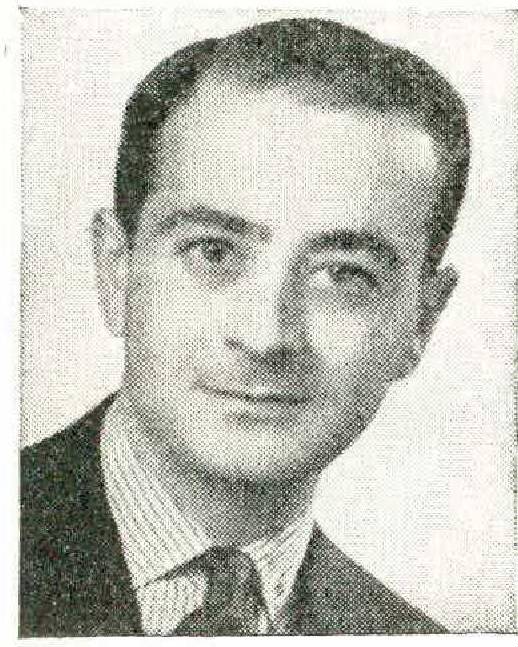
MORE novels than I care to remember have revolved around the question, Is the hero going to write that book? This is treated, in the customary formula, as a momentous conflict between virtue and vice. The fictional would-be writer is guilty of mundane cravings, which lead to a modern version of the compact with the Devil: he “sells out” to a cynical magazine or advertising agency. A mouselike Faust, he drifts guiltily into worldly indulgence— joyless wenching and exhausting tippling. In the end he achieves salvation — simply by sitting down to write a novel. The reader, more often than not, emerges with the feeling that the redemptive outcome to the hero’s conflict would have been suppression of the urge to play the novelist, a realization that to confect indifferent fiction is not synonymous with virtue or self-fulfillment.
The trouble with the theme of salvation via novel-writing (or painting, or composing music) is that the hero must be convincingly portrayed as an artist, a hard thing to do —even Thomas Wolfe did not bring it off too happily. If you are not convinced the author’s would-be novelist has real talent, all his heaving and straining novelward is merely embarrassing. This weakness crops up in the last section of a novel with considerable qualities: The Fires of Spring (Random House, $3.50) by James A. Michener, whose Tales of the South Pacific won the Pulitzer Prize in 1947.
David, write that book!
The Fires of Spring is an old-fashioned Bildungsroman, which traces the development of David Harper from childhood in a Pennsylvania poorhouse to early manhood in New York during the Depression. David grows into his teens, quite happily, in the poorhouse: the old men lavish kindness on him and stir his imagination with tall tales of their fine adventurous pasts. He does well at school, and is befriended by a rich Quaker family whose young daughter takes a lasting fancy to him. As an adolescent , he get s a summer job in an amusement park near Philadelphia: Mr. Michener, who also once worked in an amusement park, re-creates this raffish world in striking detail and original colors. Here David becomes an artist at short-changing customers, falls obsessively in love with a prostitute, and meets an ambitious singer who later enlarges his experience of human bondage. An unknown benefactor pays David’s way through college; then, after an adventurous summer with the Chautauqua (which the author trouped with, himself) David lands in New York. He works for a spell on a sex-and-murder magazine, and is put through the wringer by poverty, unrequited love, and the torment of trying to write a novel.
Mr. Michener makes of this a warmhearted, readable story, crammed with lively incident and a remarkably diversified array of characters. But sterner intelligence was required to infuse his vision with genuine meaning. The Fires of Spring is flawed by sentimentality and naïveté. Davids portentous discoveries on the journey toward manhood — the “meaning" of love, art, maturity, and so on — are made explicit in banalities. David’s conviction, “There’s no reason why I couldn’t write as well as Balzac,” remained, as far as I was concerned, one of many indications of his intellectual innocence, not an earnest of his mission. Consequently, the final conflict —novel-writing versus the wicked job — has a histrionic ring and is a rickety symbol of Michener’s theme: the struggle to keep alive the adventurous spirit and fierce ideals of youth, the “fires of Spring.”As for the denouement, Pollyanna takes command.
Waugh in Neutralia
Evelyn Waugh’s new novelette— “the story of a summer holiday, a light tale”—made me wish, on two different counts, that it were twice as long. In the first place, eighty-nine pages are too little of a good thing. Waugh has devised a situation perfectly suited to his temper and his genius for picaresque comedy—a seedy English schoolmaster is inveigled into attending, as British delegate, a phony cultural jamboree in a totalitarian state on the Mediterranean.
My more serious regret about the story’s brevity was that it does not allow room for Waugh’s subject — the germ of another Scoop or Black Mischief—to be properly exploited: one is left with a sense of unrealized possibilities. One is also left, however, with a thoroughly diverting burlesque. Totalitarian pseudo-culture and mores (“It is not what you do that counts, but who informs against you”) and the bureaucratic apparatus of a modern dictatorship furnish superb material to a satirist whose forte is handling nightmares in terms of farce. Scott-King’s Modern Europe (Little, Brown, $2.00) should not be missed by readers with a taste for Evelyn Waugh.
Scott-King has been classical master at Granchester for two decades. The epithet for him is “dim,” and it was blood-brotherhood in dimness which first drew him to study the long-forgotten poet Bellorius. The fruit of fifteen years’ devoted labor is a modest essay published in a learned journal. Surprisingly there follows an invitation to attend the Bellorius Tercentenary Celebration in the socalled Republic of Neutralia.
Along with a dim compatriot, a famous American woman correspondent, and a comely Scandinavian giantess (who has strayed from the Physical Training Congress), Scott-King is whirled through the horrors of totalitarian hospitality and cultural ceremonial— warm, sugary champagne and long, unintelligible speeches. Waugh’s story — rich in comic touches of Latin rascality and told with a sardonic zest — is climaxed by a scoundrelly hoax emanating from the Ministry of Popular Enlightenment, and by equal baseness, more harrowing in its consequences, on the part of the Ministry of Rest and Culture.
Mr. Waugh has made no secret of his distaste for contemporary society and his veneration of the ancien régime, so one knows what parting maxims to expect of him. His latest runs true to form. Scott-King’s experience of “modern Europe” sends him back to Granchester determined never to teach anything but the classics: “It would be very wicked indeed to do anything to fit a boy for the modern world.”
Dreadful freedom
Within the past year, six books by Jean-Paul Sartre have been published in America, and three plays of his have been on display in New York — all of which adds up to some sort of record.
Nausea (New Directions, $3.00), Sartre’s first novel, was published in France in the middle thirties. It deals with a mysterious inner crisis in the life of Antoine Roquentin, who, after some years of travel, has buried himself in the dismal provincial town of Bouville. Roquentin has lately been subject to shattering attacks of “nausea”— a species of d.t.’s without alcoholic cause — and he starts to keep a journal in the hope it will lead him to their source.
Nausea, in the existentialist lexicon, is the metaphysical anguish that accompanies man’s awareness of the human condition. According to Sartre (the quotations that follow are from his philosophical writings), man finds himself “thrust into a world” in which there is no God or material necessity which accounts for his existence. There is therefore no such thing as “human nature,” no preestablished code of values to serve as a moral compass. Man is totally free —“he is what HE wills himself to be”; and be is totally responsible — he “defines himself” by his actions and he has “no excuses.”
If man lets Ids freedom lie fallow, Sartre argues, lie ceases to be a man; it is freedom which differentiates him from “objects.” Freedom becomes real and concrete only to the degree it is committed to a comprehensive course of action — “There is no reality except in action. . . . What counts is total involvement.” Most of us, however, recoil from this awesome responsibility. We hide from awareness of our freedom by immersing ourselves in the trivia and selfdeceptions of daily routine, and by invoking codes, conventions, or conditioning to justify our behavior.
Sartre calls this “ bad faith.” What the hero of Nausea sets down in his journal —as he studies himself, the patrons in the cafe, the Self-Improver who is reading his way alphabetically through the public library — is an encyclopedia of “bad faith,”of human subterfuges and absurdities.
The novel is prefaced by a quotation from Céline, which is appropriate, for this is Satre’s own “ journey to the end of the night.” It reaches a desolate “happy ending.” Roquentin has so purged himself of self-deception that he finds life with his nausea — he has discovered it is self-awareness — not intolerable. A cracked record of “Some of These Days,” by which he has long been enchanted, suggests to him that man can perhaps justify his existence: he can act, create something.
Within the limits of his subject, Sartre has not neglected the creative task. His ideas are brought to life with great intensity in the texture of Roquentin’s experience, and there is a good deal of small incident which is gruesomely amusing. Nausea seems to me the best-written and most interesting of Sartre’s novels.
The Wall (New’ Directions, $7.50) —translated by Lloyd Alexander, who also did Nausea — is published in a luxurious limited edition. The book is a collection of five stories, three of them marked by extreme sensationalism. The title story details with brilliance (and a surprising climax) the night-before-execution of three Spanish Republicans. “The Childhood of a Leader” is also first-rate: it shows with great exactitude and penetration the development of a spoiled rich boy into an obsessive anti-Semite. Though Sartre’s fiction tends to have what many readers might consider a perverse flavor, it also has u singularity and intellectual vigor which are rare; whatever his merits or failings as a philosopher, Sartre is usually an extremely penetrating psychologist.
Between The Wall and Anti-Semite and Jew (Schocken, $2,75) came Sartre’s experience in the Resistance, which intensified his social interests and gave a decidedly more positive complexion to his writings. Sartre sums up the anti-Semite as “a man who is afraid . . . of himself, of his liberty, of his responsibilities, of change — of everything except the Jews. . . . If the Jew did not exist, the anti-Semite would invent him.” Anti-Semitism, then, is “a comprehensive attitude . . . fear of the human condition.” The anti-Semite has elected to be a pitiless Thing — “anything except a man.”
Sartre’s analysis of the dilemma of the Jew created a tremendous stir in France. Looking at the French Jew in the existing situation, Sartre notes that he has chosen to he either a Frenchman or a Jew. But though the Jew, Sartre argues, is “perfectly assimilable,” anti-Semitism does not allow him to choose not to be a Jew. The Jew who attempts assimilation is condemned (by anti-Semitism) to become “inauthentic,” a haunted man “continually in flight from others and from himself.” Thus the liberal, who insists that there is no such thing as Jew or Christian but merely Man, denies the Jew the only reality open to him, which is to “make himself a Jew” —and so become “authentic,” free from bad faith.
This does not solve his social problem. Indeed he cannot solve it, because “it is society that has brought the Jewish problem into being . . . it is we who force [the Jew] into the dilemma of authenticity or inauthenticity.”
Anti-Semitism, Sartre concludes — and here the analysis, which brashly rejects Freud, becomes shallower — is the product of the class tensions of bourgeois society, and can only be eliminated by “the socialist revolution.” This revolutionary outlook was one of the later developments in Existentialism, which remains completely at odds with dialectical materialism. Sartre and the Communists are continually bring broadsides at each other.
Death of a legend
During the night of January 29, 1889, Crown Prince Rudolph of Austria shot his mistress and then himself in the royal hunting lodge at Mayerling, near Vienna. The lovers’ suicide pact and its prologue quickly became one of history’s legendary “true romances,” now irresistibly associated with Charles Boyer and the fragile beauty of Danielle Darrieux. The legend is demolished with impressiveauthority by CountCarl Lonyay in Rudolph: The Tragedy of Mayerling (Scribner’s, $5.00). The author, whose uncle married Rudolph’s widow, has had access to a great many unpublished family documents, and to the secret state papers concerning Rudolph. Despite aristocratic descent, Count Lonyay writes of the Habsburgs with searing contempt, and documents the vices of the imperial regime with democratic fervor (and sometimes sententiousness). His biography, which makes lavish reference to original sources, is a thoroughly effective job — a fascinating chronicle and a spirited if minor addition to history.
In Count Lonyay’s post-mortem, Rudolph’s suicide emerges as the predestined and sordid climax to a lifelong case of psychoneurosis. Rudolph’s family tree showed “on his father’s side ... a strain of imbecility, and on his mother’s one of paranoia,”
A sickly, nervous child, who was criminally neglected by his parents, Rudolph was brought up by brutal tutors who stuffed him with learning and thwarted his interests—first science, then soldiering, then art and government. In order to distract him from public affairs — he showed a genuine sympathy for liberal reform —he was deliberately led into every sort of excess. He was spied on, at the Emperor’s order, twenty-four hours a day. He was pushed into marrying a Belgian princess described by contemporaries as “an obelisk of tactlessness” with “the daintiness of a dragoon.”
By his early twenties, Rudolph had — almost inevitably — become a physical and mental casualty. He drank heavily, took morphine, and suffered from “a venereal complaint.” Along with increasing moroseness came a reversion to Habsburg arrogance and a trace of the Habsburg bureaucratic mania. He had a member of Parliament savagely whipped for a disrespectful speech. He kept a “Register of Conquests,” each lady’s reward for enrollment being a silver cigarette case bearing one of five emblems, depending on her rank.
But even as a lover, Rudolph was not the man of the legend: he was not — his “conquests” gossiped — much of a man. Nor was he in love with Mary Vetsera, whom the legend has romanticized beyond recognition. The plump young Baroness was a notorious trollop, crazy with snobbery: what made her welcome the suicide pact, according to Lonyay, was the enthralling idea of being found dead in the bed of a prince. It is a weird matter of record that she was only Rudolph’s fourth choice as a dying companion. The honor had already been declined by two army officers and by another mistress (with whom Rudolph spent the night before driving to Mayerling).
Count Lonyay’s portrait of Franz Joseph and of life in the imperial court is a sharp corrective to the many sentimental accounts of the period. The “kind” old Emperor has left damning evidence he was an unfeeling hypocrite; his reaction to Rudolph’s suicide was, “My son died like a tailor,” his only concern was over possible scandal. As a ruler he was, in Lonyay’s phrase, a “petty quill driver,” who fiddled with his precious files while the empire tottered toward dissolution. A privileged adviser once wrote: “I cannot get the Allhighest gentleman out of the habit of telling lies.” The All-highest’s consuming passion was designing new buttons for the army uniforms.
As for his court, a forgotten detail rudely challenges the nostalgic image. In Vienna’s Imperial Palace there was not a single bathroom; in fact, there was no plumbing of any description.