Displeasure
RENE MACCOLL, Washington correspondent of the London Daily Express, is a frequent contributor to Accent on Living.
by RENÉ MACCOLL
THIS is a mealymouthed age. A time of euphemism and circumlocution. We refuse to face facts, even in print. Shrouds have long since become slumber robes, and coffins caskets. The prickly words of the Elizabethans have been chased into the deep shelters.
This soothing, crooning flight, from reality has lately taken a fresh turn. Its agents have found the ideal prefix with which to lull the unwary and reassure the timid. This prefix is “dis.” Give your molasses man a “dis” or two to play with and he will be back within the hour, a flock of verbal capons quacking quaveringly at his heels.
Here’s how it works. You are writing a piece. You reach the phrase “Her father was found drunk.” Too brutal. So you reach for your “dis” and you turn around and back daintily up on the problem. Result: a hygienic “Her father was found dissober.”

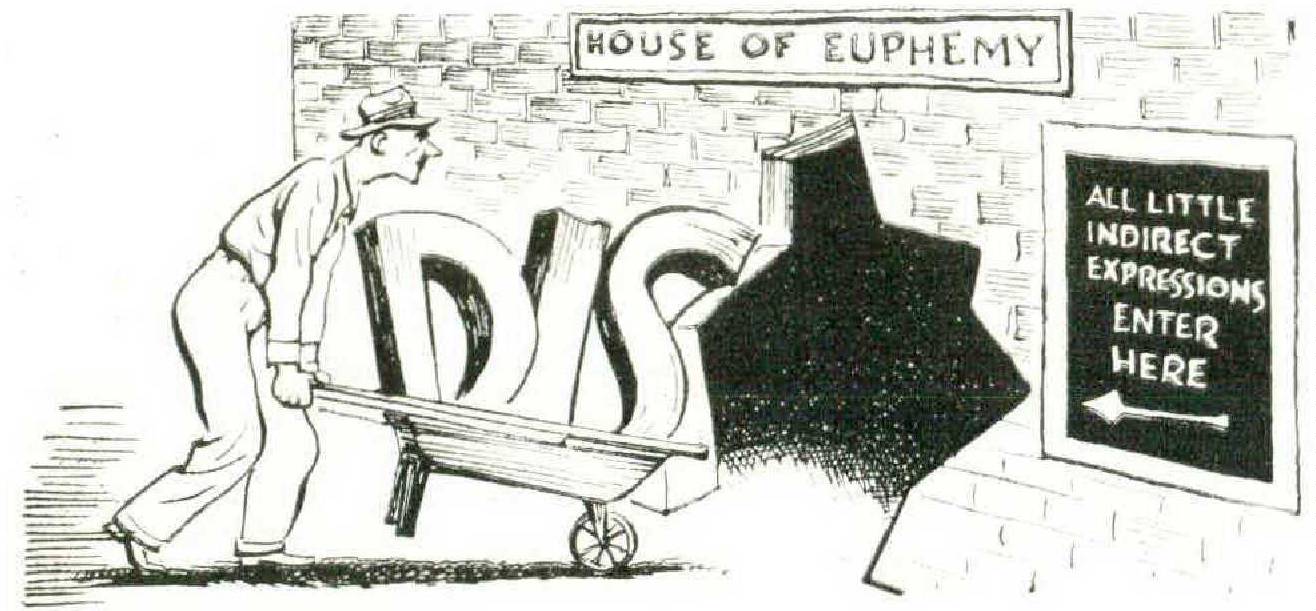
Two prime examples of this trick have recently caught my eye. In a magazine article the British economist Geoffrey Crowther discards “recession" — the hitherto modish substitute for the forthright, monosyllabic “slump” — in favor of “disinflation.”The other item is an extract from a recent analysis of the business outlook by the Federal Reserve Board. “The substantial dissaving in 1047 reflected the consumer willingness to spend freely. There was a significant rise in the number of dissevers.” Let us pay more attention to dissaving. “Why, Bobby, your piggy bank is empty!" “I know it, Pop. I’ve been dissaving again.”
What, one may ask, is wrong with the verb to spend? Whom is the Federal Reserve Board afraid of? Why this finger-in-mouth coyness? Why don’t they come right out and say that there are too many spendthrifts? If this tendency grows, I can foresee in the headlines, instead of “Fleeing Maniac Slays Four,” the news that “Fleeing Man, Dissane, Disenlivens Quartet.”
With an able assist from Crowther, the Federal Reserve Board, and the mealymouths in general, I am about to make a very tidy packet with a new soap opera. Title: Mrs. Cutbud’s Dismemberment.
Mrs. Cutbud is a dishappy-go-dislueky sort of woman who always manages to get the disking end of the stick. She worries herself diswell. Fverything is going disright. Her son has dispassed his exams. Her husband has just got a disraise from his firm, and she suspects that her daughter is being markedly disaloof with a married man.
But there is always Sorrell, the handsome doctor. For years theirs has been a disearthy friendship. High-minded, he makes only dispasses at Mrs. Cutbud.
“Sorrell,” she tells him, “sometimes I feel that I am going to discontinue it all. Here am I dissitting all day long over a discoid stove and what do I get out of it?”
Sorrell urges her to go away with him. “ You are dissaving the disworst years of your life,”he assures her.
“But — my husband?”
“Disworth a thought.”
“When we first married I used to run my fingers through his hair,” muses Mrs. C. “Now”—a bitter laugh “he’s got dishair.”
And so on.