This Month

IN setting out to publish articles about food and drink in this part of the Atlantic, we have turned resolutely away from certain specific ideologies in that field. Our general position is that the enjoyment of food and drink is one of the really great destinies of intelligent people. A wide subject, never static, it affects everyone. Although man has pursued it since he first discovered fire and the process of fermentation, its curriculum must be mastered anew, from baby food to Burgundy, by each generation. And as we have said, our own thoughts about it all have to do with enjoyment.
We omit freaky diets for the obese, the scrawny, or the ailing; neither do we wish to vie with the food interests shown by the consumers’ organizations. These groups might be called the soybean school: one pound of soybeans contains enough of everything to meet your energy needs for a whole weekend; why eat steak? From such sources we learn what we should eat in terms of necessary fatty acids, with vitamin D supplements in the wintertime; that vegetable fats and fortified oleomargarine are every bit as good as butter in this respect. We should eat with one eye on our pellagra potential, mindful of beriberi, the middleman, our calcium and dental decay, secondary anemia, and the household budget.
We should avoid wasting fuel by making sure that the gas flame never reaches up along the side of the kettle. (If there’s a tinge of yellow in it, we should clean out the burners then and there or complain to the company about the quality of the gas, and we ought not to overlook a chance to put the whole meal in a fireless cooker at an immense saving.) Our ice cream should be tested for the bacillus coli, mayonnaise for a deficiency in egg solids. Sweetbreads are a disadvantageous buy, practically immoral.
There is nothing for Atlantic readers, as we see it, in the literature of Household Hints, the I-servedtuna-fish-instead-of-chicken-for-my-bridge-club-andnobody-knew-the-difference kind of advice. This school goes in for novel table decorations, perhaps little men made of toothpicks, prunes, processed cheese, gherkins, and peanut shells. It believes maraschino cherries and chopped nuts are just as basic a part of the salad as olive oil and vinegar. Its disciples are all tomato stuffers, sculptors in orange peel and green peppers. They like whipped sweet potatoes topped with marshmallow and they add peas to all soups and sauces. A slice of roast beef would seem as outlandish to these people as American bison or shark fin. Their tables make many a four-color page in the illustrated magazines, but fortunately the Atlantic does not use photographs.
Our readers will escape involvement, also, in the haute cuisine. If they happen to possess old cognac and fine wines, our advice is to drink these rarities, judiciously, and not to expend them on soaking, stewing, and poaching sundry meats and fish. We believe in wine cookery as a handy way of boosting the standard of living, but we feel that vintage champagne is at its best bubbling in a glass and not in a Dutch oven. Our efforts will relate to less Lucullan but nevertheless effective proposals. We have found, for instance, that a pound of 35-cent coffee and two cups of molasses added to the parboiling stage of baked ham will prove rewarding; it may sound less sumptuous than “stewed in champagne” but it seems to us somehow a better idea.
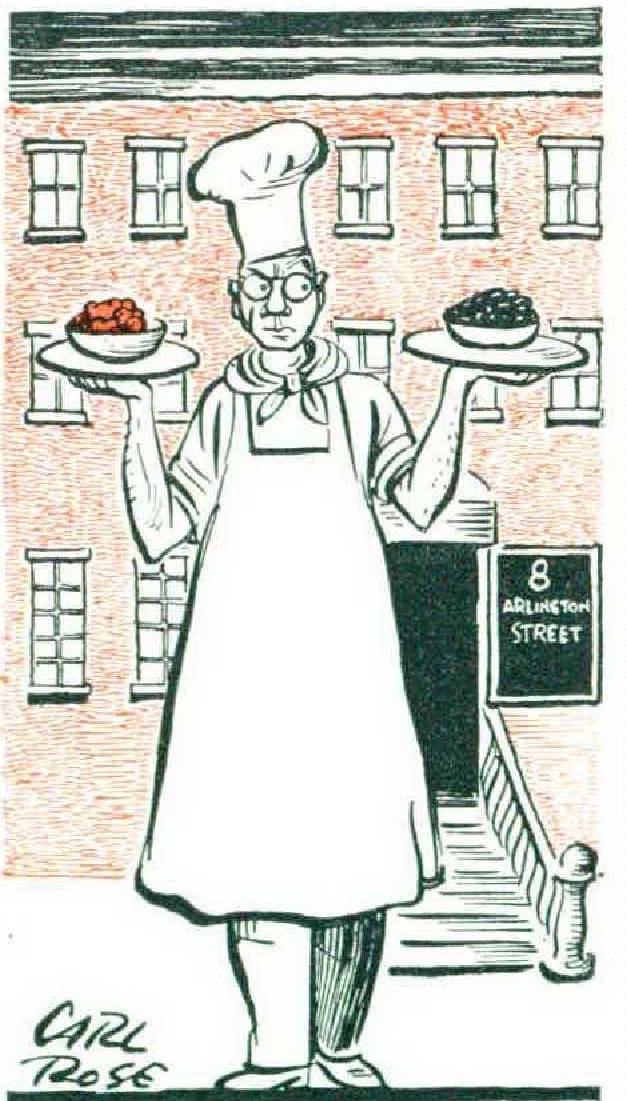
The series in Accent on Living from the pen of Crosby Gaige represents for us a reasonable point of view about food and drink. Gaige is a sound, practical cook. He made in his own kitchen, on one occasion, the soup for a serious demonstration of foodstuffs at a Waldorf-Astoria banquet. His data have been gathered thoughtfully all over the earth. We have never been able to come up with a reference to a dish or a drink of which Gaige lacked firsthand experience.
Never the man to overstate a dish just because it is unfamiliar or exotic, he once accepted gratefully from us a simple suggestion that thick, rare steaks, served and carved on a platter bedded with plain, piping hot spaghetti aided only by butter and salt and pepper, was a scheme of distinction. We feel a sense of reassurance in hearing from Gaige how much he has enjoyed one of his parties, or a ham or a green salad or a turkey. His case for cold meats and such has our hearty endorsement.