Cold Buffet

THE cold buffet can be made a memorable occasion if approached with a certain carefree generosity and a mind unhampered by such sordid considerations as budgets and home economics.
Originally a buffet was a cupboard for displaying dishes and glassware; later it was a restaurant bar; today it connotes a real party with action, fun, and plenty to eat. There are drinks, but the highballs are handmaidens to the hash. It is, or should be, the antithesis of the cocktail party, which, to my mind, is the lowest form of social intercourse.
It is pleasant to plan a buffet party to celebrate some special event like a birthday or baby’s first tooth. Anyone who expects to be successful at it with things disinterred from tin cans or with leftovers from the refrigerator had much better devote his time and energy to some other pursuit. Likewise the hors d’oeuvres, antipasto, or smorgasbord fiend will never excel as the designer of a proper cold buffet. Some day I hope to startle a world swarming with tidbit tinkerers by an all-out attack upon the so-called appetizer, which formerly, if served at all, came after the soup at well-considered tables. I will lay special stress on the smorgasbord, which stems from the pleasant land of Sweden, where the consumption of canned, smoked, or pickled fish is a national obsession.
Let me emphasize the fact that a dish for a cold buffet is an end in itself. It must be prepared with the point well in mind that its primary function is to be served cold rather than hot. It must have eyeappeal as it stands among its neighbors on the table. Whether it be a five-rib roast of beef, a saddle of mutton, a leg of lamb, or a bird of one sort or another, it must never present the tired look of something left over from last night’s dinner. If you carve a hot roast, it naturally gives out its juices. If the same roast, intended as a lavish and wholly intact offering for the cold buffet, is cooled, refrigerated, and then carved for the first time, it will make the ordinary cold leftovers seem dry and tasteless indeed. Once you have reached the momentous decision that a party is in order you should invite to it a few stout lads and lassies who are fitted for special jobs and are not only willing but eager to perform them. It is my mature conviction that the perfect host never works. He has the inspired gift of hospitality that makes each guest feel that he is a vital part of the household, and as such, the real Amphitryon of the occasion. You will never get the milk of human kindness from a harassed or hurried host who whirls from guest to guest scattering cocktails and canapes in all directions.
The Old Farmer’s Almanac had truthfully predicted a perfect day. The seventy-odd guests began to troop in about six o’clock sunset .
The buffet had been set up in the house. The bar was placed beneath a big black birch that sheltered a terrace. It was amply stocked with spiritual refreshments of all sorts. There was a new wooden washtub filled with cracked ice, and another tub piled high with ice and bottled beer.
Terraces and lawns were furnished with bridge tables and chairs sufficient for everyone to have a seat. It has always seemed to me to be the boiling point of discomfort to pack a crowd of people into a room not large enough to hold half the number. Everyone stands. Everyone has to stand, with a dry Martini in one hand and a dill pickle in the other, and say, “How are you?” and “Glad to meet you,” and try to shake hands without dropping either pickle or cocktail. It’s all very uncomfortable until you finally crash your way to the open and to escape.
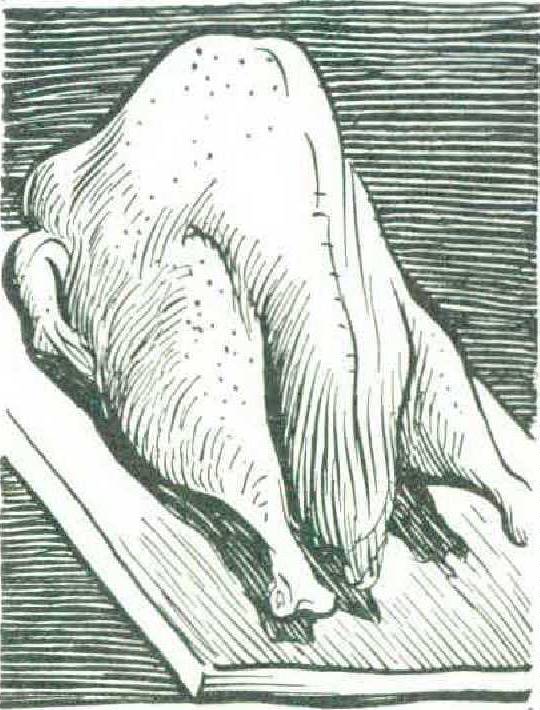
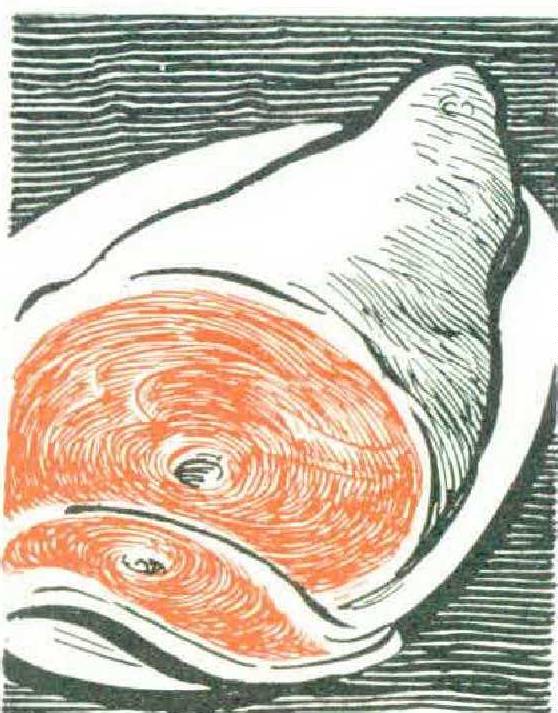
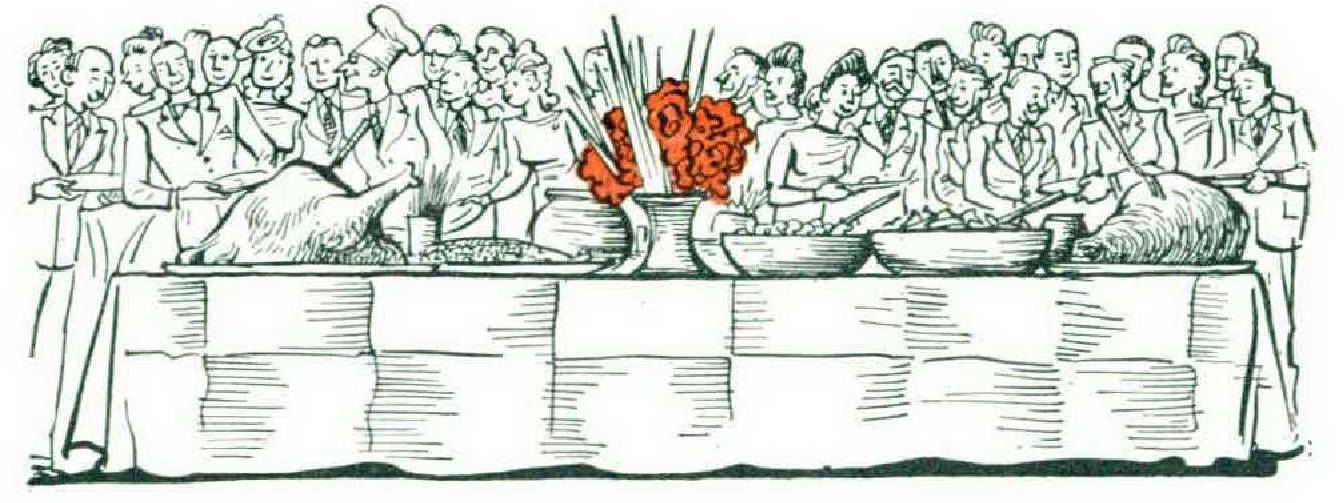
The components of the buffet were arranged upon the dining-room table, which had been let out to its full length. At one end of the table was a thirtypound turkey, roasted to brown perfection the day before, and reposing invitingly on a white mahogany carving board. At the other end of the table was a majestic Smithfield ham which had been wrapped in a blanket of sour rye dough and baked, like the turkey, the day before. On one side of the table was a long silver fish platter proudly bearing a full-sized lake trout boiled in court bouillon and cooled in the refrigerator. On the other side were two huge wooden bowls, one of mixed green salad and the other of potato salad. There was a two-gallon pot of baked beans.
In between were scattered vases of young scallions, iced dishes piled high with crisp and creamy-white raw cauliflower buds, sliced young raw carrots, and tender scarlet radishes. There were piles of breadand-butter sandwiches — homemade white bread, rye, and pumpernickel. Plates and silverware for service were stacked upon the sideboard, and as the ham and the turkey were carved, each guest helped himself or took on the extra duty of attending to a lady as well.
As the turkey easily ranked as the headliner in an all-star performance, let’s have a few quiet words among ourselves as to how to deal justly and competenty with our national bird.
The turkey and not the eagle, by all rights and justice, is really our national bird and as such should appear upon our coins and stamps and flags as well as upon our tables. The eagle is a thief and a scavenger. The turkey, despite his loud talk, has made himself popular in all parts of the world.
Whoever it was that first got the notion of stuffing a turkey would be considered, in my own school of thought, in the same class as the heretic who devised the idea of dunking a delicious oyster, fresh from the sea, in a birdbath of indifferent catsup dolled up with tabasco and horse-radish.
In other words, turkeys to be at their best should never be stuffed. You either like the turkey or you prefer the stuffing. The problem is as simple as that. Those addicts who say that the stuffing is the best part of a turkey dinner are unaware of the fact that the stuffing has acted as a blotter for absorbing the natural juices of the bird. For those who must have stuffing, an acceptable substitute may be had by making the stuffing in the usual manner, tying it up in a bag of cheesecloth, baking it in the pan along with the furkey, and basting it when the fowl is basted.
When the turkey for our buffet has been prepared for the roasting pan, the inside cavity should be anointed with melted butter and rubbed with a tablespoon of salt. The outside should have a bath of boiling butter, which will tend to sear it and close the pores. Then a massage of salt and pepper. A big bird should be roasted resting first on one wing and then on the other until back and both sides are nicely browned. Then it goes on its back for the final browning of the breast, which may be covered with a few slices of bacon. Put a little butter and hot water in the pan to start the liquid for basting and baste every 15 minutes. For a large turkey, 20 minutes roasting time per pound is about right.
When we come to the ham I would suggest a wellaged Smithfield ham of ample size — it might be 18 to 20 pounds— for a large party. The ham should be well scrubbed and soaked for at least 24 hours in cold water. Remove from the soak and scrub again with a brush so that any foreign material is removed. Place the ham, skin side down, in a large boiler and cover with cold water to which you have added a quart of dry ginger ale and a pint of vinegar. Add a bay leaf, 6 whole cloves, 2 or 3 onions, some peppercorns, and 2 or 3 sliced young carrots. Bring the water to a boil and then simmer slowly just below the boiling point for at least 20 minutes per pound of ham. Slow cooking is the secret of tender meat.
When the small bones are loose the ham will have been cooked sufficiently. No matter what any lady of the skillet may tell you, never stick a fork or any other sharp instrument into a cooking ham to see if it is tender. As a matter of fact, old-time cooks used to say that when the ham was done it would turn over. I have seen this happen with a 12-pound Smithfield cooked in a vessel sufficiently large; the ham actually did perform a slow, stately bobbing somersault at the psychological moment. You will need to add hot water from time to time as the cooking liquid evaporates.
When the boiling process is finished, remove the boiler from the stove and let the ham stay in the liquor until it cools. Then remove the ham and curefully skin without breaking or tearing the fat. Trim nicely so that the ham presents a neat appearance. Slowly bathe the ham with a cup of good brandy, letting it soak into the meat. Dust on about a teaspoon of black pepper and a like amount of powdered cloves. You should have on hand about 3 pounds of sour rye bread dough which you have either ordered from your baker or have made yourself. This should be rolled out into a blanket about an inch and a half thick and of sufficient size to wrap the ham completely. Fold this mantle tenderly around the ham and seal the edges so that you have a tight covering, with the seams on the bottom side. Place the ham, flat side down, in a large baking pan and bake in a slow oven, about 375° Fahrenheit, for 3 hours. Present it to your guests in its brown overcoat, which you crack off before carving. Many people will be bound to nibble at the crisp crust.