This Month

A radio expert was clearing away some of our misconceptions about radio in general. He did a brilliant job on them, shredded them up and tossed them to the winds. It left us adrift and reaching for a new mooring, something to tie to while we got used to the facts.
We had ventured to tell the expert of our distaste for “daytime” radio programs. Their output of family bickerings, conjugal suspicions, shrill accusations, and perpetual misunderstandings seems to us, we told him, insufficient. Could not a great industry, radio, think up a slightly less disgusting troupe of personalities to serialize? Must every husband be a dupe, each wife a mindless nuisance, and each judge—most of these people are regularly in and out of the courts — crooked?
The radio expert heard us out politely. He had heard it all before, the same kind of uninformed complaint, he said. It came from listeners who had no knowledge of radio. They did not realize its purpose, its method, or its true dimensions. Turning on a radio, such people made the mistake of turning on at the same time their mental processes; they listened for ideas and they allowed themselves to react, even thoughtfully, to what they heard. This was all wrong, had nothing whatever to do with the case. Radio was not intended for such listeners, and anyhow they could be measured only in several decimal places in the mass audience. The expert then warmed up to his main subject — the mass audience.
The great lump of radio listeners, the expert explained, simply turn the thing on in the morning and let it run all day. It makes a noise. In the course of time the noise becomes a familiar part of their daily background. It becomes a habit, part of the scene, like the engines’ drone in a transport plane or the clatter of a machine shop. The radio’s noise undergoes nominal changes as new voices and bits of music are mixed in, but it remains substantially the same noise all day — a radio noise.
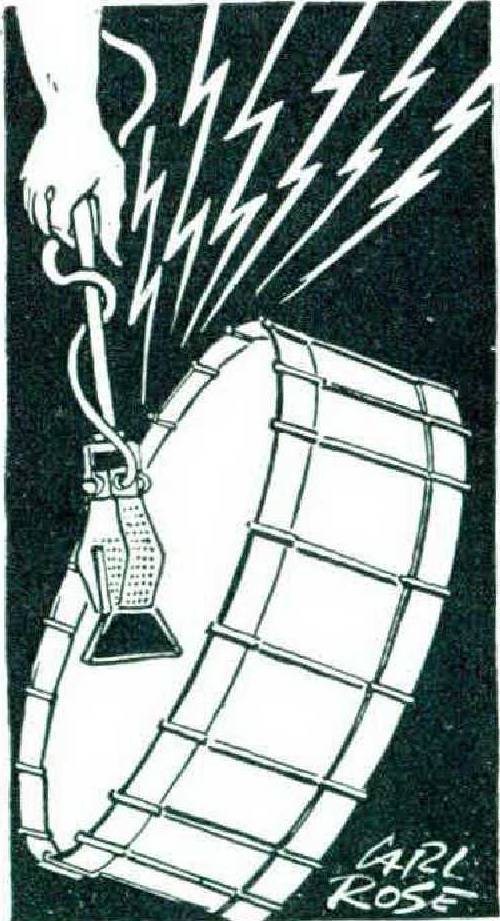
The importance of postulating this essential noise should not be minimized, the expert said. On it depends the slate of hypnosis, a kind of chronic suspension of the normal uses of mind and ear, which accomplishes the real purpose of American radio — namely, “impulse buying” on the part of the mass audience. As the term suggests, “impulse buying” has to do with small odds and ends — pills, powders, lotions, breakfast foods, biscuit mixes, and scalp restorers with which the mass audience preens and feeds itself and often wards off dangerous radio discases as well. Careful tests in retail stores, the expert said, showed a staggering percentage of sales caused solely by “impulse buying,” and certain products were always bought impulsively. These are incontestable facts, he said.
To get back to the noise. It goes on and on. It has no particular meaning. The listener ceases to give it any conscious attention. Hypnosis sets in; in millions of homes the noise continues. But carefully distributed throughout the noise — and at this point the expert was again speaking as one backed by the best of facts — are various crucial Words. These are key words, seed words if you please, words to be repeated again and again.
“Get them good and groggy and then hit them again,” was the way the expert put it. If hit often enough with the candy-bar word, the breakfast word, or the word that means an end of unsightly skin discolorations due to external causes, the listener, or half-listener, will subconsciously store up the word. On the listener’s eventual arrival, still in a trance, at a drugstore or any other of the shops dealing in Words, he will do the “impulse buying” which radio requires. He will then goon back home to the Noise.
At the risk of seeming a bit stubborn about radio, and in spite of the expert’s pronouncement, we shall continue to deal with the subject as part of Accent on Living. It’s a hard one to cover: writers won’t, as a rule, listen to radio, and the hypnotized listener doesn’t hear it. By long pursuit, however, we have finally caught up with several people who know radio from the inside and who have done some thinking about the ingredients of the Noise. We shall be stringing along with this subject for some time to come.