The Peripatetic Reviewer
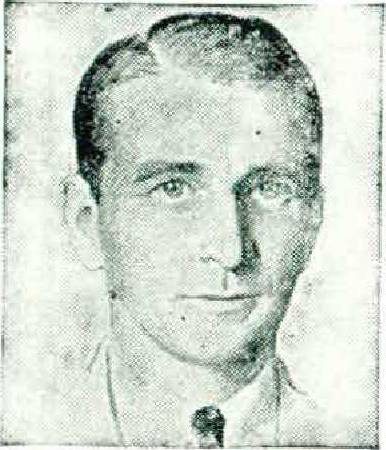
BY EDWARD WEEKS
“WHAT do you do,” asked a friend of mine, “with a boy who won’t read?” ought to have been ready with an answer, for I have just such a youngster of my own. But my nine-year-old, while he has made some progress lately, has not advanced to the Q.E.D. At the outset his resistance to print was painful in its stubbornness. Neither rewards nor punishments were effective; nor could I find among my old favorites books to lead him on. His mind was not sluggish: he would listen avidly to the evening stories I told, and repeat them with embellishments to his gang on camping trips. He could dope out comics almost as fast as a boy in uniform, but the unilluminated page of print held no invitation for him whatever. And what his teachers and I had patiently to discover was whether it was laziness or lack of adaptation which slowed his reading down. While we were searching for the answer, I traveled back in my mind to the days when books were an obligation rather than a pleasure to me.
Most of us parents make the mistake of believing that books which enthralled us at an uncertain age will be equally delightful to children. Alice in Wonderland, for instance, is a feast for parents. They love to read it aloud, but it doesn’t take a lie-detector to show that a boy finds it neither funny nor comprehensible. Dickens is almost always prescribed too early. I know that in my case those double columns of fine print and those bleak, unlovely illustrations were a bitter pill. Not until I was in the A.E.F. did I go back to Dickens with honest enjoyment. Books were pretty much a closed door to me from 1905 to 1910. The love stories in wolf’s clothing by Ernest Thompson Seton seemed to me sad and I tried to avoid them. Bob, Son of Battle was read aloud to me and we skipped the parts that made me cry. I heard — but did not read — Black Beauty, Uncle Remus, Tom Sawyer, Howard Pyle’s Robin Hood, and, best of all, A Connecticut Yankee. I read the Old Testament straight through with my godmother (skipping the “begats”). But that was duty, not pleasure. I visited the public library alone, asked for a good book, and was given a two-volume Life of George Washington. Which closed that avenue.
It was hero-worship which first made me explore books by myself. I was visiting my Navy cousins in Annapolis, and on one of the dog days in July
they took me into the cool, impressive tomb of our first great sailor, John Paul Jones. From there, we went to one of the other Naval Academy buildings, to gaze long at the beautiful models of the Ranger and the Bonhomme Richard, the two ships in which Captain Jones had electrified Europe. At that point the magnetism began to flow, and before my visit was over, I plugged my way through the more understandable chapters of three books on John Paul Jones.
IN THIS ISSUE
THE GRAVEDIGGERS OF FRANCE • BY PERTINAX
Reviewed by William Henry Chamberlin
CLUNY BROWN • BY MARGERY SHARP
Reviewed by Frances Woodward
LABOR LAWYER • BY LOUIS WALDMAN
Reviewed by T. R. Powell
THE WORLD OF WASHINGTON IRVING • BY VAN WYCK BROOKS Reviewed by Claude M. Fuess
THE DEVIOUS WAY • BY THEODORE MORRISON
Reviewed by Ellery Sedgwick
THE ORACLE OF BROADWAY BY HELEN M. MOROSCO AND LEONARD PAUL Dugger Reviewed by Leo Lerman
Reading came easier after that eye-opener, though I still followed my preference for stories with lots of conversation. St. Nick was a great appetizer. Ralph Henry Barbour gave me what neither Tom Brown nor Horatio Alger could ever give — a feeling that these were real boys, a little older and a little more heroic than I was myself. From Barbour it was an easy jump to the Lawrenceville of Owen Johnson. His Dink Stover, his Tennessee Shad, and his Humming Bird were boys I’d love to have known, and they gave me the pass key to Stalky & Co. Once I began reading Kipling, I never stopped. Those brown volumes with the elephant cameo and the beautifully spaced print I took in slowly and with complete absorption. I read them one after the other — the entire set — through a spellbound autumn. And when I had finished, my blinders had disappeared.
Heroes and handicaps
In these days Robin Hood and Robinson Crusoe are outmatched by Superman, and he in turn is overshadowed by Admiral Halsey, General Patton, and Monty. It is quite natural that the exploits and hero-worship of this war should rouse many a boy from t he lethargy of non-reading.
But there remains the boy who makes hard going of the printed page, the boy who works twice as hard, oftentimes for only half the result. His case we are just beginning to comprehend. My boy is left-handed, he is a southpaw, he kicks with his left foot — and with this left dominance, as they call it, it was natural for him to read from right to left. Reading that way doesn’t make sense, and in his bewilderment he stopped.
About one boy in seven has this left control, and what such youngsters suffer, in adapting themselves to a right-handed world, we right-handed parents and teachers seldom realize. For them the first and second grades are a desert of misunderstanding. When they look at a page, the letters are automatically reversed. At an early age you may get a hint of this in their mirror writing. I remember the Hallowe’en (he was six) when he carved his name ”DET on the pumpkin. If you stick with him in his reading, you will see how his eye reverses our right-hand pattern. You will see how “was” becomes “saw ”; you will see how “to,” if read hurriedly, becomes “of” (he sees “o” first and guesses at the consonant); you will see how, in his hurry to keep up, his eye will skip to the right-hand end of the sentence, in his search for the first key-word. These left readers, as I call them, work so hard for so little return.
I remember putting an extra blanket on him one winter’s night and hearing him murmur in his sleep, “I don’t get it! I just don’t get it!” He doesn’t get it because usually there isn’t time for readjustment. In Europe, where traditionally they have no patience with left-handedness, the slow readers are shoved into trade. Here, until recently, we classified them as scientists (he’s no good at books; therefore, he must be good at figures), or we classified them as stupid or careless. Now we are learning better. We are learning that these left readers can adapt themselves to a right-handed page, and in the remedial reading courses in our preparatory schools and colleges we are coming late to the rescue of those bright enough to carry on despite their handicap. A friend of mine, expert in his detection of this left dominance, read the 850 bluebooks of a freshman class at Harvard and foretold in advance the 130 men who would have difficulty with their reading — and writing — in the year ahead. He expected that they would be reported to him for remedial work, and they were, every man of them, before the year was over.
The question is, and it is a question we might be thinking about in Children’s Book Week, what practical aids can we give these left readers in the formative years when their handicap hurts most? To begin with, we have to establish a new habit, and that takes more time and more patience than most parents or teachers are habituated to give. So I prescribe patience as the first and indispensable tonic. Next, an old typewriter, or one of those rubber-ringed models for children, will strengthen the habit of forming words from left to right. Next, have the boy read aloud to you while you look over his shoulder. This way you will see his hurdles and can encourage him not to jump from the wrong side. A left reader has to make twice the normal effort, so expect him to tire fairly soon; when he tires, the mirror reading, the reversal of letters, and the other errors will become more apparent. Finally, rouse his interest.
One left reader I knew made virtually no progress up to his twelfth year. Then he became interested in following the Graf Zeppelin around the world. First he got the family to read to him. Then, as this became a bore, he began to figure out the headlines and as much as he could grasp of the news stories. In these days when American heroes have caught the imagination of every town, it seems to me inexcusable to let a boy’s mind go to seed.
10,000 times 10,000
Many a good book has been called to Hollywood, but only a few, a very few, have emerged with their integrity intact in a film. For this debasement bad producing rather than bad acting is generally to blame. Hollywood puts box office ahead of aesthetics; and in their quest for the Greatest Common Denominator, producers oversimplify and vulgarize books which they are afraid will otherwise be too “brow” for the public.
The competition for “photogenetic” literature grows keener as the war drags on and as the number of accessible and popular novels shrinks. In times past most novels have been sold to the studios after publication (Gone with the Wind, a blazing exception, was sold for $50,000 before the public had ever seen it. Had Miss Mitchell waited . . .), and in most cases there is a direct ratio between the book sales and the purchase price: the larger the sale, the higher the price. But in the face of the shortage this spring, MGM decided not to wait for the printed book: they set up a prize of $125,000 for the best novel submitted to them in manuscript form by July 1. When the prize was awarded to Green Dolphin Street by Elizabeth Goudge of England, we had the chance to see what Hollywood demands of an expensive novel.
Since Green Dolphin Street is being celebrated as source material for a film, it seems only fair to preview it as a picture. It is a romantic, Old World picture begun in the little city of St. Pierre in the Channel Islands in the mid-nineteenth century and traveling on to New Zealand for its heartache. The costumes of the island and the graces of the period will lend themselves to technicolor. The narrow, crooked streets leading down to the tumultuous sea, the clipper ship as she wings her way out of the harbor, the perilous stairway which the Norman monks carved out of the rock face leading straight to the height of Notre Dame du Castel, the exquisite walled gardens of Le Paradis, and the jolly revels of Midsummer Day — here are scenes which can be acted with such perfection of detail that one will hardly pause to question the central improbability on which the entire plot depends.
That a British naval officer, however reckless and lackadaisical, should forget the name of the girl he has loved ever since he was fourteen, and in his forgetfulness marry her sister, strikes me as not only something which is not cricket, but something which is not done. It is true that the sisters’ names both begin with M, but there the likeness ceases — as William well knew. It is inconceivable that some term of endearment, some pet name coined by the lovers, might not have saved the young exile from his marital mistake. But if there is one workshop in the world with enough guile and skill to cover up this fallacy, Hollywood is the place.
This story will show to better advantage in film than in print. Green Dolphin Street is utterly lacking in suspense, the characters are foreordained, and every effect down to the smallest happen-stance is telegraphed ahead to even the mildly observant reader. There is no possibility of surprise, no spontaneity of grow th. Instead one has the gratification of looking at a world whose contours have been softened by pink veils. Miss Goudge is a spinner of words, and in thousands upon thousands of them she writes of the sea, the birds, the sky, the picture ships, of untamed New Zealand smothered in honeysuckle, in a style which only time can pall. Personally I got tired a long way from the end.
Blood and ivory
In her Foreword to a recent reprint of her first book, Flowering Judas and Other Stories,Katherine Anne Porter has this to say: “It is just ten years since this collection of short stories first appeared.
. . . Looking at them again, it is possible still to say that I do not repent of them; if they were not yet written, I should have to write them still. . . . To any speculation from interested sources as to why there were not more of them, I can answer simply and truthfully that I was not one of those who could flourish in the conditions of the past two decades. They are fragments of a much larger plan which I am still engaged in carrying out, and they are what I was then able to achieve in the way of order and form and statement in a period of grotesque dislocations in a whole society when the world was heaving in the sickness of a millennial change.”
In this lofty, ivory-tower voice speaks the perfectionist, intent on filigree, disdainful and baffled by the turns of a rude world. In her first book Miss Porter made her bid as a stylist and was much praised for her slender, carefully wrought narratives; and with this praise the legend grew that in her next book — or the one after the next — Miss Porter would assert herself as a full-fledged novelist. As one friend put it, if Miss Porter wrote novels, they would be better novels than Hemingway’s. But that condition is unfulfilled and we must continue to judge her on the merits of her short stories.
The Leaning Tower and Other Stories, Miss Porter’s third book in fourteen years, is fastidious in phrase, feminine and knowledgeable in observation, and very frail in vitality. In each of these nine stories, the author establishes a mood, and then probes, rather like a dentist, for the momentary reactions of her patient. A child goes to a circus, is frightened by a clown, and is taken home by a rebellious Negro nurse who would like to see more; an American art student (of whose talent we have no inkling) tries to find his feet in Berlin and is depressed by the Germans in his boardinghouse; a little boy whose parents squabble goes to visit his grandmother, in whose household he is also chivied, and when his mother drives him home, he sings to himself a comfortable, sleepy song: “I hate Papa, I hate Mama, I hate Grandma, I hate Uncle David, I hate Old Janet, I hate Marjory, I hate Papa, I hate Mama . .
Nothing much happens in these stories. The people do too little to excite your curiosity or deepen your sympathy. One must respect the sheer virtuosity of Miss Porter’s prose, which is supple and ever so carefully selected. But style without warmth, like character without emotion, can be a tedious affair. These stories miss the intensity of Katherine Mansfield’s best; they miss the savor and hidden irony of Max Beerbohm, or the warm, spirited flow and movement of Anne Lindbergh; they miss the searching originality of Eudora Welty. There is a static quality here, and I say so with the genuine disappointment of one who enjoyed Flowering Judas.
The fiction of Katherine Anne Porter seems finicky when compared with a novelette like Valley of the Sky. Here is a case of too much, not too little, vitality. Within the compass of this short and attractively designed war book, S/Sgt. Hobert Douglas Skidmore tells of the private lives and present adventures of a bomber crew flying out on a mission in the Pacific. Beginning with Walt the belly gunner and newest replacement from the States, the narrative traces its course up and down the ship, dwelling on man after man — now on Sgt. Poniatowski the waist gunner and superb mechanic, now on Chief Washington, a full-blooded Indian and the nose gunner, and now on Jerry the pilot and the most experienced of the ten. These men are bound together by intimacy and dependence and we watch them under the strain and impact of emergency and we hear as from a distance their past to which their minds revert in the lulls. Mr. Skidmore has his favorites in the crew — Pon, Mike, and Chief are three of them — and I fancy that he is a little closer in spirit to the noncoms than to the officers. Certainly he draws them better. The feel, the power, and the vulnerability of the “Heartless Harpie” are well conveyed. The action is breathtaking and perhaps a shade exaggerated — I mean for a single mission; and when in reverie the author pulls out the stops and lets his aspirations soar, the writing is at once immature and touching. A first book, and a good one.