The Gravediggers of France
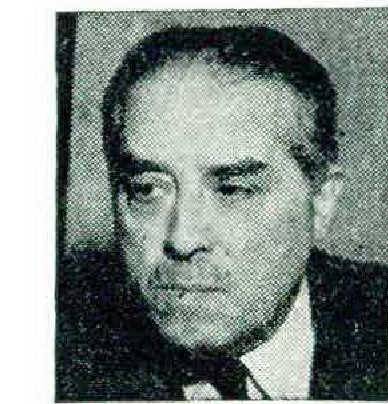
By
THIS is far and away the most authoritative and informative account of the French military and political collapse and of the establishment of the feeble Vichy dictatorship. Immediately after the tragic weeks of May and June, 1940, the American market was flooded with books purporting to explain why France fell. At their best these were impressionistic reports; at their worst they were exaggerated and misleading propaganda. The time had not come when all the threads of the national catastrophe could be woven into a coherent pattern.
Now France’s most distinguished international journalist, André Géraud, so widely known under his pseudonym of Pertinax, has prepared a solid, massive work of six hundred pages which possesses the qualities of permanent history. Every incident in the collapse of France, the personalities of its leaders, the negligent preparation for the war, the stunning defeats, the frantic days of chaos and disintegration at Tours and Bordeaux, is closely and critically examined.
Here one has not the hasty improvised impressions of a foreign observer, or of a Frenchman inexperienced in political life, but the ripe, considered judgment of a man who had lived and breathed politics for decades, who knew personally most of the major and minor actors in the tragic drama which he describes.
As the title indicates, attention is focused on the personalities of the leaders who failed France in her supreme crisis: on Daladier and Reynaud, the last two premiers; on Gamelin and Weygand, the unsuccessful generals; on Pétain and Laval, who exploited the defeat in order to set up a counter-revolutionary regime. With a vast background of historical and classical knowledge the author combines a sharp Gallic wit. Some of the phrases in which he hits off the men of defeat make a deep and lasting impression.
Gamelin was “a military Buddha. The list of surprises sprung upon him by the blitzkrieg was a long one. His inertia was a match for it. There is a striking account of how, on May 15, less than a week after the beginning of the German offensive, Gamelin fatalistically informed the horrified War Minister, Daladier, that the French Army was doomed.
Daladier, the baker’s son from a little town in Southern France, did not deserve his reputation for stubborn energy. He is depicted as “ weak and irresolute, a dictator in spite of himself.” Paul Reynaud, who succeeded Daladier in the last months of the war, despite his keen intelligence, his recognition of what a Nazi conquest would mean, “in the end had no fortitude to show except in speech-making.” His life was all fits and starts. He was the victim of the intrigues of his mistress, the Countess de Portes, and of an intriguing cabal that surrounded him as a kind of inner council.
Weygand, the famous associate of Foch, had turned fanatically reactionary and succumbed to the temptation to make England the scapegoat for his failure to save the military situation. Pertinax has no sentimental feeling for Pétain. “He lacked breadth of outlook and what may be termed imagination oi the heart. On the level of intelligence and feeling, he was dull and commonplace.” And Laval, of course, is the most sinister figure of all.
With all its conspicuous merits, the book suffers from some defects, especially in the matter of organization. To know too little is fatal; but there is also sometimes a danger when an author knows too much. The grand march of Pertinax’s narrative is sometimes impeded by the undue intrusion of unimportant individuals and minor details. He flits from war scenes to pre-war political developments and back again in a fashion that may be confusing to some American readers. The method of the daily commentator for a newspaper is carried over a little too faithfully into a book where selection and discrimination are essential. The book might have left a stronger and clearer impression, especially on the non-French reader, if it had been somewhat cut down.
As for interpretation, the author does not always bear in mind that few Frenchmen were so unconditionally committed to the idea of war to the bitter end and close alliance with England in 1939 as he was. Lukewarmness about the war was so widespread that even greater men than Daladier and Reynaud would have found it difficult to arouse national enthusiasm, although the author is correct in noting that treachery, in the strict meaning of the word, did not play an important part in the defeat.
With all these reservations, it will be a long time before American readers will possess a source book of equal authority and value on the men, events, and ideas of the French collapse. This is a sad chapter in French history, to which, as everyone hopes, a brighter sequel is now being written. Doubleday, Doran, $6.00.
WILLIAM HENRY CHAMBERLIN