Lady by Act of Congress
By HARRIETT SEYMOUR
IT LONG has been standing gossip among Naval enlisted men’s wives that invitations to all-ship activities are worded to include “Officers and their ladies, enlisted men and their wives.” Until the prewar expansion program became effective, that line of demarcation was well defined. Daily the formerly well-fenced social horizons become more obscured.
To one who long has maintained that she merely is in the Navy, not of it, the social perplexities reach humorous heights. I once was in the humbler half of those invitations. My husband enlisted many years ago and worked his way up from the ranks to become a commissioned officer. Since I was his wife then, and I’m still his wife now, I’ve gone along on t he ride.
I recall those dead but decidedly not so dear days when I groveled in the depths of social obscurity. My acquaintance with the upper strata was not the bowing one which I enjoy today. Indeed no. I then viewed t he comings and goings of my more fort unate sisters only from afar. From the social columns of our city newspapers the picture of Mrs. Ensign Soand-so smiled at me as she played golf. Or Mrs. Lieutenant Commander Whosis waved gavly in my direction simultaneously with taking her jumper over the hurdles. Occasionally I was accorded the high privilege of a stilled look from a 2-col. of Mrs. Admiral Blankname who had just returned to her home following an extended safari into the wilds of a near-by winter resort.
But could I get nearer? Not on your best gold chinstrap.
These caste differences in the organizations purportedly maintained for the perpetuation of democracy were emphasized even more strongly by my husband’s attitude. Born as he was on soil we now call Allied, and uniting his fate with the Navy’s as he did for the highly commendable reason of a sense of indebtedness to this great country of ours for the privileges he had received, his attitude is understandable. But breathes there the human being who always has understood and never disagreed?
I have protested when we were forced to adopt the slower pace of the officer strolling ahead on the street. BurNavReg number unknown: prohibiting junior from passing a superior without a “By your leave, Sir.” (Note: Intended for conduct aboard ship and Navy establishments, but my guy’s consistent.) I have protested when we surrendered our place in the theater queue or restaurant line with a smile for the man with the gold braid — or lace; I mustn’t be vulgar — on his arm. And how I protested when sales clerks left us waiting uncounted minutes while they attended the needs of those Olympian souls.
While originally I hadn’t the slightest intention of being at all fair or even tolerant about this thing, I must admit that there was a slight foothold of truth upon which the phraseology of invitat ions could have rested in the beginning.
Before my time, I understand, it was common civil practice to hand offenders a jail sentence with a cruise in the Navy as an alternative. Since this is not a treatise on democracy, I hope I can say without too much criticism that, were I an officer’s wife in those days, I shouldn’t want to bump into some convicted robber’s moll either. In those days there was a necessity for the line.
But the Navy is different today. Except for the standards of aviation schools, there is no branch of the service with higher requirements than the Navy. Former professors, lawyers, doctors, and other professional men are filling the upper brackets now, and that higher level is, in turn, transmitted down through the line to the enlisted men, where the IQ is at its highest. No X marks the spot of Joe Bootcamp’s signature these days. He writes his name in a well-trained hand. Chances are he is at least a high school graduate and has plans for more education when the war is over.
Joe’s wife knows which fork to use, too. Rarely does she split an infinitive or dangle the participle. She’s a nice girl, and it’s about time somebody recognized the fact.
Perhaps I’m biased in her favor because I once was she. But if I am, the bias is true because I’m on the other side of the fence now and I’m being looked at by the same gals at whom I looked so long.
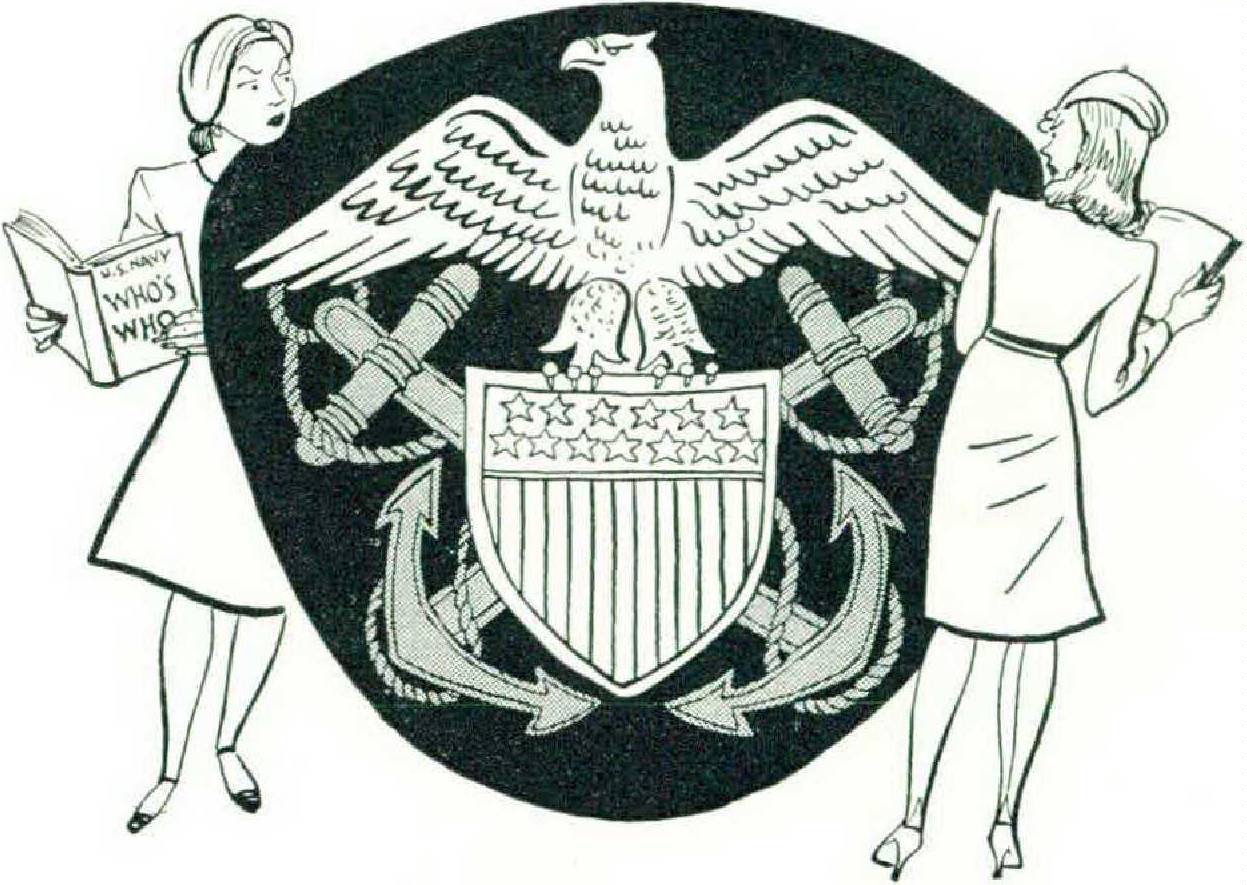
Covertly, oh ever so covertly, the ladies I meet at bridge look up my husband’s name in the nautical equivalent of Who’s Who. They can go clear back — and probably do — to the first Annapolis graduation lists, and they don’t find his name. And believe me, there’s no clearance tolerance here — there’s not even any tolerance. No name, out of bounds. And, brother, I’m not kidding.
They tell me the first Annapolis graduates were numbered according to their class standings. High man, number 1, and so on down the line. Which should catch you up on that point. The second graduating class received numbers consecutive from the last number of the first class, and so down through history.
If you don’t know what that has to do with us wives, you don’t know much about women. All ensigns look alike and ditto lieutenants. But everyone has a number. After all these years it must take spherical trig to find out who has the drop on whom, but those gals do it — discreetly, it is needless to add.
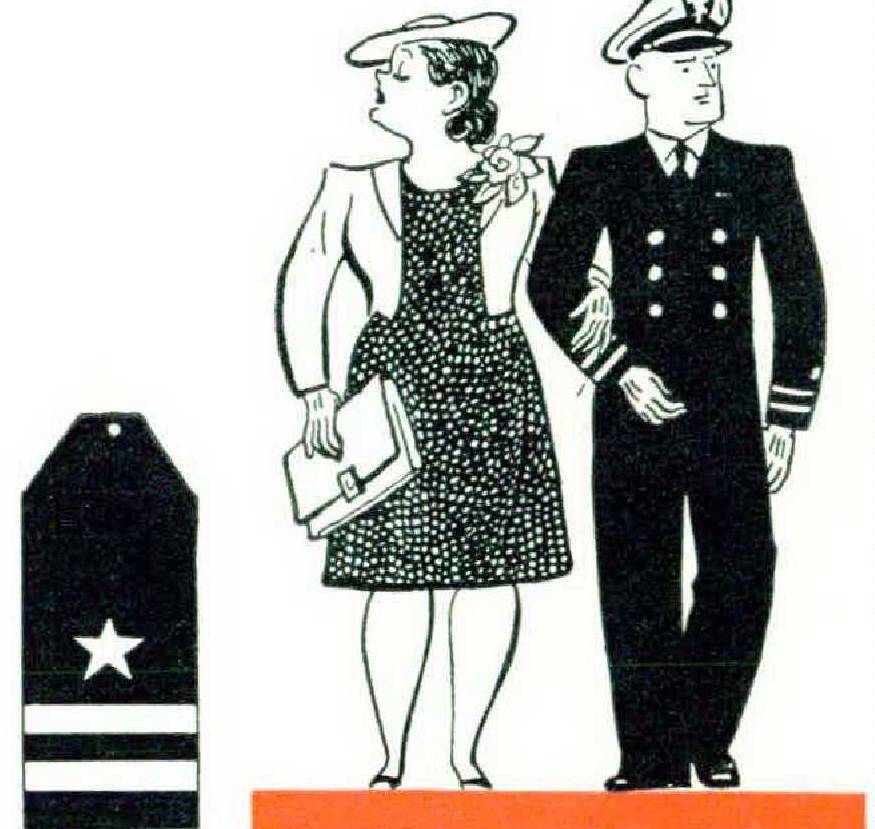
When a lieutenant’s wife becomes acquainted with a lieutenant’s wife, they don’t step over dead bodies in their frant ic haste to get home for a look at That Book, but the effect is the same. You can tell who won t he next time t hey meet. The senior is the one with the slightly upraised profile.
Perhaps you can see where that leaves wives without a number to their name. Now I shouldn’t put it so baldly. Our husbands have numbers all right, but their names have been inserted into the lists. It doesn’t seem to me those numbers are in neon, but then I’m crass.
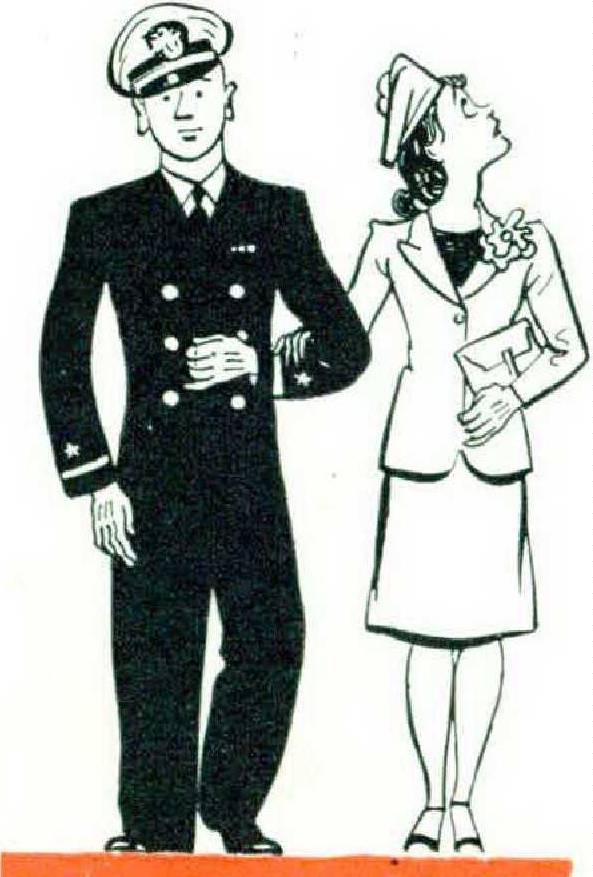
However, our guys aren’t always “anchor men.” We mustangs’ wives (that’s the Navy’s inelegant description of us who have married men from the ranks) can score on the occasions when we have rank. It’s Cinderella’s night out then.
- HARRIETT SEYMOUR is the nom de guerre of a “Navy mustang’s” wife.↩