The Contributors' Column
TODAY from Maine to California there is one insistent question which clamors for an answer: What is the best I can do to help the country? One thing we all can and must do — put an instant stop to the waste and carelessness which have made us the most luxurious people on earth. We have, says Marquis Childs (p. 133), ‘a bedrock of American thrift on which to build. It been overlaid with a plating of shiny chromium but down beneath it is still there, a solid inheritance to be drawn on in this time of national need.’
One of the ablest of the Washington correspondents, Mr. Childs has a reputation which extends beyond the reaches of his own paper, the St. Louis Post-Dispatch. A graduate of the University of Wisconsin, class of 1923, he is the author of Sweden — The Middle Way (1936).
From Sandakan, North Borneo, the Atlantic recently received a letter by Agnes Keith (p. 142), author of Land Below the Wind and an American who has made a place for herself in one of the outermost reaches of the Empire. Mrs. Keith’s letter was written before the Japanese Invasion, but it leaves no doubt that the blow was momentarily expected. At this writing, word has been received that Mrs. Keith, her husband, and her two-year-old son are still in Borneo.
An American poet, member of Harvard’s class of 1911, Conrad Aiken (p. 146), with seventeen volumes of verse to his credit and a Pulitzer Prize, has come home to a Cape Cod cottage after many years of residence in Sussex, England.
Pravda’s editorial on the defense of Manila is one more indication that our partnership with Russia for the defeat of Hitler will result in some very plain speaking, both during the war and after. We know of no American better qualified to survey this problematical relationship than William Henry Chamberlin (p. 148), who was for twelve years the Moscow correspondent of the Christian Science Monitor.
Gerald Johnson (p. 156) of the Baltimore Sun wants every newspaperman to bear in mind the new responsibilities which the Press must assume in this total war.
Howard Spring (P. 162), the author of My Son, My Son! came into his own as a novelist after long experience in the ranks of English journalism. The son of an Irish gardener, he spent his boyhood in the neighborhood of the Cardiff docks. He was a wage earner in his thirteenth year and picked up his education wherever books were available: now in the office and chapel of the Plymouth Brethren and now in a night school of Manchester, England. Then he became a journalist, and finally in his forty-third year, he began to apply himself seriously to the writing of fiction.
Professor Emeritus at Harvard, Alfred North Whitehead (p. 172) is a philosopher in whom England and America take equal pride.
The most eminent of living German authors, winner of the Nobel Prize and known the world over for his The Magic Mountain, Buddenbrooks, and Death in Venice,Thomas Mann (p. 176) now makes his home in California.
Antoine de Saint-Exupéry (p. 184) won his wings by flying the mail over the Riffian Deserts at a time when the Moors were in revolt. During his twenty-one years as a pilot he has familiarized himself with the airways over Africa, South America, Europe, and Asia. He made a forced landing in the Libyan Desert and lived to tell the tale (in Wind, Sand and Stars), he made a record-breaking flight from Paris to Indo-China, and he survived a terrific crash while outward bound in a new plane for South America. In 1939, he was one of the first to volunteer for the French Air Force, where he served as a captain pilot until the collapse.
The Atlantic is happy to serialize his new narrative, Flight to Arras. The work has been admirably translated by Lewis Galantière, and will appear in book form this spring.
Formerly the editor of the Virginia Quarterly,Lawrence Lee (p. 206) is a Southern poet for whom there has always been a cordial welcome on Arlington Street.
A Philadelphian, born in 1885, Philip Goodman (p. 207) eventually came to Manhattan to publish the books of his friends H. L. Mencken, George Jean Nathan, and Arthur Hopkins. Then, in collaboration with Hopkins, he put on a production of Don Marquis’s play, The Old Soak, which met with such success that he abandoned publishing to become a Broadway producer. His biggest hit was Poppy, with W. C. Fields and Madge Kennedy. The Atlantic has selected three chapters of his posthumous book, Franklin Street, which is to be published by Alfred Knopf this spring.
The business of educating daughters was never more complicated than at the present, and the Atlantic is pleased to learn from Mildred H. McAfee (p. 211) of the part which Wellesley College plays in such a process. Born in Parkerviile, Missouri, at the turn of the century, Miss McAfee graduated from Vassar in 1920 (where she was president of her class and Phi Beta Kappa), took her M.A. at the University of Chicago, was Dean of Women at Oberlin, and in 1936 assumed the Presidency of Wellesley at the retirement of Ellen Fitz Pendleton.
Every lecturer and politician returned home after a campaign has felt the deflation which John Mason Brown (p. 219) has described so poignantly in this issue. Dramatic critic of the World-Telegram, Mr. Brown is soon to publish a new book, Accustomed As I Am, under the imprint of W. W. Norton.
An engineer by training, an educator who rose to be President of Antioch College, a public servant who was one of the triumvirate entrusted with the building and operation of TVA, Arthur E. Morgan (p. 222) is an American who likes to get down to fundamentals. His wide experience and his technical knowledge are both brought into play as he surveys the influence of the small American town of today.
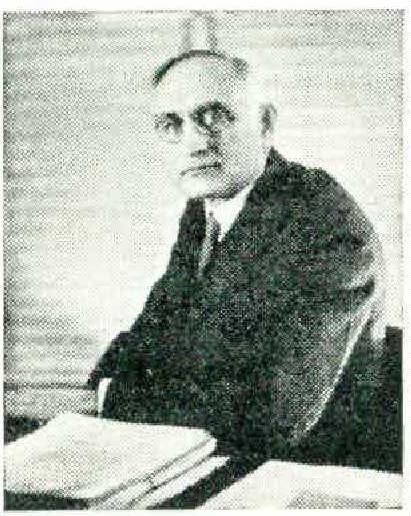
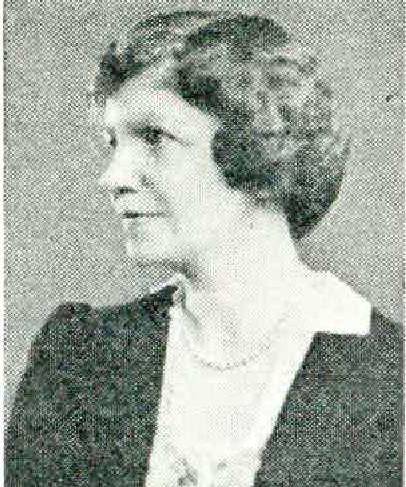
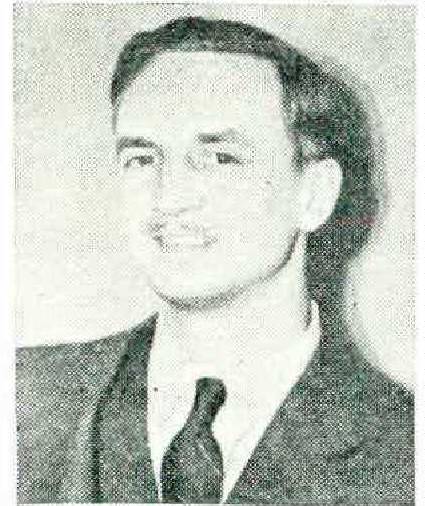
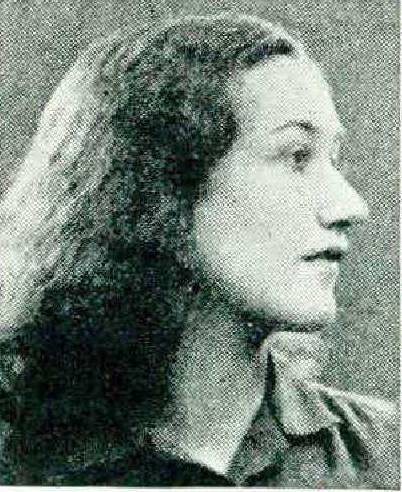
Born on a farm in West Virginia, educated in rural schools and, as she tells us, in eight different colleges, Louise McNeill (p. 229) now divides her time between her husband, her year-old son, and her writing. She has one volume of verse, Gauley Mountain, in print, a second collection in progress, and a novel halfway along.
A contributor whose papers are as refreshing as they are friendly, Frances Lester Warner (p. 230) now sends us an essay on a theme which, in other hands, might be morose — the gentle art of growing old.
One of the most experienced sailors on the Atlantic seaboard, Samuel Eliot Morison (p. 235) followed the course of Columbus’s caravels in craft of much the same dimensions, shared the Discoverer’s experience of wind, weather, and navigation, and studied every nautical problem with time, place, and circumstance to guide him. Much of his biography was written at sea; and out of the tangle of controversy and legend, Professor Morison has made his way by dead reckoning, giving us a book which the Atlantic has been happy to serialize in part and one which many readers will wish to read in its entirety.
Nina Fedorova (p. 249) was horn in Poltava in Southern Russia. Her parents were of the intelligentsia; and in the stormy days of 1919 she and her family became part of the exile movement which flowed across Siberia into Manchuria and thence to China. In Harbin she met and married a young professor of law, like herself a Russian exile. Driven out of Harbin by the Japanese, they moved to Tientsin, only again to have the invasion engulf them. In 1938, she and her husband and their two sons crossed the Pacific to begin life anew as American citizens in the university town of Eugene. Oregon. Her first novel, The Family. was the winner of the Atlantic $10,000 Prize in 1940. Her second, The Children, traverses the border line between tears and laughter to tell the story of those young men and women without a country in the Far East today.