The Contributors' Column
SEPTEMBER marks the second anniversary of the outbreak of the war. In those two years Germany has scored fifteen knockouts, and toduy is pound-
ing away at the biggest heavyweight of them all. But who knows what this struggle has cost the Nazi Party? Who knows what Germany’s loss has been in men, materials, and morale? Writing in his Berlin Diary, in September 1935, William L. Shirer referred to Douglas Miller (p. 265) as ‘the best informed of our embassy crowd,’ and it is to Mr. Miller that we have turned for an answer to these vital questions. A graduate of the University of Denver and a Rhodes Scholar at Oxford, Mr. Miller joined the United States Department of Commerce in 1921, and became Assistant Chief of the Western European Division of the Bureau of Foreign and Domestic Commerce. In May 1924, he was sent to our Embassy in Berlin as Trade Commissioner. There he remained for fifteen years, the last six of which he acted as our Commercial Attaché in direct connection with the Nazi economists.
Long trained as an observer of Soviet affairs, William Henry Chamberlin (p. 274) gives us his clearheaded analysis and his reasonable expectations of the Russo-German war. Mr. Chamberlin graduated from Haverford College in 1917. The Christian Science Monitor sent him to Moscow as its correspondent in 1922, and there for twelve years he ‘covered Russia’ with a thoroughness and accuracy no other American writer has equaled.
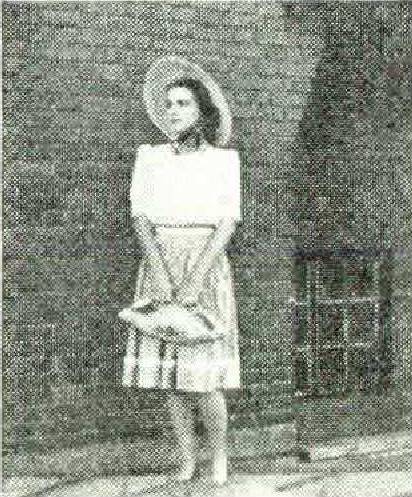
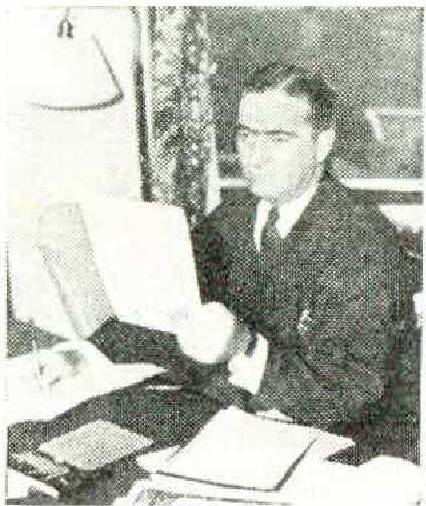
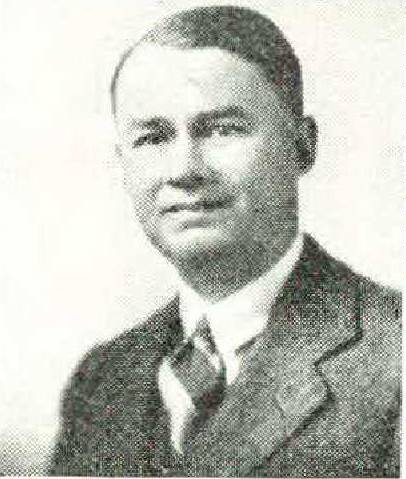
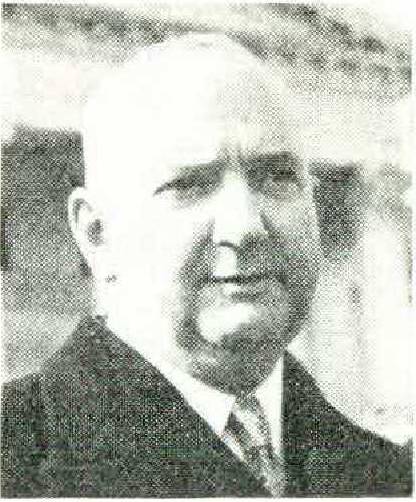
Moe Berg (p. 281) would rather play baseball than write about it. But at the editors’ insistence he has set down the observations of a Big League
catcher who is also a scholar. An honor student at Princeton, from which he graduated in 1923, Mr. Berg studied the Romance Languages at the Sorbonne and took his LL. B. from Columbia in 1928. Listeners to ‘Information, Please’ should remember what a pundit he is. His love of books and his work as a lawyer (he is a member of the New York bar) have always gone hand in
hand with his love of baseball. He joined the Brooklyn Dodgers in 1923, played in the minors for two years, in 1926 was sold to the Chicago White Sox, thereafter caught for Cleveland and Washington, and is today on the active roster of the Boston Red Sox. In this, his first contribution to any magazine, he discusses that subject of perennial fascination to him and to millions of other Americans — the battle that goes on day after day between the pitcher and the man at the plate.
The editors regret that the physical limitations of the Atlantic prevent our publishing the many firm and conscientious comments which have been written in response to Albert Jay Nock’s articles on ‘The Jewish Problem in America.’ To date we have received fifty-six full-length articles and one hundred and thirty-two letters— a body of evidence both thoughtful and invigorating. In this issue we conclude the formal discussion with succinct statements by Emanuel Celler (p. 289), Congressman of the 10th District of New York, Mrs. Frances Strauss (p. 289), of Milwaukee, Wisconsin, and Dr. Louis Finkelstein (p. 292), President of the Jewish Theological Seminary.
In the First World War, Charles R. Codman (p. 294) was a pilot in the 96th Aero Squadron. He survived many a dogfight, was decorated with the Croix de Guerre and Legion of Honor, and lived to tell the tale in his book, Contact. A veteran with a keen recollection of his own apprenticeship, he has visited the airfields along the
Atlantic Coast and in Texas to see what the cub pilots of today must do to win their wings.
Nina Fedorova (p. 303), who was born in Southern Russia and studied at the University of St. Petersburg just prior to the Revolution, knows what it is to live in exile, for from 1918 until 1938, when she came to America, she and her husband and their two sons were part of that White army moving across Siberia into Manchuria, thence to China and points west. They now make their home in Eugene, Oregon.
In his forthright statement of the government’s attitude toward propaganda, Lowell Mellett (p. 311) is making his first official pronouncement as Director of the Office of Government Reports. Newspapers please copy. Mr. Mellett was a war correspondent with the American and French Armies in 1917-1918, managing editor of Collier’s Weekly, 1920, and manager of the Scripps-Howard Newspaper Alliance, 1925-1937.
‘Dark Symphony,’ the poem by Melvin B. Tolson (p. 314), won the National Poetry Contest conducted in connection with the American Negro Exposition in Chicago. Mr. Tolson is Vice President of Wiley College, Marshall, Texas. ‘At the present time,’ he writes, ‘I am trying to build, on our campus, the Log Cabin School of Drama and Speech. An ex-slave has given us several acres of timber; a white plumber and four Negro carpenters are giving their services; a white printer is getting out the propaganda; and, in general, the boys and girls are scouring the region with the collection boxes. We aren’t discouraged, for we’ve covered thousands of miles on our debate and drama tours with bad brakes, bad motors, bad tires, and bad drivers. Give us time, and we’ll have Negro theatres springing up in cotton patches! We’ll take what we have and make what we want.’
For a number of years W. G. Morse (p. 318) has had one of the most fascinating jobs in all New England. As the Purchasing Agent of Harvard University, he has had to call on every ounce of his Yankee shrewdness in planning for his community of scholars.
‘Have you ever wondered,’ asks Olivia Harlan (p. 330), ‘what life is like in an insane asylum? I believe that a great many people have strangely wrong ideas of what goes on inside the walls of such places.’ Miss Harlan took her degree from Mount Holyoke in 1922. After four years of study at the Academy in Cincinnati and the Art Students’ League, she was married and moved to New York. It was there that she had a serious mental and emotional breakdown which led to her being incarcerated for the next eight years, while she was suffering from a manic-depressive psychosis. During this long interval she continued with her painting, and many of her water colors were exhibited while she was still within the walls of an institution. Now, once more restored to an active place in the life without, she tells of the life within.
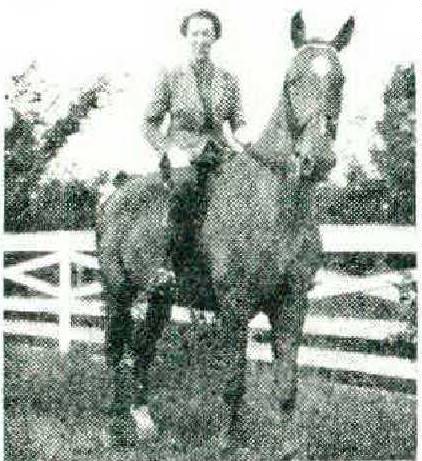
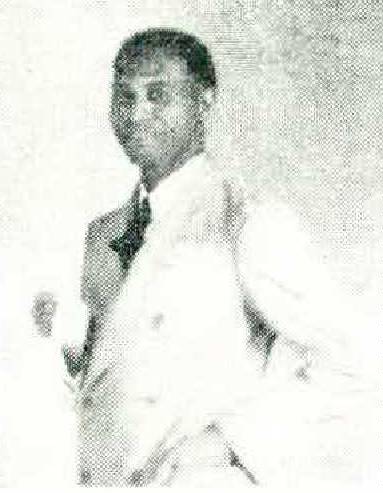
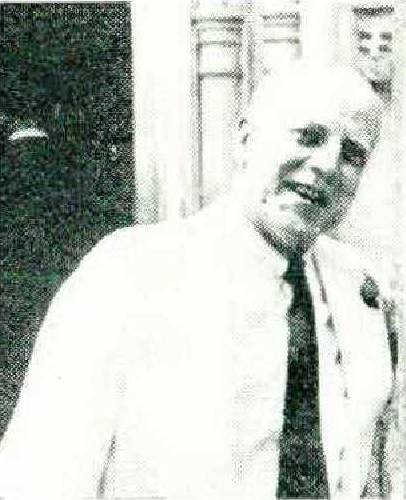
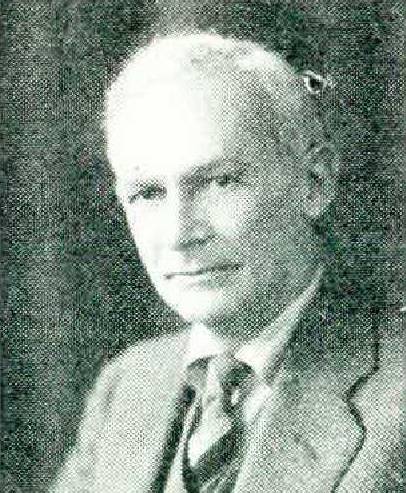
Headmaster of Phillips Academy in Andover, Massachusetts, and the biographer of Daniel Webster, Caleb Cushing, and Calvin Coolidge, Claude M. Fuess (p. 335) turns our attention to that vigorous and dependable statesman, the Secretary of War, Henry L. Stimson.
Rena Niles (p. 343) was born in St. Petersburg, Russia, and graduated from Wellesley in 1923. The wife of a Kentucky folklorist and musician, she has been sending to the Louisville Courier-Journal a series of Kentucky profiles which have attracted attention far beyond her neighborhood.
Born of a Russian father and an English mother, Miss E. M. Almedingen (p. 349) was brought up in St. Petersburg. Her mother died in the midst of the Revolution, and thereafter Miss Almedingen became one of that defenseless army who live by their wits and their courage when their country has collapsed and no escape is possible. She is today an English citizen, and her manuscript. which crossed the ocean in convoy, was the last to qualify for the Atlantic Non-Fiction Competition. It was also the winner.
Roger Burlingame (p. 360) is an editor and author with a keen sense of our country’s destiny. His two superb volumes on the history of American invention were published under the titles March of the Iron Men (1938) and Engines of Democracy (1940). More recently he has singled out for special citation the coöperative life in Rockingham County, Virginia.
With this issue we conclude our serialization of Reveille in Washington, by Margaret Leech (p. 373). It is the September selection of the Bookof-the-Month Club.