To the Indies
CHAPTERS 6-11
TO the Indies
A NOVEL OF ADVERNTURE
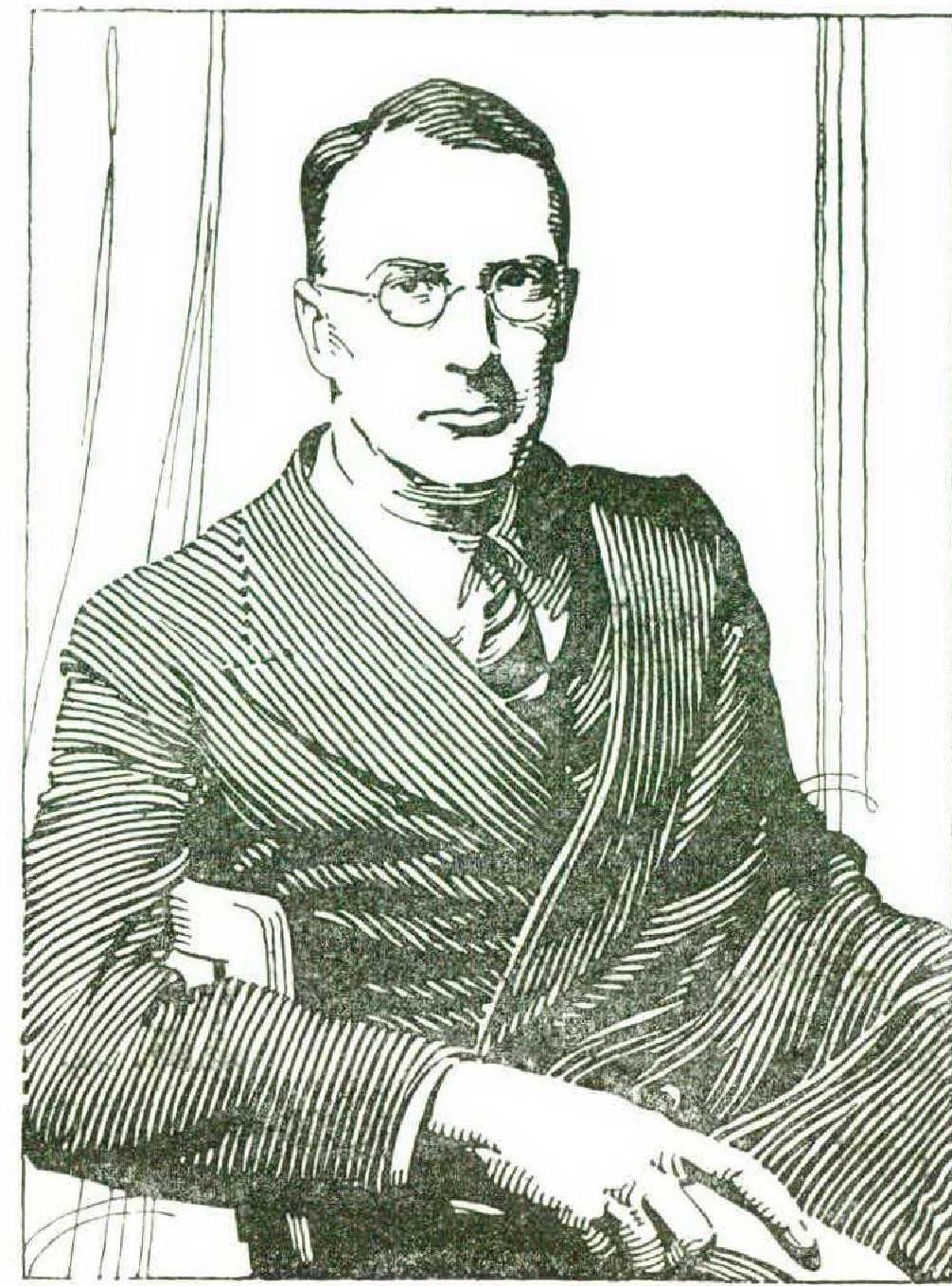
By C. S. FORESTER
Author of “Captain Horatio Hornblower”
ON the third voyage of that erratic genius Christopher Columbus, the ship’s company was a motley, unfamiliar crew. Why was it, wondered the brilliant young advocate Narciso Rich; why did those who had seen and felt the fascination of the Indies fight shy, refusing to go againp Things weren’t too serene at home in Spain. There was unemployment, as well as the unhealed wounds from the confounded religious purges. He knew all that. Still . . .
Narciso Rich has been sent as the personal representative of King Ferdinand and Queen Isabella to make sure that the Admiral and his brother Bartholomew do not overstep their authority in the new lands which have been discovered for the Crown. Rich is not a man of action. He would have been better content to carry on his remunerative practice in Barcelona.
The Spaniards parley with t he dark-skinned and generous natives. Taking advantage of the Indians’ generosity, they secure such gold ornaments and pearls as are available.
Rich has a personal problem which involves his authority over the hidalgos. Being a lawyer and not, strictly speaking, a nobleman, he must impress these fighting men in terms they can appreciate. Guiding a shore party back from water and a native village, Rich suddenly discovers two of his firebrands, Garcia and Tarpia, missing. He has heard a cry like that of a bird some time back. When the hidalgos finally appear, he not ices that Garcia’s hand is stained with blood. Garcia smiles and washes it in the sea. . . .
TO THE INDIES
BY C. S. FORESTER
VI
THERE was a very marked northerly current along this western shore of Trinidad. Hove-to during the night, the squadron was carried steadily northwards, until at last the late-rising moon had revealed such looming masses of land ahead that the Admiral had been roused, and the sleeping men on board had been awakened, by the bustle and noise of letting go the anchors. Now, at dawn, everyone could see more clearly what lay ahead. There were several small steep-sided islands in a chain across their course, with narrow passages between, over which soared and wheeled innumerable sea birds. The Admiral beside the taffrail was studying the sea on their quarter towards these passages — Rich was still landsman enough to feel a slight shock at the realization that in an anchored ship one does not necessarily look ahead to examine the course one intends to pursue.
‘More dangerous passages, Don Narciso,’ announced the Admiral. ‘There are currents and eddies there as bad as the Serpent’s Mouth yesterday. The Mouths of the Dragon, do you think?’
‘A very appropriate name, Your Excellency,’ said Rich.
‘I am not justified in risking the passage,’ announced the Admiral. ‘I intend heading westward along this chain of islands until we shall find an easier one.’
‘It is not for me to discuss questions of navigation with Your Excellency,’ said Rich in perfect sincerity; the Admiral was the best practical seaman the world could show.
Orders were bellowed back and forth from the ship to the caravels; men set to work at the capstan while others loosened the sails.
‘It is better if we head westward in any case,’ went on the Admiral, turning back to Rich from the business of getting the squadron under way. ‘It cannot be far to the west of here that the Earthly Paradise is to be found. I am convinced of it — the air blows fresher and purer with every league.’
‘I had not noticed it, Your Excellency,’ said Rich boldly.
‘You are insensitive, and you have not had my experience of this climate. And besides, you were present when Alamo discovered bitumen in the island, weren’t you? He told me that there was obviously some undiscovered central source of bitumen in Trinidad. The analogy with the Dead Sea is very close. The Euphrates — only across the desert from the Dead Sea — was one of the four rivers of Eden, and not even the most learned Fathers of the Church have been able to identify the other three. They have remained unknown for as long as all our knowledge was derived from the westward. Now we are approaching from the east, and shall solve the mystery.’
‘But between us and the Euphrates must lie all India, and the Spice Islands, and the empire of the Great Khan, Tour Excellency,’ protested Rich, bewildered.
‘Undoubtedly they must lie to the northward,’ admitted the Admiral. ‘It would be hard to reconcile the theory with that of a perfectly spherical earth. But remember what I suggested to you before, and assume that in this quarter of the world the sphere is prolonged into a pear-shaped extension. That would then allow room enough to the northward for Asia, and at the same time account for the balminess of this air, and for the fierce ocean currents here — probably, when our knowledge is more advanced, for the existence of sources of bitumen on either side of Eden, and for the steep-sided shape of those islands there.’
‘I see, Your Excellency,’ said Rich.
The theory was a difficult one, but no more difficult than that of an earth which was not flat, nor than the postulate of the existence of antipodes, and the Admiral and the Portuguese had between them established these firmly enough. Rich began to feel a new excitement at the thought of fresh discoveries and began restlessly to pace the deck, exchanging a courteous formal bow with Garcia as he did so. After García’s deeds of yesterday Rich wondered what men of that stamp would be guilty of in the Earthly Paradise, and at the same moment he found himself wondering heretically whether perhaps the Earthly Paradise had not already been discovered, and whether those laughing hospitable folk who entertained them were not dwellers in it, pagans though they were. The thought struck him with sadness, and he turned again to look at the land.
They left the islands to starboard, and crept slowly before the wind on a westerly course. The northwestern corner of Trinidad, which they were leaving behind them, had been steeper and loftier than the central part where they had landed yesterday, and this chain of islands appeared to be a continuation of the ridge. The last island of the chain in sight was not quite so bold in outline, but as they drew up to it Rich could see that it was steep enough, all the same, and as wooded and green as the others.
Slowly they coasted along it, but it was a good deal bigger than the rest of the chain. Rich could see no end to it as he looked along its green flank.
Throughout the ship there was a bustle, and an interest in what they were discovering, oddly at variance with the comparative apathy of yesterday. Rich told himself that the enthusiasms of men in a mass ebbed and flowed like the tides of the ocean. They ate their food today with one eye over the ship’s side; they stayed voluntarily exposed to the two tremendous rainstorms which swept down on them from Trinidad. Even the hidalgos were interested, talking freely and imperiling their dignity with their pointings and gesticulations. The lookout at the masthead announced land right ahead, across their course — low green hills again. With land to the west of them now, as well as land to the north and land to the east, and the water shoaling fast, the Admiral ordered a southerly course in his determination to circle round this large island. He had ordered a chair to be brought up to the poop, and sat there with his white beard fluttering and Perez and Spallanzani at his elbow. He feared lest his squadron might be embayed here, where the wind blew always from the east, and it was well before sunset that, as the sea grew shallower and the land ahead was seen to trend farther and farther to the southward, he ordered the anchors to be let go.
‘I shall send the longboat tomorrow, Don Narciso,’ he announced, ‘to discover if there is a passage ahead or to the southward. Would you care for another jaunt?’
‘I am no seaman, Your Excellency,’ said Rich, taken a little aback. He had not been ready for this question.
‘There will be seamen with you to take the soundings and set the course,’ said the Admiral. ‘I would go myself, but, as you see . . .’
With a gesture the Admiral indicated his rheumaticky joints. There was a hurt, pleading look in his eyes. Rich had won his trust, and there were few enough people on earth whom the Admiral trusted. Ever since Pinzón had deserted him on his first historic voyage of discovery, and set out to discover new countries for himself, he had been cautious about dispatching expeditions which could make themselves independent. It was dangerous — in his view, at least — to delegate authority either to turbulent and needy hidalgos or to adventurous captains. Rich might be an agent of the King and Queen, but he was an honest one; he could be trusted not to plunder the inhabitants and — more important — not to conceal treasure, not to go off on expeditions of his own or (the Admiral’s suspicions were unbounded) to bring back false information which might wreck the whole voyage.
‘It would please me very much if you would go, Don Narciso,’ said the Admiral. Several hidalgos were listening.
‘I will come and pull an oar,’ said Rodrigo Acevedo.
‘I, too,’ said his brother.
There was a little ripple of volunteering round the circle. A respite from the cramped conditions of the ship, the chance of fresh food and new sights, the possibility of finding women and pearls and gold — they were all willing to come for the sake of these. They all eyed Rich, with his new reputation as a bold fighting man, and for the sake of that reputation he could not refuse.
‘Thank you, Your Excellency,’ he said. ‘I shall much appreciate the honor.’
Five seconds later García was addressing him as privately as a crowded ship permitted.
‘ May I be one of the party? ‘ he asked.
Their eyes met — the burly young hidalgo with his bristling beard and his shabby flaunting clothes, and the stout little lawyer with the sharp eye belied by the unobtrusive manner. It was strange for the one to be asking a favor of the other, and yet he undoubtedly was.
‘There are others who have not been ashore at all,’ Rich temporized.
‘Yes,’ answered Garcia, with a placatory grin, ‘but I should like to go again.’
‘And you remember what happened?’ said Rich. He did not want García in his party; he was afraid.
‘I remember. But—’
Rich knew that if he refused him he would offend him. On the other hand there was a chance of loyal service from him now — only a chance, but that was better than making a certain enemy of him.
So García was one of the twenty men who crowded the longboat at dawn next day when they pushed off from the Holy Name and headed for the low green shore while the ones left behind waved farewell. The air was hot and sticky; it had rained heavily during the night and the overcast sky bore promise of more rain still. There was only just enough wind to fill the sail and push them slowly forward; it was fluky and variable, too — twice Osorio at the tiller had to shout an order as the sail flapped heavily over to the other side. A flight of pelicans flapped solemnly overhead.
There was no sign of a break in the land to the northward; to the south the hills grew lower and died away into a flat green coast. It was to the south, then, that Rich directed Osorio to steer the boat. The sun broke through the clouds and glared upon them with a terrible eye, illuminating the shore to which they were trending; a seaman standing in the bows cried out that he could see a break in the coast. Rich climbed to his feet and stood precariously balancing in the stern sheets he had no faith in his own judgment, and yet, as commander of the expedition, he had to make some pretense at employing it. So low and flat was the shore that it was hard to distinguish where the sea ended and the land began, but Rich thought he saw what the seaman indicated — there was at least an arm of the sea running up into the land there.
With the dying wind they were compelled to take in the sail and set to work with the oars, and they took an occasional cast of the lead as they headed in. Three fathoms — two and a half fathoms — three fathoms again . . .
‘Hardly enough for the flagship,’ commented Osorio, spitting loudly over the side.
They were close to the shore now; the trees that fringed the sea were a sad gray, not the bright green of Trinidad, and seemed to have their roots set actually in the water. Osorio put the tiller over until the boat was close in, and the men rested on their oars while she drifted, the gurgle and bubble at the bows dying away along with her motion.
‘Look there!’ said somebody, pointing to the trees.
On the bare gray stems close to the surface of the water there were oysters clustered thick. Osorio reached out and snapped off a brittle branch — the tip that trailed in the water bore four of them.
‘We know now where those pearls come from,’ commented Rich.
Osorio eagerly prized an oyster open with his knife, and poked a gnarled forefinger into its interior.
‘None there,5 he said, hesitated a moment, and then swallowed it noisily.
The boat lurched as everyone tried to grab for oysters; there was an interval as oysters were gathered and knives were borrowed. Food and pearls were sought with equal eagerness, but no pearls were found. Osorio turned over the shell he held in his hand and examined it curiously.
‘They are nothing like our oysters at home,’ he said with his mouth full — and
then, looking across at the birds wheeling over the sea: ‘It is more than pearls that they make. No wonder there are so many sea birds here.’
‘So the birds eat oysters, then?’ asked Rich.
‘No,’ said Osorio, ‘the oysters grow into birds.’
He opened a fresh specimen for the purpose of his lecture.
‘These half-tide shellfish always do that. Many’s the goose I’ve eaten which was a barnacle once. I expect these become pelicans. See here, sir. You can see the wings starting to sprout. And this must be the head — the long beak must grow later, when they are fledglings. Every spring tide brings them out in thousands, as butterflies come from chrysalises.’
It was an interesting point in natural history, and an apt comparison. Rich told himself that it was no more marvelous that a pelican should develop from a half-tide oyster than that a butterfly should emerge from a dull chrysalis, and yet somehow it did appear so: the one was a wonder to which he had been accustomed all his life, and the other was new. He supposed that when at last the expedition reached the Asiatic plains he would experience the same sensations on seeing the unicorns that only a virgin could tame, and the upas tree which destroyed all animal life within half a mile.
They took to the oars again, and the boat crept along up the inlet. Monkeys appeared on the shore, chattering loudly at them from the treetops; gaudy birds flew over their heads, and the steaming heat closed in upon them. The inlet was no more than half a mile broad when it divided, one portion continuing westerly and the other trending off to the south. Osorio at the tiller looked to Rich for orders.
‘Which do you think looks more promising?’ asked Rich as casually as he could manage.
Osorio shrugged enormously and spat again.
‘Go to the right, then,’ said Rich; if one way appeared as good as another to Osorio it was no use for Rich to try to judge by appearances.
VII
Now it began to rain, the usual relentless downpour to which they had grown accustomed in these latitudes. The roar of it drowned the noise of the oars in the rowlocks and the squeaking of the stretchers. The near-by land was almost blotted from sight, and the jesting conversation in the longboat came to an untimely end. The men at the oars rowed in dogged silence, and the rest sat patiently suffering. The channel divided again, and Rich took the northern arm, but this immediately divided once more, and he took the southern arm this time in the hope of preserving as direct a westerly course as possible. And these were only the main channels; peering through the rain, Rich fancied that there were plenty of minor waterways, mere threads of water by comparison, diverging from the wide channels. It was bewildering.
Then at last the rain stopped, and the sun shone once more. The forest beside them steamed, and they could hear again the innumerable sounds of the life within it. The men at the oars were relieved by their companions, and the longboat pushed on along the channel. And here they were balked; the channel split into two channels, at right angles to each other, and each was barely wide enough — the oars caught against the vegetation on either side.
‘There’s no way through here for the flagship,’ said Osorio.
‘No,’ agreed Rich, hoarsely.
At Osorio’s orders they backed water again until they could turn the boat, and they retraced their course; there was a resentful murmur at this wasted labor.
‘We must try again,’ said Rich loudly. ‘The Admiral relies on us to discover a passage.’
But the mention of the Admiral had small effect — he did not command these men’s devotion.
The bank where the nose of the boat touched it in turning was soft and oozy; this was an amphibious sort of island, plainly — the distinction between land and water was not a sharp one. Still they rowed along winding channels, turning now south and now north, yet in general holding steadily westward, rowing interminably.
‘We must be three leagues from the sea,’ said Osorio.
‘That at least,’ agreed Rich.
‘And no sign of a spring yet.’
The channel in which they found themselves now was wider than several they had previously traversed. And here the vegetation did not come quite to the water’s edge. There was rock — pebbles — in sight. The same idea seemed to strike Osorio and Rich at the same moment. Osorio moved restlessly in his scat, staring at the bank. Rich cautiously put one hand into the water and tasted the drops which he lifted out. It was palatable water, almost fresh.
‘We’re in a river, by God!’ said Osorio.
‘Yes. The water is drinkable,’ said Rich.
The rowers rested on their oars at the announcement, mopping their sweat. Two or three men leaned dangerously over the side and sucked up water like horses. There was a babble of talk.
‘Under that bank,’ mused Osorio, ‘there’s quite an eddy. Look! There is a current running here. And it’s a big river.’
A river a quarter of a mile wide, thought Rich. And those innumerable marshy channels through which they had struggled! Rich thought of Padua, of the innumerable arms of the Po, embanked by the labor of centuries. And there were all the mouths of the Ebro, too, in the dreary marshland beyond Tarragona. He had seen the mouths of the Rhone, too, and he had heard of the mouths of the Rhine and of the Nile. This must be a delta too; and the deductions to be drawn from that simply staggered the imagination. It could be no small island which they were exploring: a river the size of the Ebro implied a land the size of Aragon at least. Larger still, most probably. Perhaps — perhaps it was the mainland of Asia at last.
But then again there were difficulties. Rich remembered the description by the Venetian, Marco Polo, of the Asiatic countries and of the court of the Great Khan, its wealth and its fleets and armies. If this were the mainland, those armies must have pushed hither to conquer this productive country, and those fleets must have coasted along these shores. Certainly the land would not be sparsely peopled by naked Indians with no knowledge of metals — and wearing pearls worth a king’s ransom. If the Great Khan’s fleets had not come here, it must be because it was not part of the mainland of Asia at all, but a mere island — a large island — and far enough from Asia not to have been discovered from that side.
That implied a wide stretch of ocean to the westward of it, as large a stretch, perhaps, as the ocean they had already traversed on their way from Spain. And this in turn implied that the world was far larger than anyone t hought, that the Admiral’s calculations were vastly at fault, and that they had not reached the Indies at all! That was as nonsensical as the other theory.
It was a dangerous thought, too. There had been doubters before, on the Admiral’s second voyage, and the Admiral had not only compelled all to swear a solemn oath that they believed Cuba to be part of the mainland of Asia, but also publicly threatened to cut out the tongue of any man who affirmed the contrary — very right and proper treatment for dangerous skeptics, thought Rich, involuntarily, until he came back with a shock to the thought that it would take very little more to push him himself over into the abyss of skepticism as well. And he had never yet been a skeptic in his life.
Osorio was addressing him — apparently had been trying to attract his attention for some time.
‘Shall we land and eat our food?’ asked Osorio.
‘No,’ said Rich, after a moment’s thought. ‘Let’s push a mile or two more up the river first.’
As far as he was concerned, he would have no appetite for food while consumed by his present doubts. There was just a chance that the theories were all wrong, that this was not a river at all, current and fresh water notwithstanding. A little further effort might resolve all doubts, might carry them to a place where all was clear — might even take them again to the open sea on the farther side of this mysterious island.
The oars groaned in the rowlocks, the blades splashed monotonously alongside, and the boat crawled steadily up the channel round a vast bend. Another bend succeeded to that, the banks here lined with a wide stretch of golden sand. Some vast dull-colored creatures lay sunning themselves there; at the sound of the oars they best irred themselves and wallowed down into the water.
‘Iguanas,’ said Garcia, in reply to a question from a companion. ‘Lizards.’
They certainly looked like lizards, like large specimens of the kind of creature they had seen scuttling along the branches in Trinidad, and of which they had eaten at the Indians’ invitation.
‘Tender and sweet as chicken,’ said Tarpia, with a smacking of his lips. All hands stared over at the sand bank, now quite deserted.
Round the next bend the character of the river changed. A long way upstream they could see rocks, and a sparkling of wavelets, and a hint of white water.
‘Rapids,’ said Osorio.
‘I fancy so,’ agreed Rich. At that rate they had reached the limit of their expedition in this direction; no sensible purpose could be served by dragging the boat over the rapids, even if it were possible. Yet Rich was conscious of a feeling of disappointment; he did not want to turn back. He wanted to push on and on into the depths of this new and mysterious island. But the men were hungry and tired, and already the current was running faster.
‘We’ll land,’ said Rich curtly.
A narrow deep channel ran aimlessly up between a sand bank and the sand of the shore, and Osorio guided the longboat into it. The sharp shelving edge made a suitable landing place; while the oarsmen scratched ineffectively at the sand with their blades a seaman in the bow took a grip with the boathook and drew the heavy boat in, so that Rich was able to stop ashore almost dry-shod. The heat and glare from the sand came up into his face like a fountain of fire, and he hurried forward to the shade of the trees with the rest of them capering and chattering after him. A little crowd of monkeys overhead peeped through the branches at them and chattered more shrilly back until misgivings overcame them and they fled over the tops of the trees like thistledown over a field before they stopped again to peep.
‘That would be meat for our dinner,’ roared Tarpia, pointing. ‘Better than mouldy olives.’
They all looked eagerly to Rich for permission, and he gave it after a glance at Osorio’s expressionless countenance.
‘Bring your crossbow this way, Pepe. We can cut them off,’ said Tarpia. ‘Will you go along the shore, Cristobal? Take Esteban with you. Try round there, Acevedo.’
They clattered and crashed off into the forest, leaving Osorio and Rich standing in the edge of the shade, the food bags at their feet and the river shining in front of them beyond the glaring sand. Shouts and cries came from the hunting party. They heard the sudden clatter of a discharged crossbow, a burst of laughter, and more cries. Birds were fluttering over the treetops in panic.
‘The gentlemen are full of life,’ said Osorio, philosophically. ‘Let us hope Saint Hubert will favor them.’
Saint Hubert apparently did, for they came back soon along the sand dragging their spoils with them.
‘These little men,’ said Garcia, exultantly, ‘have never seen a crossbow before. That is plain. They squeaked with surprise when a bolt reached them at the top of a tree — that was a good shot of yours, Esteban.’
He turned over with his foot one of the limp bodies on the sand; the grayish brown fur was clotted with blood.
‘Pope got these two with one shot,’ said Tarpia. ‘It broke this one’s leg and hit that one in the belly.’
‘Pedro got a parrot,’ said someone else, displaying the dead bird.
Garcia drew his dagger and knelt by the dead animals.
‘Who’ll light a fire?’ he asked over his shoulder. ‘Holy Mary, the last game I gutted was a seven-point stag in the forest of St. Ildefonso!’
VIII
Everyone had eaten; everyone had swallowed at least a mouthful or two of monkey’s flesh despite the brutal jokes which were passed; everyone had decided that parrot’s meat tasted of tough carrion and was not food for Christians. Two or three of the more phlegmatic were asleep in the shade; most of the men, too excited with their run ashore to wish for a siesta, were lying talking in low tones. Rich was too restless even to lie still; he heaved himself to his feet and asked Osorio to walk with him, and the boatswain obeyed even though he would clearly have preferred to continue to take his ease in the shade.
‘I want your opinion on the rapid there,’ said Rich.
With notable self-control Osorio refrained from pointing out that, whether the rapid were easy or difficult, its mere existence made it impossible for the Holy Name to pass it — even if, unlike all the other rivers which Osorio knew, this particular one ran from sea to sea. They plodded doggedly side by side over the blazing sand, which scorched their feet through their boots.
‘I have the Admiral’s order,’ said Rich, ‘to spend four days if necessary seeking a passage.’
‘We shall need every minute of four days,’ said Osorio, in an elaborately neutral tone. ‘Four weeks, or four months. You do not find rivers this size on a small island.’
‘I am afraid so,’ said Rich. ‘But we can at least report to the Admiral whether it is possible for a force to get up into the interior of the island this way.’
‘Yes, sir,’ said Osorio, noncommittally, and they plodded on in silence.
The rapid when they reached it was clearly a difficult one. Flat gray rocks showed everywhere above the surface of the water, which swirled sullenly round them. Upstream, as far as their vision extended, the rocks were to be seen scattered over the river. Here and there they were so thick that the water came tumbling through the gaps in cataracts.
‘M’m,’ said Osorio. ‘A league of broken water. I can tell you this, sir. It would take the twenty men we have with us now a week at least to drag the longboat up there.’
‘Thank you,’ said Rich. ‘That was what I had to find out. We must go back and look for another passage.’
‘We must,’ said Osorio.
Halfway between them and the boat lay three bulky shapes sunning themselves on the sand — iguanas, like the ones they had disturbed on their passage up the river in the boat. Half a dozen gentlemen were stealthily approaching them over the sand, García, conspicuous in his glittering helmet, in the lead. Their cautious movements brought them to within a score of yards of the creatures while Rich and Osorio were still a hundred yards away in the opposite direction. Rich watched one of the men kneel and aim with a crossbow; the faint clatter of the released steel reached Rich’s ears over the heated sand.
From then on events moved rapidly. Two of the creatures vanished into the river; Garcia, leaping forward with a rope, noosed the third before it could escape. A whirl of the brute’s tail sent him flying, but the others grabbed the end of the rope and hauled manfully, while the one with the crossbow was frantically working his windlass. The iguana, oddly agile for a thing so deformed, made at the prostrate Garcia with open mouth, but the drag of the rope just deflected him and Garcia was barely able to roll out of reach of the snapping jaws.
Rich and Osorio came running up to see the fun, but Rich stopped appalled at the spectacle of mad ferocity exhibited by the iguana. This was no harmless tree lizard to fall a victim to the sticks and stones of naked savages; it was a ton weight of hideous strength. Its jaws were frightening and its lashing tail a formidable weapon. Coursing through Rich’s mind, like a river in spate, came a torrent of recollections of what he had heard and read of the crocodile of the Nile. This was more like a crocodile than anything he had imagined. Its left foreleg was crippled by the crossbow bolt driven deeply into it, to which fact perhaps García owed his life, but it was still lively enough and fierce enough to face eight men with every chance of success despite the noose round its neck.
With a whirl of oaths Osorio snatched the knife from his belt and sprang forward into the fray, while Rich stood rooted to the sand, his hand clutching the hilt of his undrawn sword. As he slowly pulled out the weapon a sudden swerve on the lizard’s part swept off their feet the men at the end of the rope. They tumbled in the sand, and the beast, after a futile snap at the rope, caught sight of Rich and rushed straight at him. Rich still stood fascinated for a second by its little dead eyes, which yet were so malignant; the shouts of the others reached his ears so faintly that he hardly heard them. Yet his mind was racing; he knew in that moment that if he ran away, as his every instinct dictated, he would forfeit any regard which the others, thanks to Acevedo, might feel for him. He changed his movement for flight into a clumsy evasion of the rush, and swung his sword frantically at the brute’s head; he felt and heard the blade ring loudly on the bone. Three times he slashed; it seemed like a long minute that he was at grips with the thing. A crossbow bolt whizzed harshly past him — apparently the gentleman with the crossbow had taken a hurried and ineffective aim for his second shot.
Then suddenly and unexpectedly the brute, as it swung round, turned over on to its back, revealing its whitish belly; the others had grabbed the rope again, which, passing under its body, had twisted round its right foreleg. The thing squirmed insanely for a second or two while Rich slashed again; Garcia was beside him now, slashing too. Rich saw the pale green-gray belly gape widely in a red wound. As it righted itself, the creature’s tail knocked Garcia violently against him, but in an instant of time, as lie reeled, he saw a hind leg within the sweep of his sword, and he slashed once more. There was a thrill as the blade bit deep; Rich had the gratifying feeling that the muscles of his back and loins — all his strength — had been behind that blow. Red blood spouted in a dark trail over the sand from beneath the animal. The rush the thing was about to make at Osorio was crippled and disjointed, and a fresh drag upon the rope flung it on its side.
Moret was here now, sword in hand too. He plunged the weapon deep into the thing’s side behind the foreleg, and the other men dropped the rope and came running in, plucking out their swords. The thing died under the sword blades, its huge jaws still snapping together with a ringing sound, and the mad yelling — they had all apparently been shouting at the tops of their voices — died away as they looked at each other across the corpse.
‘Holy Mary, Mother of God,’ said Osorio solemnly. He stood dagger in hand and looked round at the sweating gentlemen, at the torn-up sand with its bloodstains, and the dead lizard.
‘Did you say the Indians kill these things?’ asked Joao de Setubal of Garcia; the latter was cautiously feeling the bruises on his thigh.
‘Smaller ones. I said smaller ones, before we attacked it.’
‘I should well think so,’ said Joao.
‘And you say you have eaten their flesh?’ asked another. ‘God, how the thing stinks!’
‘It was Don Narciso who first struck it with steel,’ Moret said.
‘By God, that is so!’ said Osorio. ‘I heard the sword ring against the thing’s head.’
‘It is for Don Narciso to claim the kill, then,’ said Moret.
In the tradition of the chase, the honor of the kill in the case of dangerous game went to the man who first set steel in the quarry.
‘Yes,’ said Joao de Setubal in his halfintelligible Portuguese. ‘And look at that hind leg! I saw him strike that blow myself.’
The creature’s left hind leg was cut nearly through close to the body, hanging merely by a bit of hide.
‘A good blow, that,’ said Osorio.
They all looked at Rich; he felt himself blushing in the hot sunlight.
‘Gentlemen,’ he said feebly, and then experience in court loosened his tongue and found him words to say, despite his embarrassment. ‘It was the efforts of all of us that killed this crocodile. There was the crossbow bolt which crippled its foreleg. There were the skill and courage of Don Cristobal, who dropped the noose over its head. There was our worthy boatswain, who came rushing into battle with no more than a dagger. There were the intelligent men who dragged at the rope at exactly the right moment. Why, gentlemen, there is no need for us to dispute for honor.’
They murmured in pleased agreement at that; they all had a better opinion of themselves now, and there were no hard feelings. It was odd, the influence trifles laid over these hot-blooded gentlemen.
IX
A fresh distraction came when one of the seamen cried out that a canoe was approaching. Every eye turned down the river; they could see the canoe paddling briskly against the current towards them. The sun flashed on the paddle blades. Rich walked to the water’s edge and waved a welcome, and the canoe came steadily on towards them until it grated on the sand and the five Indians in it stepped out and lifted it — it was a tiny, cranky thing — beyond the water. The Indians wore cloaks of white cotton, and aprons of the same material. They were handsome, of the palest copper color, and with long straight hair hanging to their shoulders.
Three of them wore thin metal collars — half the Spaniards hurriedly called Rich’s attention to them — which seemed to be of pale gold, but Rich forbore to offer to barter for them until their curiosity might be satisfied. With inquiring looks and beckoning gestures they walked away from the longboat towards the dead lizard, confirming Rich’s theory that they had been studying the Spaniards’ actions from across the water, and they stood and stared at the dead body with ejaculations of wonder. Garcia approached them and pointed to it.
‘Iguana?’ he said inquiringly, and, when they only looked puzzled, he repeated the word, varying the intonation. ‘Iguana? Iguana?’
A look of understanding came over their faces and they made emphatic gestures of negation.
‘Caiman,’ said one, and then, pointing to the trees, ‘Iguana.’
He helped his meaning out with more gestures; clearly the iguanas who lived in trees were vastly different, creatures from the caimans that lived in rivers.
‘Eat caiman?’ asked Garcia. He pointed to the body and then to his mouth and then rubbed his belly.
The gestures of dissent were still more emphatic now; they made wry faces and held their noses. One of them, too, made all the gestures of fear, pretending to run away, and holding his hands to represent the snapping jaws of the caiman. That brought them back to their wonder that this ferocious animal had been killed at all. They marveled loudly at the severed hind leg, and one of them turned to Garcia in an attempt to discover the magic means by which such a blow had been dealt. Politely he put out his hand to Garcia’s sword hilt — he must have seen swords drawn already. García pulled the weapon from its sheath.
‘Hey! Careful!’ said García; the Indian had grasped the blade with his bare hand. García’s involuntary gesture and the Indian’s withdrawal between them gashed the palm — fortunately not deeply; the Indian looked with amazement at the blood, while García was voluble in apology and prodigal of gesture. But the Indian only smiled and shut his fist upon the cut; from the chattering that went on it was apparent that they were explaining to each other that a weapon which could cut at a touch could sever a caiman’s leg at a blow.
Rich judged it to be as well to be conciliatory. He produced some of the trade goods with which the longboat had been supplied, and jingled a hawk’s-bell enticingly. There were just the same awe and delight displayed at the gifts as Rich had seen on the first occasion. He tapped at one of the collars of gold, and without a moment’s hesitation the Indian unsnapped it from his neck and thrust it into his hand. It was harder and tougher than pure gold would have been; it was clearly an alloy, but its weight demonstrated that it must contain a large proportion of gold. Rich tried to display in dumb show great affection for the gold, and pointed inquiringly to the horizon. Instantly the Indian pointed south, with many words and gestures. Rich caught one word — ‘Guanin.’
‘Guanin?’ he said.
‘Guanin,’ said the Indian, tapping the collar.
They knew now the Indian word for ‘gold.’ The two other collars were put into Rich’s hands without his even asking for them. These uncultured folk clearly were possessed of the instinct to present strangers with whatever t hey desired. One of them began a new pantomime, pointing to his mouth, pointing to the whole group of Spaniards, and then, in a wide gesture, away across the river.
‘He’s inviting us to dinner,’ said García.
‘I fancy so,’ said Rich. ‘He wants to take us to his village.’
He nodded in acceptance, and with little more ado the matter was settled satisfactorily. They pushed the longboat out from its mooring place and pulled after the canoe, which preceded them down the river with the Indian in the stern looking anxiously back at them and calling to see that they understood what they had to do. His gesture towards the setting sun indicated his wish to arrive at their destination before nightfall.
The current bore them down the river, while they quartered steadily across. Down where the delta began, the canoe turned abruptly into a side channel, which led them into a broader arm again, where trees grew with their feet in the water. It was not very far up here; the forest receded from the river bank, leaving a wade clearing. Four more canoes floated moored to the bank, and a little crowd of Indians stood at the landing place to welcome them, men, women, and children, some in cotton aprons, many of them naked, and all of them chattering and laughing with pleasure at the success of their embassy in inducing these strangers to visit, them.
A dignified Indian, taller than his fellows, met them at the huts, and for the moment chatter ceased. The speech he made was obviously one of welcome.
‘Thank you,’ said Rich. He said something about Their Highnesses, and about His Excellency the Admiral. He mentioned the Church of Christ, and to all of this they listened with grave attention. The chief tapped his own chest.
‘Malalé,’ he said.
Rich tried to reproduce the name. The chief listened courteously, and repeated it.
‘Malalé,’ said Rich.
The chief clapped his hands with pleasure, and all the mob round clapped as well. Yet the chief still waited for a second or two, and then with extreme deference he began again.
‘Malalé,’ he said, pointing to himself, and then pointed to Rich, who grasped his meaning at last.
‘Rich,’ he said, touching his breast.
Malalé hesitated.
‘Rich,’ said Rich again, encouragingly.
‘Lish,’ said Malalé with an effort.
‘Rich,’ said Rich.
‘Lish,’ said Malale.
It was too much for anybody’s gravity, certainly too much for the very precarious gravity of the Indians. Everybody laughed, including the chief. Everybody was saying ‘Lish’ in a hundred different, intonations. The harsh r and ch were clearly beyond their powers of articulation.
‘Lish,’ said the girls on Osorio’s arms.
‘Lish,’ said a pothellied little boy, laughing with his head thrown back and his stomach protruding.
‘Lish,’ said everyone else; it was like the wind rustling in a grove of willows.
The chief waved his arms to terminate the seance; Rich was irresistibly reminded of the kindly young teaching friar in his first school breaking off the chorused repetition when it grew too riotous. Everyone remembered the real business of the meeting, and the Spaniards were led by their chattering escorts up to the leafy huts. There were hammocks in there, standing on the earthen floors; a few gourds; a headless spear; some fantastic shells — practically nothing. Rich was led into the main hut, and seated on a couch of trelliscd creeper beside the doorway. It wobbled under his weight; it was as impermanent as the hut in which it stood. Osorio was given a block of wood on which to sit at Rich’s side, and Garcia another — apparently these two were singled out to share the place of honor, the one because he had been seen much in Rich’s company and the other because of his glittering helmet.
It was almost dark by now. Someone stirred the two fires into a bright blaze, and the rest of the Spaniards were led to seats by them. Then came the food, a prodigal display. There was fish and there was fruit, yellow corn bread, and gray cassava bread, with roast meat of a nature quite unidentifiable — all served by the women and young men, while the older men stood by anxiously watchful that their guests should want for nothing.
‘A cup of wine, now —’ said García. ‘Hey, Don Malalé!’
He made a gesture of drinking, and in obedience to Malalé’s request a girl approached him, carrying under each arm a bulky gourd. Another girl followed her with a couple of small drinking gourds. She put one in each of García’s hands. The first girl filled one of them, and stood by while García tasted it.
‘Queer,’ said García, savoring it on his palate. ‘Sickly. I can’t say that I like it.’
The expression on his face was sufficient indication for the girl to stoop and fill the other cup from the other gourd.
‘Sour,’ said García. ‘But still — drinkable, at any rate.’
He drained the cup, and it was refilled for him. When Rich came to taste the drink he found it sour, as Garcia had said. The flavor was indefinable, and he simply could not guess whether it was fermented or not.
Malalé was standing ready to make polite conversation. It called for a good deal of effort to make him understand that they wanted to know the name of this little town.
‘Paria,’ said Malalé at length. He pointed all about him into the surrounding darkness. ‘Paria.’
So this country was called Paria. Rich could remember no geographical name that resembled it, in the way that Cibao resembled Cipangu.
‘Guanin?’ asked Rich, and the chief evinced a little surprise at Rich’s knowing a word of his language. One of the Indians who had been in the canoe interposed with a voluble explanation in which Rich heard the word repeated more than once. Malale called to his subjects. There was a good deal of bustling about, and people brought Rich ornaments of gold and put them at his feet — two more collars, and several shapeless lumps, the largest the size of a walnut.
‘This wench here has pearls on,’ said Osorio.
‘I was going to ask about them next,’ said Rich.
He reached out and touched the armlet, and at his touch the girl stood stockstill, quivering a little like a frightened horse. At a word from Malalé she stripped off the armlet and put it in his hand, still stood for a second, and then, presumably deciding that it was only the pearls that interested Rich, quietly withdrew. More pearls were brought: a little pile of wealth lay at Rich’s feet.
Beyond the ring of light round the fires something was happening in the darkness. The circle of Spaniards had grown thin. The din and chatter had died away into a more secretive murmur. Uneasily Rich guessed what was going on, and felt a little sick with apprehension and disgust. He could feel only small sympathy with the animal grossness of these hot-blooded Castilians; he was a dozen years older than the eldest of the hidalgos, and he felt as if it were more like thirty or forty.
All the same, it was dangerous to interfere — physically dangerous. To take a girl from these men was like taking a kill from a wild cat. They would challenge him, perhaps. Any of these brawny louts could kill him five seconds after crossing swords. Rich vividly pictured to himself a sword blade slicing through his soft flesh, and his red blood flowing; the thought made him sick, and decided him instantly to take no action. After all, he did not know — he was not certain — what was going on. That was sufficient excuse, although he despised himself for his weakness at the same time that he yielded to it.
Somewhere in the darkness a woman screamed sharply, and Rich felt his heart sink. He tried to act as if he had not heard, and the cry came again. García was eyeing him curiously in the firelight, and Osorio was looking at him sidelong, to see what he would do. The Indians were tense; everything seemed to be waiting on his decision. In a few moments there might be a bloody massacre, he realized now. He got slowly to his feet, and as he did so an Indian girl came running into the firelight. She made straight for one of the men and threw herself into his arms; she pointed back into the darkness with tearful explanations as he stood with an arm round her shoulders.
As she pointed, two figures came into sight, blinking a little sheepishly in the firelight, João de Setubal and Diego Moret. They saw the others on their feet, and they felt the tension, and they were self-conscious with every eve on them.
‘What is this?’ asked Rich. Every word was a torment to utter.
‘I found the girl first,’ said Moret, sullenly.
‘You found her first? You found her?’ protested Setubal in his slobbering Portuguese. ‘She promised me an hour ago.’
‘Can you talk this monkey-talk, then?’ Moret was a fat and lazy man, but he was thoroughly roused now.
‘No. But she knew what I meant, well enough,’ said Setubal. ‘She promised me.’
‘Nonsense. She was willing enough for me, or would have been if you had not interfered and frightened her.’
‘You had no right to her.’
‘Nor had you!’
‘I claimed her first!’
‘That’s a lie!’
Their hands went to their sword hilts at those words. To give the lie was as much an invitation to bloodshed as to give a blow. Someone was at Setubal’s elbow in the half light, and someone else at Moret’s. In a moment there would be a dozen swords drawn. Everyone’s life would be in peril, with these Indians uneasily looking on, and Rich had to plunge in, lest worse befall.
‘ Don Diego! Don João!’ he cried, hurrying forward from the hut between the two fires.
His words barely sufficed to check the men as they stood with their swords half drawn. They looked round at him, their bodies turned towards each other, right feet advanced, left shoulders thrown back. In the tenth part of a second those blades could cross.
‘Take your hands from your swords!’ roared Rich. The desperate urgency of the moment gave power to his voice — it was like shouting at a child who was about to touch unwittingly a brazier of burning charcoal. They hesitated, and then, as Rich strode between them, they dropped their melodramatic poses; their right hands left their sword hilts even if their left hands still retained their grasp on the scabbards.
‘Are you fools enough to want to fight with a hundred Indians looking on?’ spluttered Rich. ‘They may think us gods now, but how long would they think it if one of you had a yard of steel in his belly?’
A training in rhetoric may have enabled his tongue to move more freely, but he had never before been so desperately anxious to win a cause, and the idiom he used and the tactics he employed were the proof of the inspiration of necessity. The sound of the quarrel had called back to the firelight the other Spaniards who were out in the shadow; they were coming back to the ring one by one, and taking their places in it, while the Indian women were grouping together in the background behind the screen of their menfolk — Rich was conscious out of the tail of his eye of this byplay.
‘Will the women be so easy for you if they see you think ‘em worth squabbling about?’ he asked, wondering, as he said it, whether his tone of self-confident coarse good-fellowship rang true. ‘Twenty of you came with me in the longboat, and I’ve got to take twenty of you back, or there’ll be the devil to pay when I make my report to the Admiral.’
He ran his eyes round the ring; every Spaniard was present now. Somebody damned the Admiral in an undertone, but low enough for Rich to be able to pretend he had not heard.
‘If it comes to that,’ he went on, amplifying his earlier speech, ‘what’ll these women think of us anyway if you go on as you do? With our clothes on, and our helmets, and our sword belts, and our white skins, we’re gods to them now. There’s gold and there are pearls for the asking. But with our breeches off we’re men. Aren’t we, now? And you’ve been taking the surest way of making the men angry and dangerous. Think of your own case. If an archangel visited you in Spain you’d give him dinner, wouldn’t you? But if you caught that archangel with your wife? What then?’
He got a laugh at that — a most encouraging sound.
‘Let’s have no more of this nonsense,’ he said, taking the bull by the horns at last, and assuming the attitude of authority which he dreaded. ‘It’s time for sleep, and we’ll sleep close together for safety’s sake. I’m not going to take chances with my eyes shut. Seamen can sleep by the fire here. Gentlemen here. Don Cristobal, you can make yourself obeyed by these hot-headed lads. See that nobody wanders off in the night and gets his throat cut. Boatswain, you can do the same with your seamen.’
To delegate the responsibility to García was a bold and successful move. García would not like it to be demonstrated that he could not make himself obeyed after Rich had assumed he could, and he certainly could fight if necessary, which was more than Rich could do. And the simple assumption of authority and of García’s support, worked a miracle, too. The young men were impressed by it — and perhaps Rich did not realize that they were the less ready to resent his authority after he had withstood, sword in hand, the first mad charge of the wounded caiman. Nor was the hint that their lives might be in peril, here in this unknown land, without its weight.
X
For the four full days which the Admiral had allotted as a maximum, Rich explored this new coast in the longboat. Southward they went, and southward again, finding the land continuous. The marshy delta continued for miles — more than one big river contributed to its formation. There was a fresh-water lagoon where flocked countless white aigrettes, beautiful in the sunshine. There were cranes and monkeys and parrots, while each sand bank bore its two or three caimans — the sight of them always raised a laugh in the longboat at the memory of García’s temerity in attempting to kill one with a noose and the bare steel.
There were Indians in little groups everywhere, each group with a hospitable welcome, and ready to accompany them to the next group oven though il was impossible to explain to them by sign language that they wen’ seeking an easterly passage to the open sea — they were never able to make them understand this. The Spaniards’ gesticulations were met with a wooden lack of understanding which their utmost efforts could not enlighten. The Indians knew of no sea to the west, but the evidence was not convincing, seeing that it appeared unlikely that any one of them had ever been more than ten miles from his birt h place.
The Admiral listened courteously to Rich’s report. His eyes brightened at the sight of the gold and the pearls which Rich handed over, and beseemed pleased at the news that the longboat was full of fresh food. The Admiral had no interest in food himself, — his bad teeth alone would have limited it, — and with him it was an article of faith, not of knowledge, that weaker men found benefit in a varied diet. He laughed at Rich’s account of how they had at tacked a caiman under the impression that it was an iguana.
‘It is a pity you had no men with you with experience of the Indies,’ he said, and then his face hardened as he realized what he said. When the squadron sailed from Spain no inducement offered had been great enough to tempt a single one of those survivors of the previous expedition who had returned to Spain to sail again for the Indies.
Rich noticed the Admiral’s hurt expression, and went on hastily with his report so as to smooth over 1 he difficulty.
‘11 is a vast land, Your Excellency,’ he said, and the Admiral nodded doubtfully. ‘The rivers are huge.’
‘You mean the channels between the islands? ‘
‘Rivers, Your Excellency. Vast rivers of fresh water. So vast that they freshen the water far out in this inland sea.’
‘That freshness is interesting — we have noticed it here, near the ships, while you have been away. I have decided on the cause.’
‘It is caused by these big rivers, Your Excellency.’
‘Oh no. There is no land near which could support a river of that size. It is far more likely that — ‘
‘We found a river the Indians called Orinoco, Your Excellency,’ said Rich. He was desperate enough to interrupt in his anxiety not to hear the theory. ‘They said one could ascend it for many days’ journey, as far as a great waterfall.’
‘There is nothing so easy to misunderstand as the signs these Indians make,’ said I he Admiral, kindly. ‘Believe me on that point; I have had sufficient experience to know.’
Rich remembered the Admiral’s early reports and their frequent mentions of the consequences of such misunderstandings, and yet he was sure that on this occasion there had been no misunderstanding.
‘Their gestures left mo in no doubt,’ he said.
‘Thai is often enough the case, believe me. Could they have been referring to a fountain, perhaps? The Fountain of Youth. What did you say this river was called ? ‘
‘Orinoco, Your Excellency.’
‘There were four rivers in Eden: Euphrates, Hiddekel, Pishon, and Gihon.’ The Admiral thought for a while; Rich could see the struggle in his face as he gave up the attempt to reconcile one of the last three names with ‘Orinoco.’ ‘No matter. These Indians often have several different names for their rivers. Let us hear more.’
Rich told of the oysters which grew upon trees.
‘Ah, that is the source of these pearls. Pliny has a passage on the subject. Did you notice any clinging with their shells open?’
‘No, Your Excellency.’
‘Pliny tells that oysters exposed by the tide open their shells to receive drops of dew from the skies, and then solidify these drops into pearls. It is natural to meet with confirmation here.’
Rich kept his mouth tight shut. He was not going to risk a snub by advancing any further information about the pearls. And then with a shock he realized that the Admiral was right. He remembered perfectly plainly now the passage in Historia Naturalis that dealt with the point. Pliny could not be wrong; Rich withdrew in horror from the brink of the abyss of freethinking into which he had been about to plunge.
‘What is the matter, Don Narciso?’ asked the Admiral politely. ‘You look unwell.’
‘Oh no, Your Excellency, thank you,’ said Rich, hastily. Not for worlds would he confess to a proximity to heretical unbelief. ‘I am perfectly well.’
‘Then let us hear more.’
Rich told of ihe endless marshy channels, of their eventual recognition of the Isle of Grace as they emerged beside the Serpent’s Mouth.
‘So that between here and the Isle of Grace you think the channels impracticable for the squadron, then?’
‘Yes, Your Excellency.’
That was one way of saying that he thought the Isle of Grace a peninsula jutting out. from a vast continent, and it was one which saved argument. Besides, after the incident of Pliny and the pearls, Rich was in a bewilderment of doubt again.
‘Then we shall have to risk the passage of the Dragon’s Mouths. We have no more time to spare at the moment — my presence is probably urgently needed in Española. We shall make the passage tomorrow morning.’
‘Yes, Your Excellency.’
Rich had foreseen this development some time back—he was coming to know the Admiral so well and to anticipate his reactions. It was the Admiral’s way to touch lightly upon one subject of investigation and then dash on to the next, to formulate a theory and neglect the confirmation of it, to find the distant prospect always more alluring than the present — an extraordinary trail in a man with the obstinacy and firmness of character to pursue, as the Admiral had done, a single aim through eighteen early years of rebuffs and poverty. It was as if that effort had drained him of all his single-purposed ness,
‘My brother, I hope, will have reduced the colony to order, and will have several shiploads of treasure awaiting us. As Adelantado, he was left with full powers.’
‘Yes, Your Excellency.’
Bartholomew Columbus was one of the few men whom the Admiral trusted — but these clannish Genoese could be of course expected to trust their brothers. And Bartholomew had sailed with Diaz to the Cape of Good Hope, and was generally reputed to be a man of parts. With the powers of Adelantado — deputy to the Viceroy — he certainly might by now have effected a change in the colony since the date of the last depressing reports; but Rich was aware that it would call for a man of vast ability and courage to enforce an orderly government on the adventurers and jailbirds who had accompanied the Admiral to Española on his second voyage. He hoped it had been done.
‘If all is well in Española, Your Excellency,’ ventured Rich, ‘I hope you will consider it advisable to dispatch a new expedition to explore these parts.’
‘I hope I shall,’ said the Admiral. ‘But there is so much to explore — there is so much to do.’
The Admiral sighed, and his heavy lids drooped over his blue eyes; the man was weary.
‘But here there is so much to discover,’ said Rich.
‘Yes, indeed,’ agreed the Admiral with more animation; his face brightened as he spoke. ‘I have written it all in the report I am sending to Their Highnesses. The Earthly Paradise, the mines of Ophir, the Fountain of Youth — I am glad that you are with me, Don Nareiso, to confirm me in all these matters.’
Rich had not the least intention of affirming to King Ferdinand the presence of any such phenomena on these parts; he wanted a great deal more evidence before he could do that, even though he knew that the countertheories at the back of his mind were ridiculous and dangerous enough to call for instant repression with nothing to replace them. But he had to swallow twice before Ins innate honesty forced him to hint as much to the Admiral.
‘The gold and the pearls which you will send will be bolter evidence of the wealth of the country, perhaps, Your Excellency,’ he said, ‘and I am not geographer enough to venture an opinion on the other points.’
The straight deep line reappeared between the Admiral’s eyebrows at the suggestion of an opinion contrary to his own.
‘The ultimate exploration of this group of islands,’ he said finally, ‘will reveal many wonders. I should be accustomed by now to having my ideas mocked at by those unqualified to judge.’
‘At least, Your Excellency,’ pleaded Rich, ‘I am aware of my lack of qualification.’
For the first time in his life Rich was feeling sympathy towards heretics faced with a demand for a recantation. Someone who should know spoke of ‘a group of islands’ where Rich himself considered lay a mass of land; and in the face of superior experience Rich could not but cling to his own opinion, despite himself. Whether he would go to the stake for it or not Rich could not decide; cert ainly he would face a good deal of unpleasantness, and he was decidedly glad that it was a geographical point, and only distantly a theological one, which was at issue.
‘Then you need not continue to weary me with argument,’ said the Admiral, dismissing him.
Rich went on deck again depressed and unhappy, to watch the sun descend slowly towards this unknown land — or islands.
XI
A little group of canoes came stealing out to the squadron over the glassy waters of the Gulf of Faria; they were the usual cranky craft of which Rich had seen a good many specimens during the longboat’s voyage, mere strips of bark two or three feet wide. The two ends were tied into thin bundles and bent upwards, so as to accentuate the natural trough-like curve of the bark, thus making a boat which a venturesome boy might use on a millpond, but which would roll over at the first incentive and which buckled about, snakelike in its lack of rigidity, under the impulse of the paddles. Two or three such groups had already visited the squadron during the longboat’s absence, and the ships’ companies watched the approach of this one without excitement; Rich was too deeply sunk in his own thoughts to pay any attention at all.
It was Acevedo who raised him from his depression.
‘Don Nareiso,’ he said, crossing the deck, ‘a friend of yours is hailing you.’
A small canoe was creeping alongside the ship, propelled slowly by the paddles of two boys, and in the middle a naked Indian half stood, half crouched on his precarious foothold.
‘Lish!’ he was calling. ‘Lish!’
He saw Rich’s head and shoulders appear over the bulwark, and nearly capsized the canoe in the enthusiasm of his arm waving. It was Malalé, the chief of the village Rich had visited; he smiled widely and stooped to seek something down by his feel as the boys brought the canoe to the ship’s side.
‘Perhaps it is a royal collar of gold and pearls which he has brought you,’ suggested Acevedo — someone was throwing a rope for Malale to climb into the waist.
The I ndian swung himself up over the bulwarks; he blinked for a moment, like a man emerging into strong sunlight, at the proximity of all the massive wonders about him, but he had confidence in Rich and was still smiling with the pleasure of seeing him again.
‘No, it’s a parrot, by God!' sail! Acevedo; perched on Malalé’s hand was a big blood-red bird, which, as it moved, betrayed bewildering markings of a vivid blue it was an extraordinarily stimulating combination of colors.
Malalé approached, talking volubly but deferentially; it was not hard to guess that he was employing formal phrases which for once had a real meaning. He stopped,, and waited for Rich to speak.
‘I am delighted to see you again, Malalé,’ said Rich. ‘I hope you are well.’
He might as well say that as anything else, and il was all true. Malalé lifted the red parrot and offered it to Rich, and at the latler’s hesitation burst into voluble pleading; Rich held out his hand and Malalé set the parrot upon it. Rich was about to utter formal thanks, but was checked by a new outbursl of speech from Malale. He was chattering to the parrot, stroking its feathers and rubbing the back of its head, and the parrot contorted its neck and goggled up at Rich with beady eyes. Still Malalé chattered and caressed; the parrot put its head on the other side and said something in reply — but evidently not the right thing, for Malale continued to address it, coaxingly. Suddenly the parrot seemed to realize what was expected of it.
‘Lish,’ it said, clearly and unmistakably. ‘Lish, Lish, Lish.’
Everybody laughed, and Malale stood by with modest pride while the parrot looked round the ring with its inhuman eyes and rutiled its blood-red feathers and repeated ‘Lish’ half a dozen more times before it trailed off again first inlo Indian speech and then inlo silence, with its long claws gripping Rich’s finger.
‘They must have started teaching the bird to say that the moment we left their village,’ commented Acevedo.
Rich did not need Acevedo’s friendly comment to call his attention to the forethought that contributed to the gift, He was inexpressibly moved by it foolishly, he told himself — and he was surprised to find such a strong emotion in him, impeding his utterance and blurring his vision for a second or two. Not manv people had ever made gifts to the learned Xarciso Rich, save in payment for his professional services. He found it hard to stammer his thanks, and it moved him still more to see Malalé’s obvious delight in the pleasure he had given. The parrot flapped impotent wings and began to sidle along his sleeve wit h beak and claws.
‘Lish,’ it said, peering up at him.
Malalé’s visit and the gift he bore drew sime of the sting from the necessity of saying farewell to the Gulf of Paria.
(To be continued)
With each twelve months of the Atlantic
THREE GREAT BOOKS OF THE YEAR