The Contributors Column
‘LET US not shut our eyes to the realities. The vanishing of free lands, the spread of large-scale manufacturing units, the growth of cities and their slums, the multiplication of tenant farmers and despairing migratory laborers, are signs of the passage from one type of social order to another. The existence of vast unemployment emphasizes the evil significance of an unwelcome change. Have we reached a point where the ideal of a peculiar American society, classless and free, must be regarded as of only historical significance?' President James Bryant Conant (p. 593) of Harvard reminds us of the ideals which Jefferson thought essential for our public education; he reminds us of Turner’s belief in ‘a high degree of social mobility’; and then, with cool courage, he enlarges these precepts to cope with our present crisis.
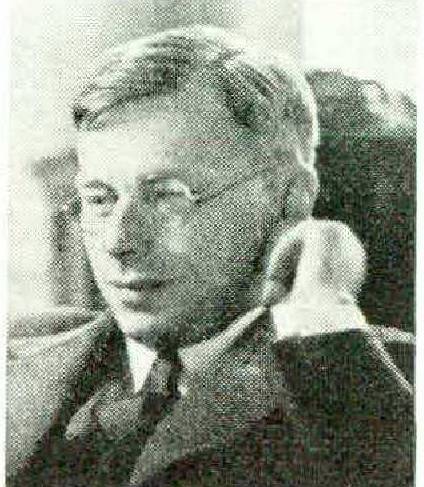
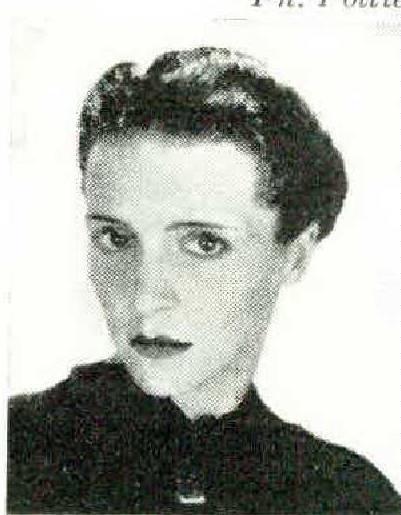
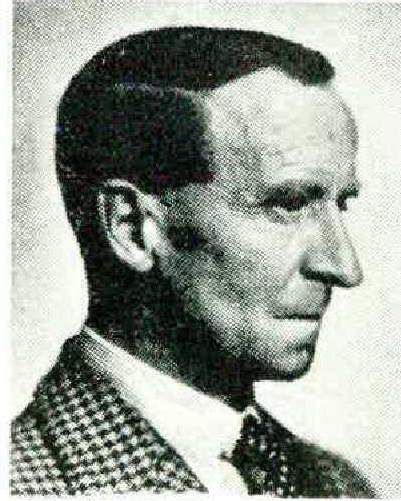
Daughter of two great scientists, and author of the famous biography of her mother, Eve Curie (p. 603) is, if you like, a liaison officer of whom France may well be proud. At the outbreak of the war Jean Giraudoux appointed her a Director of his Commissariat of .
The Atlantic is well represented below the Mason-Dixon line by David L. Cohn (p. 614), a graduate of Yale who was born and raised in the Delta, and who knows the South, the Southerner, and the Negro with an accuracy no visitor will ever approximate. Mr. Cohn is the author of God Shakes Creation and Picking America’s Pockets, and his latest book, The Good Old Days, was published this spring by Simon and Schuster.
Did you ever read John Buchan’s (p. 620) novels Greenmantle and The Thirty-Nine Steps? Did you ever wonder how a British Proconsul caught up in world affairs could find time to write, in sickness or in health, that long shelf of books which bear his name? Now that his work is done, American readers who remember his friendliness towards us will turn with affection to the clear and unforgettable prose in which John Buchan tells his own story.
On his graduation from Harvard in 1902, Witter Bynner (p. 630) served for four years as Assistant Editor of Mccture’s Magazine. Then, his apprenticeship at an end, he settled down to the writing and study of poetry. He has been the Phi Beta Kappa poet at Harvard, the Uiversity of California, and Amherst, and president of the Poetry Society of America, 1920-1922. His last volume, Selected Poems, was published in 1937.
Bliss lsely (p. 632) is the son of a frontiersman. Kansas-born and -bred, he knows what wheat stands for in the eyes of the American farmer, and the hard facts he has assembled should be pondered over while the Senate’s recent and record appropriation is still fresh in memory. the last seven years the expenditures for farm relief have pyramided from $84,000,000 in 1933 to $1,205,000,000 in 1939. ‘ I write three market letters a week,’says Mr. Isely, ‘to publications serving trades that deal in farm products. I write a broomcorn letter, a flour letter, and a feedstuffs letter. In addition I do a great deal of writing for the farm press. My connection with the Western Tractor and Power Farm Equipment Show held annually at Wichita puts me in touch with thousands of farmers.
The Atlantic began the serialization of Hans Zinsser’s (p. 638) Biography of It. S. before the end of the book had been written. In its length — though not in its excellence — it exceeded the editor’s original expectations, with the result that the final chapters had to be held over until the present issue. The complete book is to be published in May under the title As I Remember Him: The Biography of R. S.
Mary Lavin (p. 617) left Massachusetts when she was ten to return with her father to the Old Country. In Dublin two years ago she began the writing of her short stories, one of the first of which came to us with the recommendation from Lord Dunsany that it was ‘a slice of Irish life more redolent of Ireland than a piece of turf cut out of an Irish bog.’ It is a delight to welcome a talented newcomer to our columns.
This spring two American novels are sort to be widely read and discussed — Chad Hanna, the historical novel by Walter I). Edmonds, and Native Son, the Negro novel by Richard Wright. The Atlantic has invited Robert M. Gay (p. 656), Director of the School of English at Simmons College, to assess the qualities which have already been marked in the stories of Walter D. Edmonds, and David L. Cohn (p. 659) to assess those problems which are open or implicit in what is probably the most powerful first novel that has yet come from a Negro writer.
When a small child, John A. Lomax (p. 662) rode in a wagon pulled by a yoke of oxen from Mississippi to the frontiers of Texas; his father settled in the beautiful Bosque River Valley in the days of free grass and the open range, and the Lomax ____ ranch was the stopping place for the great herds of longhorn cattle and the cowboys who drove them. John Lomax graduated from the University of Texas, a classmate of Will C. Hogg, who fought all his life to keep democracy free, generous, and unfettered in tire Lone Star State.
To the January Atlantic Charles Stevenson contributed a leading article entitled ‘Labor Takes in the Fair. Harry Van Arsdale, Jr. (p. 673), Business Manager of the Electrical Workers’ Union, Local No. 3, asked if he might have space in which to reply to Mr. Stevenson’s charges. A native of New York City, Mr. Van Arsdale followed his father’s trade, working as an apprentice, journeyman, and foreman electrician. He is at the present time the executive officer of the largest trade-union in the V. F. of L. and vice president of the Building and Construction Trades Council of New York City. In accordance with parliamentary procedure, Charles Stevenson (p. 678), a Washington correspondent of integrity, is given the opportunity for a rebuttal.
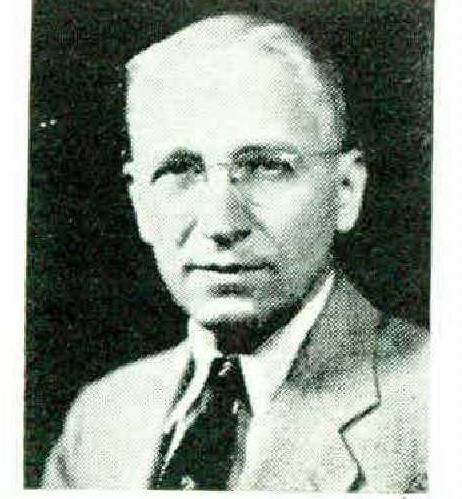
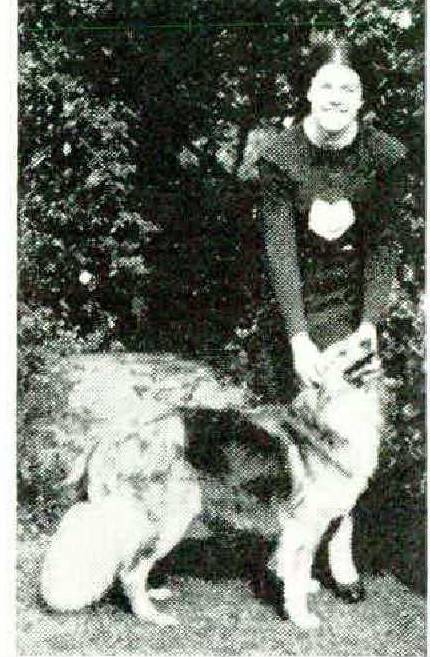
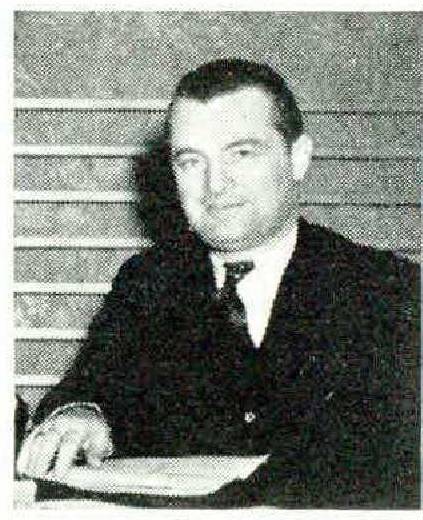
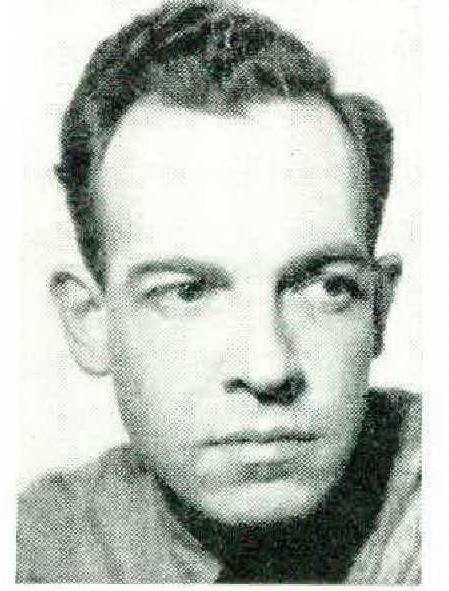
Edmund Wilson (p. 681), critic and biographer, concludes his expert analysis of Charles Dickens and the lifelong effect upon his work of his youthful experience in the Marshalsea Prison.
Mark Schorcr (p. 692) makes his first appearance in the Atlantic with a story which must touch the heart of all dog lovers.
Poet, teacher of English, and a scholar who speaks with authority on Elizabethan England, Theodore Spencer (p. 694) is a lecturer of Cambridge University now teaching at Harvard.
With the coming of spring, the war is certain to develop a new phase of strategy. Lieutenant Colonel C. Requette, Ancien Professeur de l’École de Guerre, Belgium, presents those reasons which may — or may not — deter the Germans from entering the Low Countries.
From Cambridge, Massachusetts, T. H. Thomas (p. 700), formerly a major at G. H. Q. at Chaumont, sends us his thoughtful accounting of ‘ Weygand and the Eastern Command.’
In Bradford, Vermont, Wilson Follett (p. 711) continues to hold the fort as a valiant defender of good English.
The Atlantic is happy to begin the serialization of C. S. Forester’s (p. 713)to the Indies. Mr. Forester was tints characterized in a thumbnail sketch by Sir Hugh Walpole: ‘It is as a storyteller that Forester’s good qualities are most obvious. And yet, curiously enough, it is this ability to tell a story, so rare nowadays, which has delayed His recognition as a writer of the first class. . . . The fact that his yarns are so good tends to make people miss his other good qualities. I have already called attention to the excellence of his prose, and I am glad to have the chance of calling attention to his excellence as an artist. The artistic balance of his books, the way in which the climax grows naturally out of the preceding incidents, the consistency of the character drawing — all these have been occasionally obscured by his reputation as a narrative writer.'