The Like and Times of William Howard Taft
[Farrar and Rinehart, $7.50]
ON the demise of the Taft administration a just epitaph was suggested by the New York Times for March 5, 1 ‘President Taft,’ it read, ‘has been a victim of too much Roosevelt.’ A sufficiency of Theodore Roosevelt had proved tonic. An overdose was fatal.
The lives of two remarkable men raised to the dignity of high importance an entire era of American history. They lived as brothers. They parted bitter enemies, Roosevelt to plunge down to the tragic anticlimax of his career, Taft to stumble, then to rise to his permanent achievement. Rightly does this accurate and impartial chronicle measure each of the protagonists by the stature of the other, and very naturally it is to the relations betwixt the two that the reader of Mr. Pringle’s two handsome volumes most eagerly turns.
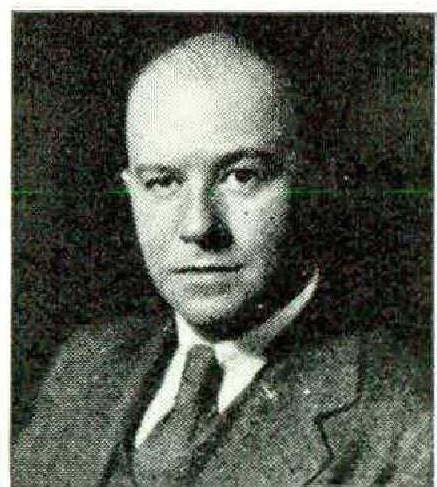
There is a Plutarchian strain in history, and those of us to whom a purely economic conception is not all in all delight in the human contrasts which Fate so often and so engagingly provides between the leading actors of dramatic epochs. As Cæsar had his Brutus, Gladstone his Disraeli, so Taft had his Roosevelt. What a pair of brothers in arms! Roosevelt the child of Genius; laft the child of Duty. Roosevelt with his flaming righteousness and his pale truth, scorning the law save as a judicious curb upon his adversaries; the methodical Taft whose very soul was outraged by lawlessness and to whom all progress was measured in terms of orderly progression; Roosevelt the man of instinct, touched with divination, living within the future’s edge; Taft the lawmaker, moving from precedent to precedent, slow to leave the past behind. That they should be riven apart was written in the stars. But a personal quarrel is an unlovely thing. It poisoned the lives of both men, and to the country they both loved it did a grievous wrong.
It must be that offenses come, but it is written, ‘Woe to that man by whom the offense cometh.’ In prime measure the guilt was Roosevelt’s and the misfortune Taft’s. Mr. Pringle tells the story in orderly and fair detail. The main points in the Roosevelt indictment he quashes completely — the charges growing out of the Ballinger case, the capitulation to old-guard principles, the larceny of convention votes. The multiple slanders of the Progressives are swept away, but Taft’s errors and weaknesses, the defects of strong virtues, he makes no effort to conceal.
It is long since I have read Mr. Pringle’s earlier volumes devoted to the life of Theodore Roosevelt, but it is my impression that long and laborious years spent in intimate communion with Mr. Roosevelt’s record have not increased his affection for that maculate hero. However, whoso disputes his final decision must face a meticulous record of facts which can hardly be disproved.
Why is it that a Life of Taft on the library table looks something less than exciting? liven after a long lapse of years the shadow of a larger figure lies athwart the pages. But, read for its own sake, Taft’s story lacks nothing of even exceeding interest. God grant that America will not be called, like less happier lands, to develop a race of Proconsuls, but if that must be, may they be wise, benign, and good as our first. Governor of the Philippines. His understanding of the cause of labor, which came late after his unhappy presidency, is a proof of his continual development. The Chief Justiceship, conservative but fruitful, worthily fulfilled the ambition of his life, fivergiven to self-analysis, his confidence hi his chosen career was not misplaced.
Good old Taft! Devoted public servant, high in aim, high in achievement. Tune it is that justice should be done to a great record. Mr. Pringle has done his work with admirable fidelity, spirit, and skill. He has served Taft well. He has served history better.
ELLERY SEDGWICK