The Contributors' Column
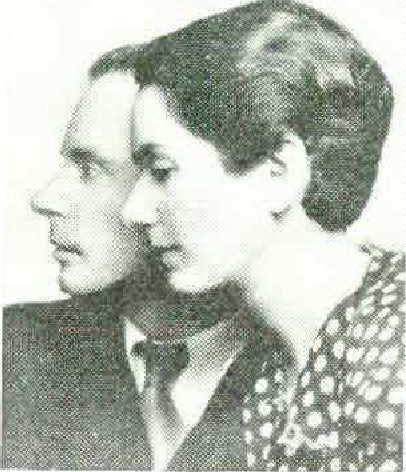
THE first and second children of Thomas Mann, Erika and Klaus Mann (p. 441), share, as do the rest of his family, in the exile of Europe’s most distinguished living novelist. It was Klaus who in 1933 telephoned to his father, then vacationing in Switzerland, warning him not to return to Hitler’s Germany; it was Erika who went back in disguise to the Mann home in Munich to rescue from confiscation the manuscript of Joseph and His Brothers.
Erika is a playwright and actress. A pupil of Max Reinhardt, she scored a youthful success in Berlin, Munich, and Hamburg. Her satirical revue, Peppermill, of which she was author, director, and actress, has played to more than a thousand audiences throughout Europe. At the age of thirty-three Klaus is already the author of some twenty books and plays. More recently brother and sister have collaborated in writing the dramatic story of the German emigration — a book which is to be published this month Under the title Escape to Life.
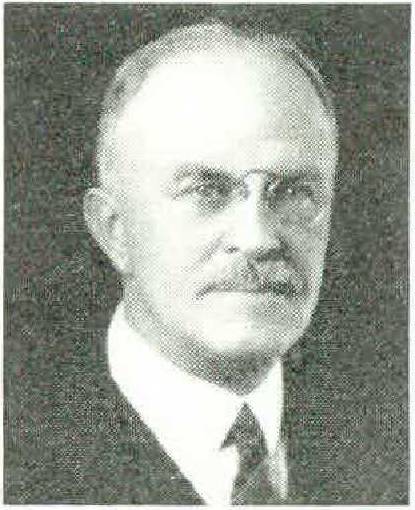
At a time when censorship and propaganda both threaten our freedom of speech, it is particularly invigorating to have an editor like Oswald Garrison Villard (p. 452) summarize for us the philosophy of his fighting years. The editor of the Nation from 1918 to 1933, Mr. Villard was then, as he is today, a writer with courage to follow where his conscience led. His autobiography will appear this spring with the characteristic title Fighting Years: Memoirs of a Liberal Editor.
A graduate of Rockford College, Illinois, in the class of 1923, and formerly editor of the New Student,Lenore Pelham Friedrich (p. 461) is the wife of a Harvard professor and the mother of four children. Her present home is Beechwood Hill Farm in Vermont.
From an island north of Boston, ice-bound when this is written, come the manuscripts of Alexander Woollcolt (p. 166). By good luck and good management, the Atlantic is to have the first look at his portraits In Memoriam, his stories of poodles and of places, which will eventually constitute a book in the tradition of While Rome Burns.
In the February number, Mr. Woollcott made the statement that a record of the Areher-Shee case is nowhere available. A few readers promptly wrote in to remind us of the chapter in Edward Marjoribanks’s Life of Sir Edward Carson, but Mr. Woollcott stands by his guns: —
‘The Life of Sir Edward Carson does not contain a record of the Areher-Shee case. It contains a short chapter about the case which whetted my appetite to look for the record. I have been trying ever since in every available law library to find one to read. Now the complete record is in my possession, and I have been in conference ever since with one English publisher and one American publisher and one University Press as to the best means of making it available for every law student. Your troubled readers seem to be under the impression that I had said, “ Nowhere in England or America is there available in any library an account of the Archer-Shee case.”That would, of course, be nonsense. There are many such accounts, including the very full ones available in the English newspapers and the English service journals at the time of the trial.’
The efforts of the Administration to make this country prosper will go down in history as among the most fascinating experiments in the annals of economics. ’But,’says Sumner H. Slighter (p. 170), ‘plainly something is wrong — either the Great Experiment has been bused upon a faulty diagnosis of our ills, or the policies for correcting these ills have not been well selected. What is the trouble?’ Professor of Business Economics at the Harvard Business School, Mr. Slichter gives us the nonpartisan analysis of a ranking economist.
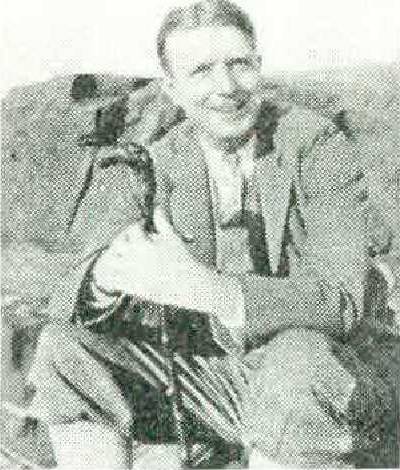
A member of the Harvard class of 1921, Frank C. Hanighen (p. 478) has distinguished himself as a foreign correspondent for the American press. Europe is his assignment, and as co-author of Merchants of Death he laid bare the little-known facts about the international traffic in arms. Now he describes the revolution which is going on inside Germany, where the expropriation of capital and the hard driving of labor have brought the initiative of industrialists and workmen to a dangerously low point.
Struthers Burt (p. 486) finds the secret of happiness by dividing his time between ranching and writing. Baltimore is his birthplace, but Wyoming beckoned in 1908, and since then he has enjoyed the open months at Three River Ranch and has hibernated at Southern Pines.
Thomas Hornsby Ferril (p. 490) takes his stand in Denver, Colorado. There he was born and educated, and there his best writing has been done. He knows the feel of his country and the color of its past. The author of two books of poems. High Passage and Westering, and winner of the Nation’s Poetry Prize (1927), Mr. Ferril is seen in this thumbnail sketch by Robert Frost : —
Plus the height of his home town,
I know a Denverite
Who, measured from sea to crown,
Is one mile, five-foot-ten,
And he swings a commensurate pen.
At the dinner given by the Civil Liberties Committee of Massachusetts in commemoration of the Bill of Rights, Howard Mumford Jones (p. 492), Professor of English at Harvard, spoke out in ringing defense of the racial minorities in the United States.
An Anglo-Catholic, formerly warden of St. Stephen’s College and Professor of Religion at Columbia University, Bernard Iddings Bell (p. 499) sends us an Easter Sermon for those Christians who stay at home.
Virginia Woolf (p. 506) is the daughter of Sir Leslie Stephen. In 1917 she and her husband, Leonard Woolf, established the Hogarth Press, whose earliest productions, now collectors’ items, were modest, hand-set pamphlets by such unknown authors as T. S. Eliot, Katherine Mansfield, E. M. Forster, and Mrs. Woolf herself. The Woolf’s home in Bloomsbury became a literary centre where were to be met John Maynard Keynes, Arthur Waley. Miss V. Sack ville-West, and, not least, Lytton Strachey, whose skill as a biographer Mrs. Woolf now appraises.
A New Yorker who finds Cambridge salubrious for his writing, Walter D. Edmonds (p. 511) enjoys living in the past of the Empire State. The source materials for his novelette, ‘The Wedding Journey,’came from the Erie Canal of 1835. Meantime he has been writing the Young Ames stories laid in Manhattan of 1836, and they in turn are an offshoot of his new novel, Chad Hanna, the story of a circus that toured Upstate New York a hundred years ago.
A Southerner who knows how to make the dialeet sing, Nancy Byrd Turner (p. 521) has long been at home in the Atlantic columns.
Is there a new hope, a new scope, for American schools? Dr. Luther Gulick (p. 522) says there is, and says it emphatically. From 1935 to 1938 he directed the New York Regents’ Inquiry into the Character and Cost of Public Education. His article is a summary of the most important reëxamination of American Education that has yet been attempted. The full details of the Inquiry have been made public in eleven compact volumes under such titles as High School and Life, by Francis T. Spaulding; When Youth Leave School, by Ruth Eckert and Thomas O. Marshall: Adult Education, by F. W. Reeves, T. Fansler, and C. O. Houle; and Motion Pictures and Radio, by Elizabeth Laine.
From her home in Dublin, Winifred Letts (p. 530), Irish poet and playwright, went on pilgrimage to the island in Lough Derg where Saint Patrick once made his historical penance.
Literary critic of the New Statesman and Nation, Cyril Connolly (p. 534) is a graduate of Eton and Oxford and a close friend of Logan Pearsall Smith, to whom his new book, Enemies of Promise, is dedicated.
Amherst and Robert Frost together exerted an early influence upon Edward A. Richards (p. 539), a poet who is also an Educational Director for the Industrial Training Corporation of Chicago. His first collection of verse is to appear this spring.
From Mr. O. C. Huffman, President of the Continental Can Company, we received the manuscript of the reminiscences written by his father, James Huffman (p. 542), formerly a private in the 10th Virginia Infantry. His pages throw new light upon the treatment accorded the Confederate prisoners of war. More than that, they illustrate the courage and resourcefulness with which a man endures captivity.
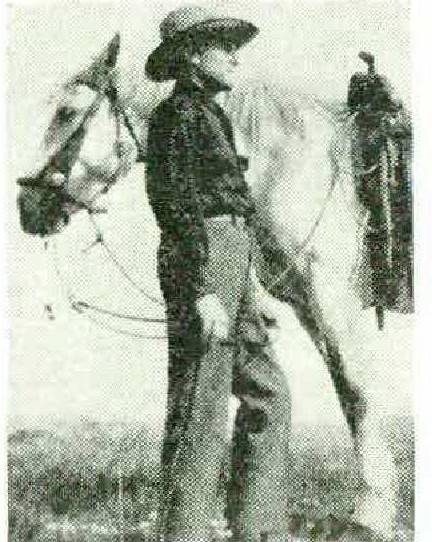
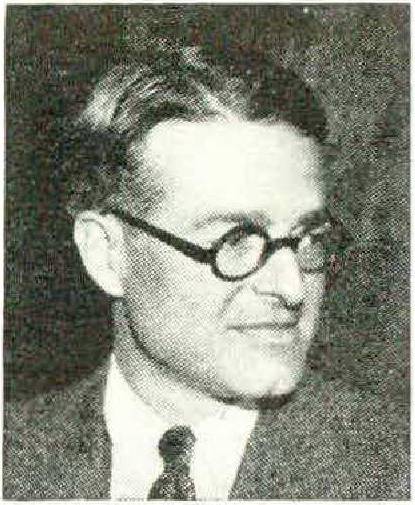
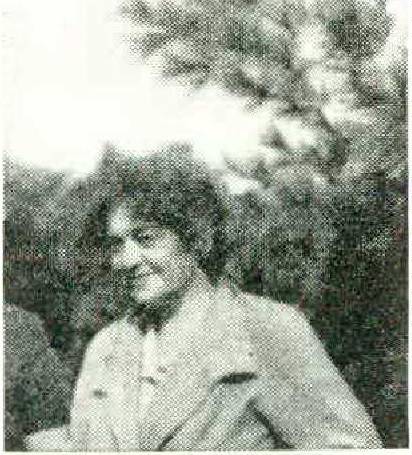
Lest our testimony come too often from the ranks of the white collar, the Atlantic turns this month to spokesmen, both Under Thirty, who know what it is to work with their hands. Born in the United States, of Russian parents, Katya Semenov (p. 519) is an American mother now working as a waitress in a Greek restaurant in Massachusetts. Carl A. Benz (p. 550) sets an example which might be followed by other recent college graduates, He did not wait for a job to find him. He took care to aim his application, and, once employed, was willing to work while other people slept.
Critic and novelist, Wilson Follett (p. 555) is also a Consultant on Modern American Usage. He keeps no regular office hours, but readers can reach him at Bradford, Vermont.
In the December Atlanlic we announced a three-point program for the New Year. In fulfillment of our promise of ’laughter spontaneous and hearty’ we have selected as our new serial ‘What Luck!’ — the autobiography of A. A. Milne (p. 557). Of course he had good luck. But he also had good wits, the industry that he had learned from his schoolmaster father, and the courage to try to support himself at the most hazardous occupation in the world — writing. More amusing than a comedy, more satisfying than a romance, this autobiography is as English as a copy of Punch (of which Milne was once the assistant editor) —and as gay.
Through a regrettable oversight the name of Miss Virginia Prewett was omitted from the Contributors’ Column of the MarchAtlantic.It was she who translated and edited Professor Molina’s paper, ’Mexico’s Defense,’ and we are very sorry that she did not receive full credit at the time of printing.
A Letter in Rebuttal
New York City
Editor of the Atlantic
Dear Sir:
The article ‘Manuel Quezon,’ by John Gunther, in the January 1939 issue of the Atlantic Monthly, has been called to the attention of our Press Relations Committee.
Whether the article presents a just criticism of the character and personality of President Quezon may be left to the President himself to decide. In view, however, of the treatment accorded to the Catholic Church and religion, we feel constrained in justice to comment upon the following points: —
I (p. 69). ‘The Church has vast properties, some gained by gifts or purchases through the tithe, some when priests coerced men and women to donate their land to God in penance for sins confessed.’
(а) The question of the Church property was arranged through negotiations with Pope Leo XIII and William Howard Taft representing the United States Government, full details of which are available in the official documents. We summarize a few salient points here.
The Philippine Islands comprise 73,216.000 acres, of which the friars possessed, in 1898, 420,000 acres, or a little more than one half of one per cent. The United States Government purchased through the Taft agreement approximately 410,000 acres of the friars’ land to be sold in small lots to actual tenants or other purchasers. According to the report of the Director of Lands for the year ending December 21, 1934, there still remained to be sold of 23 friar-land estates 1588 lots, totally 22,036 acres, valued at $571,707.
In addition to the 10,000 acres not sold to the United States Government at the time of the Taft agreement, there are to-day a few haciendas whose revenues are definitely assigned — that of San José de Buenavista to the San Juan de Dios hospital, Manila; that of the Calamba Hacienda to the University of Santo Tomas; two others assigned to the support of the Seminary for Filipino secular priests (the revenues for which amounted to $10,500 in 1934). Adding to these a few properties in and around Manila and belonging to the Archdiocese, and every other bit of property throughout the Islands, the total of all land owned by all church organizations in the Islands amounts to 70,000 acres, or less than one tenth of one per cent of all the land. These figures by no means merit the adjective ‘vast.’
(b) It is strictly against Canon Law and the principles of the Sacrament of Penance, as held by the Catholic Church, to coerce anyone in the performance of any penance. Penance is, of course, in the nature of a sanction, and as such part of the Tribunal of Penance (i.e. Confession), but sanctions are not coercion in the sense of forcing a person against his will through terror or some other method. In the case of Confession and the assigned penance, such coercion is forbidden and there is a duly authorized procedure to handle any violations of these rules. Any instructed Catholic, and, in fact, anyone with common sense, would know that such coercion would invalidate the confession and render the penance valueless.
2 (p. 69). ’Quezon knows that to make a real revolution he must destroy feudalism — that is, the Church.'
To refute the identification of feudalism and the Catholic Church is surely unnecessary.
3 (p. 66). The account related here of President Quezon’s return to the Church in 1928 ignores certain patent facts. President Quezon, in his abjuration of Masonry sworn to and signed on August 18, 1930, said among other statements: ’I wish once again to be a Catholic, to live and die in the Faith. . . . With all my heart I deplore having passed the best years of my life forgetful of my God and separated from His Church.’
Mr. Gunther should know that no priest could receive the submission of anyone who had apostatized from the Church, or indeed admit anyone to the Church, who refused to make a full profession of Faith in all the truths held and taught by the Church. No one is a Catholic on any terms save those of the Church, and if he proceeds to lay down his own terms, he thereby ipso facto is out of the Church.
This statement is also a reflection upon the character of the ecclesiastic who did receive President Quezon into the Church. The circumstances surrounding this event are easily to be ascertained from him, a precaution that should have been taken before publication of this article.
4 (p. 65). The statement that Señora Quezon is ’a devout Roman Catholic ‘ but willing to forgo going to Church while in Mexico in order not to embarrass her husband in his conversations with President Cardenas places Señora Quezon in the position of being willing to subordinate her religion to expediency, which no ‘devout Roman Catholic’ would do, and would submit her to serious criticism from her own people. Such a charge should have been verified before publication.
MARIE MADDEN
United Catholic Organizations
Press Relations Committee
There is Black Pride.
Chicago, Ilinois
Dear Atlantic, —
I should like to suggest that the attitude expressed in ‘Black Pride’ received wide promotion and general approval ten years ago, but at the present moment it is likely to be taken with salt by many Negroes, including myself.
You may recall a certain foment in Harlem during the period prior to 1932, a foment sometimes referred to as the ‘ Negro Renaissance’ and the ‘New Negro.’ Since I had a part in the foment, I can say with emphasis that a slant similar to the one expressed by Mrs. Goffman was the basis of that awakening. But the Renaissance spent itself like a skyrocket. The young people who held the banners during that optimistic moment seem without exception to have given up their trenches. Curious turns have been taken by the individuals who made up the group. My position is that we are wiser than we were.
Back in those Harlem days we fought for the things which are now applauded in your pages. We offended all the old mossbacks whom we accused of having no race pride. We went to the sanctified churches and shouted —an expression of our glory in things black. We did the Charleston and the Black Bottom. We wore barbarous clothes, and we roamed the Harlem night, singing.
Some of us wrote. We wrote about enticing jungles. We wrote of slim black wenches without any of the ugly old inhibitions. We scorned Charles Chestnut because he refused to get on board. It did not occur to us that we were perhaps absurd, that most of us were at best no more than half-black, that the jungle-child rôle we had adopted didn’t really fit. But now, ten years later, two publishers announce spring books by Negroes in which the authors concern themselves with people of other races. Another of our group is in Hollywood writing a play for a white star. Still another is the leading contributor of cartoons to Esquire, without fettering himself with racial considerations.
I question seriously most of the points made in ‘Black Pride.’ I wonder if we should help glorify black things when we deplore a similar tendency in others. I wonder if Negroes can be helped in the long run by calling attention to themselves in that way. I wonder how those of us who are less than half black can apply the theory. I wonder if it isn’t too late for us to hope to be anything but ordinary Americans without any qualifying adjective.
Marian Anderson is a singer by anybody’s standards. Joe Louis is a hell-lion in anybody’s ring. E. Simms Campbell is only incidentally a Negro. The same Went for Tanner, Dumas, and Joe Gans. It was the same with Coleridge-Taylor and the composer of ‘Listen to the Mocking Bird’ and with Batista.
‘Black Pride’ leads in another direction.
A. BONTEMPS
Are we fundamentally different?
Detroit, Michigan
Dear Atlantic, —
A ‘thank you’ to Mrs. Goffman for bringing to our attention our highly distinctive qualities, ‘black skin, kinky hair, thick lips, high cheekbones, large hands, feet, and nostrils.’ It isn’t so much how you look as ‘where you are at’ that makes one distinctive.
The cosmetic manufacturing industry is a ranking American industry entirely apart from the Negro phase of it. The matter of race pride is no more involved when a Negro applies a bleach cream than it is when a white person applies it.
There is no more of moral issue involved when a Negro woman pays a beauty-shop operator to remove the kinks from her hair by use of hot irons than is involved when a white woman pays five times as much to sit under an octopus-looking electrical device for several hours and receive a kinky-like ‘permanent’ (four weeks) wave. In each case all the person is trying to do is look differentand to her mind more charming than she looked at first.
The fact that Negroes are prejudiced in favor of whites (if we accept it as a fact) may not be an ideal state, but is an easily explained one. Jews, under various pogroms, have embraced Catholicism, changed their names, and in any way possible tried to lose their identities; maybe not a very ideal procedure, but certainly a very practical procedure.
I think Mrs. Goffman has been a home-town correspondent so long that she has a home-town point of view. Either that or, as is the case with many Negro speakers and writers, she knows what American whites like to hear about American Negroes. They are sufficiently astute to know that if they expect to be paid for telling the truth they must tell the truth that the payor wants to hear.
There are still some of us who continue flagrantly to mimic whites. One of my favorite ways is by reading the Atlantic. I really have no right to — so far as I know it is the product of an all-white institution. But I enjoy it, and, mimic that I am, I am enclosing check for my renewal.
Your friend,
EDNA SHAW
One way to stop.
Papeete, Tahiti
Dear Atlantic, —
In ‘Snobbery on the Left,’ which appeared in the December number, there is a passage that makes fun of Roosevelt for inferring that ‘the poorest are the wisest,’ and that ‘the stupidity of industrialists and the greed of America’s Sixty Families would have driven us upon the rocks long ago had it not been for tolerant wisdom from the White House and the long-suffering of the forgotten man.’
Last summer in the woods of northern Maine a man of my acquaintance, although he needed the money, refused to sell a few pieces of scrap iron to the junkman because the iron would go to Japan. One of the guides expressed to me his intense annoyance at receiving from a mail-order house a fishing line ‘made in Japan,’ and told me how hard it was to avoid buying Japanese goods. On the other hand, a long-established New England firm of high reputation removed from its catalogue the word ‘Japanese’ as a description of its brand of crabrneat.
Some time ago labor-union members in Australia had to be coerced into coaling a Japanese whaling ship on her way to continue the extermination of the whales of the Antarctic. Recently Australian union laborers had again to be coerced into loading pig iron for Japan; the same resentment has been shown at our own ports, and we have read of labor’s protests from other parts of the world.
But while union laborers and my friends in Maine have been trying to withhold assistance from the avowed enemies of democracy, the industrialists, and notably American industrialists, have been selling to Japan the materials that have enabled that nation to destroy the cities of China, a peace-loving country from which we had nothing to fear, whose people used to be friendly, whom we have benefited with universities and hospitals that now lie in ruins, destroyed by airplanes and bombs made in America. President Roosevelt pleaded almost in vain for many months that this traffic should be stopped.
To most people except those who still believe that nothing matters unless balance sheets balance as of yore to show an immediate money profit, it must now be apparent that if Japan’s luck continues, as it probably will, she will soon be in a position to realize her plans of complete domination of Eastern Asia. Then with the vast material resources she has conquered, and the tremendous spiritual elevation of her people that such success will bring, she may find the mocking Fates, weary of western civilization, aiding her to march over the relics of the western nations to the accomplishment of that world dominion which is the essence of her religion.
So Mr. Wecter’s scathing ridicule seems rather ill placed. When we observe our industrialists arming our enemies to destroy our friends it would seem to make more sense to infer stupidity and greed from such actions on the part of the industrialists and the Sixty Families than from the President’s words.
HARRISON W. SMITH