The Contributors' Column
PROFESSOR of English at Harvard University and Literary Editor of the Boston Evening Transcript, Howard Mumford Jones (p. 585) has risen in town meeting to ask a rather embarrassing question. Says he: —
’Everybody knows about the parades, the “spontaneous” cheering, the farcical elections, the uniforms, and the perpetual celebrations. Naziism has its martyrs, fascism its saints, and communism its heroes. It is true that the official history of these countries, which obedient citizens are required to swallow, would not delude even a weakminded freshman in the United States, but that is not the point: the point is that the official history is full of heroism. The result is that the communist or fascist citizen, at least in his public moments, has an exhilarating sense of living in a vast grand opera. Why is there no American grand opera to correspond? Why has American democracy mislaid its mythology and lost its glamour? ’
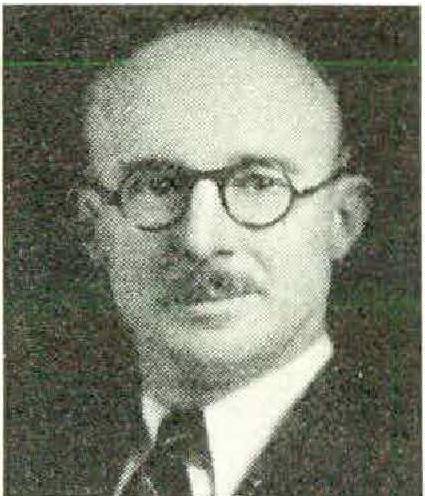
Stuart Chase (p. 593) makes his home in Georgetown, Connecticut, and there he writes his books. But the world is his laboratory, and he goes wherever there is an interesting experiment in progress. Last summer he went out to see for himself the building of the Grand Coulee Dam. The sight was inspiring. Twenty-three million tons of masonry is a monument three times larger than the Great Pyramid, and when Mr. Chase explains what the Dam will mean to the future of American civilization we feel proud of our engineers.
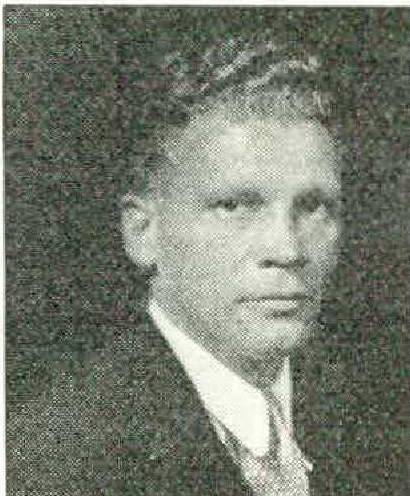
Like Conrad, Hugo Johanson (p. 600) is a sailor who learned his English at sea. Sweden was his birthplace; today his home port is San Francisco. The years in between are described in these words: ’I went to sea as a small boy. I came to this country in 1923 to make my fortune, and I succeeded admirably. After three years of rear-ranking in the American Army in the Orient, I became an itinerant laborer. During the next five years I tackled almost every known underpaid, disagreeable task. Of course, sometimes I soared to astonishing altitudes. Once I was a bellhop and a bootlegger and I have had a short, wistful, not entirely unsuccessful fling as a pictorial photographer.’
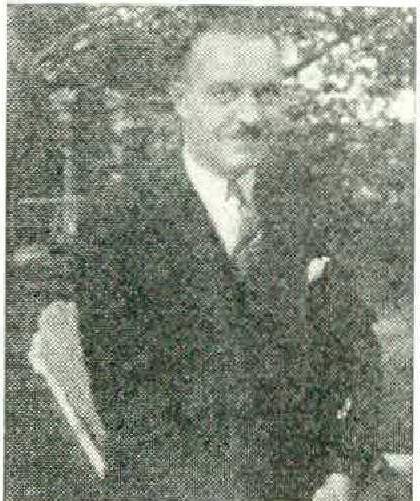
How have the relief funds been distributed in these months before election — fairly or with political discrimination? That is a serious question which Lawrence Sullivan (p. 607) seeks to answer on a national scale. At the conclusion of his inquiry, readers are invited to scrutinize the WPA projects in their own neighborhoods to determine how vulnerable they may be to his criticism.
In 1919 Mr. Sullivan joined the Chicago staff of the Associated Press, where he served for seven years before being transferred to the Washington Bureau. From 1928-1934 he was assigned to the White House successively by the United Press, the Scripps-Howard Alliance, and the Washington Post. Since 1934 he has been the Washington correspondent of Forbes business magazine.
There is always a reserved seat in the Atlantic for A. Edward Newton (p. 616). A lifelong admirer of Boswell and Johnson, a book collector beloved on two continents, an essayist who would have charmed Lamb, he now illuminates for us his delightful friendship with that London wit, E. V. Lucas.
No one is better entitled to speak for peace than Vera Brittain (p. 625), the author of Testament of Youth, who was stripped by the last great war of most that was dearest in life. She served as a volunteer nurse from 1915 to 1919 in London, Malta, and France, and she regards with sympathy any such crisis as might be faced by the younger generation in England.
Maurice B. Cramer (p.632) tells us that he wrote the poem we have accepted while working for his Ph. D). degree at Princeton, in 1933. For the past four years he has been instructor in the English Department of Mount Holyoke College.
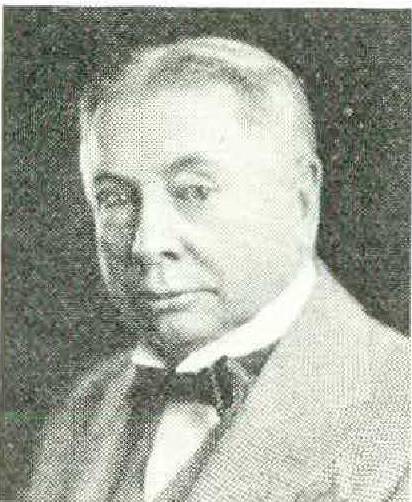
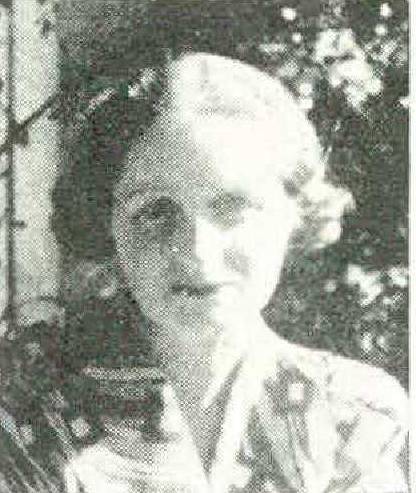
A poet who is also a member of the editorial staff of the Atlantic, Mildred Boie (p. 633) knows the release that comes at the five o’clock hour even for those who love their work.
“‘We Sail at Dawn” I read to a sailor,’ writes C.F. MacIntyre (p. 634). ’He merely said: “Now how in hell do you know all that? I never thought much about it before, but that’s exactly how it is.” He said that the garbage, Chinese, and the cook’s pants hit him where he lived, and he was going to sign up again.’
Dr. MacIntyre was awarded a Guggenheim Fellowship last April, and is now in France working on a translation of Faust. He is Assistant Professor of English in the University ol California at Los Angeles, the editor of two anthologies of English literature, and the author of a volume of Poems. His letter goes on to say: ‘The problem of poetry now is one of great concern to me. I feel its maladjustment, but I’m by no means sure that the poet should desert his rather high office and come down to the people. I know some who sprinkle their very substantial oysters of the world with a pale catsup of fake communism and pretend to be brotherly. I mistrust them and so do you.’
The problem of how to make recovery lasting in this country has, we think, been fairly stated by Professor Sumner H. Slichter (p. 6.33) of the Harvard business School. His statement of the factors which must contribute to this greatly desired transition is of equal interest to both industry and labor.
The Civil War means much to Richard Ely Danielson (p. 643), who has a story to tell of Chancellorsville — and a beauty!
At a time when our nerves are taut with anxiety, it is rather tonic to hear from Albert Jay Nock of those leaders who a century ago found in delay — and Snoring — the best possible defense.
A reader writes in to say †hat the letters from ‘Under Thirty ’ are “a new spark plug’ for the Atlantic. They certainly are. We shall extend the space for them in direct ratio to their spark and power. Of the four speakers this month, K. Hoover (p. 658) is a young man who married on a shoestring — and has n’t a single regret; W.G.P. (p. 659) is a German exile who found sanctuary in the United States and who wants to keep this country a land of promise; Evelyn Meredith Gillespie (p. 660) is a Southerner who resents ‘the crybaby attitude’ of her generation; and Alex Daughtry (p. 661) is a Kansan and a New Dealer — and proud of it!
financial statements, with their balance of income and outgo, have been for twenty years an open book to Lawrence Scudder (p. 663), president of the company bearing his name, and one of the ablest, public accountants in this country, Having studied the books of Uncle Sam, he feels that our most pressing problem is to stabilize our buying power, transferring the excess of good years to the deficit in the lean. And he demonstrates that this can he accomplished by an improved income tax!
Five marriageable daughters are enough of a headache for any mother, and especially if that mother happens to be Queen Victoria. E. F. Benson (p. 668), an accomplished biographer, shows how marriage and the influence of the Queen Mother brought England’s reigning family to the sword’s point.
A Frenchman who has lived in London for thirty years, André Simon (p. 678) has probably the most sensitive and widely respected palate in the English-speaking world.
People in search of amusement should read Frank Sullivan’s (p. 684) forthcoming book, A Pearl in Every Oyster.
Tree lovers who have seen some of their best friends toppled over by the North Atlantic hurricane will read with special sympathy the sonnet by David McCord (p. 687). He was thinking specifically of a tree outside his genial office in Wadsworth House, Cambridge.
It is certainly no exaggeration to say that Colette (p. 688) is the most distinguished woman writer now living in France. Her love of animals has contributed no little to her literary success, as witness the Dialogues de Bêtes, which helped to establish her reputation before the war. Cats have always been her best friends in the animal kingdom.
In her new book, Behind the Label, — it will be published in November,Margaret Dana (p. 690) tells what every consumer ought to know and makes a ringing condemnation of those slovenly habits and sharp practices which still keep our retail trade less open than it ought to be.
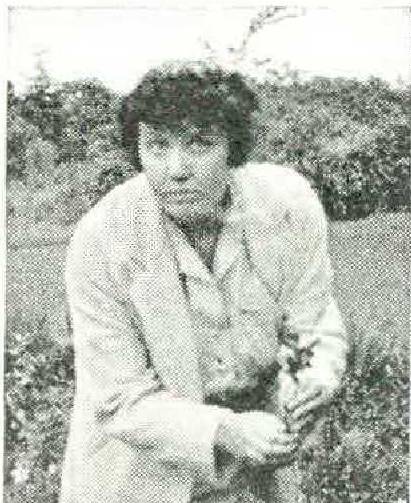
Wilson Follett (p. 701) has been by turns novelist, critic, editor, and teacher. In each capacity he has had to depend on good, live English. But the abuse of the language is something he will not tolerate. Incidentally, he will be glad to hear from those readers who agree with — or denounce — his point of view.
With this issue we conclude our Atlantic novel, Spella Ho, by H. E. Bates (p. 703). If our correspondence is a fair test, the consensus is strongly in support of our own preview, to wit that this is the most remarkable story that has come out of England in the last five years. Are there any more votes to be counted?
A Correction
In the September Atlantic we described the new book by David Cornel DeJong as an autobiography, whereas actually Old Haven is a work of fiction.
‘We Negroes should take a bow.’
Detroit, Michigan
Dear Atlantic, —
We Negroes should stand and lake a bow in acknowledgment of the publicity we are receiving these days. We are running nip and tuck with the recently discovered share-croppers for attention in the field of literature and drama, and the fact that so many share-croppers are Negroes perhaps gives us a slight edge.
Some of the recent magazine articles about Negroes have portrayed them as an ominous political threat, some have prodded them psychologically, and of course the Atlantic’s own David Cohn has continued to play up their supposed sexual laxity. I have n’t been South for about eighteen years, but I must go again to check up on Mr. Cohn. From reading his article in the May 1937 Atlantic and his more recent short story in the September Contributors’ Club, I have come to the conclusion that in walking through sections of the rural South one literally stumbles over promiscuous couples.
The honors, however, go to Archibald Rutledge for ‘ Insight,’ yes sah! It’s all too wonderful — the plantation Negro, whose spiritual wave lengths are attuned to those of the dogs and mules, and Cap’n Archie, whose spiritual wave lengths are in turn attuned to those of ‘his’ Negroes. Mr. Rutledge has said he considers the plantation Negro to be the American Negro at his very best, and no doubt many more white Southerners feel the same way. It reminds me of the story of one who stood on the side lines watching the Academic Procession at Fisk, a Negro college in Nashville, Tennessee. As pair after pair of sturdy, well-formed young Negro men marched by in cap and gown, he became more and more depressed. Finally he could stand it no more. ‘That-there Fisk,’ he said, turning away, ’has spoiled many a good plough hand.’
Surely Mr. Rutledge must know that a feeling of mystery about God and nature is the possession of any people entirely unschooled. Man without any scientific knowledge at all stands in awe and reverence of almost anything. That trait is not peculiar to the Negro. If Mr. Rutledge were as good a friend as he thinks he is to his Negroes he would know that the squalor and ignorance that plantation Negroes live in is too high a price to pay for any mysticism or spirituality they might have — too great a price to pay even for the ability to call a wary hunting hound back on the trail, or to whisper sweet nothings into the ear of a mule.
It must have exalted Mr. Rutledge to say that he sometimes feels spiritually inferior to his humble and beloved Negroes. No doubt he determined to say it no matter what his white friends thought of him afterwards. He thinks he is the Negro’s friend, yet he uses the word ’humble’ over and over in describing them. There may be a sort of glorified patronage on the one side and an acceptance of it on the other, but no friendship.
The plantation Negro’s quiet acceptance of life, his patience in suffering, his steadfastness in affliction, are to me no things of beauty. They are tragedies — tragedies because they are all that he has, because he has had to develop them in unwarranted oppression in order to prevent his annihilation.
I admire Mr. Rutledge’s attempt to be fair, even kind, in his presentation of his Negroes. I am sure he does n’t realize he is patronizing. I am glad he appreciates their finer qualities. As for me, I should like to see every one of his Negroes, and those that are n’t his, lifted out of their depravity, educated, and filling a useful place in American society — no matter what happens to their mysticism.
Sincerely,
EDNA D. SHAW
Lynchburg, Virginia
Dear Atlantic, —
I want to add a bit of evidence to Mr. Rutledge’s experiences with the keen perceptions of the Negro. The sensitiveness of the Negro to natural beauty is remarkable. We once employed an odd-job man, who was drunk as often as he was sober. He lived nowhere and frequently slept on a few planks in our wood cellar. One moonlight night my sister was leaning on the railing of the back porch gazing into the night. She exclaimed, ‘Oh, what a glorious night!’ From the cellar steps came Henderson’s voice: ‘It cert’ny is a purty nite, Miss Alice. I don’t think much about the sun, but I thinks a heap about the moon, and I thinks the man what made that moon is beyant here an’ more’n human.’ He died on the dump with a bottle of whiskey by his side. His pal would not let the authorities have the body, believing it would be sent for dissection, but begged from house to house until he got money enough for a pine coffin and a grave.
MRS. C. S. MOSBY
A Democrat who has had his eye on Social Security from the first would like to reach for a better solution.
South Milwaukee, Wisconsin
Dear Atlantic, —
Inasmuch as my pamphlet entitled The Social Security Steal, published in 1936, was the first public exposé of the intention of the Administration to divert the Social Security funds to meet current budget deficits, I have a natural interest in replying to both Mr. Eliot and Mr. Linton, in their debate on the subject.
It seems to me that Mr. Eliot has damned this diversion with faint praise, and that Mr. Linton has praised it with faint damns. Mr. Eliot’s chief apology for the diversion appears to be that the Social Security Act calls the old-age fund an ‘account’ rather than a ‘fund.’ But, inasmuch as the Act contains identical investment provisions as to the ‘unemployment trust fund’ which is called a ‘fund,’ and the moneys of which are being similarly diverted to bridge over the gap until the old-age account becomes sufficiently productive, Mr. Eliot’s distinction is not particularly convincing. Also note the additional divertible funds provided by an identical provision in the Railroad Retirement Act.
Mr. Eliot attempts to minimize the importance of the issue by saying, ‘And the excess revenue from payroll taxes will probably not amount to anything like forty-seven billion dollars.’ Yet forty-seven billions is the estimate of Table IV of the Senate Report on the Bill.
Both gentlemen omit to mention the vitally important fact that the moneys ‘borrowed’ need never be repaid. This fact follows inevitably from the actuarial estimate that, from 1980 on, the old-age fund will maintain a level of forty-seven billion dollars, which accordingly will never be drawn upon, and hence might just as well remain in the form of mere paper non-negotiable I.O.U.’s—‘U. S. Consols,’ so to speak. These are not ‘bonds,’ as Mr. Eliot miscalls them. Borrowings which never have to be repaid can hardly be said to increase the national debt.
This fact is, paradoxically, both the strongest and the weakest feature of the present setup.
As to the economic effects of this diversion. Arguments pro: it is producing huge revenues at the most critical period of American history, without increasing the national debt, and without even increasing future obligations to pay interest (for the 1 1/2 billion a year which the present plan contemplates that the government will contribute annually after 1980 as interest would still have to be contributed in some manner under a pay-as-you-go system, and thus can hardly be said to increase interest obligations). Arguments con: incentive to extravagance; taxing those least able to bear it. Rebuttal pro: if the wage earners get what they pay for, why should they care what is done with the money which they pay? Rebuttal con: the certainty of repudiation, which the act itself expressly permits. A pay-as-you-go system would require either a 9.5 per cent payroll tax in 1980 and thereafter (as against the 6 per cent now contemplated), or that the deficit be made up by taxation equal to the interest now intended to be paid on the permanently diverted funds. In the meantime the government would lose the use of the diverted funds. If the Roosevelt Administration were suddenly to be deprived of all these billions, on which it has been counting since 1935, the only alternatives would be an immediate increase of the national debt and/or immediate backbreaking taxes.
My suggestions as to a way out: return the unemployment funds to the several states, under proper safeguards and investment criteria, the latter to include (for the purpose of flattening the business cycle) depositing a major portion of them in Federal Reserve Banks as suggested by Sumner Slichter, and/or holding a large portion in actual currency as suggested by Irving Fisher—the old-age and railroad retirement funds to be held by a specially chartered insurance corporation, with provisions to encourage the use of the excess funds to reduce the present national debt.
ROGER SHERMAN HOAR
Be it understood that before he had the temerity to write his article, ‘An Englishman Looks at the States,’Mr. Graham Mutton, the Assistant Editor of the London Economist, had lived in, traveled through, and scrutinized twenty-four of our forty-eight states.
Bluffton, South Carolina
Dear Atlantic, —
Having just finished Graham Hutton’s article in the September issue, we inquire how long Mr. Hutton looked. And at whom? If he failed to observe the gross venality of the present administration he must have peeped, and briefly at that, through a New Deal keyhole.
Mr. Hutton saw a gulf between the administration and Big Business. It is quite true that millions of intelligent Americans have practically been disenfranchised because they are outnumbered by voters who subsist on New Deal bounty. They can’t meet the New Deal raises. Their deck is not stacked with bureaus. They have no jobholding aces up their sleeves. But they do exist and they do eke out a precarious livelihood on the opposite side of the ‘gulf.’
Is it possible that Mr. Hutton toured the States without meeting one of us? On a bus? In a day coach? Or hitch-hiking to the corner grocery? Let him come to the Deep South. It is full of recalcitrant Democrats who are firm in their conviction that gutter politics result, invariably, in gutter democracies. And you won’t find an economic royalist, a prince of privilege, or a Liberty Leaguer in a carload!
EDITH D. MOSES
North Cohocton, New York
Dear Atlantic, —
I have read with such keen interest Graham Hutton’s article on the subject of American trends in politics and economics that I cannot refrain from a word or two of comment.
The burden of his song throughout is that he can’t understand why, things being as they are, there is such a large and influential body of Americans who bitterly oppose Mr. Roosevelt’s programme. He also dwells with rather telling — but somewhat erroneous — effect on the theory that there is no organized or even well-defined plan alternative to the New Deal.
Addressing ourselves to his first plaint, the answer is, I think, that it is not so much Mr. Roosevelt’s objectives as his methods in attempting to arrive at them that have so disgusted a large and influential body of Americans. To say that hypocrisy and deceit have characterized these methods throughout is stating a simple truth. It would be a much smaller task to set down the positions in which Mr. Roosevelt has remained constant than those in which he has eventually completely reversed himself. And it would be interesting to know just how your English commentator would regard a man and a movement that would sell their birthright to a bulldozing labor organization like the CIO for a half-million mess of pottage. A legislator who would sell his vote for money would simply be tried and put in prison, but an Administration can accept a bribe for its support and, by calling it a campaign contribution, escape scot free.
As to the lack of an alternative platform, our friend from across the seas might look up and study one assembled on a point basis not so long ago by Senator Vandenberg of Michigan. To me this seemed an entirely feasible crystallization for positive action as against the wholly negative attitude of the opposition which our English author claims. But he is right in indicating that no active formidable support of Senator Vandenberg’s platform or of a similar declaration of principles has yet been developed.
ROSCOE PEACOCK
Mr. Follett’s large black cat.
Providence, Rhode Island
Dear Atlantic, —
Most of Mr. Follett’s ‘Letter to a Communist Friend’ in the October number is entirely sound. His arguments are those advanced against the Marxian system by competent economists. But there is a more vital objection to the system — namely, that it denies God. However, he is right not to mention that in a paper designed to explain how the average American feels toward Communism, for the usual American does not take God much more seriously than does his Communist brother overseas, or here.
But when Mr. Follett gets excited he lets out of his bag a large black cat, in a rhetorical denunciation of ‘planning from the top, putting the bottom on the top, arbitrary expropriation and division and regimentation, dictated economy and production for use’ as all alike, Marxian and wicked. Here is a man who, having pretty well demolished Communism, proceeds to imply that he has also discredited the only thing that can keep going the industrial system which Communism would destroy, the system in which, he rightly says, are many and great virtues. That is like cursing at one breath the burglar and the policeman.
A planned economy has nothing whatever to do with ’putting the bottom on the top’; it seeks, rather, to put the community as a whole in control over both bottom and top, and over the middle layers as well. A planned economy is one designed to keep supply of our various commodities fairly near to the real demand, so that excess goods will not periodically flood the market, unbought farm products rot, the workers be put on the dole, and the investing public find itself bankrupt; or so that, as the only alternative, each nation that produces this unwanted surplus will not be forced to dump it in a foreign market, at any cost, even the cost of war. It is that sort of planless nonsense which has well-nigh ruined us all, and rendered conditions so bad that to all too many ordinary Americans even Communism seems a possibly attractive alternative. A planned economy does not involve a political Commissar of Stove Bolts; and it is not fair for Mr. Follett to say it does.
Sincerely yours,
BERNARD IDDINGS BELL
‘On the other side’ in Lynchburg at the time of the ‘Great Skedaddle.’
Lynchburg, Virginia
Dear Atlantic, —
Readers interested in the diary of a Union soldier appearing in the July issue may also be interested in what was happening ‘on the other side’ in Lynchburg before and after June 18, 1864, when the Great Skedaddle, described by William Stark, was begun.
That night, Stark wrote in his diary, ‘After the battle Hunter made preparations to retreat . . . but we did not think such a thing possible. We must and would take Lynchburg at all hazards.’ Fortunately for Lynchburg, the slowness of General Hunter’s movements with his forces, said to be between twenty and twenty-five thousand, allowed time for better-equipped soldiers to come to the aid of its Home Guard composed mainly of ‘convalescents from the hospitals, the halt and maimed who were there congregated in invalid camps,’the aged, and any stray able-bodied soldiers, commanded by General Francis T. Nichols, who had lost an arm and a leg in battles.
The senior officer in Lynchburg, General John C. Breckinridge, recovering from injuries received at Cold Harbor, was too ill for active service and he called on General D. H. Hill and General Harry T. Hayes of Louisiana to plan the best line of defense. Some of Breckinridge’s men arrived (he had had ‘2100, but it is not known whether all came’) on the sixteenth, and on the same day General McCausland with his 1500 cavalry, who had been harassing Hunter’s forces all the way from Staunton, via Lexington, where Hunter burned the V. M. I. barracks, the cadets taking refuge in Lynchburg. On the seventeenth. Early, who had reached Charlottesville with 8000 men the day before, arrived in Lynchburg with half of his force in time to take part in sharp skirmishing that afternoon. All told, General Early could not have had more than 12,000 men for ‘the battle of Lynchburg,’ which we have known from our fathers as merely a ‘fight ’ or ‘skirmish.’
Stark writes on June 17, ‘While laying the skirmish line tonight we knew when reinforcements came to the enemy,’ and General Hunter himself reports, ‘During the night the trains . . . were heard running without intermission, while repeated cheers and the beating of drums indicated the arrival of large bodies of troops.’ General Early employed a ruse to indicate these ‘large bodies of troops,’ for he ordered empty trains of cars shuttled back and forth to the Six Mile Bridge, sliding noiselessly down the grade to the bridge, and coming up to the town with throttles open as if heavily laden, cheers and drum beating given by citizens and convalescents. A letter from a wife to her husband, Captain C. M. Blackford, gives something of the fear and the joy as Hunter approached and withdrew: —
’On Monday, the 13th we began to fear that Hunter would make Lynchburg his point of attack, but it was not a definite fear until we heard of his being at Lexington and turning this way. On Thursday, the 16th we heard of his being at Liberty, (now Bedford), marching this way, and then all was excitement and apprehension. Gen. Breckinridge with some troops got here Wednesday night. It was a most reassuring sight, and . . . we were also cheered by the knowledge that General Early was at Charlottesville. He arrived with some of his troops on the evening of Friday, but could do little more than get what he had into position. Saturday the 18th was a day we will not forget. There was no general engagement, but a constant cannonading and heavy skirmishing all day, and the next morning the coward Hunter was gone. Hunter’s headquarters were at old Maj. Hutters. He told them he proposed to capture or burn Lynchburg. After he and some of his generals left the house, other officers and men robbed it. . . . The flight was so rapid that all but the slightly wounded were left behind.’
Major Hutter and General Hunter had known each other when both were in the U. S. Army, and it is said that two on the staff at ‘Sandusky,’ the Hutter home, afterwards became Presidents of the United States — Colonel R. B. Hayes, and Major William McKinley.
MARY E. K. BRATTON
The Atlantic gets around!
Boulder, Colorado
Dear Atlantic, —
The man wore high-heeled riding boots and brought with him into the magazine stand a strong odor of horse sweat and leather. His legs, covered by blue denim pants with copper rivets, were bowed by years in the saddle, and a hairy chest was revealed by a half-open shirt front. His slitted gray eyes swept expectantly down the lines of periodicals on the wall racks, and he spun a silver dollar across the counter.
‘Want a bag of Bull Durham and the latest Atlantic!' he said through yellow teeth. I thought you would like to know.
DON E. COWLES
Dear Atlantic, &emdash;
A library has recently been instituted for the book critics of the year 6939. More than 100 volumes with a total of 10 million words were buried inside the Westinghouse time capsule fifty feet beneath the ground of the New York World’s Fair. There they will be found — if critics know how to dig centuries hence and if English is still being read. The discoverers will be given some quaint idea of American literature in the year 1938.
Among the exhibits was a copy of the Atlantic for July 1938. I call that planting a library !
A CONSTANT READER