Two on the Land: An Antithesis
Beyond Dark Hills, by Jesse Stuart (Dutton, $3.50), and Charles Allen Smart’sRFD (Norton. $2.50) have the superficial resemblance that each records the existence of a writing man who knows what it is to use his body to temporary exhaustion in the routine work of a farm. The two are, moreover, near neighbors as neighborhood goes in America. The two farms that Mr. Smart inherited, on the smaller of which he has lived for the three years (1934—1937) chronicled in RFD, are in southern Ohio. The one on which Jesse Stuart became the Man with the BullTongue Plow is in the hills of northern Kentucky.
There end all resemblance and propinquity. To reckon the spiritual distance between the men, which is that between the meanings of the books, is to pass from the scale of miles into that of light-years. Even to call both authors writing men is to hide a small needle of fact in a haystack of false suggestion, for they have incommensurable ideas of what it is to be either a writer or a man, to say nothing of a farmer.
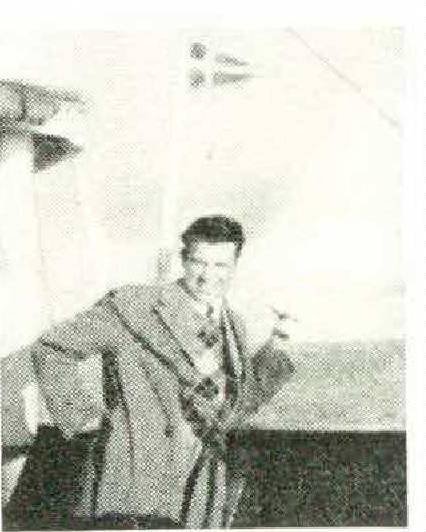
Mr. Smart dismisses his past as that of ‘a fairly typical urban intellectual and malcontent of the twenties.5 To-day he is that urban intellectual and malcontent transplanted to the country and, by an ingenious, witty, sometimes very eloquent series of rationalizations, making himself out to himself as a farmer. The most interesting of the rationalizations is that whereby he translates his output as a writer into the extra, saving ‘cash crop’ that almost any small, lean farm has to yield to balance its books. The difference between Mr. Smart and many or most other urban intellectuals living on the land is that he has made adventures and sporting propositions out of the limited means, discomforts, endurance, and incessant contrivance that the others do their best to dodge. Such things are his ‘copy5; they are materials of his trade, as travel or newspaper reporting or dabbling in modish society might be a different writer’s.
But what he and his wife are basically interested in is the intellectual’s inveterate interest, self-conscious self-education. ‘As a means to seeing, to living deep, we may be said to be trying to develop and integrate what “faculties” we have.’ His book, under its guise of a long autobiographical chapter, is a knowing, at its best a searchingly astute, textbook on how to be a city man in the country — how to skim the cream of both milieus on a good deal less a year than one would have to have in the city, how to make a sophisticate’s fresh adventure out of stretching one’s complicated, overcivilized, self-tormenting mind around rudiments of a wisdom that millions of simpler folk are born knowing, how to gobble one’s cake and have it too.
Mr. Smart has the perfect formula for three years or five. By the decade or the lifetime it observably doesn’t work. The city man in the country beats the rules of his game by getting money ; or, failing that, he decides (or his wife and edueable children for him) that he has at last squeezed this particular orange dry enough; or, failing both, the country insensibly makes him a country man in the end and so breaks up his little game of translating rural values into urban valuations.
The Man with the Bull-Tongue Plow, the man of W-Hollow, does his translating the other way about, and be has no little game to play with himself. When Jesse Stuart looked at his first twentyfive-dollar check for poetry he saw three hundred and fifty-seven dozen hen eggs with one egg left over (from which data you can, if you want to, figure out the price he got for the eggs his wonderful pipe-smoking mountain mother sometimes let him sell to get postage). Whenever he went beyond his dark hills the hills went with him, encompassed him still, and high-handedly fetched him back to do three giants’ work plowing among stumps for his father and to forget his fantastic alien adventures of learning and teaching in sonnets scratched with a stick on poplar leaves while he sat on the beam of the plow.
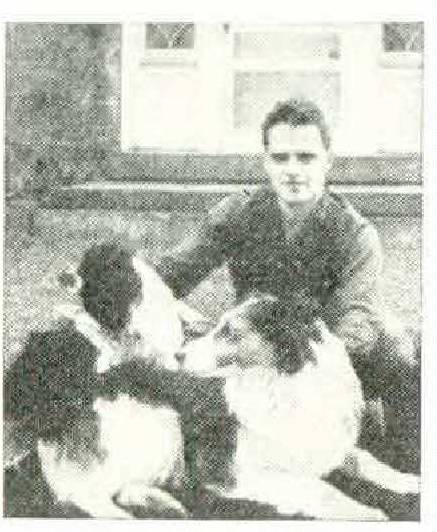
For this naïve hillbilly, as boy and youth and young man, ran poems and stories as an artesian well runs water. The water table of his surroundings, his memories, his familiarity with amazing characters that he hardly knew were amazing, pressed down on him, and what came up was song. It overflowed on to poplar leaves, the insides of old envelopes, the linings of Red Horse tobacco sacks. He could not collect his salary as County Superintendent of Schools, he could not buy postage stamps or socks, but he could write sonnets — twenty of them in a day one time, eighty-four during two plowings of his father’s corn, seven hundred and three that he unwrapped from an old hand towel to send away for his first book.
Some of them have, as this story of his life has, crudities, awkward bits, lapses from what in Mr. Smart’s composite world is called taste. But every little while, among his
basket songs . . . woven from the words Of corn and crickets, trees and men and birds, you come upon one that is genuine as Burns and effortless as Goldsmith; and likewise in this ‘personal story’ you come upon character portraits and narrative episodes — for instance, the account of a drought and the history of a political light between the school systems of town and county — that, read like (cantos of an American epic so great and so very simple that it has not before come into anyone’s head to tell it.
Here is the natural man, the American as primitive as Esau, exalted into the apotheosis of himself by innate genius. It is impossible to read the story of his great and inevitable success and not hope to high heaven that he never goes literary, never forages beyond his dark hills but to go quickly back, and never so far succumbs to the flattering beguilements of civilization as to discover that the Self is something to develop, to integrate, and to sickly o’er with the pale cast of thought, instead of something just to be.
WILSON FOLLETT