The Contributors' Column
Antoine de Saint Exupéry (p. 1) is one of France’s most distinguished aviators. Too young to have flown in the Great War, he was initiated as a mail pilot in Morocco at the time when the Moors were in revolt and when flying was a doubly dangerous operation. As his skill developed, he traversed North Africa, South America, and the various routes over Europe and Asia. The adventure which he recounts in this and the following issue occurred on a test flight from Paris to Indo-China. He is that rara avis, a man of action who can write brilliantly of what he has experienced.
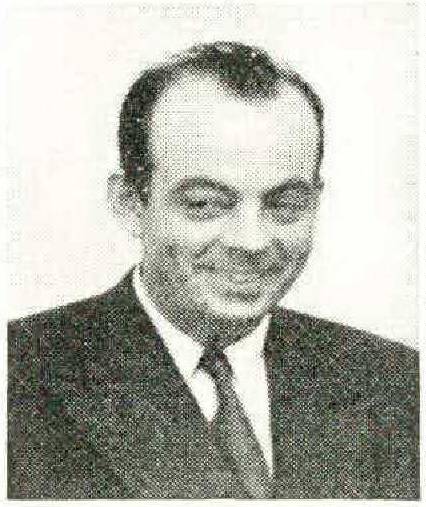
As First Assistant Secretary of Labor from 1933 to 1937, Edward F. McGrady (p. 13) proved himself our most successful conciliator of labor disputes. The arbitration which under his direction settled the Toledo strikes of 1935 and 1936 led to an experiment in industrial relations well worth the attention of other bewildered communities.
Japan, argues Owen Lattimore (p. 22), cannot possibly succeed in its ‘latest adventure’ without strong backing from other countries — notably Great Britain and the United States. Will our principles or our interests be well served by a triumphant Japan, he asks. Here is the farsighted view of an American realist who was born and bred in China, who is the editor of Pacific Affairs and the author of live authoritative volumes on the conflicts and recent history of Asia.
A graduate of Rugby and Oxford, George Allen (p. 27) came to this country in 1934 to enjoy two years of study on a Commonwealth Fellowship in Literature. His poetry throve in our environment, and now from a troubled England he sends us his testament of confidence.
From Santa Monica, California, where he now resides, came the pocket autobiography of James Hilton (p. 28), the novelist. Born in England at the turn of the century, Mr. Hilton was educated under the shadow of the Great War. To-day, midway in his career, he looks back upon his seventeen years of schooling with those halfironic, half-affectionate observations that made Mr. Chips so illuminating.
Grandson of Charles Darwin, Bernard Darwin (p. 41) has dedicated his books and himself to the survival of the fittest — golfer! He has played for England against Scotland and the United States; he has twice reached the semifinals of the English Amateur Championship, and as the golf correspondent of the London Times he has seen many famous players react to the strain of the world’s most stubborn game.
An American citizen, Joseph Gollomb (p. 47) was born in St. Petersburg in 1881. Brought to this country when he was ten years old, he was educated at the College of the City of New York and Columbia, and for a decade taught in the New York public schools. Then he began to write: first as a reporter on the Evening Post, then as dramatic critic of the Nation, then as the author of a dozen works of fiction. And for twenty years he has been a friend of Sidney Hillman, a labor leader of vision and integrity.
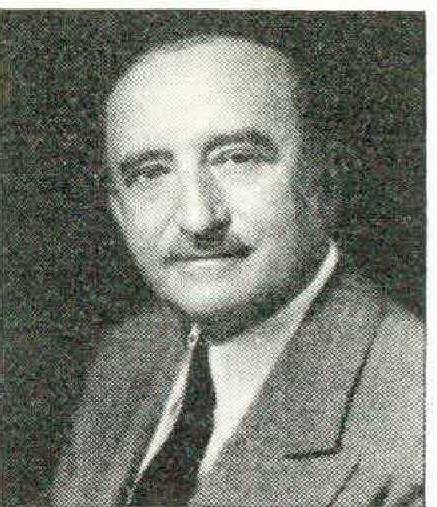
Our short stories this month come from a trio whose skill has already been recognized in the Atlantic. A native of Mississippi, David L. Cohn (p. 57) knows the deep South like an open book. (See his study, God Shakes Creation.)Walter Brooks (p. 61) is a Connecticut Yankee whose fiction fulfills our New Year resolve ‘to restore American humor to its place in the sun.’ Earlier stories of his have appeared in the Atlantic for August 1937 and for January and March 1938. Librarian of the Hindman Settlement School at Hindman, Kentucky, James Still (p. 68) is a poet and narrator who loves ‘the country of creek-bed roads and nag-back travel, the long way round, the far between, the slow arrival.’ ‘My Atlantic poem, “ Child in the Hills,” ’ he wrote, ‘ has a little sequel. The poem was written about a friend over on Carr Creek who is the last dulcimer maker I know anything about in these hills. You may remember I mentioned the beechwood forest where he played as a child. He has deeded a magnificent beech tree to me. It stands at the head of Dead Mare Branch in a forest that will soon go under the axe. This tree alone will be left standing.
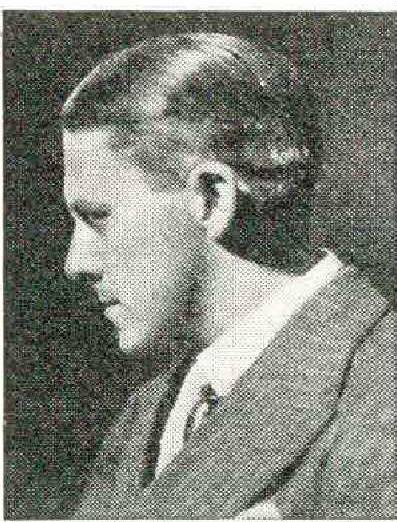
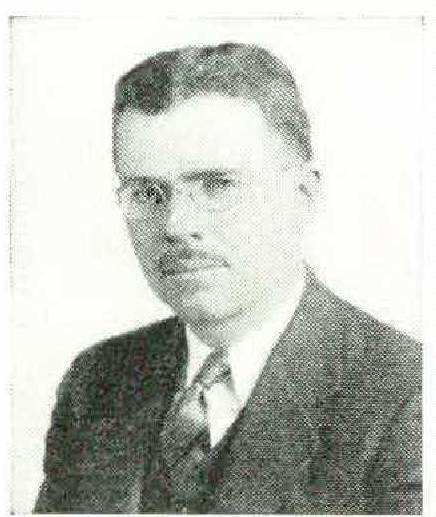
Dr. Robert N. McMurry (p. 72) has made an intensive study of the types who to-day comprise the twelve million unemployed men and women in our country. Trained in psychology at the University of Chicago, he took his doctorate at the University of Vienna. On his return he investigated causes of delinquency in the steel-mill district of South Chicago. For the past three years he has been in charge: of the Chicago office of the Psychological Corporation.
Scholar and critic by profession, poet and playwright in his spare time, Howard Mumford Jones (p. 79) is professor of English at Harvard University.
On July 21, 1862, William B. Stark (p. 86) enrolled as a private in K Company, 34th Massachusetts Volunteers. He kept for his family a diary of his service, first in the Washington Garrison and then in General Hunter’s command.
Helen Bannard Risdon (p. 95) knows a bank from the inside out, and she knows for a fact how many savings accounts have lost their owners - even in hard times. It appears that Einstein is not the only absent-minded member of society.
Women’s colleges have better things to do than ape the masculine fashions — especially when it comes to reunions and money-raising. So says Anonymous (p. 98).
Gardens are the hobby of Mrs. Ethel Anderson (p. 101), who sends us her essays from Turramurra, Australia.
Following his graduation this June from Cornell College, Iowa, Edward Weismiller (p. 102) points towards Oxford, where as a Rhodes Scholar he will have further opportunity for reading and contemplation, which every young poet needs. His first collection of verse. The Deer Came Down, was published in the Yale Series of Younger Poets in 1936.
During the ’20s H. B. Elliston (p. 103) was bar Eastern correspondent for the Manchester Guard-ian and the London Observer, acting for a time as adviser to the Chinese Government Commission for the Readjustment of Finance. In 1930 he returned to the United States to become the Financial Editor of the Christian Science Monitor.
Evidence is accumulating that our readers are as interested as we are in the pages reserved for those Under Thirty. E. P. (p. 111) is one of many college gradual.es who have found that hard-won degrees are not necessarily a passport to security. Ella Tambussi (p. 112) was born nineteen years ago in a Connecticut mill town. Her mother came from a small village near Milan, her father from Piemonte. As a sophomore at Mount Holyoke, she has embarked upon a study of Italian immigrants in this country. M. H. (p. 113) is a New Yorker who was educated at St. Paul’s School and at New College, Oxford.
With this issue we bring to a conclusion the third Allantic serial, ‘ Men against Mountains,’ by Oscar Lewis (p. 119). His story of the building of the Central Pacific and of those four robust individuals who made their fortunes thereby — Charlie Crocker, Mark Hopkins, Leland Stanford, and Collis P. Huntington — will shortly appear in book form under the title, The Big Four. We believe that in serializing Enchanter’s Nightshade by Ann Bridge, The Prairie Grove by Donald Culross Peattie, and ‘Men against Mountains,’ we have more than fulfilled our promise to secure three distinguished books of the year. All that we wish to say of the new serial to begin in our August issue is that it is an Atlantic ‘discovery’ of first importance.
‘Love in America,’ by Raoul de Roussy de Sales, one of the features in the MayAtlantic,has aroused the ire or the commendation of every woman who read it. Forced to choose from many letters, we have selected one representing each faction.
Los Angeles, California
Dear Atlantic, —
May I express my appreciation of Raoul de Sales’s salutary article, ‘ Love in America It is excellent counsel for the women of this country, and I hope they read and profit by it. The views expressed have for me a familiar ring, because my own European husband has the same reaction to our lovelorn country.
Yet I must plead guilty to authoring one of the books of advice to the married (Getting Along together) which M. de Sales deplores. When a publisher asked me to write if I complied because it seemed to me that we had enough unhappiness to warrant some effort being made to reduce it. Your French contributor doubts if there are more troubles between men and women here than elsewhere. I am inclined to think there are — at least for women. Our divorce rate is the highest in the world, three times that of France. Although it is true that we divorce for less serious causes than the French, still, when one marriage in every six splits up (and the number is increasing daily), perhaps it is actually time for us to make a national problem of the relationship between men and women.
It is of course a feminine movement that raises love to a pedestal of such importance. What is behind this attitude of American women? Undoubtedly they are over-romantic. It is an Anglo-Saxon tradition to be romantic (and we suffer because of it), as it is a French tradition to be realistic (and thereby to achieve greater content). But I wonder if there is not a psychological cause too. To be unduly romantic about something is to betray a lack of that thing. Those who have the satisfactions of love take love more for granted; it sinks in importance for them. But, as we are told in this article, when the middle-aged complain about their love lacks it becomes slightly farcical — and, it seems to me, slightly tragical. American women, notoriously the most restless, nervous, and discontented of any nation, very probably have grounds for complaint. The erotic needs of no other women seem to be so little considered or so inadequately appeased. And by erotic needs we mean not only physical satisfaction, but the mental sustenance of contact with masculine minds. For too many American wives, though loaded with material riches and given unprecedented freedom, suffer from the spiritual desertion of their husbands. American men give, too much time to business and masculine contacts to have more than meagre crumbs left over for women.
MARJORIE D. KERN
Washington, D. C.
Dear Atlantic, —
Don’t for one single moment believe that you should credit your ‘foreign co-respondent,’ Raoul de Sales, with increasing your circulation! No — a hundred times no! On the contrary - his disgustingly amateurish blurb in your May issue simply nauseated me no end, with the result, that you lose another ‘constant reader.’
‘I know a woman,’ he sez, sez he — well, who does n’t? sez I. But the one woman he knows (probably only one) is just another introvert (commoner in France than in America) and he would know her.
He puts up Crêpes Suzette as an example in Section V — just tell him we’ve bigger, better, lusciouser pancakes in any Stale, than in every Department in France! And we’re so confident they suit us that we have n’t written books about ’em, either.
In Section VI, he opines that American women ‘imagine that the, Europeans have found better ways of managing their heart and their senses than the Americans.’ I might criticize his grammar - in fad I might criticize his whole statement - were it not for the fact that his whole article is a potpourri of what all nationals resent — a touristic résumé of another people.
A. MARY KANN
Many readers have risen to express their instant appreciation of ‘The Living Presence’ and to extend their sympathy to its anonymous author.
Fort Erie, Ontario
Dear Atlantic, —
May I offer a word of commendation for your policy of including articles dealing with spiritual values — such as ‘Star in the East,’ in December 1937, and ‘The Living Presence,’ in May of this year. By circulating the latter you have offered to many 4 a cup of strength.’
Sincerely,
AGNES M. HAYES
To ‘A Believer’: —
Not long ago I asked my family to have a ‘cheerful funeral’ for me when I passed on, so it was with great pleasure and appreciation that I read ‘The Living Presence’ in the May Atlantic. You have beautifully expressed my feelings and beliefs on the subject of death and of funerals.
I have served my first threescore years and ten and am well started on my second. Considering the talents which were given me, I think I have balanced my budget fairly well. I have enjoyed life to the full and have had unusual opportunities to help Others enjoy life. When the time comes I hope my family will give me a cheerful funeral for their sake and for mine.
ANOTHER ‘BELIEVER’
Let’s have a second helping of Chautauqua!
Harlan, Iowa
Dear Atlantic, —
Bless me, but how well Gay MacLaren remembers and writes re old Chautauqua day’s! As a local secretary and ‘paymaster’ of ihe ‘talent ’ of the days she recalls so vividly, I think, however, she was peculiarly unfortunate in meeting so many disciples of ‘uplift’ cant, since I know that in many local independent Chautauquas that disagreeable attitude did not prevail.
For instance, here is a partial list of the many distinguished men and women that our little hinterland (a county seat of 3000 souls) invited and brought lather at ‘so much per,’ that we might see them and partake of such intellectual pabulum as they had in stock: Opie Read, Will Carleton, Henry Watterson, Robert J. Burdette, William Jennings Bryan, General O. O. Howard, Captain B. P, Hobson. Maud Ballington Booth, Jane Addams, Senator Robert M. La Follette, Senator (‘Pitchfork’) Tillman, General John B. Gordon, and others scarcely less noteworthy.
In the meantime I await with great interest what Gay MacLaren may say as to what killed the Chautauqua and lecture (Lyceum) systems, whether they deserved to die, and what, if anything, will likely rise to fill in the minds and hearts of people the place these institutions occupied.
And (aside) if she will come again to the Middle West some of us will see to it personally that she is provided from our gardens with fresh radishes, onions, head lettuce, peas, asparagus, new potatoes, strawberries — all in regular Chautauqua season! And when the pork chops are passed her ‘No, thank you’ will be respected, and no compulsion exercised.
Very truly yours,
EDWARD S. WHITE
A tribute to Theodore Judah, and to Oscar Lewis’s California epic.
Chicago, Illinois
Dear Mr. Lewis: —
The reading of ‘Men against Mountains’ has given me delightful evenings for which I have you and the Atlantic to thank. From my father, who was one of the founders and for twenty-six years editor of the Railway Age (he died in 1928 at the age of eighty-nine), I early gained an interest in railway development, and from frequent trips to the Pacific Coast, the first when I was twelve years old in 1886, I have come to know a good deal about and to love the State of California.
I am particularly impressed with your generous tribute to Mr. Theodore Judah. What a tragedy that he did not live to see come true the great project whose success owes so much to him! That the line for the railroad which he laid out from Sacramento to Reno remains practically unchanged to-day is certainly a tribute to his engineering genius. As you doubtless know, ‘The City of San Francisco,’ with its Diesel power and seventeen cars, now covers the 153 miles between San Francisco and Reno at an average speed of approximately thirty-three miles per hour.
My future trips over this route will have an added zest for me as a result of your wonderful research and graphically told story. For several seasons my sixteen-year-old boy and I have fished the Klamath River in late August, and I already have our reservation for our 1938 trip.
Yours sincerely,
RALPH H. HOBART
The question is, should she blush or turn pale?
Brooklyn, New York
Dear Atlantic, —
I believe the color of the Atlantic is entirely due to the world we are living in. Yesterday, passing a news stand, I saw the Lady of Quality in the midst of the riffraff and came home and wrote the following: —
NEWS STAND
Are the pulp mags of the hacks,
Mags of sin and mags of crime,
Mags of sex and mags of slime.
Stands a deb of yesterday,
A blueblood, Miss Atlantic —
How this crowd drives her frantic.
And live with folks who are sane!
Little wonder she’s this hue —
If you were there, you’d blush too.
FREDERIC WALTERS