The Contributors' Column
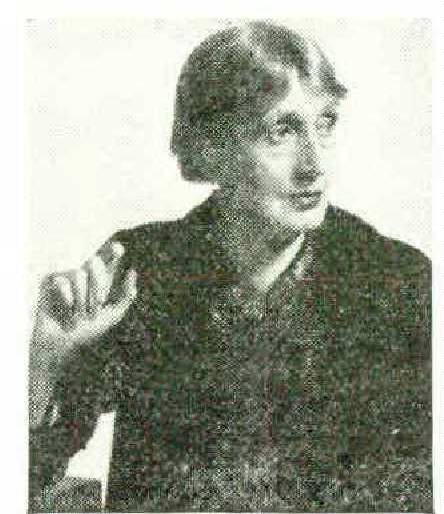
CHIEF ornament of the Bloomsbury Group, Mrs. Virginia Woolf (p. 585) is the daughter of Sir Leslie Stephen. A vest-pocket biography tells us that the family’s time was divided between the London house in Hyde Park and a summer home on the coast of Cornwall, and that among the more distinguished visitors were Lowell and Dr. Holmes, Hardy, Meredith, Stevenson, Buskin, and John Morley. The biography goes on to tell us, however, that ‘no formal schooling was imposed upon the young Virginia, who was allowed the unrestricted freedom of her father’s magnificent library from the moment when she had first learned to read.’ In 1912 Virginia Stephen married Leonard Woolf, who, after a period in the British Civil Service, had returned to London to devote his energies to letters, economics, and the Labor Movement. In 1917 they began a joint enterprise in the Hogarth Press, publishing, among other earlier ventures, modest hand-set pamphlets by such obscure writers as T. S. Eliot, Katherine Mansfield, E. M. Forster, and, last but not least, the books of Mrs. Woolf herself. Her novels, The Voyage Out, Jacob’s Room, and Mrs. Dalloway, have established her as a unique craftsman, and her essays, especially A Room of One’s Own, have endeared her to all militant members of the gentler sex.
Born in New York City in 1894, Robert Nathan (p. 595) divides his writing time between New York and Cape Cod. Author of fifteen volumes of poetry and prose, he is best known for his Puppet Master, One More Spring, Road of Ages, and The Enchanted Voyage. His writing has an individuality which no single adjective will fit. To its humor, its irony, and its gentleness is added, as in Road of Ages, a moving spirit which no reader can forget. His latest novel, Winter in April, is still hot from the press.
A graduate of Harvard, the Believer (p. 615) is in his early fifties and a lawyer whose reputation is well respected along the Atlantic seaboard. Incidentally, he would like very much to have his copy of Fechner’s Life after Death returned by the now anonymous friend who borrowed it some years ago.
Is Hitler’s shadow across Europe reminiscent of that Man on Horseback whose domination stirred the Continent to its depths little more than a century ago? The advent of the new Napoleon is a subject of increasing importance to those Americans who look, beyond their own fences.
Joseph Barber, Jr. (p. 618), now the Atlantic’s Managing Editor, first knew Germany and Austria as a student in the days when Hitler, making his bid for support among the youth of those lands, was speaking almost nightly at beer halls and open-air meetings to young and old alike. Later, shortly after Hitler’s accession to power, Mr. Barber returned to Germany to cover the day-by-day manifestations of Nazi policy as a Berlin representative of one of the great American news agencies. His assignments brought him into contact with various Austrian Nazis in Munich and Vienna.
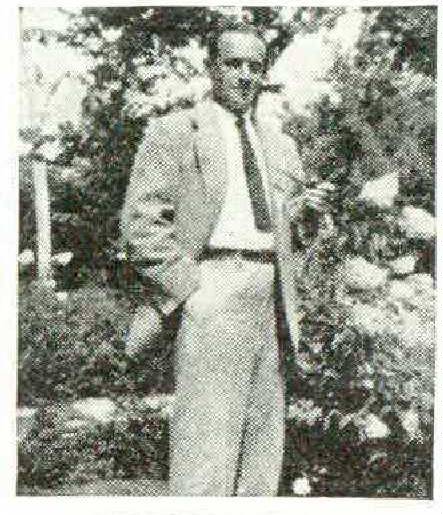
M. W. Fodor (p. 623) was born in Hungary. At eleven he could speak five languages fluently, and according to rumor had memorized half the Encyclopædia Britannica. His family pointed him to engineering, and for a time he managed a steel factory in England’s Midlands. Then the call from the Continent became irresistible and he lived in Italy, Austria, and Hungary, delving both into politics and into journalism. For eighteen years he has been a correspondent of the Manchester Guardian. He represents the Chicago Daily News in Central Europe. He is a close friend of Dorothy Thompson, John Gunther, and other graduates of the Correspondents’ School. Gunther says that Fodor has ‘the most acutely comprehensive knowledge of Central Europe of any journalist I know — of all Europe, for that matter.’ Published late last autumn, Fodor’s book, Plot and Counterplot in Central Europe, is now an almanac for political prophets. Shortly before the elimination of Austria, Mr. Fodor undertook a circumspect journey along the Czech-German frontier, with observations which the Allantic is glad to print.
It is hard to remember for how many years Albert Jay Nock (p. 630) has been the Atlantic’s Dutch Uncle. During a recent sojourn in Holland, this sapient American was seized with the impulse to tell us, not what was wrong, but what was right with the most watertight country in Europe.
Poet and critic,Louise Bogan (p. 637) is well known for her contributions to the New Yorker, the New Republic, Poetry — and now the Atlantic. The author of three volumes of verse, — Body of This Death (1923), Dark Summer (1929), and Sleeping Fury (1937),—in 1930 she won the John Heed Memorial Prize. Last spring Miss Bogan spent several weeks in Ireland doing what every poetry lover would like to do — reading the poetry of Yeats with Yeats’s landscape fresh before her eyes.
‘America appears to be the only country in the world where love is a national problem. The secret. of making a success out of democracy and love in their practical applications is to allow for a fairly wide margin of errors, and not to forget that human beings are absolutely unable to submit to a uniform rule for any length of time. But tins does not satisfy a nation that, in spite of its devotion to pragmatism. also believes in perfection.’ The speaker is a Parisian, Raoul de Roussy de Sales (p. 645), who now makes his headquarters in Manhattan as the American correspondent of Paris-midi and Paris-soir. He sees, as we could never see for ourselves, the zest, the earnestness, and the self-deception with which we fall in — and out of — love in the United States.
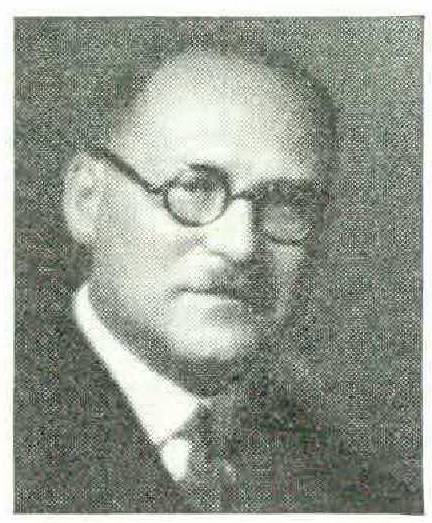
Prose and verse equally absorb Frederic Prokosch (p. 652), who is still in his twenties and whose novel, The Seven It Who Fled, won the Harper Prize for 1937. Discerning readers will remember his early volume of poetry, The Assassins, and his first venture into prose, The Asiatics, a book which received high praise both here and in England. The recipient of a Guggenheim Fellowship, Mr. Prokosch is now writing and traveling abroad.
Robert Hillyer (p. 653), who succeeded ‘ Copey ‘ as Boylston Professor of Rhetoric anti Oratory at Harvard, lias been identified with Cambridge for most of the past twenty-five years. Poet and novelist, his work will be freshly remembered by Atlantic readers for his Letters to Robert Frost and Others, several of which appeared in onr columns in 1937.
Edward Weismiller (p. 651), who has just attained his majority, was born in Wisconsin of mixed Swiss and ScotchEnglish stock. Then his family moved to Vermont, and it was from this second farm, southwest of Brattleboro, that he drew much of the material for his first volume of verse, The Deer Come Down. From Cornell College, Iowa, he will go to Oxford as a Rhodes Scholar.
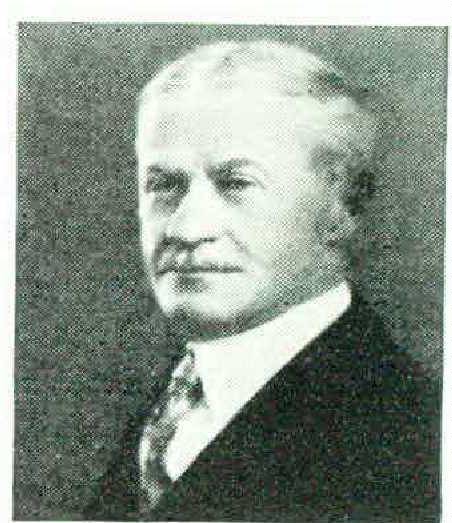
‘ If is my firm belief,’ writes Clifford B. Reeves (p. 655), ‘that the recent slump in business was caused primarily by an unwarranted destruction of security values, due to the inability of present markets to withstand any liquidation without wide-open breaks in price. . . . An intricate and high-speed system of transmitting financial news is tending to make all investors act simultaneously in buying or selling securities, thus subjecting the market to alternating shocks which inflate and destroy values.’
Gay MacLaren (p. 663) was a little girl of seven in South Dakota when she first experienced the thrill of the traveling Chautauqua. There and then she caught the ambition which she was never to relinquish until she had traveled literally hundreds of thousands of miles as a Chautauqua trouper in the United States. She was a play reader, a mime, who could act a dozen parts and bring an empty stage to life with her vivacious presence. Of the many orators and public men who lent their lustre to the Chautuaquas, unquestionably the most eloquent was William Jennings Bryan. Here is a glimpse which Miss MacLaren gives us of forty-eight hours in Air. Bryan’s schedule in July 1911: —
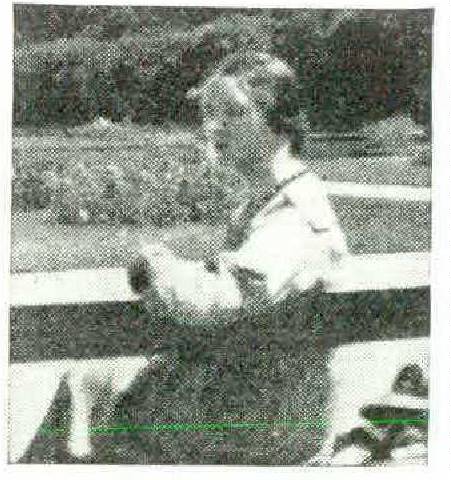
‘On July 9 he left Lincoln, Nebraska, at 1.50 P.M., reached Kansas City at 8.20 P.M., spoke at a business men’s club, leaving that night at 10.05 and reaching Arkansas City at 7.45 the morning of the tenth. He arrived at Pawhuska, Oklahoma, at 12.10 P.M., and lectured at the Chautauqua, then made an address at the reception downtown, shook hands with the entire population, jumped in an auto with Manager Horner, and headed for Pawnee, sixty miles away. The road was the worst ever staked, being merely a trail part of the way and almost impassable. Four autos started with the party, but only one arrived with Bryan at Pawnee at nearly ten o’clock that night, having stopped on the way while he addressed the towns that massed as he went through. Four addresses and four thousand handshakes in one day. He closed his lecture at Pawnee about midnight.’
Such was Chautauqua enthusiasm!
Jean Prévost (p. 674) is a French journalist who has recently been visiting the United States in search of source material for his next book to come.
Wind currents and the aeroplaning of birds at sea mean much to Alfred H. Woodcock (p. 678), a technician attached to the staff of the Oceanographic Vessel Atlantis.
One of the most distant of Atlantic contributors, from Turramurra, Australia, Mrs. Ethel Anderson (p. 681) sends us her essays so reminiscent of her days in England.
Born and content to live in Whitby, Yorkshire, Storm Jameson (p. 683) has made a place lor herself in the English world of letters. Her novels have been enjoyed on this side of the Atlantic since first they arrived in the early ‘20s. Her latest, The Moon Is Making, has recently been published by the Macmillan Company.
In the Atlantic for April, Roger W. Holmes (p. 692) began his study of man’s mental equipment and its relation to nature. ‘Man’s mental equipment,’ he writes, ‘offers limitations of our knowledge which, to my mind, are quite fascinating. We are compelled to “think” our world in certain ways just as we can only sense it as our sense equipment allows.’ If there are those who disagree with Professor Holmes, — he is Assistant Professor of Philosophy at Mt. Holyoke College, — now is the time to speak up.
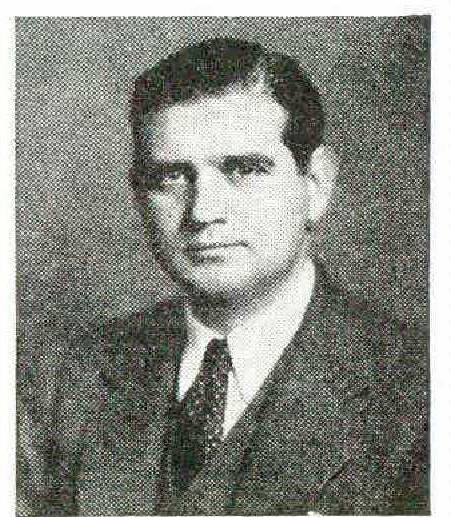
Born within sight of Nob Hill, Oscar Lewis (p. 701) is a native son alert and learned enough to realize the wealth of human material waiting to be uncovered about California’s Big Four — Charlie Crocker, Uncle Mark Hopkins, Leland Stanford, and C. P. Huntington.
In the recent government hearings, presided over by the President, which led up to the removal of Dr. Arthur E. Morgan as Chairman of the Hoard of the Tennessee Valley Authority, theAtlanticfor September 1937 played an exceptionally prominent rôle. Introduced into the official proceedings as a major exhibit to support the charge that Dr. Morgan impugned the honesty and integrity of his fellow directors was his Atlantic article, ‘Public Ownership of Power.’ Moreover, Mr. Wendell L. Willkie’s rebuttal of Dr. Morgan’s thesis, in the Contributors’ Column of the same issue, was also read into the record, as further evidence hearing upon the investigation. Readers who have yet to establish in their own minds the justice or injustice of the charge based upon Dr. Morgan’s article will find it profitable to reexamine the paper in question. Certainly the letter which follows represents the feeling of thousands who have come in contact with Ur. Morgan and his good works.
Zellwood, Florida
Dear Atlantic, —
Just at this time I should like to share with the many Atlantic readers of Arthur E. Morgan’s article the following tribute to him, part of a letter from an Antioch classmate of mine.
‘The current TVA crisis has revealed to me how firm a hold A. E. M. has on my emotional loyalty. I knew before that he had been a tremendous influence in my spiritual and intellectual growth, but I did n’t suspect how deep-seated his presence was in my heart. It was the day after he left President Roosevelt and his ultimatum. When I got to Fels House I heard that Mr. Morgan was arriving on the morning train in Xenia. The word spread among the students and faculty. More than half the campus — some three hundred strong — were at the Xenia station when the train pulled in. A. E. M. was apparently surprised, and much pleased. A triumphal procession, amid horn-blowing and cheering, escorted him to Yellow Springs. And that evening he consented to speak in Kelly Hall.
‘ The Hall was packed fuller than I have seen it in many years. I went past the Gym full five minutes before the appointed hour, and all intramural games had stopped, students rushing across to the Main Building still buttoning the last few buttons. Everything stopped and everyone turned out. Mr. Alexander introduced him as a man “who puts principles before persons — even when the person is himself.” When Mr. Morgan stepped up to speak, the applause was strange. It was reserved, — anything but boisterous, — but it kept on and on for minutes, as if the stature of the man, his kinship with us, and the dramatic significance of the moment, were together something exceedingly precious — something we all wanted to cling to as long as possible. ‘Then he spoke — this quiet, thoughtful, virile, gentle giant. He was tired and relaxed, with the poignant happiness and confidence of one who has given everything to a fight for the right against desperate odds, and awaits the verdict of history without regrets. He read, with a delightfully delicate humor, the telegram just received, notifying him of his removal, expressed his genuine (and I think he was really mightily pleased) appreciation of the reception, but not without further delicate humor in regard to previous occasions when his presence on the stage had not been quite so much of an attraction. He begged not to be expected to talk about TVA, and then rambled along in his best philosophical style on the theme of the importance and ultimate efficiency of the long-range “timeless” view of progress, as opposed to opportunism.
‘It. was Mr. Morgan at his best — but not a word of discussion of the TVA. crisis as such. If that was n’t greatness of spirit, I don’t know where else to find it. With the eyes of the nation upon him as they are seldom turned to a single man, he quietly waives consideration of details and incriminations the press and people are clamoring for, and sums up the essence of the conflict in terms even more transcendent than history’ itself — all with unassuming casualness, a few rambling, philosophic remarks “about the birds and bees and the flowers.”
‘ If there were any misgivings as to how the audience would react to having their curiosity — or perhaps eagerness for excitement and verbal vindication— left utterly unsatisfied, they were dispelled when Mr. Morgan finished as quietly as he had started, and sat down, First there was a moment of silence. Then the applause.— again not riotous in the least— a bit more vigorous than before, starting as suddenly as a flock of blackbirds al the sound of a shot, and continuing with unmodified steadiness till Mr. Morgan finally had to stand and bow. We were clinging to something great —and something that was part of us, part of Antioch — something we had lost, only now feeling its true greatness.
’I was near the door and rushed out, not wan ling to look anyone in the face for fear he might think me silly and sentimental. But the night air gradually eased the lump in my throat and I repaired to the Gym for the delayed volley-ball game. An hour later, amid locker-room gossip about Mr. Morgan’s chances in the inevitable investigation, I heard the long whistle of the train, taking A. E. M. to Chicago. We had lost him again. But there was something strong, way down inside, that we had had renewed, not to be lost so easily.’
AN ANTIOCHIAN
The response to ‘Crippled — An Appeal to Motorists,’ in the March Atlantic, was immediate and heartfelt. Thousands of reprints were ordered by various organizations concerned with safety on the road, and newspapers throughout the country quoted at length from the article. Here is a cross-section of the letters that have flowed into the Atlantic office.
Brooklyn, New York
Dear Atlantic, —
I feel guilty of something close to sacrilege when I ponder objectively over Ruth Sawyer’s tragic message, ‘Crippled — An Appeal to Motorists.’ Her words are so personal, so freshly wrung out of tortured thinking, that, having read the message, I am all but impelled to apologize for having intruded on the sacrosanct privacy of profoundest grief.
However, the implication is apparent enough that practical steps are necessary for the successful working out of a plan to cheek the headlong-to-hell career of the thousands of automobile drivers who seem to operate on the premise that the spirit of the machine age stands for the utter elimination of mental processes. let alone conscienceful cerebration — true soulfulness. if you like.
Just what practical sleps are to he taken is difficult to figure out. A first thought is the further restriction of driving licenses, limiting their issuance only to those who possess a fairly established modicum of responsibility in their actions, barring thereby precisely such as are typified in Mrs. Sawyer’s provocatively accurate descriptionol the worthless, wretched youth ‘going fifty . . . late for a date.’
Harshly and altogether too promptly, the answer rings back, ‘Try and do it! ‘ While talk on conscience, public and private, is rampant, it might be well to isolate the substance and attempt put ting it to one great, good use. At any rate, there is this to be known to all, and to bo forgotten by none: It is a poor life we live if not all can live it. the same. No human being is entitled to rest satisfied, to think this a good world, while there exists the least likelihood that even one fellow human may be wantonly deprived of normal life, deprived by means humanly preventable. A blot upon a single life is a mark upon all of us.
JOSEPH GANCHER
San Pedro, California
Dear Atlantic, —
While wholly in sympathy with any effort to stop the rising tide of motor accidents, and at the risk of sounding heartless toward a suffering woman, I wish to point out that America is laboring to-day under another mistake than the tendency to lake one’s pleasure heedlessly at the expense of another’s grief. The fault of which I speak is our general tendency, when anything terrifying occurs, to hop up and down in the middle of the road and holler.
Ruth Sawyer, I also am a mother. 1 am in my late forties, you in your early twenties, so what I am about to say will seem to you as old-fashioned as the tilings my mother used to tell me.
There are other sorts of tragedy besides death and crippling. You are right in your assertion that death is not the worst of afflictions. You say, ‘We think of terrible things always happening to that mythical “other person.’”
That is true. Until one has come up against what Carlyle called ‘The Eternal No,’ one thinks always of ‘other people ‘ as the ones to whom tragedy happens. But, my dear, the logical result of one, or two, or three tragedies is generally the discovery of what he called ‘The Eternal Yes.’
You will work your way through this dark valley. You have made a good beginning in your refusal to ‘bold God accountable,’ and in your resolve to think chiefly of others: of little John Paul and his need to be ‘given a chance for man-growth,’ of your ‘big Paul’ and his work, of the thousands of other victims of the machine that has brought a cloud over your lives. Hold fast to all those things, and you will find that ‘in your patience possess ye your soul.’ Some of the old, old words of comfort now discarded will become as real for you, through your experience of them, as your torturing experience in the hospital, which only a short time ago would have seemed incredible to you because you had never lived through such a thing.
Look about you in your own town or suburb and you will find examples of people who have met disaster bravely and, without making a fuss about it, have worked their way out into the sunshine. Make friends with them; find out what sustains them.
And God bless you in your efforts to give your John Paul some compensation for the loss of his freedom; to help him to be ‘sound and disciplined from within.’ That’s the stuff !
GERTRUDE W. SCOTT
University of Minnesota
Dear Atlantic, —
We are usually so appalled by the vast numbers killed that we Lend to overlook entirely the far greater number permanently injured. ‘Crippled’ makes it impossible for us to continue to overlook them; for that reason it is a worth-while contribution to the solving of that problem.
By the time I had finished ‘Crippled’ I was thoroughly aroused for action. What could I do? Drive carefully? But I’ve always tried to do that. What else? Frankly, I did n’t know.
I’ve been trying to formulate a rough plan to show you what I mean, something which would give each motorist some responsibility beyond that for his own car, but this seems to be the best I can do.
Every one of us who drive sees day after day many instances of recklessness, Carelessness, direct violation ot traflic laws, and acts lacking in road courtesy. Those are the things which, if uncorrected, will result in accidental death and injury. When we see any instances of those and do nothing, we are assuming a lraction of responsibility for any future accident involving that driver.
If we could only jot down the license numbers, the ofienses, the times and places, on a postcard and mail it to the proper office, those offending drivers might be reminded of their faults in time to avoid accidents.
I’ve tried to put myself in t he shoes of both t he reporter and the reported. The reporter, in being aware enough to notice someone else’s lack of courtesy, would be more likely himself to be courteous. The reported one would be brought to realize, in a friendly way, that his city neighbors noticed his courtesy or lack of courtesy. If many cards were sent in, he would feel the powerful force of public opinion in a different way than he would if some police officer —representing public opinion — were to call him discourteous.
Admitted that this suggestion is not very fully made, it does, however, give everyone some definite action to Lake and it is not too demanding on time or money. At any rale I am in earnest in saying, and I think I speak for many others, that I should like to know something tangible that I could do to help improve the situation.
JAMES I. BROWN
Votes are still coming in on the question of theAtlantic’scover. Which side are you on?
Charleston, South Carolina
Dear Atlantic, —
I agree with Josephine Hemphill, whose letter appears in your March number, that your cover clashes with everything. She compares it with a filling station. To me it suggests the Atlantic & Pacific store that sprang up, a vermilion horror, on our quiet residential street in Charleston — many years ago, before zoning committees flourished. The store was repainted an inoffensive cream color, with the narrowest possible red trimming hand, when two artists of the neighborhood pointed out to the A & P local manager the incongruity of this red intrusion into the sanctity of — Atlantic Street!
Dare I hope that the Atlantic will follow the example of the A & P, and doff its flaming garment?
MAY A. WARING
Newark, New Jersey
Dear Atlantic, —
For goodness’ sake do not change the cover of your magazine. My house is dull, dark, dreary, and dead. The Atlantic’s cover is its one bright spot, its contents my mental salvation.
CLARA I. WILSON
The newAtlanticstories are approved.
Rosary College
River Forest, Illinois
Dear Atlantic, —
We have found the March Atlantic exceptionally interesting and heartily endorse the change in policy in regard to fiction. An issue such as this one, containing a variety of fiction, is especially useful in college composition classes, and we hope that you will feel warranted in repeating the experiment.
SISTER JULIE
Providence, Rhode Island
Dear Atlantic, —
The other evening a group of friends discussing the March issue of your splendid magazine agreed that David DeJong’s contribution was rightly placed.
This young man is doing some good things, and ‘Only Foots Go to America’ is, I think, one of his best.
GERTRUDE S. LAMBERT
Detroit, Michigan
Dear Atlantic. —
Please let me register my vote for the new policy of running four short stories in a single issue. Your stories have been very fine in the past, but there have not been enough of them. There are a lot of us out here in the provinces who do like short stories when the quality is good — so let’s have more of them.
F. E. EVANS
Wanted; A Few Friends.
958 18th; Street
Oakland, California
Dear Atlantic, —
I am seeking the ideal in climate and environment. There I would retire with a few friends who are interested in living a beautiful life. I should like to hear from a few people; who are not conscious of rank and fortune. Who know that happiness and contentment can be found in wholesome living. Who prefer chastity to sensuality, the affairs of the mind to those of the body. Who can he alone. Who measure a man by what he would do for others; and not by talent or genius or education, personal prowess or any such claptrap. Who value will and strength and moral courage. Who can face public opinion. Who are not concerned about the praise of men. Who do not judge anyone by forces over which they have no control. Who can appreciate the life and philosophy of Henry Thoreau.
I am thirty-six years old. I like the best of the best of singing. I like to read, write, walk, think and meditate. I am writing a real story, although I hesitate to mention that, considering, as I do, writers, actors, musicians, and artists as so many public clowns. In general appearance, I resemble F. D. Roosevelt when he was my age and before his misfortune.
MAX MARVIN