The Contributors' Column
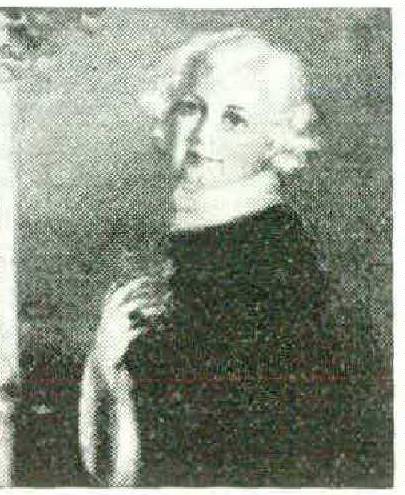
THEODORE ROOSEVELT once called Chautauqua ‘the most American thing in America.’ To three generations the traveling Chautauquas and the Mother Institute at Lake Chautauqua, New York, provided the uplift, the education, and the entertainment they craved. Gay MacLaren (p. 441) was one of the youngest and most versatile of the Chautauqua troupe. She was a play reader, a mime who could act a dozen parts and bring an empty stage to life. She knew her fellow performers — Swiss yodelers, lady trombonists, and eloquent reformers — on friendly terms, and she saw at first hand the culture and glamour with which they were surrounded.
She was a little girl of seven in South Dakota when first she experienced the thrill of the Chautauqua, and it was a sight she never forgot. In time she secured from Mark Twain a recommendation as a remarkable young elocutionist, and an introduction to Bishop John H. Vincent, Chautauqua’s founder. So armed, she secured her first engagement. For years she traveled the circuit, living and working with those memorable individuals whose names are bywords to thousands of Chautauqua-bred Americans. A further installment of her reminiscences will appear in the next issue of the Atlantic.
In 1923, Mary Agnes Hamilton (p. 452) wrote a short sketch of Ramsay MacDonald, predicting that he would some day be Prime Minister. Few took her prophecy seriously — hut how right she was! Since then she has gone on to an everbroadening life of public service, which has included attendance as a League of Nations delegate at Geneva and election to Parliament as a member of the Labor Party. She has been a frequent Contributor to the Atlantic, and her enlarged and revised study of J. Ramsay MacDonald, published in 1929-1930 in both England and America, is regarded as the standard reference.
‘I came West,’ writes Lillian Fryer Rainey (p. 463), ‘as the bride of a young lawyer who believed the greatest opportunities for success lay in the new State of Oklahoma. The town in which we settled was alive with college graduates who, with sheepskins, marriage licenses, and the last prom programmes for heavy baggage, had come, just as we had, to make our fortunes. We were all on a parity. Few of the wives knew how to cook, but we learned. We burned biscuits, and our husbands hungrily and loyally ate them; we played Chopin and Beethoven, and they applauded; together we read Hardy and Kipling and Browning, and had the temerity to discuss style!’ From her back door in Oklahoma City, Mrs. Rainey witnessed the phenomenal overnight growth of the oil fields, the economic and social changes wrought by oil, and daily was brought into contact with neighbors who were made or ruined by the black gold.
‘There can be no orderly progress until the government first takes inventory of its vast and cumbersome self, until it determines what parts of it are to be permanent and what parts are not. When these questions are answered with definite and clearly defined policies that will be adhered to, then the questions involved in paying the bill will be met sternly, but definitely and with certainty.’
Thus cogently does Senator Harry F. Byrd (p. 472) sum up some of the primary problems which must be settled before we begin to talk of balancing the budget. As Chairman of the Select Committee on Investigation of Executive Agencies, Senator Byrd has been engaged in a study of ways and means of reducing government expenditures. During his term as Governor of Virginia (19261930), he instituted state economies and reduced the state debt with a success which is still remembered in the Old Dominion.
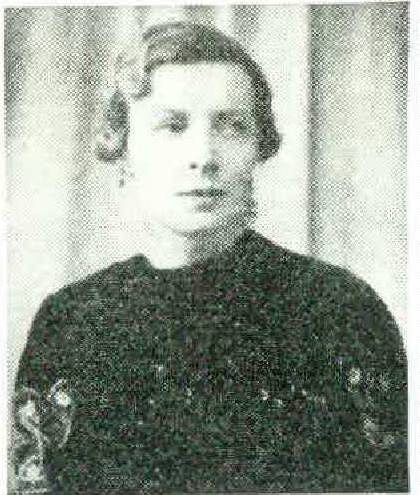
Catherine Drinker Bowen (p. 479) would rather play music in a friendly quartette than eat! She is the author of that cordial little volume which brings balm to every amateur musician, Friends and Fiddlers, and more recently she was co-editor of Beloved Friend, the letters of Tchaikowsky and Madame von Meck. A search for source material dealing with this same period took her not long ago to the U. S. S. R., where her democratic soul was momentarily captivated by the Soviet ballet.
An Irish poet whose fame is international, William Butler Yeats (p. 488) is a voice which still sings despite its threescore and ten. In May a new collection of his poems will appear, including, of course, the three in this issue. In the May Atlantic his Portrait, ably set down by Louise Bogan, will, we believe, form a notable addition to our series.
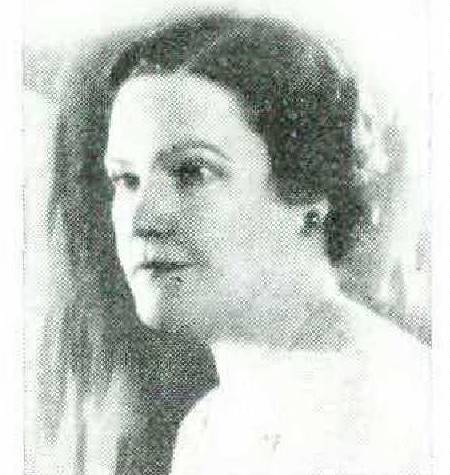
To remain dispassionate about so vital an issue as war or peace when rolling drums, even to the most optimistic, seem to be rising to a crescendo, is a task well-nigh impossible. Yet objective we must be, if we are not to be swept away in that hysteria so apparent in countries less fortunately situated. Raoul de Roussy de Sales (p. 492), American correspondent of Paris-soir, points out aptly that the problem is not so much that of war or peace, but of war and peace, because both eventualities confront us, whether or not we admit it. War and peace are indeed two aspects of reality as it exists to-day, as Captain Dudley W. Knox (p. 495) shows, in indicating the course America must pursue if she is to remain impervious to the ominous ferment in the world abroad, Captain Knox, now retired, was for some years naval editor of the Army and Navy Journal, and is the author of a number of studies of American sea power.
All young writers of short stories know William Saroyan (p. 504), an American born of Armenian parents who in his own work is capable of deep feeling, swift innovation, and delightful caprice. Readers will remember his ‘Pomegranate Trees,’ which appeared in the Atlantic for February 1938.
As European director of the Columbia Broadcasting System for the past seven years, Cesar Saerchinger (p. 509) arranged for America to tune in on broadcasts by George Bernard Shaw, Gandhi, and Trotsky; he supervised the technicalities which made Edward’s abdication and the Coronation ceremonies familiar events in every household. The story of his life ‘behind the mike’ is told in his forthcoming book, Hello America!
Pursuing her campaign for fair and recognized identification of fabrics, Margaret Dana (p. 519) shows clearly what happens in a highly competitive industry such as that of silk hosiery where advantages and profits have to be reckoned in quarter cents.
Show us the horse lover who reads unmoved the story of Martha Doyle. It seems to us that Richard Ely Danielson (p. 523), former editor of the Sportsman, has written as blue-ribbon an essay as was ever laid on a horse’s grave. The story will form the first chapter of a book dealing with his remembrances of sporting activities.
Just as we are going to press, the mail brings us this postscript from H. B. Elliston (p. 527), financial editor of the Christian Science Monitor and a most astute observer of foreign affairs: —
‘Since this case study of diplomacy in no man’s land was written, a postscript has been provided in Europe. Chancellor Hilter has wrung a “cold Anschluss” out of Austria. And Anne O’Hare McCormick, New York Times special representative in Europe, cabled from Rome, on February 21, that the general opinion of informed observers is that if “an understanding between Italy and Britain could have been reached a year ago, perhaps even six months ago, the Austrian surrender would have been postponed indefinitely.” On Britain’s part such an understanding, it is now revealed, has hitherto been blocked by the paralysis resulting from the dualism in British foreign policy symbolized by Premier Chamberlain, exponent of the Old Diplomacy, and Foreign Secretary Eden, exponent of the New. With Mr. Eden’s resignation the world of diplomacy is more than ever advanced out of no man’s land.’
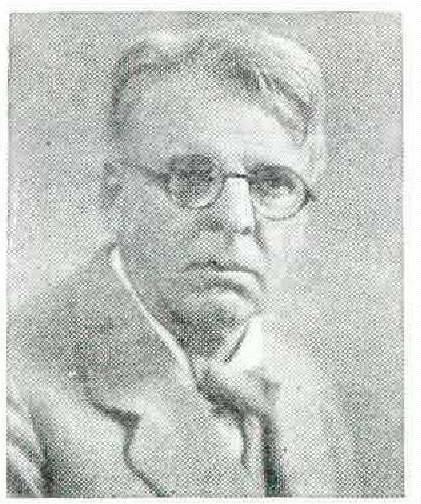
With Elsa Lanchester’s (p. 532) description of what it was like to heard Sir James Barrio in his den we conclude her account of life with her actorhusband, Charles Laughton. When Mr. Laughton first read the biography, he termed it ‘the nicest husband-and-wife story I know,’ and we are inclined to agree with him about its satisfying qualities. Later in the year, Harcourt, Brace and Company will publish the biography in book form.
One of the most promising writers of the short story in England, T. O. Beachcroft (p. 539) is beginning to make a name for himself on our side of the water. This present story is his first to appear in the Atlantic, and those who like its flavor are advised to look up his longer work. The Man Who Started Clean, which appeared in book form late in 1937.
The son of John Haynes Holmes, Roger W. Holmes (p. 547) graduated from Harvard College in 1926, and thereafter continued his studies at the University of Rome and the University of Berlin as a Sheldon Traveling Fellow. He took his Ph.D. at Harvard in 1933 and is at present Assistant Professor of Philosophy at Mt. Holyoke College. He gives us his hobbies ‘my family, teaching, chess, brain teasers, sailing, playing’ cello in quartettes, skiing, tennis, and acting in Dramatic Club plays.’ Those who want to find him in his more serious mood should refer to his book, The Idealism of Giovanni Gentile, published by the Macmillan Company in 1937.
For the next Atlantic serial we have turned to a new theme and country, to the epic struggle which men — Americans, Irish, and Chinese — waged against the Sierras, the seven-year battle to lay rails over or through those majestic peaks. Hire, in truth, is a California epic, and we know of no one better able to tell it than that native son, Oscar Lewis.
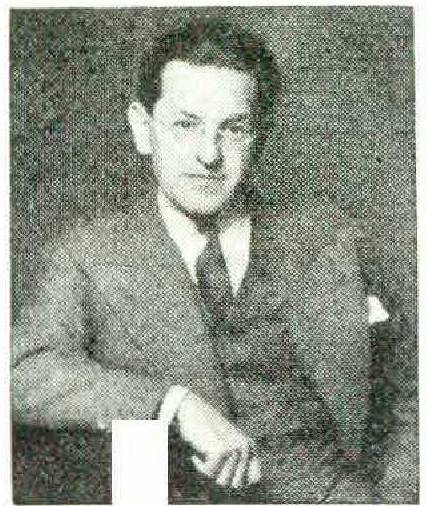
Wilson Follett’s article, ‘Are Children Vegetables?’ in the FebruaryAtlantic, aroused such wholehearted ‘Yeas’ and ’Nays’ from all sides that we think readers will be interested in what Mr. Follett has to say about the steadily mounting correspondence provoked by his discussion.
The correspondence has fallen thus far into four interesting groups of letters: (1) the protests of psychologists and educator, outraged that a layman should be more impressed by what he sees happen than by their ‘science’; (2) the plaudits of other psychologists and educators who rejoice when the ignorant layman says what they are in no tactical position to say themselves; (3) the corroborations volunteered by parents out of their own experiences with their children; and (4) the challenges of other parents who see with desperate clarity that, if you bring up your children on the system of ministering to their healthy demands for knowledge, you have them at the age of five mentally all dressed up with nowhere to go, the present state of the schools being what it is.
To the first group I am reconciled; for the second and the third I am grateful. But what really arrests me is the plight stated in the fourth, to which, indeed, my article was tacitly a preface. What is to be the relation of the keen, alert, normally growing child to a school system that presupposes lethargy and vacuity, bases its methods on the needs of the starved and the defective, and deals with the fiveor six-year-old in such terms as, with a modicum of help, he outgrew at the age of thirty months? It is as burning a practical problem as civilization poses. As one of the tens of thousands of parents who have it to face for the immediate future, I mean to repeat and amplify the question I asked before: What are we going to do about it?
And from readers: —
New York City
Dear Atlantic, —
Mr. Follett, like Jane, verbalizes extremely well a feeling and a contention which educators of all colors and varieties have emphasized for a number of years. Modern educators’ and psychiatrists’ outstanding contribution to child psychology is this awareness of early contacts. Mr. Follett presents that aspect ably, but I think Mr. Follett exposes himself to the same criticism when he evaluates intelligence in terms of only one single technical acquisition.
There is this point which has not been discussed as it should be in the educational world: the profound influence of these early contacts and the effect of these early contacts upon the entire learning process. During these most sensitive years it is almost the universal practice to expose our infants to individuals whose contributions are limited to primitive habit formations, and beyond this their contribution is nil. Naturally this specialization would prolong and accent a phase of development which should only be preliminary to other interests. This is a serious question, because our contemporary culture insists upon divergent activities for the young mother which, if carried through, must needs relegate to others some of these elementary and important contributions. Actually we have involved here the question of the nursery school in our modern civilization as a desirable substitute for the limited contacts which even in our most privileged homes these growing children have been exposed to. Sincerely yours,
EDWARD LISS, M. D.
Winthrop, Massachusetts
Dear Atlantic, — What a ‘tyranny of words’ we should be compelled to live under in the next generation if all normal children of two years, to-day, had vocabularies of from 3000 to 6000 words! I think children know a lot more than Mr. Follett thinks they do. Perhaps these many children who speak only thirty-five words or less at eighteen months know that a great deal of the talk in this world is unnecessary chatter, noisy, enervating, confusing. Perhaps in their small, wise minds they know that many words are a hindrance to thought; that thought is born and nurtured in quiet; that in thought lies progress!
Mr, Follett would have us believe that the youth of to-day is a mutilated, dwarfed, and altogether ghastly thing, owing mainly to the all-embracing ‘fact’ that the parents of this generation are unintelligent. It follows, then, that if the parents of this generation are unintelligent the children had no intelligence to inherit, so there is no hope for them. It also follows that if we, the parents, are not intelligent our parents could have had no intelligence to pass on to us, and so on and on back down the generations. This is tinged, is it not, with the ridiculous. Any person with eyes and ears in his head can ascertain quickly enough the condition of our youth. Pass by any playground and watch and listen. Do you see ‘mutilated organisms’ coping freakishly with a ‘hostile environment’ and ‘incapable of amusing themselves except by experiments in deliberate mischief’? Do you hear peevish cries and addled attempts at expression? You do not! The youth, at least of these United States, is a healthy, happy, normal, and unthwarted thing. If we keep it as it is, we have nothing to fear, alarmists notwithstanding.
PRUDENCE PEASE GREEN
South Orange, New Jersey
Dear Atlantic, —
At the age of two, my small son approached his French grandfather saying, ‘Grandpa, would you like to read the obituaries?' — handing him the paper forthwith.
Then one day when his grandmother discovered him scaling the heights of an old-fashioned bookcase whose lower drawer afforded a templing foothold and asked, ‘Where are you going, Donald?’ he replied: ‘Up, up, and up where the mother moon beams and the fairies are swinging.
Not so indicative, but amusing, was his question when shown a picture of George Washington by Gilbert: ‘Is that by George, Mummy?’
A. L. R.
The war debts as subsidies.
Kansas City, Missouri
Dear Atlantic, —
I was late this month in getting to my Atlantic, and when I did pick it up the first article that caught my eye was about war debts. ‘What a coincidence!’ I said; because not an hour before I had included a ten-minute discussion of one phase of that subject in a radio interview. It is true that what I tried to bring out was one of the ethical features which Mr. Elliston thinks it is only confusing to discuss; but that is not the reaction that has come to me from the broadcast.
My questioner was a Mr. Smith (really and truly), and after we had talked for a while on other financial aspects of world economic coöperation the interview went on as follows: — ‘What else might finance do for economic stability and world peace, Mr. Cooke?’
‘There is one thing our country might do, but I am sure will not. If we would write the advances we made to our war associates, the so-called war debts, off the national ledgers, that act would remove one of the obstacles to the resumption of sound international financing.’
‘ Why do you say “ so-called” debts?’ ‘“Debts” begs the question. If they were debts, they ought to be paid; they were not debts, but subsidies. Have you ever looked up subsidies in history? They have been convenient weapons. France under Louis XIV subsidized England under Charles II. In the Continental wars of the eighteenth century, England subsidized first one side and then the other. We subsidized the European enemies of our enemy and enabled them to carry on until we could prepare and strike ourselves. That our subsidies also helped Great Britain. France, and other countries to victory did not change the character of our payments. They remained subsidies.
‘It is a pity that after the war we failed to take a realistic view. We Americans pride ourselves on being practical, but we were not practical then. Now, of course, we realize that the subsidies are not going to be returned to us in any material part. If we could only take the next short step to practicality and recognize that they never should be returned, who can say what that gesture might not do for world coöperation and peace? But I know that we shall not take it.’
I should have omitted that last sentence if I had read Mr. Elliston’s article just before broadcasting instead of just after.
Conscience does press, as the February ‘Contributors’ Column’ said, and I hope the Atlantic will have more to say about what is equitable and what is practicable. I am encouraged to hope that we shall come nearer to justice than we stand now.
THORNTON COOKE
From B. L. T. to G. B. S.
Ann Arbor, Michigan
Dear Atlantic, —
Why ask a Hibernian to be consistent? Is n’t Shaw enough as he is? See an expert’s opinion below.
HERBERT HARLEY
SHAW
Fit matter for their trade of whacking;
Let pundits analyze your mind,
And say that this or that is lacking;
For critic sass or pundit gas
I do not care a week-old cruller:
I only know that when you pass
This world will be a damn sight duller.
J. Donald Adams’s appraisal of the state of the nation, ‘The Collapse of Conscience’ (January number), arouses a dissenter.
Hollywood, California
Dear Atlantic, —
Otherwise brilliant minds often become hopelessly befogged on the question of the American mise en scene.
The people have been accused at various times of lack of culture, moral sloth, political incompetence, declining virility; and now, to mount Pelion upon Ossa, are accused of losing that ‘still, small voice,’ the Personal Conscience. Truly, if all their jeremiads were laid one atop another, it would be a modern Babel that would reach from the earth to the unsullied air of the stratosphere!
The ‘Personal Conscience,’ we are asked to believe, has been steadily submerged. Indeed, it has been supplanted by a new concept called the Social Conscience, which, to paraphrase our critics, ‘costs nothing and sounds good.’ Then there follows a list of so-called proofs of the steady deterioration of the American character that, if true, would be a diagnosis of complete decadence.
But after nine years of traveling throughout the country, from farm to city and village to hamlet, in nearly every state in the Union, I have learned that the moral code of the aristocracy has never been an index of the morality of the populace; that shameful instances of political expediency and compromise are not straws in the wind that presage the disintegration of American national character, and that a people who can weather the Unprecedented depression of the last few years without a revolution, without wholesale riots, and without embracing either Fascism or Communism, is a nation that, far from having lost its collective ‘Personal Conscience,’ still possesses the 4 Refuge of Reason,’ without which no conscience, personal or otherwise, is possible.
ALBERT DE PINA
Praise for Saudin.
Levi, Ky.
Dear Atlantic, —
I am twelve years old and I had never read the stories in your pages but have enjoyed the travel section. So I was surprised to find the ‘Story of Saudin’ readable and I enjoyed it very much. Our March number came yesterday and I beat Mother to it to see what you have this time.
Will you please send the enclosed letter to Saudin for me. You can count on me as one of your faithful readers from now on.
Very truly yours,
WALLER BLAIN
P. S. By the way, do you have any more dragon’s teeth? W.R.
‘The best government on earth.’
Republic, Michigan
Dear Atlantic, —
Like Mr. Sullivan, in ‘Government by Mimeograph,’ of the March issue, I regret that the government should resort to the use of propaganda. However, in a democracy sovereignty is forever disputed and contested. Will Mr. Sullivan explain how the government could maintain itself if it did not reach for the powerful weapons with which it is attacked? Does he think that the sober, prosaic truth buried in documents no one reads can suffice against the most comprehensive and best-organized campaign of propaganda to which any administration was ever submitted? In his own field there is certainly no such naïve reliance on the unadorned truth.
I regret the epithet slinging and name calling of which a few government officials are guilty. I find comfort in the thought that the officials did not start it. And for Mr. Sullivan there should be vast comfort in the knowledge that every epithet fired by a government official is answered in the press by salvo upon salvo, so that the welkin rings with constant thunder from Maine to California.
The charge of planned confusion in government reports of finances is the most serious he makes. The government certainly should not adopt the techniques of holding-company officials in compiling their financial statements. The ease with which their deceptions are detected proves that they are still bungling amateurs at it. Consummate practitioners of the art leave trails that a regiment of accountants and lawyers cannot follow.
I still believe that we have the best government on earth. A little confidence in our democratic institutions is, I think, quite as essential as confidence in business. There are weighty matters before us. I do not believe that the pot-and-kettle technique is going to prove much of a help in their solution.
GUY SCHUTTE
A tribute to an Atlantic contributor.
Palm Springs, California
Dear Atlantic, —
Some memories of former Secretary of War Newton D. Baker.
In the old days, after a Cabinet meeting with President Wilson, it was the custom to adjourn for luncheon to a large round table in the Shoreham Hotel. As I was passing the table one day I was invited to join the Cabinet members and meet the new Secretary of War, Newton D. Baker, who was having his first day. Although they were joshing him a good deal they were all delighted with his bright spirit and quickness of return at anything that was tried on him.
At one point he said, ‘I cannot get accustomed to the extraordinary situation of my becoming Secretary of War. I have always been an outspoken and almost fanatical pacifist. I came to my office at nine o’clock this morning and at ten o’clock I had to order one hundred thousand men to the Mexican frontier.’ He turned to Houston and said, ‘I don’t know anything about this game. Do you?’
To this Houston replied, ‘Yes, I have always been interested in military affairs.’
‘Can you help me?’ Baker asked.
Houston said, ‘I don’t know about that, but my Department can be of a good deal of help.’
‘How in the world can the Department of Agriculture help the Department of War in a campaign?’ asked Baker.
Houston said, ‘To begin with, the water problems of the government are centred in the Department of Agriculture, and I’ll arrange for our foremost water expert and a number of aides to go down to the border to see that water problems are properly handled.’
‘ Yes,’ said Baker, ‘ I can see that is very important. Is there anything else?’
‘Well,’ said Houston, ‘the supervision of meats comes under our Department. It is not only important that slaughterhouses should be properly watched, but the utmost care must be taken of the meat itself until it goes into the pot. I can send the chief meat expert with the army with enough aides to see that the meat supply is properly controlled. ‘Yes,’ said Baker, ‘I can see that that also is important. Is there anything else?’
‘Yes,’ said Houston. ‘Our Department also has the supervision of vegetables and I’ll arrange for the chief vegetable expert with some of his aides to go to the front.’
It turned out that the most serious problems down there were concerned with vegetables. The mothers of all the young soldiers, remembering the great mortality in the Spanish-American War when soldiers died off like flies in Florida, were very much concerned about their boys, especially since it was during the summertime. But with all this care which was given by the Department of Agriculture the young men went through their experiences without any unusual mishaps and came out in wonderful condition. The same organization was there at the time of the Spanish-American War, but it did not occur to anyone to use it. The principles worked out in this rehearsal campaign turned out to be of the highest, importance in watching over the army during the great European War.
I had been in Russia during the first six months of the 1917 revolution. We had entered the war after I left home, and on returning in the autumn I stopped at several points to get some idea of the technique of the war. After visiting the British front and the French front, I went to the American front. Our soldiers had begun to arrive and plans were well under way for them to get into action. I saw much of General Pershing.
One day I said to him, ‘I am leaving to-morrow afternoon at four o’clock to go directly home. I’ll come to have lunch with you before I go, and please be thinking over any message you would like to have go straight to headquarters, for I shall be seeing the President and the Secretary of War almost immediately. If there is anything wrong, or if there is any special message you would care to send, be sure to let me know and I shall see that it gets to the proper authority.’
When I met him the next day he thanked me for my proposal and said, ‘I have been thinking about it a great deal and I must say that I am amazed that things are going so well. My relations with the other commanders on the front are especially good. It might be that the people at Washington would be glad to have this message. You might tell the President that I am especially happy to be working under Secretary of War Baker. I have known all the Secretaries of War for many years, but I have been immensely impressed with Secretary Baker’s ability and understanding. Before we came over here we had to present problems to him almost daily, but be never hesitated or deferred his decision and always when we left his office we said to one another, “Well, really that was the right way to decide the matter.” Working with him in Washington or here is a great inspiration.’
When I arrived in Washington a bitter attack was being made on Secretary Baker and I felt it my duty to state publicly my own experiences at the front. My declaration made a great impression and I was called before Congress to repeat what I had said under cross-examination, with the final result that the attacks on Secretary Baker ceased. All those who had personal contact with him, either through duty or otherwise, could not fail to understand that they were dealing with a great and righteous spirit.
CHARLES B. CRANE
A postscript to Arthur Pound’s ‘Housing: A Comparison,’ in the February number.
Madison, Wisconsin
Dear Atlantic, —
My interest in housing dates back to my freshman year in high school and that same Model Home, which I visited. From that time I have followed housing — both here and in Europe — from Octavia Hill’s plan down to the Greenbergs here.
I offer one possible, partial answer to the manufacturer’s query, ‘How to find ten thousand or a hundred thousand persons who will buy precisely that kind of modern shelter?’ My hint lies in my having seen a piano’s being regarded as an evidence of respectability in every parlor; then a bicycle’s being a necessity in every basement; finally a car’s being a sine qua non in front of every house lest one he thought queer. What can be done for pianos or bicycles or automobiles can probably be done, I suggest, for houses.
Just now we are car-conscious. We no longer say, ‘ He has a fine foundation for success’; we say, ‘He is going places.’ To create this attitude (or to induce it would be the better phrase) the automobile industry has been aided not a little by the oil, the cement, and the highway-machinery interests. Possibly the manufacturer might consider this clue. Cordially,
LELIA BASCOM
Paging Colonel Ayres!
Keetley, Utah
Dear Atlantic, -
To show you how the fine and timely article by Colonel Leonard P. Ayres is appreciated, let me cite the following instance.
The February Atlantic was delivered in Utah the latter part of last week. While I was in Salt Lake City on Saturday, two friends went to great pains to urge me by all means to read this article, wishing to send me a copy if I were not a subscriber. On Monday of this week another friend, just after having read this article, called me up long distance to urge me to get a copy of the Atlantic for this article. Very truly yours,
PAUL H. HUNT
If WE could only make it wind-proof!
Richfield, California
Dear Atlantic, —
In the, Atlantic, as in many of us, are latent powers. Lacking a carpenter’s square in making a V-shaped hog trough, I laid the Atlantic on the plank, with its top flush with the edge, and marked the cuts by placing a pencil against the back of the magazine and drawing lines across the wood.
When the edges of the two planks were lapped one over the other and nailed to form the V, the sawed ends joined in a straight line; and, with the end pieces nailed to them, the trough was watertight. Q.E.D.
ROBERT D. KELLOGG
A request.
Library of Congress, Washington, D. C.
Dear Atlantic, —
In the Library of Congress is a collection of Sherman letters, which is sadly lacking in letters written by the late John Sherman. It is desired to borrow such letters, so that copies may be added to the collection permanently housed in the Library. If originals are sent, they will be copied and returned immediately, or added to the preserved collection, according to the wish of the sender.
Loans of letters are particularly desired at this time because a biography of Senator Sherman is under preparation at the Library.
Very sincerely,
JEANNETTE P. NICHOLS