The New South
I Was a Share-cropper (Bobbs-Merrill, $2.75) is the autobiography of Harry Harrison Kroll, who emerged from a share-cropper’s cabin to become a writer. It is a moving and beautiful book. But stranger still, because of the passionate controversies that rage around share-cropping, it is an honest and tempered consideration of the system by a man whose family and himself endured its almost intolerable hardships and poverty.
Mr. Kroll paints magnificent portraits of his family. ‘ I can see Maw: a thick-bodied unbeautiful woman, going through frozen dawns to milk the cows ... or chopping wood from the bottom back of the house; or bogging through mud and slashing rain to feed the pig and horse. . . . She was a shapeless person in a man’s old coat, man’s brogan shoes, and wearing a crocas sack over head and shoulders to turn the wind and rain. . . . My Mother.’
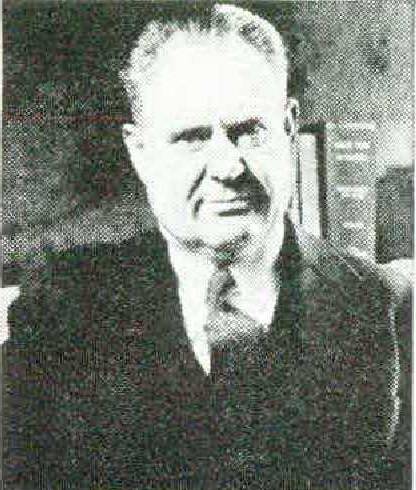
There was the author’s father, Darius, a ‘dark, bent man, with a back nearly hunched,’who spent all his life at heart breaking labor, uncomplaining, gentle, quiet, with the pulse of a sublimated artist beating in him. There was Soddy, the author’s brother, with something of the indeterminable quality of a wild creature in him; Julia, his younger sister, who succumbed to the rigors of poverty; and Birdy, his older sister, big and strong, who lived to marry a share-cropper and repeat the pattern of her parents’ life.
Mr. Kroll points out time and again that his family might have risen from the lower depths of sharecropping to become landowners on a small scale if they had exercised thrift or had had any sense of the morrow. ‘We could have done it, had we not frittered away our energies, and chased after strange will-o’-the-wisps. . .'
But this book — fortunately — is not an economic treatise on share-cropping, but a finely drawn portrait of a family struggling heroically against environment; struggling with dignity, courage, and composure, and achieving that ultimate glory which lies in the struggle itself.
I Was a Share-cropper is not only a distinguished autobiography. It is also an indispensable book for anyone who would attempt to evaluate sharecroppers, not in terms of dollars and cents, but in terms of flesh and blood.
You Have Seen Their Faces (Viking, $5.00) is a book about share-croppers by Erskine Caldwell, illustrated with superb photographs by Margaret Bourke-White. It approaches the difficult question of share-cropping with all the amiable openmindedness of a Boston Abolitionist of 1850. It is characterized by the sweet reasonableness of a speech by Hitler on modern art. It is marked by a lordly disdain of facts.
The South that in 1937 produced the largest cotton crop in its history (over eighteen million bales), and the highest yield per acre ever recorded, is called by the author ‘a worn-out agricultural empire.’ There is much talk about rich landlords and vast plantations, when, as a matter of fact, the rich landlords are rattling the tin cup at the doors of Congress and more than half the cotton crop is produced by farmers who grow from two to five bales. And, of course, the rich landlords became rich by exploiting sharecroppers.
If that is true, it is difficult to reconcile it with the fact that planters are abandoning the share-cropping system as fast as possible, marking perhaps the first time in history that an exploiting class has voluntarily surrendered its weapons of exploitation. They are not seeking to ameliorate the conditions of sharecropping and thereby retain some of its privileges; they are not throwing a bone to the dog: they are giving up the animal altogether. Why? Because share-cropping does n’t pay. Does n’t pay whom? The planter. And it goes without saying that share-cropping has n’t paid most share-croppers, else Mr. Caldwell could not have written his book.
If you disregard the author’s exceedingly dubious economic facts, if you close your ears to his shrill preachments, if you listen to men and women telling their own stories of their lives, and then look at Miss Bourke-White’s photographs of the storytellers, you are likely to get an accurate picture of the manners and morals of some hundreds of persons who are representative of hundreds of thousands of black and white sharecroppers. If, however, you are of that rapidly dwindling minority who want to hear both sides of a case, if you have a passionate curiosity that bids you ask why, why, why, if you would understand the plight of sharecroppers as the result of a collocation of complex causes, your curiosity will not be satisfied by this book.
The humane reader will share Mr. Caldwell’s passionate indignation at the poverty and degradation of great masses of share-croppers who are the poorest people of the poorest section of the United States. He will feel that their condition ought to be enormously improved. He will agree that no country making even the most modest claim to civilization can rest content until thousands of share-cropper families have been brought to a higher standard of living. Mr. Caldwell renders a service to us in bringing the plight of the share-cropper once again to the country. His failure, as I see it. is not one of feeling but of thinking, for he has substituted the method of Uncle Tom for the spirit of free and fair-minded inquiry. And that spirit, too common already in the United States, is in the long run perilous to truth and fatal to liberal democracy.
DAVID L. COHN