Famine Days in China
THE Chinese have a proverb: “if the city gale is burned, it will cause injury to the fish in the moat.”Which being translated from Oriental symbolism means: “The innocent bystander is generally the chief sufferer when the law (symbolized by the protecting gate of a walled city: is destroyed.”
Certainly this is true of the Chinese people in the famine-stricken area today. Bandits and soldiers in the pay of rival political factions have swept back and forth over this land burning and pillaging what little supply of food has been produced in a territory that has Suffered two years of drought. But the drought and the Soldiers arc only two of several causes contributing to the slow death by starvation which now faces over fifty million people in the Land of Sorrows.
The land itself is one of the contributing causes of the famine. Imagine a territory as large as all of the New England States put together, with a contour so nearly flat as to have an average inclination toward the sea of only one foot in fifteen thousand. Then place on this area a population nine and one-half times that of the New England States, and one which is propagating so fast that in spite of pestilence and famine its birth rate far exceed its death rate. You then have the stage set for one of the worst tragedies China has ever known. The famine area is alluvial deposit and very fertile, but, if there is too much rain, the streams overflow and the country becomes a shallow, but well-nigh boundless, sea which drowns out all attempts at cultivation. On the other hand, if there is not enough rain, as there has not been for the past two years, the rich soil hakes hard and refuses sustenance to any living thing.
About the time when Theodoric was founding his Italian kingdom, some one hundred years before Augustine landed in England, and thirteen years before the barbarous Franks under Clovis made Paris their capital, the first recorded famine in this district was sweeping away its millions, and ever since then famine has been the sword of Damocles to this harried land. Some forty-three years ago, about, seven-tenths of the population of Shansi perished from starvation, and in 1900 the Province of Shensi lost one-third of its population in the same way. This whole region is one vast graveyard. Men have become discouraged and have given up the fight against Nature. The land has passed into the hands of absentee landlords, whose motto is “Pay up or got out.”
Exposure and unwholesome or scanty food have paved the way for disease, And for the last ten years the land has been the prey of disbanded and unpaid .soldiers, or of illegally mobilized soldiers who have mercilessly plundered the tenant farmers. Is it to be wondered at that desperation, beggary, human traffic, hopelessness, suicide, and starvation have been the result?
Even photographs cannot give an adequate impression of the ravaging, power of famine, but they do help. It was the writer’s privilege to serve as Assistant to the Superintendent of one of the four divisions into which the famine area of 1912 was divided, This area is almost immediately southeast of the present famine area, and therefore the field conditions are approximately the same. A brief outline of the work then done, together with a few pictures, may help us to visualize the present catastrophe.
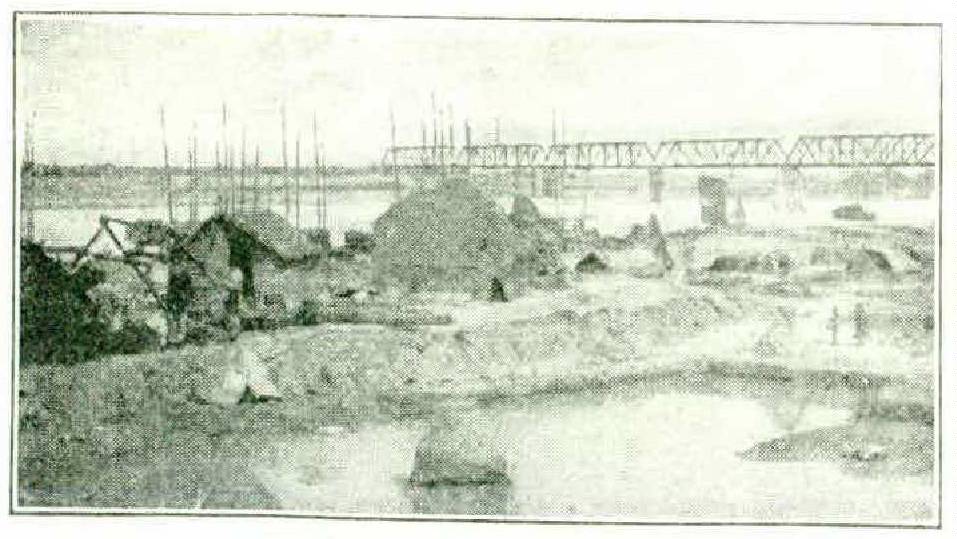
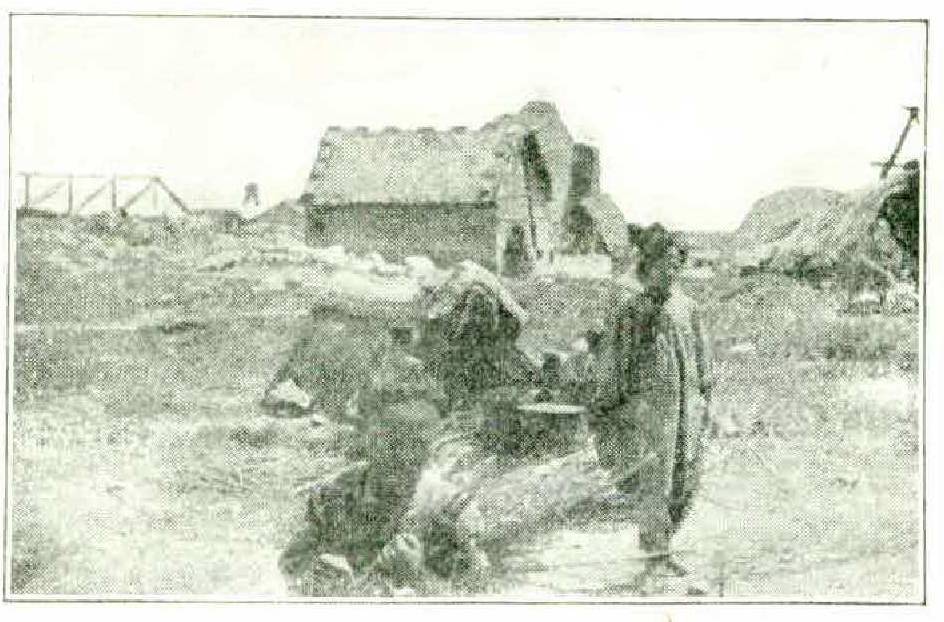
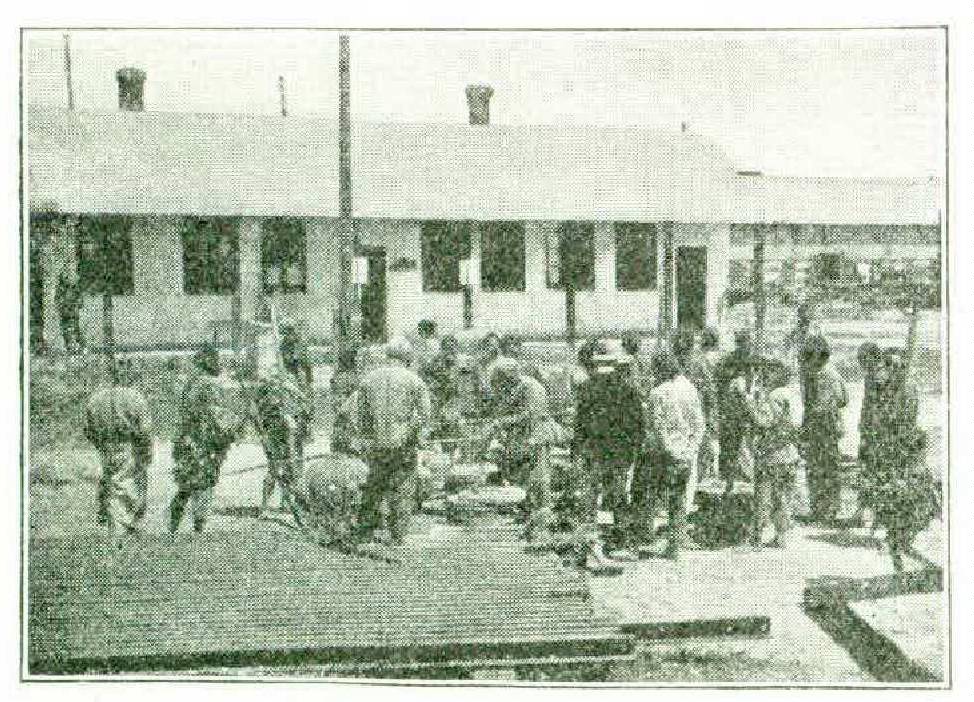
Notice the first picture! It is a picture of the city of Pengpu, where we of the Hual River District had our divisional headquarters. Yon will notice that the large mud house in the center of the picture has no roof, both the roof limbers and the thatch having been sold to buy food. But the family of nine still lived in it at the time the picture was taken. Look at the straw “house" in the foreground of the next picture. By actual measurement this mat shed was four feet wide, six feet long, and four and one-half feet high. In this shelter there lived three “large mouths” and two “small mouths, as the Chinese say. There were two sisters, each of whom had lust her husband,—one killed in the Revolution, and the other swept away by a flood. Originally the family had been happy and fairly prosperous in Northern Anhui; but, after the men had been taken, robbers had plundered and burned the home and carried off a younger sister when they departed. Being left destitute, these two women had journeyed on foot with their old mother-in-law and their five young children, forty miles to our headquarters is, because they had heard that the foreigners were distributing food. During the journey they had lived on chaff of wheat, bark of elm trees, and weeds from the fields. By the time we came into contact with them, on the morning when the picture was taken, the three little girls were gone. “Eaten up” as the mother tersely told us! No, not literally eaten,—but sold as slaves in order that the rest of the family might have a little food. The two girls had been sold for the equivalent of two dollars apieee. The food thus obtained was so loathsome and poisonous that their faces and limbs were swollen and painful, giving them a false appearance of good living.
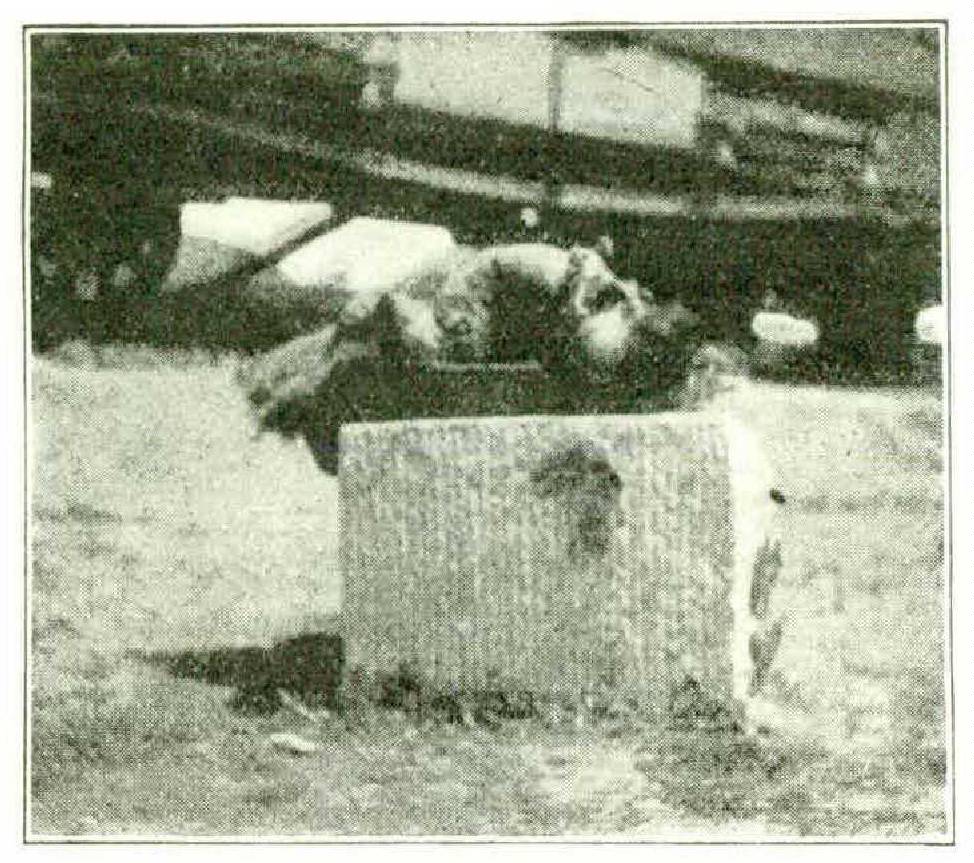
We tried to keep the remnant of this family alive by employing the boy whom you see in the foreground with his arms full of straw. To prevent the utter pauperization of the people, it was the policy of the then Famine Committee to give relief wherever possible only in return for services rendered. The boy was given the task of handing out tally sticks to the carrying coolies as they brought the bags of rice from the boats on the river to the freight cars for shipment to one of our northern distributing camps. These tally sticks were turned in by the workers at the end of the day, and they received their dole of food accordingly. The little. fellow worked just one day. The next morning we found him curled up on a stone as you see him. Hunger is hunger, and in spite of our repeated warnings he had literally gorged himself on stolen beancake and rice which he had stuffed I into his mouth raw. We buried him in the river bank along with all others who had succumbed the night before. (Burial parties were always the first order of the day before the sun made the work impossible.) Then we went in search of his mother and grandmother, but never found them. Probably they, too, had gone to join those others who had gone before.
This is the story of one family out of many making up the half million people for whom we were responsible. It was not an exceptional ease. It was duplicated many, many times,— and is being duplicated today over a much wider area.
And how is this desperate need being met. From all accounts, probably in much the same way in which we tried to meet the need in 1912. The main famine area was then divided into four divisions. In each division there were four or five distribution camps. In each of these camps it was planned to have from two to four foreigners on hand to lay out, supervise, and inspect the preventive work which was the backbone of the Committee’s policy. The Committee gave away food only in case, of dire need and physical inability to work. The work done was of a preventive nature, that is, road-building, dyke building, canal dredging, and drainage ditching— in short, anything that would put the country on a productive basis as soon as possible, and at the same time serve as a foundation for future conservancy. Each distribution camp had an average of twenty thousand laborers enrolled, and it was the task of the supervising foreigners to keep this horde busy and lo see to it that they were fed.
Let me try to picture a typical day s work in one of these camps. Before the sun rose, necessary burials were performed, and usually by 6.30 one of the foreigners was out laying out new work for the day, while the other occupied himself in straightening up the grain and cash accounts. Not that there was anything crooked that needed straightening! But when you are dealing with Chinese money, you are dealing with a wonderful and fearful thing! Each Province issues its own money, and so does the National Government. All foreign banks doing business in China issue their own money. In addition, Spanish dollars, Mexican dollars, and trade dollars are used by the merchants in different. localities. Each of these forms of currency passes at par only in its own locality, and even then its par value fluctuates from day to day. Imagine doing business with a dollar that produced eighty-nine cents one day, and a dollar and twelve cents a few days later! So much by way of a side-light on frenzied famine finance.
But to return to the day ’s work. In the afternoon. both foreign supervisors would be out on the work, directing, advising, commanding, encouraging and measuring the work done. Inhere would be interviews with the head men of the “hundreds” into which the workers were divided; consultations with officials and local gentry, visits to neighboring villages, to enroll new workers or to distribute clothing, or to give such amateur medical assistance as the workers were capable of. By 4 o’clock both supervisors would return to camp and prepare for the day ’s distribution of grain.
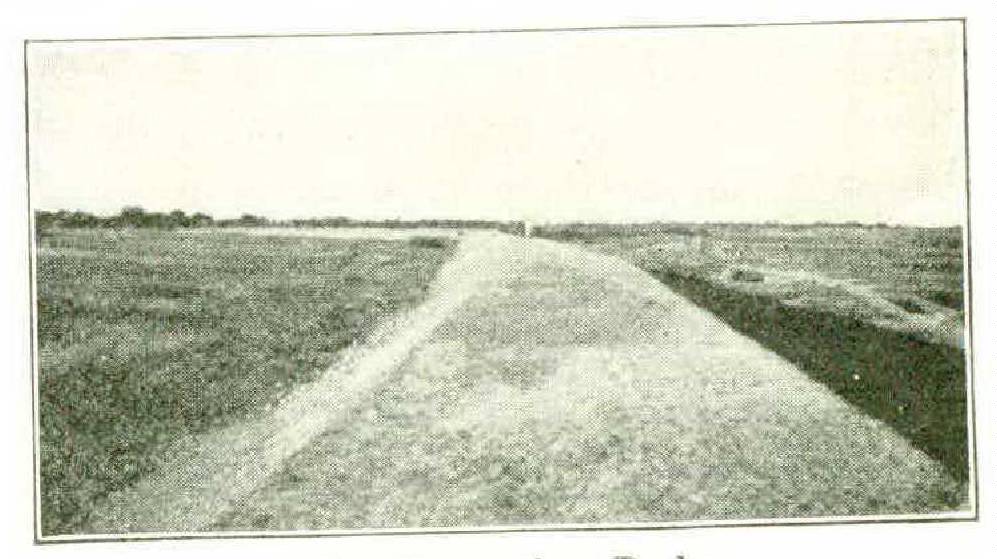
The method of distribution was somewhat as follows: All who were able to work were enrolled, and a copy of that enrollment, was given each worker. This acted as a certificate of identification when presented to the head man of the “hundred” to whom the workers had been ordered to report. It entitled him to work in that “hundred” and entitled him to receive his share of the food earned. In all labor involving the handling of earth, the basis of calculation of a day’s work was a fang, which is approximately one hundred cubic feet. As fast as the excavations were measured by a foreigner, the head man of the “hundred” received a ticket which specified the amount of earth removed by the laborers of his “hundred” and also indicated the food equivalent which the head man was entitled to draw that evening at the close of work. Some of these excavations are illustrated, and also a part of a dyke built with the earth taken from them.
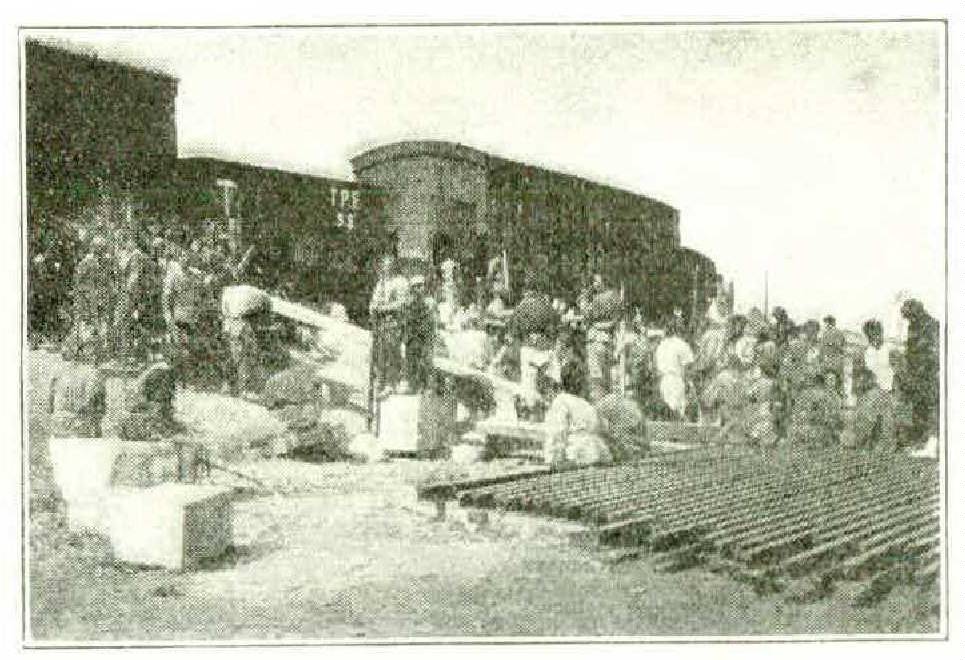
The necessary weighing in this plan of distribution was done by a pair of arm scales such as you see in front of the foreigner in the foreground of one of the pictures. The food there being weighed is beancake. Each one of the huge round cakes you see weighed from ten to twenty-five pounds, and was the residue left after the oil had been pressed out of a quantity of large native beans. The cake tastes like uncooked oatmeal that has been soaked in rancid butter, and smelts as it tastes. But however disagreeable it may be externally, it is fairly nutritious and the Chinese eat great quantities of it when rice and other food articles are scarce.
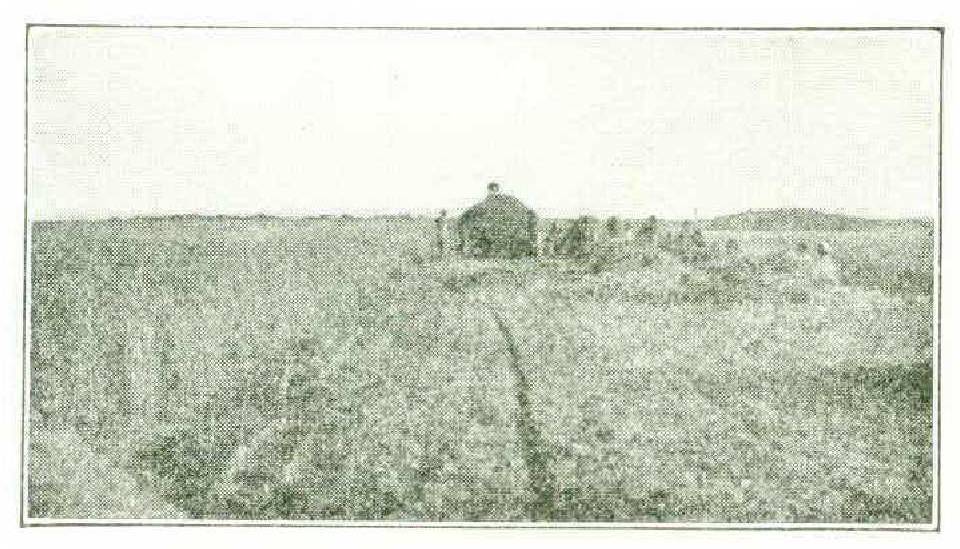
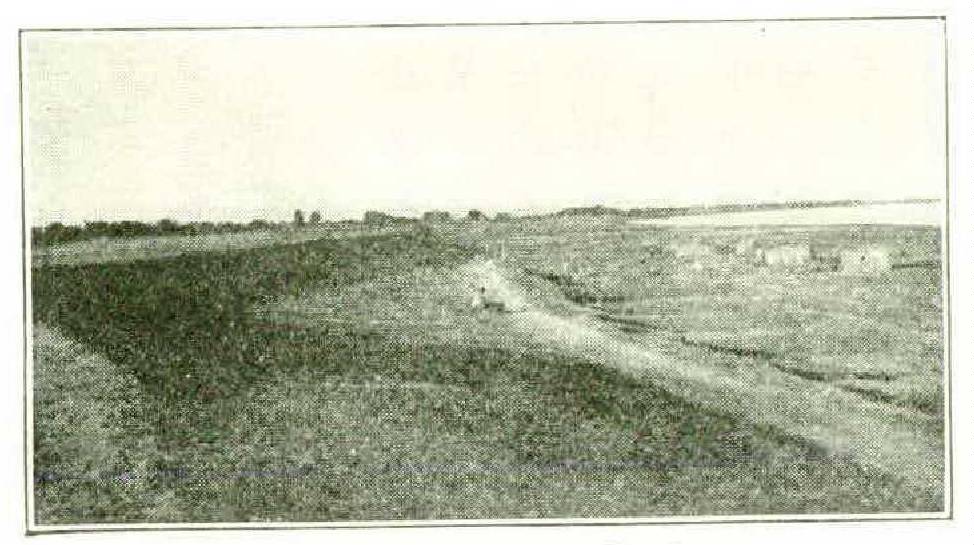
And the result? Many practical people will ask—did it pay? bet us see. For the work of our division we had appropriated about $173,000 of the money raised in England and the United States for this purpose. With that amount we built forty-four miles of dykes, twenty-four miles of drainage canals, ten miles of ditching, and one mile of road; employing thereby about ninety-five thousand men for a period of five months. Roughly estimating the average family as being composed of live persons, that meant some four hundred seventy-five thousand persons were fed arid cared for for a period of five months. Moreover, the dykes, canals, and ditches then constructed made possible a thing unheard of for many years in this region,—the harvesting of a full crop. You see illustrated a stand of wheat on land that for the six preceding summers had been submerged. The reason is seen iu a straight hue that forms the horizon. It is made by a dyke fifteen feet high, twenty feet broad on top, and eighty feet broad at the bottom. On this particular patch of land enough wheat was raised to supply the whole of the neighboring village with grain for two years without sowing another crop. And these same preventive works were of a sufficiently permanent character to serve as a basis of any future conservancy work.
How easy it is to write of such a matter! And how easy it is to say what should or should not be done! But no juggling of words could ever adequately picture the need. Although the events here mentioned happened several years ago, the writer can still close his eyes and hear again the wail of famished, half-crazed human beings, us night after night they lay huddled and half-naked in the icy water before the gate of the mud house in which we lived. “Show mercy, honored foreigner, for we have no food to eat!” Sleepless night followed sleepless night, and in between were fevered days of toil. There was always the haunting fear that the funds would not hold out. If we were obliged to stop work we feared for the moral effect upon the people already well-night hopeless and desperateAnd along with this fear went the fear that we would not be able to finish our task in time to check the summer floods which came in that district from the melting snows of the distant mountains. We had the feeling of trying to repair a huge dam behind which the water was inexorably rising higher and higher. If we could not plant and protect the mid-June harvest, the whole work would be worse than useless. To our taut nerves it seemed as though each day brought some new and maddening cause for delay. Why didn’t the money come in faster.Could we eke it out until the middle of June.-'
Those were our problems, and those we believe, are the problems of the workers o today as they throw themselves unsparingly into the work. Let us not defeat nor delay them by our tardiness, or our niggardliness. Let us remember that the great majority of the one hundred and twenty-five thousand Chinese who crossed the seas to do their humble part in the World War came from just this very part of China. Many of them have returned to find their homes desolate, and their once fertile soil baked as hard as iron by the relentless drought. Some of them are still at work in France—frant bally anxious about loved ones from whom they have not heard. Do we not owe it to them to come to their aid now in the day of their necessity as they came to our aid when we needed it most? It is not. a time for political discussion about China, or argument about what might have been or should have been. The need is more imperative than that now. What China needs at this moment is not so much a square deal as a square meal.
Subscriptions may be sent to Messrs. Kidder, Peabody and Company, 115 Devonshire Street, Boston.
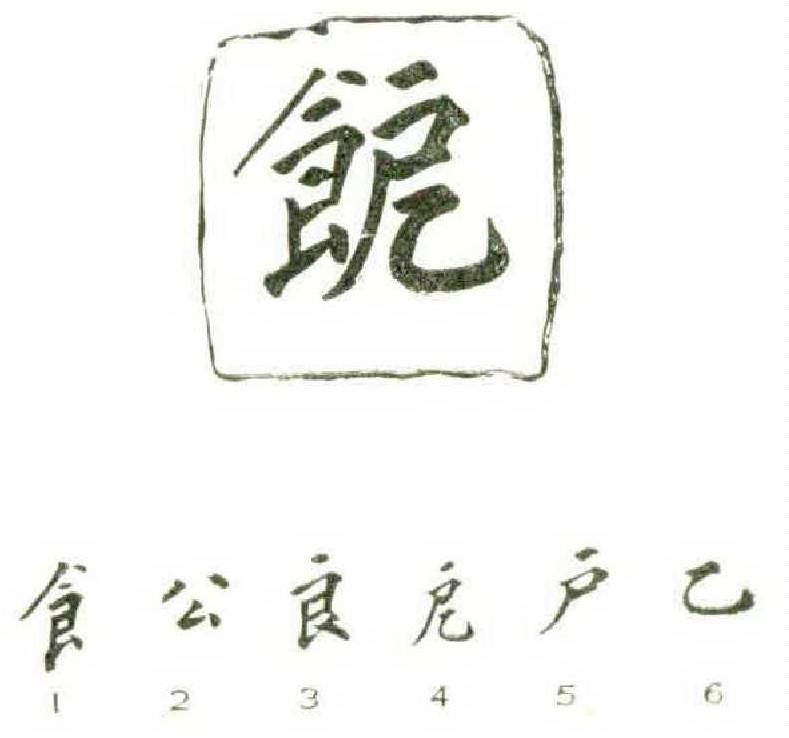
The Chinese character above is composed of four simple characters, thus: No. I is a character meaning and in turn is composed of the characters No. 2, meaning “union,” and No. 3, meaning " the six kinds of grain; the character for food then being the “union of the grains.”the right hand part of the big character. No. 3, means “distress or misery" and in turn is composed of No. 5. a “door partly opened,”and No. 6. a figure in bent position crouching to enter.”the entrance being difficult to effect. The big character now becomes distress or misery in regard lo food" and UicAUs, taken as a whole, hunger.