An Industry on the March
BY EDWARD MOTT WOOLLEY
AT ONE of the great Brooklyn shoe factories things went wrong one morning— a new workman broke an important part in a complicated contrivance, tying up a group of related machines. Simultaneously in another department a mechanical accident happened that shut down a whole row of shoemaking devices. Altogether a hundred men and women were idle.
A few minutes afterward the telephone jangled in the office of the United Shoe Machinery Company’s Service Department on Warren Street, New York. The message came incisively. Then, hanging up the receiver, the Service Manager touched two buttons on his desk.
In a large room on the same floor a dozen mechanics—out of a staff of seventy-five—were on reserve duty when the indicator on the wall recorded the summons for Repair Men 49 and 64. Immediately these two tossed aside their office work, reached for their hats, and reported at the desk. Within ten minutes they had gone to the stock room in the basement, secured the machine parts necessary, and were on their way to Brooklyn. Before the noon whistle blew the replacements in the shoe factory had been made, and all the workers were going full speed.
A great problem of business to-day—and the biggest need of the American public—is Service. This problem has been solved by the United Shoe Machinery Company, which has its great factory at Beverly, Mass., and its service stations scattered through every shoe manufacturing district in the land. The Service of this Company stands unique among industrial stories.
Every day this little drama of the Company’s “hurry call" is enacted hundreds of times. More than a thousand repair men, recruited among the most skilled mechanics everywhere, are constantly on duty in New York, Boston, Brockton, Lynn, Rochester, Chicago, Cincinnati, Milwaukee, St. Louis, Augusta, New Orleans, San Francisco, and elsewhere; in all, twenty-seven stations in fourteen states. In a year the repair men gave shoe factories the equivalent of 218,229 eight-hour days—a free Service.
The system works like train dispatching. In the New York district, for instance, the whereabouts of every mechanic is shown on a pegboard; any man can be reached by telephone and hurried to other jobs. There is also a system of delivery routes by trucks, for hurrying through large repair parts. Here in this Warren Street station, occupying a large building, is a miniature of the great Stock Room at Beverly. In all the stations—and at many sub-stations—the same thing is true.
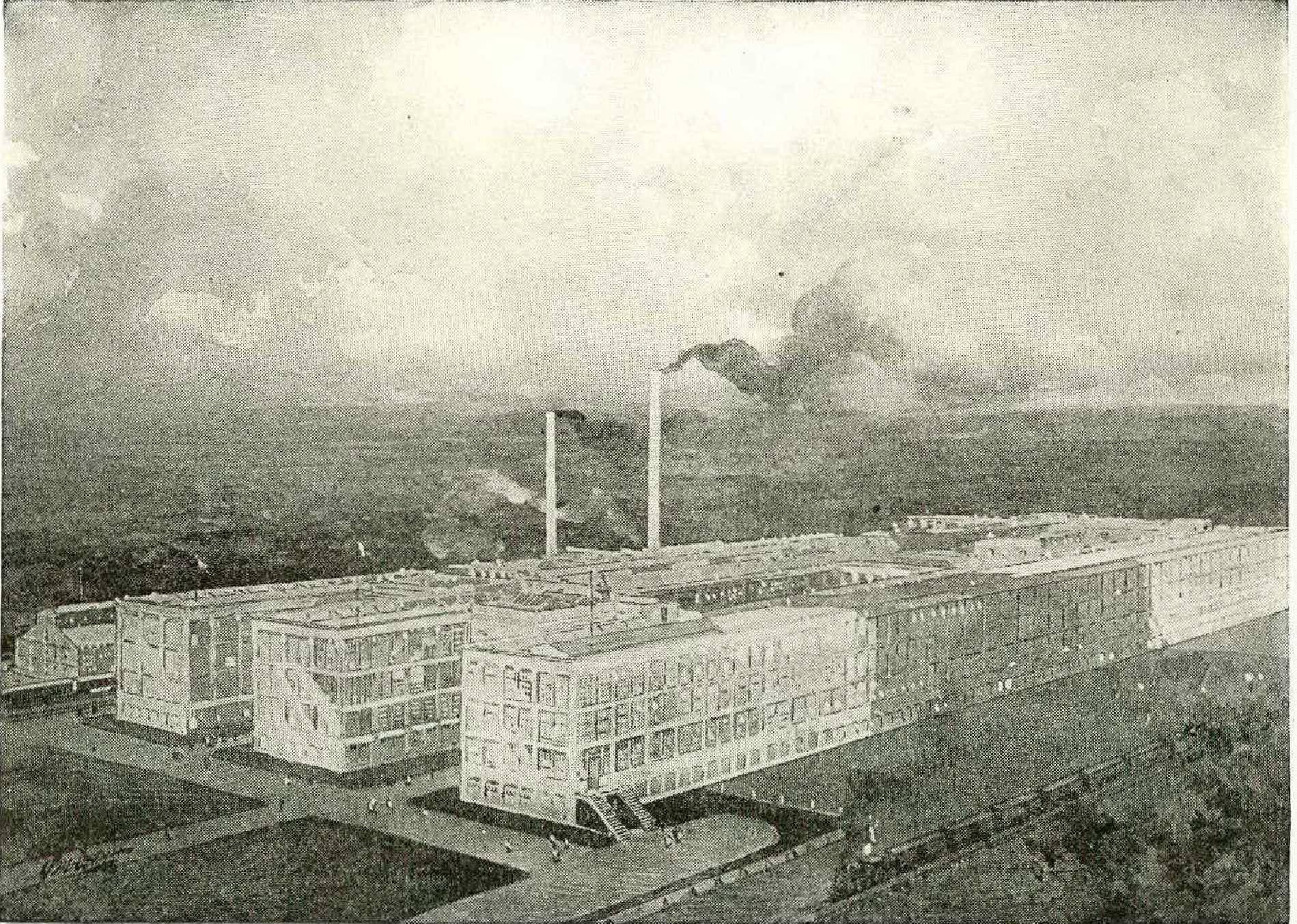
This huge Stock Room at Beverly, by the wav, is symbolic of the Company itself. It is the equivalent of three city blocks in length, and its steel racks reach from floor to ceiling. Over a hundred thousand different parts are carried, and more than twenty-one million of these go annually to branch stock rooms. All these materials are card-indexed and instantly avail able. Boys on roller skates shoot through the long corridor bearing rush requisitions, and shoot out again carrying parts that need not wait for the electric trucks.
Then in addition the Company operates a chain of retail stores, in connection with its service stations, where shoemaking accessories are on sale.
The Shoe Machinery Company’s Service, indeed, is almost melodramatic in its bigness and rapid-fire action; it lacks the gong-clanging sensationalism of the trolley line repair crew, but is scarcely less sure and swift. Almost any shoe factory can secure new parts, along with skilled mechanics to install them, within a couple of hours. All this, given in connection with the Company’s leasing system, is absolutely without charge except for the cost of such parts as may have to be supplied. The leasing methods afford other phases of important Service, to be touched on later in this article.
This whole story of the United Shoe Machinery Company is a narrative of Service. Service of one sort or another is the basis on which most big American concerns have grown. Any business enterprise that will truly serve the best interests of its customers and the nation will grow and prosper.
DEPARTMENT OF AMERICAN INDUSTRIES, NO. 1-ADV.
For the moment turn to another form of Service, which has always been one of the chief impulses in the growth of this Company. On an upper floor of this mighty Beverly plant you come unexpectedly upon a heavy wire partition that bars the way, back of which a great room, filled with machinery, reaches to the far end of the factory. As you peer through the grating of these forbidden regions you see, fading into the distance, a curious row of doors along the left-hand wall—forty or more of them. Every doorway is protected by wire mesh, yet two or three of the nearer rooms give glimpses of blue prints and machinery models.
Then your guide draws you away. This is the Invention Department—the Land of Shoe Machinery Dreams; it is the home of undeveloped fancies that are not on exhibition. “Imagination,” says your guide, “is too subtle a thing to visualize; but come downstairs where you can see the realization of fancies that have been caught in these Inventors’ dens and made tangible in cold steel.”
A FAIRYLAND OF INVENTION
On your way to a lower floor you pass through reaches of machinery, stretching away in vistas of sunlight-flooded shops. There seems no end to these mazes of machines that work apparently with little human aid. The mechanism that makes shoe machinery is almost as wonderful as the product of the machine itself. Yet although you see whole rows of these machines working automatically by themselves, so immense is this plant, with its sixteen factory buildings, that 5,000 workers are scattered through it.
Presently, down in the Assembling Room, you see the realization of those dreams you vaguely sensed at the entrance to Inventors’ Row. No man could even guess how many dreams have floated in and out of that high wire partition, for every finished machine stands for unnumbered figments of men’s brains. And now in the Assembling Department there stretches before you group after group of marvelous devices that often have come out of seeming vagaries. As they stand here in the calm dignity of mechanical perfection, ready to begin their mission, your thoughts go back to that Fairyland of Invention.
To me the Invention Department and the Assembling Room are inextricably associated; no sooner is a machine perfected and built than the cycle of imagination begins to work anew— the inventors again tear to pieces the work of years.
In the primeval days of shoe manufacturing— well within the memory of living men—the factory workman sat with lapstone, hammer, awl and pincers—his mouth full of nails—and plied his trade laboriously. The cost of labor was the great dominating factor.
Then it was that shoemakers fell to dreaming daring things; but even when the United Shoe Machinery Company was organized, in 1899, the development of shoe machinery was not far advanced.
The Company was founded by the consolidation of three non-competing concerns, through the efforts of Sydney W. Winslow, George W. Brown and Edward P. Hurd. Mr. Winslow died a number of years ago, but Mr. Brown and Mr. Hurd are now vice-presidents.
PIONEER DAYS
Years before, Mr. Winslow had worked in the little shoe factory established at Lynn by his father—who had been a seafaring man and afterward a shoemaker. Along in those early days a Lynn shoemaker, born in Dutch Guiana, as dark of skin as a mulatto, invented a machine for lasting shoes, a process hitherto performed by hand. In derision it was called the “niggerhead” by the old-fashioned shoemakers who belittled it. This machine was a vitally important step in the development of the modern shoe industry. The inventor, Jan E. Matzeliger, proved a true Service man in other ways as well, for at his death he left his property to the church.
This brings us to the story of Gordon McKay, an engineer who just before the outbreak of the Civil War became interested in a machine for sewing the sole of a shoe to the upper. He had $140,000 when he took it up, under the supposition that it was already perfected; but all his money slipped away before the machine became a commercial possibility. Then came the days of 1861, and the frantic calls for Army shoes enabled Col. McKay to render the Government distinguished Service. Later, partly through the McKay machines and partly in other ways, he acquired a fortune of many millions; but he, too, was a Service man and patriot, and all his money went to Harvard University for technical development work.
It was by McKay that the system now prevalent of leasing machines to manufacturers, on payment of a royalty for each pair of shoes made, was introduced. In no other way could he induce manufacturers to use his machine.
Mr. Winslow was perhaps the first man to see the possibilities for Service through the consolidation of different companies. There were many manufacturers of various kinds of shoe machinery, and three of these were, to his mind, especially adapted for coöperation. One company made machines for sewing soles to uppers by means of a welt; and also made auxiliary devices. A second put out lasting machines, while a third manufactured machines for attaching soles and heels by metallic fasteners. The object of this amalgamation was not to diminish competition, but rather to reduce production costs and give the maximum of Service, from a single organization and without increased expense, to shoe manufacturers who used the various types of machines —much as a huge department store is equipped to serve the needs of an entire community.
DEPARTMENT OF AMERICAN INDUSTRIES, NO. IADV.
George W. Brown had at one time been selling agent for a sewing machine company, which, however, did not make the heavy machines for stitching the lower parts of shoes. He had later been associated with Mr. Winslow in a company organized to manufacture lasting machines. Mr. Brown’s personal acquaintance with all shoe manufacturers added much to the strength of the new organization.
From the start it was the policy to develop constantly shoemaking machinery; to endow experiment so that inventors could live in comfort and devote themselves to constructive work. The establishment of the Invention Department thus became a capitalization of brains and genius. Quite different, this, from the days when inventors often agonized in solitude, despair and poverty. Business history is filled with melancholy stories reflecting the heart-breaking discouragements of men who struggled with ideas out of which to-day have come big industries.
The whole matter of inventions at Beverly was placed in the hands of a committee of officials. Millions of dollars have been invested in experimental work. Sometimes ideas that seemed valuable came to nothing after long and expensive effort. If individual men had attempted these things their lives would have been wrecked and their families desolated, but here in the Invention Department of the United Shoe Machinery Company the law of average softens failures. No hearts are broken, and a vast aggregate of mechanical genius is saved for Service that reaches directly to every buyer of shoes. More than 150 new machines have been invented, many replacing hand work.
The occupants of Inventors’ Row are recruited from inside and outside sources. Many men bring ideas, and where possibilities seem to warrant they are given facilities and salaries. In this way came the inventor of the buttonhole machine—a mechanic with imagination and ideas.
DEPARTMENT OF AMERICAN INDUSTRIES, NO. I—ADv.
The Company introduced him to one of those wire-meshed dens, where for a long time he experimented. It was a baffling problem to train the balky needle to follow accurately the buttonhole shape. Slowly the needle made concessions— and finally quit resisting and “fell in.”
Another notable device produced by the Company’s inventors is the skiving machine, which performs seeming miracles. It takes a piece of leather one-sixteenth of an inch in thickness and splits it into seven layers, and can finish leather down to two one-thousandths of an inch. Its Service extends to bookbinders, glove makers, diving-suit manufacturers and others.
The fineness to which the Company’s machines have been reduced is aptly shown by comparing their product to the human hair, which is seldom under three one-thousandths of an inch in diameter. Several of these machines work to a point eight times finer!
A DREAM COME TRUE
Some years ago the Company had a machine which put in 375 eyelets a minute, doing each side of the shoe separately. Up in the Invention Department someone dreamed that both sides might be done together, not only doubling the output but making the opposite eyelets correspond exactly in position; and after three years of contriving, such a machine appeared one day in the Assembling Room—doing both sides at once at the rate of 750 eyelets a minute. Its Service now reaches far beyond shoe factories. In corset making, for example, it has cut labor costs.
One of the principal devices of shoe factories, known as the pulling-over machine, has grown out of that old-time dark-skinned inventor’s lasting apparatus. In the early days a shoemaker, sitting on his low stool with the last in his apron, could pull over some sixty uppers in a day. Recently in a modern factory I saw a machine pulling over uppers at the rate of 1,500 a day; and oddly it was operated by a colored man.
Between these two men runs a long and weary path of invention, costing $1,500,000 and involving 2,600 changes. Now the machine has amazing steel fingers that grip the leather from all sides and draw it over the last. Some hidden contrivance then drives the temporary tacks with a single blow.
There was a time when the strip of leather known as the welt—fastening together the insole and upper—was sewed in only by hand. But workmen were constituted differently; some drew taut stitches while others left them loose; and always they spaced irregularly. Tom Shoemaker, for example, would sew viciously for an hour—expressing perhaps his feeling toward a rival in matters of affection. On the next stool his comrade Louie, finding that his own court ran smoothly, would sew amiably and with careless fingers To-day the automatic welt sewer has no moods; it never falls in love, and is a stranger to all sentiment and weariness.
INCREASING A MACHINE’S CAPACITY
The original of this welter, operated by footpower and invented long before the United Shoe Machinery Company came into being, did more than anything else to revolutionize the manufacture of shoes. But almost continuous work upon it has been done in the Invention Department. During the last eleven years alone the sewing capacity of the automatic welter has increased 66.7 per cent.
I have said that the welter has no sentiment —but I take it back. It breathes a subtle atmosphere of pathos, despite its cold exterior, because many inventors have died on this job and passed it on to others.
In erstwhile days of shoemaking the different lifts of the heel were nailed together by patient shoemakers content to follow time-worn traditions. Then out of the mysterious realms of imagination some man dared to dream of another way. Slowly his vision took on reality. I am told that for many years the evolution of this ponderous machine, as it is to-day, was part of the routine of Inventors’ Row. It takes the layers of the heel and compresses them with such mighty force that the fibers interlock and the heel becomes practically solid leather.
It is not many years since long rows of girls in shoe factories could be seen lacing the uppers temporarily with twine to keep the pairs together and allow the opening in the shoe upper to spread only to the same extent as when laced on the foot. Then out of that enchanted region of inventors emanated a curious device that now does the lacing in a twinkling, and ties the knot. Those picturesque rows of girls have passed along —let us trust to other knots that can never be tied by machines.
It was once said that the cutting of uppers would always be done by hand, because leather was too treacherous and uneven a commodity for any machine to handle. Five years inventors worked; then was developed a machine that stamped out the upper with a single motion, doubling the ouput and doing a better job.
All this means big Service. The total saving to shoe manufacturers through the use of one type of machine alone has been more than $4,000,000 annually.
By lowering machinery costs, the Invention Department has tremendously decreased the labor cost of shoes. If all people to-day were shod with hand-made shoes the labor charge would be prohibitive. The machinery cost of making shoes is the only item that has not advanced for sixteen years; if anything it is less than it was sixteen years ago.
DEPARTMENT OF AMERICAN INDUSTRIES, NO. 1-ADV.
Suppose you buy a pair of shoes for ten dollars —how much of it goes to the manufacturer of shoe machinery? Somewhere around five cents! And five cents is less than the price of the carton in which the shoes are sold, and less than the cost of the laces. Other factors must be responsible for the high price of shoes—causes quite beyond the control of shoe manufacturers. For instance: A world-shortage of hides, leather and finished shoes; unprecedented buying of high grade footwear; competition of the world for raw material; lack of proper shipping facilities; heavily increased cost of distribution; the depreciated dollar.
The average royalty for the use of all machines furnished by this Company is a little over two and two-third cents for each pair of shoes—all types and grades, embracing the machines which pay the highest royalties, about five and a quarter cents a pair.
In brief, the Service of all the millions of dollars expended by this Corporation in the invention and development of shoe machinery is returned directly to the people; they receive without charge all the benefits.
Or take benefits accruing directly to labor. A shoe operative in Brockton, for instance, is earning much more on a new machine than he earned on an old one. You can go through the rank and file of shoe workers and find that the United Shoe Machinery Company has rendered a similar Service to untold thousands.
FOLLOWING THROUGH WITH SERVICE
It was because the mere development of shoe machinery did not wholly meet Service necessities that the United Shoe Machinery Company has continued the plan of leasing certain classes of its machines, instead of selling outright. This leasing policy was used by the Company’s predecessors, and was already popular with shoe manufacturers. In the early days of shoe machinery it often happened that machines broke down, tying up whole shops indefinitely. It was largely to remedy this evil that the United Shoe Machinery Company was formed.
The Company believes its responsibility does not end when machines leave the factory; that a machine out of order—unprofitable to the shoe manufacturer—is a poor Service to the nation. Especially is this true now, when production is a panacea for rising costs.
Business success is the force that makes the world move. Therefore the Company’s policy has always been to keep machines going as nearly as possible to capacity in the factories of its customers. If it sold all its machines outright— as indeed it does in a certain class of equipment —its extraordinary repair and replacement Service would be impossible.
Very notable is the expert shoemaking Service the Company supplies without charge. It sends the best shoe men in the world into factories to show where production may be more efficient and quality improved. In addition, the Company gives a Service in the reorganization of old plants or the building of new ones, furnishing entire sets of plans and the specifications for machinery and arrangement. Owing to the rapid growth of the shoe industry, many plants were far from efficient. With the aid of this Company numerous manufacturers have entirely reorganized their plants, and in many instances rebuilt.
Revenues are derived chiefly from royalties. These, however, are not fixed sums, but based on the output of machines. If a machine runs only six months a year, the Company suffers along with the shoe factory. For every pair of shoes that passes through a machine, a prescribed royalty accrues to the Shoe Machinery Company. There could be no stronger incentive for this machinery Service than to give every possible aid to the shoe manufacturer.
A PARTNERSHIP WITH CUSTOMERS
Hundreds of shoe manufacturers have declared their success due to help this Company has given.
The Company takes on its shoulders the heavy financial risk that commonly lies in machinery. Banks will not base their loans on machinery assets, well knowing that a machine regarded wonderful to-day may be obsolete to-morrow. The Shoe Machinery Company takes this chance, and when a machine does fall into the discard it is replaced with a modern one—without additional charge. The Company assures its customers that they will continue to get the best possible machinery; nor need they worry over the selection of machines.
The United Company is virtually a partner of shoe manufacturers. Through the operation of its leasing system it capitalizes the machinery end of the business, leaving a large part of the shoe man’s capital liquid for operating purposes.
I talked with a small shoe manufacturer who told me he started in business fourteen months ago with a capital of $12,000. This, he said, would have been quite impossible except for the leasing system of the United Shoe Machinery Company. In those fourteen months his factory has grown astonishingly.
DEPARTMENT OF AMERICAN INDUSTRIES, NO. 1-ADV.
The Company’s policy places all shoe manufacturers—big and little—on a level. The small man gets the same terms and pays the same royalties for each pair of shoes as the big one; he buys his replacements and supplies at the same prices.
The United Shoe Machinery Company leases many of its machines to manufacturers. Some of them it leases for use together, as a series or group. The very Service made possible by the leasing system requires that certain machines be grouped and used together—machines designed for that purpose. Shoe manufacturers themselves endorse this policy, through which the best possible Service is assured them.
A number of years ago the operation of this system was questioned as a violation of the Sherman Anti-Trust Law, but after voluminous testimony the case was passed on by the United States Supreme Court, which in a decision said: “On the face of it the combination is simply an effort after greater efficiency.” Thus, with its activities approved by the highest authority in the land, the Company continues to expand its operations and Service.
Much interesting evidence was introduced during this hearing. It was shown, for instance, that out of a total of 1,110 operating shoe factories in the United States, 636 produced less than 500 pairs a day per factory. This meant that the freedom of business enterprise was furthered by the United Shoe Machinery Company. It was shown, too, that the leasing system enabled the little man to have a credit with commodity dealers that was unknown in other lines of manufacture. The evidence demonstrated that competition in the shoe-manufacturing industry was more free than in any other big line.
Service to employees at the Beverly factory is just as much a part of the United Shoe Machinery Company’s creed as Service to its customers and the public; but such Service is not substituted for any part of wages.
In the first place, the forty-four-hour week is in vogue all through the works. The night force puts in eleven hours four nights a week, and then takes a vacation.
It is not the province of this article to describe in detail the hygenic features of the Beverly plant and the steps taken by the corporation, working in helpful harmony with those in its employ, to insure healthgiving and agreeable surroundings. Before the buildings were begun, a year was spent by a committee of officials in investigating modern factories in many parts of the country. The plant was then constructed to embody the best features of all. Fresh air and sunlight were the first considerations, and the walls are at least seventy-five per cent. glass—sometimes as much as ninety. Purified air is forced through continually, while pneumatic devices take out dust and injurious particles from machines. Rest and reading rooms are provided, together with a dining room which is operated practically at cost.
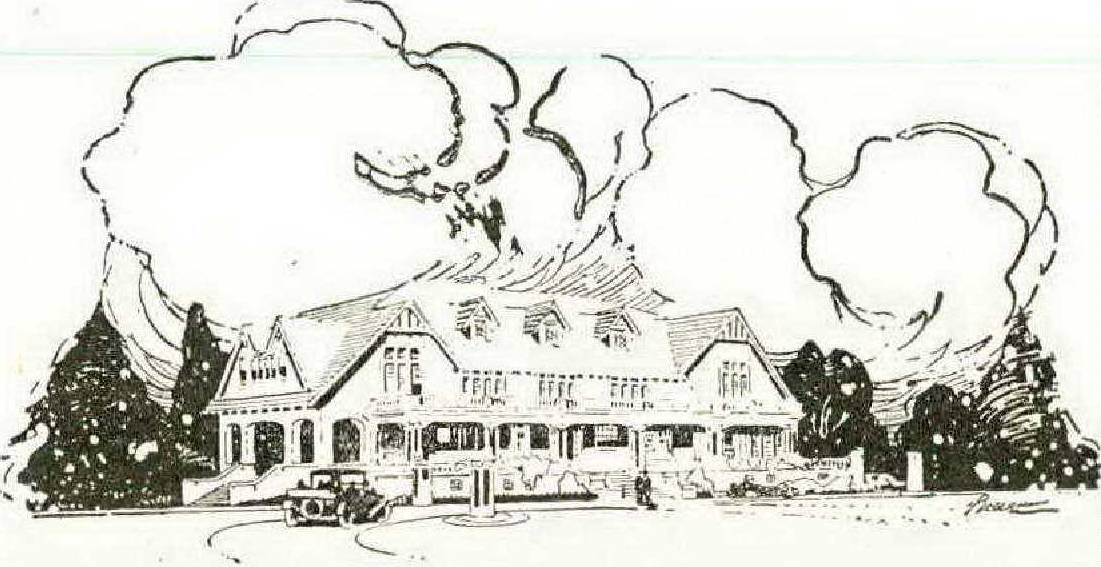
Near by is a large clubhouse, open to all workers—men and women alike—for an annual fee of one dollar, and absolutely in the control of the employees themselves—who have organized an athletic association to manage the clubhouse and all kinds of sports. This association is officered entirely by employees.
Here is a reading room with fireplace and current magazines, a beautiful dance hall and perfectly appointed theatre, bowling alleys, billiard and pool tables, and baths. There is a special department for the use of women, though they share in the rest of the club as well. Adjacent are great gardens for employees, on land furnished by the Company.
The adjoining grounds embrace 300 acres, on which are athletic fields and shooting ranges. The golf links are available to factory employees for an annual fee of fifteen dollars; to outsiders, twenty dollars. There is also a yacht club and clubhouse.
When the noon whistle blows at the plant a brass band, comprising uniformed factory workers who have been released a few minutes earlier, begins a concert in the bandstand outside the main entrance. It plays all through the dinner intermission—just a touch of corporation sentiment; and music makes better workers.
Corporations are not necessarily inconsiderate. Here at Beverly the women workers come on duty five minutes later than the men and leave that much earlier. This courteous device eliminates a problem which has perplexed many large industries where both sexes are employed.
Only the very highlights of this United Shoe Machinery Service story have been touched, but deductions are certainly plain enough. Bolshevism says Capital is organized robbery. How greatly are unthinking men deluded!
DEPARTMENT OF AMERICAN INDUSTRIES, NO. 1-ADV,