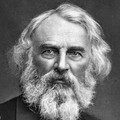
Three Cantos of Dante's "Paradiso"
CANTO XXIII.
Quiet upon the nest of her sweet brood
Throughout the night, that hideth all things from us,
Who, that she may behold their longed-for looks
And find the nourishment wherewith to feed them,
In which, to her, grave labors grateful are,
Anticipates the time on open spray
And with an ardent longing waits the sun,
Gazing intent, as soon as breaks the dawn :
Even thus my Lady standing was, erect
And vigilant, turned round towards the zone
Underneath which the sun displays least haste ;
So that beholding her distraught and eager,
Such I became as he is, who desiring
For something yearns, and hoping is appeased.
But brief the space from one When to the other ;
From my awaiting, say I, to the seeing
The welkin grow resplendent more and more.
And Beatrice exclaimed : “ Behold the hosts
Of the triumphant Christ, and all the fruit
Harvested by the rolling of these spheres !”
It seemed to me her face was all on flame ;
And eyes she had so full of ecstasy
That I must needs pass on without describing.
As when in nights serene of the full moon
Smiles Trivia among the nymphs eternal
Who paint the heaven through all its hollow cope,
Saw I, above the myriads of lamps,
A sun that one and all of them enkindled,
E’en as our own does the supernal stars.
And through the living light transparent shone
The lucent substance so intensely clear
Into my sight, that I could not sustain it.
Dante is with Beatrice in the eighth circle, that of the fixed stars. She is gazing upwards, watching for the descent of the Triumph of Christ.
Under the meridian, or at noon, the shadows being shorter move slower, and therefore the sun seems less in haste.
By the beneficent influences of the stars.
The old belief that the stars were fed by the light of the sun. So Milton,—
“ Hither, as to their fountain, other stars Repair, and in their goldea urns draw light.”
Here the stars are souls, the sun is Christ.
She said to me : “ That which o’ermasters thee
A virtue is which no one can resist.
There are the wisdom and omnipotence
That oped the thoroughfares ’twixt heaven and earth,
For which there erst had been so long a yearning.”
As fire from out a cloud itself discharges,
Dilating so it finds not room therein,
And down, against its nature, falls to earth,
So did my mind, among those aliments
Becoming larger, issue from itself,
And what became of it cannot remember.
“ Open thine eyes, and look at what I am:
Thon hast beheld such things, that strong enough
Hast thou become to tolerate my smile.”
I was as one who still retains the feeling
Of a forgotten dream, and who endeavors
In vain to bring it back into his mind,
When I this invitation heard, deserving
Of so much gratitude, it never fades
Out of the book that chronicles the past.
If at this moment sounded all the tongues
That Polyhymnia and her sisters made
Most lubrical with their delicious milk,
To aid me, to a thousandth of the truth
It would not reach, singing the holy smile,
And how the holy aspect it illumed.
And therefore, representing Paradise,
The sacred poem must perforce leap over,
Even as a man who finds his way cut off.
But whoso thinketh of the ponderous theme,
And of the mortal shoulder that sustains it,
Should blame it not, if under this it trembles.
It is no passage for a little boat
This which goes cleaving the audacious prow,
Nor for a pilot who would spare himself.
“Why does my face so much enamor thee,
That to the garden fair thou turnest not,
Which under the rays of Christ is blossoming ?
There is the rose in which the Word Divine
Became incarnate ; there the lilies are
By whose perfume the good way was selected.”
Thus Beatrice ; and I, who to her counsels
Was wholly ready, once again betook me
Unto the battle of the feeble brows.
As in a sunbeam, that unbroken passes
Through fractured cloud, ere now a meadow of flowers
Mine eves with shadow covered have beheld,
So I beheld the multitudinous splendors
Refulgent from above with burning rays,
Beholding not the source of the effulgence.
Beatrice speaks.
The Muse of harmony and singing.
The rose is the Virgin Mary, Rosa mundi, Rosa mystica ; the lilies are the Apostles and other saints.
The struggle between his eyes and the light.
Thou didst exalt thyself to give more scope
There to the eyes, that were not strong enough.
The name of that fair flower I e’er invoke
Morning and evening utterly enthralled
My soul to gaze upon the greater fire.
And when in both mine eyes depicted were
The glory and greatness of the living star
Which conquers there, as here below it conquered,
Athwart the heavens descended a bright sheen
Formed in a circle like a coronal,
And cinctured it, and whirled itself about it.
Whatever melody most sweetly soundeth
On earth, and to itself most draws the soul,
Would seem a cloud that, rent asunder, thunders,
Compared unto the sounding of that lyre
Wherewith was crowned the sapphire beautiful,
Which gives the clearest heaven its sapphire hue.
“ I am Angelic Love, that circle round
The joy sublime which breathes from out the bosom
That was the hostelry of our Desire:
And I shall circle, Lady of Heaven, while
Thou followest thy Son, and mak’st diviner
The sphere supreme, because thou enterest it.” Thus did the circulated melody
Seal itself up ; and all the other lights Were making resonant the name of Mary. The regal mantle of the volumes all
Of that world, which most fervid is and living With breath of God and with his works and ways, Extended over us its inner curve,
So very distant, that its outward show,
There where I was, not yet appeared to me.
Therefore mine eyes did not possess the power
Of following the incoronated flame,
Which had ascended near to its own seed.
And as a little child, that towards its mother
Extends its arms, when it the milk has taken,
Through impulse kindled into outward flame,
Each of those gleams of white did upward stretch
So with its summit, that the deep affection
They had for Mary was revealed to me.
Thereafter they remained there in my sight,
Regina cæli singing with such sweetness,
That ne’er from me has the delight departed.
Oh, what exuberance is garnered up
In those resplendent coffers, which had been
For sowing here below good husbandmen !
There they enjoy and live upon the treasure
Which was acquired while weeping in the exile
Of Babylon, wherein the gold was left.
There triumpheth beneath the exalted Son
Of God and Mary, in his victory,
Both with the ancient council and the new,
He who doth keep the keys of such a glory.
Christ roascends, that Dante’s dazaled eyes, too feeble to bear the light of his presence, may behold the splendors around him.
The greater fire is the Virgin Mary, greater than any of those remaining. She is the liyingstar, surpassing in brightness all other souls in heaven, as she did here on earth : Stella Maris, Stella Matutina.
The Angel Gabriel, or Angelic Love.
Sapphire is the color in which the old painters arrayed the Virgin.
Christ, “ the desire of the nations,”
The regal mantle of all the volumes, or rolling orbs, of the world is the crystalline heaven, or Primum Mobile, which infolds all the others like a mantle.
The Virgin ascends to her Son.
Easter hymn to the Virgin.
Caring not for gold in the Babylonian exile of this life, they laid up treasures in the other.
St. Peter, Keeper of the keys, with the holy men of the Old and the New Tests.ment.
CANTO XXIV.
Of the Lamb glorified, who feedeth you
So that forever full is your desire;
If by the grace of God this man foretastes
Of whatsoever falleth from your table,
Or ever death prescribes to him the time,
Direct your mind to his immense desire,
And him somewhat bedew ; ye drinking are
Forever from the fount whence comes his thought.”
Thus Beatrice ; and those enraptured spirits
Made themselves spheres around their steadfast poles,
Flaming intensely in the guise of comets.
And as the wheels in works of horologes
Revolve so that the first to the beholder
Motionless seems, and the last one to fly,
So in like manner did those carols, dancing
In different measure, by their affluence
Make me esteem them either swift or slow.
From that one which I noted of most beauty
Beheld I issue forth a fire so happy
That none it. left there of a greater splendor ;
And around Beatrice three several times
It whirled itself with so divine a song,
My fantasy repeats it not to me ;
Therefore the pen skips, and I write it not,
Since our imagination for such folds,
Much more our speech, is of a tint too glaring.
“ O holy sister mine, who us implorest
With such devotion, by thine ardent love
Thou dost unbind me from that beautiful sphere ! ”
Thus, having stopped, the beatilic fire
Unto my Lady did direct its breath,
Which spake in fashion as I here have said.
And she : “ O light eterne of the great man
To whom our Lord delivered up the keys
He carried down of this miraculous joy,
This one examine on points light and grave,
As good beseemeth thee, about the Faith
By means of which thou on the sea didst walk.
If he loves well, and hopes well, and believes,
Is hid not from thee ; for thou hast thy sight
Where everything beholds itself depicted.
But since this kingdom has made citizens
By means of the true Faith, to glorify it
’T is well he have the chance to speak thereof.”
Beatrice speaks.
Hunger and thirst after things divine.
The grace of God.
The carol was a dance as well as a song.
St. Peter thrice encircles Beatrice, as the Angel Gabriel did the Virgin Mary in the preceding canto.
Too glaring for painting such delicate draperies of song.
St. Peter speaks to Beatrice.
Fixed upon God, in whom are all things reflected.
Until the master doth propose the question,
To argue it, and not to terminate it,
So did I arm myself with every reason,
While she was speaking, that I might be ready
For such a questioner and such profession.
“ Speak on, good Christian; manifest thyself;
Say, what is Faith ? ” Whereat I raised my brow
Unto that light from which this was breathed forth.
Then turned I round to Beatrice, and she
Prompt signals made to me that I should pour
The water forth from my internal fountain.
“ May grace, that suffers me to make confession,”
Began I, “to the great Centurion,
Cause my conceptions all to be explicit! ”
And I continued : “ As the truthful pen,
Father, of thy dear brother wrote of it,
Who put with thee Rome into the good way,
Faith is the substance of the things we hope for,
And evidence of those that are not seen ;
And this appears to me its quiddity.”
Then heard I: "Very rightly thou pereeivest,
If well thou understandest why he placed it
With substances and then with evidences.”
And I thereafterward : “ The things profound,
That here vouchsafe to me their outward show,
Unto all eyes below are so concealed,
That they exist there only in belief,
Upon the which is founded the high hope,
And therefore take the nature of a substance.
And it behooveth us from this belief
To reason without having other views,
And hence it has the nature of evidence.”
Then heard I: “If whatever is acquired
Below as doctrine were thus understood,
No sophist's subtlety would there find place.”
Thus was breathed forth from that enkindled love ;
Then added: “ Thoroughly has been gone over
Already of this coin the alloy and weight;
But tell me if thou hast it in thy purse ? ”
And I: “ Yes, both so shining and so round,
That in its stamp there is no peradventure.”
Thereafter issued from the light profound
That there resplendent was : “ This precious jewel,
Upon the which is every virtue founded,
Whence hadst thou it ? ” And I: “ The large outpouring
Of the Holy Spirit, which has been diffused
Upon the ancient parchments and the new,
A syllogism is, which demonstrates it
With such acuteness, that, compared therewith,
All demonstration seems to me obtuse.”
St. Peter speaks to Dante
The great Head of tbChurch.
Tn the Scholastic Philosophy, the essence of a thin;, distinguishing it from all other things, was called its quiddity: an answer to the question, Quid est ?
The Old and New Testaments.
Postulates, that to thee are so conclusive,
Why dost thou take them for the word divine ? ”
And I: “ The proof, which shows the truth to me,
Are the works subsequent, whereunto Nature
Ne’er heated iron yet, nor anvil beat.”
'T was answered me : “ Say, who assureth thee
That those works ever were ? the thing itself
We wish to prove, nought else to thee affirms it.”
“ Were the world to Christianity converted,”
I said, “ withouten miracles, this one
Is such, the rest are not its hundredth part;
For thou didst enter destitute and fasting
Into the field to plant there the good plant,
Which was a vine and has become a thorn ! ”
This being finished, the high, holy Court
Resounded through the spheres, “ One God we praise ! ”
In melody that there above is chanted.
And then that Baron, who from branch to branch,
Examining, had thus conducted me,
Till the remotest leaves we were approaching,
Did recommence once more : “ The Grace that lords it
Over thy intellect thy mouth has opened,
Up to this point, as it should opened be,
So that I do approve what forth emerged;
But now thou must express what thou believest,
And whence to thy belief it was presented.”
“ O holy father! O thou spirit, who seest
What thou believeds't, so that thou o’ercamest,
Towards the sepulchre, more youthful feet,”
Began I, “ thou dost wish me to declare
Forthwith the manner of my prompt belief,
And likewise thou the cause thereof demandest.
And I respond : In one God I believe,
Sole and eterne, who all the heaven doth move,
Himself unmoved, with love and with desire;
And of such faith not only have I proofs
Physical and metaphysical, but gives them
Likewise the truth that from this place rains down
Through Moses, through the Prophets and the Psalms,
Through the Evangel, and through you, who wrote
After the fiery Spirit sanctified you ;
In Persons three eterne believe I, and these
One essence I believe, so one and trine,
They bear conjunction both with sunt and est.
With the profound conjunction and divine,
Which now I touch upon, doth stamp my mind
Ofttimes the doctrine evangelical.
This the beginning is, this is the spark
Which afterwards dilates to vivid flame,
And, like a star in heaven, is sparkling in me.”
Even as a lord, who hears what pleases him,
His servant straight embraces, giving thanks
For the good news, as soon as he is silent;
So, giving me its benediction, singing,
Three times encircled me, when I was silent,
The apostolic light, at whose command
I spoken had, in speaking I so pleased him.
In the Middle Ages earthly titles were sometimes given to the saints. Thus, Boccaccio speaks of Baron Messer San Antonio,
St. John, xx. 3-8. St. John was the first to reach the sepulchre, but St. Peter the first to enter it.
St. Peter and the other Apostlas after Pentecost.
CANTO XXV.
To which both heaven and earth have set their hand
Till it hath made me meagre many a year,
O’ercome the cruelty that bars me out
From the fair sheepfold, where a lamb I slumbered,
Obnoxious to the wolves that war upon it,
With other voice henceforth, with other fleece
Will I return as poet, and at my font
Baptismal will I take the laurel-crown ;
Because into the Faith that maketh known
All souls to God there entered I, and then
Peter for her sake so my brow encircled.
Thereafterward towards us moved a light
Out of that band whence issued the first-fruits
Which of his vicars Christ behind him left,
And then, my Lady, full of ecstasy,
Said unto me : “ Look, look ! behold the Baron
For whom below Galicia is frequented.”
In the same way as, when a dove alights
Near his companion, both of them pour forth,
Circling about and murmuring, their affection,
So I beheld one by the other grand
Prince glorified to be with welcome greeted,
Lauding the food that there above is eaten.
But when their gratulations were completed,
Silently coram me each one stood still,
So incandescent it o’ercame my sight.
Smiling thereafterwards, said Beatrice :
“Spirit august, by whom the benefactions
Of our Basilica have been described,
Make Hope reverberate in this altitude ;
Thou knowest as oft thou dost personify it
As Jesus to the three gave greater light.” —
“ Lift up thy head, and make thyself assured;
For what comes hither from the mortal world
Must needs be ripened in our radiance.”
This exhortation from the second fire
Came ; and mine eyes I lifted to the bills,
Which bent them down before with too great weight.
“ Since, through his grace, our Emperor decrees
Thou shouldst confronted be, before thy death,
In the most secret chamber, with his Counts,
So that, the truth beholding of this court,
Hope, which below there rightly fascinates,
In thee and others may thereby be strengthened ;
Say what it is, and how is flowering with it
Thy mind, and say from whence it came to thee ”:
Thus did the second light continue still.
And the Compassionate, who piloted
The plumage of my wings in such high flight,
In the reply did thus anticipate me :
“No child whatever the Church Militant
Of greater hope possesses, as is written
In that Sun which irradiates all our band ;
Therefore it is conceded him from Egypt
To come into Jerusalem to see,
Or ever yet his warfare is completed.
The other points, that not for knowledge' sake
Have been demanded, but that he report
How much this virtue unto thee is pleasing,
To him I leave ; for hard he will not find them,
Nor to be boasted of; them let him answer;
And may the grace of God in this assist him ! ”
As a disciple, who obeys his teacher,
Ready and willing, where he is expert,
So that his excellence may be revealed,
“Hope,” said I, “is the certain expectation
Of glory in the hereafter, which proceedeth
From grace divine and merit precedent.
From many stars this light comes unto me ;
But he instilled it first into my heart,
Who was chief singer unto the chief captain.
Hope they in thee, in the high Theody
He says, alt those who recognize thy name;
And who does not, if he my faith possesses ?
Thou didst instil me, then, with his instilling
In the Epistle, so that I am full,
And upon others rain again your rain.”
While I was speaking, in the living bosom
Of that effulgence quivered a sharp flash,
Sudden and frequent, in the guise of lightning.
Then breathed : “ The love wherewith I am inflamed
Towards the virtue still, which followed me
Unto the palm and issue of the field,
“ Wills that I whisper thee, thou take delight
In her; and grateful to me is thy saying
Whatever things Hope promises to thee.”
And I: “ The ancient Scriptures and the new
The mark establish, and this shows it me,
Of all the souls whom God has made his friends.
Isaiah saitli, that each one garmented
In his own land shall be with twofold garments,
And his own land is this sweet life of yours.
This “ Divina Conunedia,” in which human science or Philosophy is symbolized in Virgil, and divine science or Theology in Beatrice.
“ Fiorenza la bella,” Florence the Fair. In one of his Canzoni, Dante says, —
“ O mountain-song of mine, thou goeat thy way ;
Florence my town thou shalt perchance behold,
Which bars me from itself, Devoid of love and naked of compassion.”
This allunion to the Church of San Giovanni, “ il mio bel San Giovanni,” as Dante calls it elsewhere, (Inf. xix. 17.) is a fitting prelude to the Canto in which St. John is to appear. Like the “ laughing of the grass ” in Canto xxx. 77, it is a "foreshadowing preface,” ombrifero prefazio, of what follows.
See Canto xxiv. 150.
“So, giving me its benediction, singing,
Three times encircled me, when I was silent, The apostolic light.”
St. Peter. "That we should be a kind of first-fruits of his creatures.” Epistle of St. James, I. 18.
St. James. Pilgrimages are made to his tomb at Oompostella in Galicia.
The General Epistle of St. James, called the Fpistola Cattolira, i. 17. “ Every
good gift and every perfect gift is from above, and corneth down from the Father of lights.” Our Basilica: Paradise ; the Church Triumphant.
Peter, James, and John, representing the three theological virtues. Faith, Hope, and Charity, and distinguished above the other apostles by clearer manifestations of their Master's favor.
St. Janies speaks.
The three Apostles, luminous above him, overwhelming him with light.
“ I will lift up mine eyes unto the hills, from whence cometh my help.” Psalm cxxi. 1.
The most august spirits of the Celestial City.
Beatrice,
In God,
“ Where everything beholds itself depicted.”
Canto rxiv. 42.
To come from earth to heaven.
“ Say what it is.” and “ whence it came to thee.”
“ Est spes certa expectatio futuræ beatitudinis, veniens ex Dei gratia et meritis præcedentibus.” Petrus Lombardus,Magister Sententiarum.
The Psalmist David.
The Book of Psalms, or Songs of God.
“ And they that, know thy name will put their trust in thee.” Psalm ix. 10.
Your rain : that is, of David and yourself.
“ The mark of the high calling and election sure.”
The twofold garments are the glorified spirit and the glorified body.
There where he treateth of the robes of white,
This revelation manifests to us.”
And first, and near the ending of these words,
Sperent in te from over us was heard,
To which responsive answered all the carols.
Thereafterward among them gleamed a light,
So that, if Cancer such a crystal had,
Winter would have a month of one sole day.
And as uprises, goes, and enters the dance
A joyous maiden, only to do honor
To the new bride, and not from any failing,
So saw I the illuminated splendor
Approach the two, who in a wheel revolved,
As was beseeming to their ardent love.
It joined itself there in the song and music ;
And fixed on them my Lady kept her look,
Even as a bride, silent and motiónless.
“ This is the one who lay upon the breast
Of him our Pelican ; and this is he
To the great office from the cross elected.”
My Lady thus ; but therefore none the more
Removed her sight from its fixed contemplation,
Before or afterward, these words of hers.
Even as a man who gazes, and endeavors
To see the eclipsing of the sun a little,
And who, by seeing, sightless doth become,
So I became before that latest fire,
While it was said, “ Why dost thou daze thyself
To see a thing which here has no existence ?
Earth upon earth my body is, and shall be
With all the others there, until our number
With the eternal proposition tallies;
With the two garments in the blessed cloister
Are the two lights alone that have ascended :
And this shalt thou take back into your world.”
And at this utterance the flaming circle
Grew quiet, with the dulcet intermingling
Of sound that by the trinal breath was made,
As to escape from danger or fatigue
The oars that erst were in the water beaten
Are all suspended at a whistle’s sound.
Ah, how much in my mind was I disturbed,
When I turned round to look on Beatrice,
At not beholding her, although I was
Close at her side and in the Happy World !
St. John, in the Apocalypse. vii. 9. “A great multitude which no man could number......clothed with white robes.”
Dances and songs commingled ; the circling choirs, the celestial choristers.
St. John the Evangelist.
In winter the constellation Cancer rises at sunset; and if it had one star as bright as this, it would turn night into day.
Such as vanity, ostentation, or the like,
St. Peter and St. James are joined by St. John.
Christ. " Then saith he to the disciple, ' Behold thy mother !' And from that hour that disciple took her unto his own home.” St. John, xix. 27.
St. John.
“If I will that he tarry till I come, what is that to thee.”
Till the predestined number of the elect is complete.
The two garments : the glorified spirit and the glorified body.
The two lights: Christ and the Virgin Mary.
Carry back these tidings.
The sacred trio of St. Peter, St. James, and St. John.