The Lost Idealism of Heartland Rock
The genre of Bob Seger and John Mellencamp reached across the ideological spectrum in a way that seems unimaginable today.
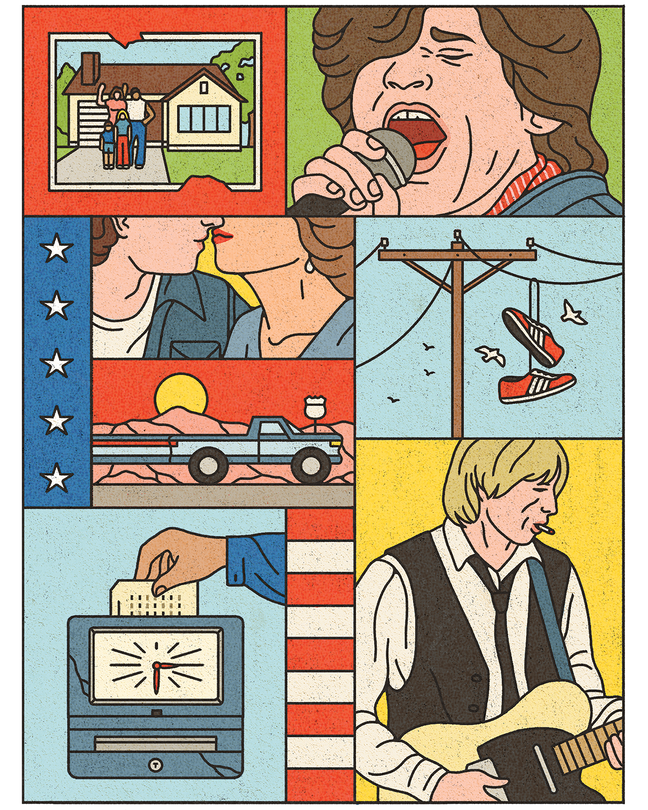
What was heartland rock? Did anyone ever really know? No less an authority than John Mellencamp dismissed the term as the work of “lazy journalists.” But in the 1980s, the music’s heyday, the phrase denoted an array of artists and tendencies while also conjuring something more atmospheric. Everything about the sound was big: the guitars, the drums, the voices, the choruses tailor-made to be shouted along to at a stadium or at a wedding or in your car, nowadays probably to the embarrassment of your kids (or maybe grandkids). The bigness is in the blaring synthesizer riff that opens Bruce Springsteen’s 1984 smash “Born in the U.S.A.,” and the soaring refrain of Tom Petty’s 1989 classic “Free Fallin’,” and the pounding drums and crunching guitar that propel Mellencamp’s own 1982 chestnut “Hurts So Good.”
Heartland rock had a big heart, too. It was concerned with the lives of everyday people, building worlds so vivid that listeners effortlessly recognized themselves in them. Heartland rock’s imagined community lies in both the quirky detail of chili dogs outside the Tastee Freez in Mellencamp’s “Jack & Diane” and the more impressionistic evocations of bygone back-seat dalliances in Bob Seger’s “Against the Wind.”
The dominant mood was obsessive nostalgia: A remarkable amount of the music consists of grown men singing about teenagers. Tugging on the heartstrings can be a cheap trick in the hands of the wrong songwriter, but the genre’s best songs are redeemed by a fastidious eye and a poetic ear. In Springsteen’s “Born to Run,” lovers, like fast cars, are “sprung from cages on Highway 9 / Chrome-wheeled, fuel-injected, and steppin’ out over the line.” Seger, in “Night Moves,” evokes callow summer fumblings in language that’s decidedly unromantic: “I used her, she used me, but neither one cared / We were getting our share.”
Heartland rock had a consistently left-leaning politics, although this aspect has long been a point of misunderstanding. “Born in the U.S.A.” expresses a Vietnam veteran’s disillusionment with the country that sent him to war and then abandoned him; the title refrain is meant to be ironic. Just a few months after the song’s release, the conservative columnist George Will chose not to hear it that way, describing the chorus as a “grand, cheerful affirmation.” Ronald Reagan praised the song’s “message of hope” during a reelection-campaign stop in New Jersey. Reagan’s people reportedly also wanted to turn Mellencamp’s “Pink Houses” into a theme song. Mellencamp intended the song to address racial and economic inequality—its refrain, “Ain’t that America,” is at least partly sardonic.
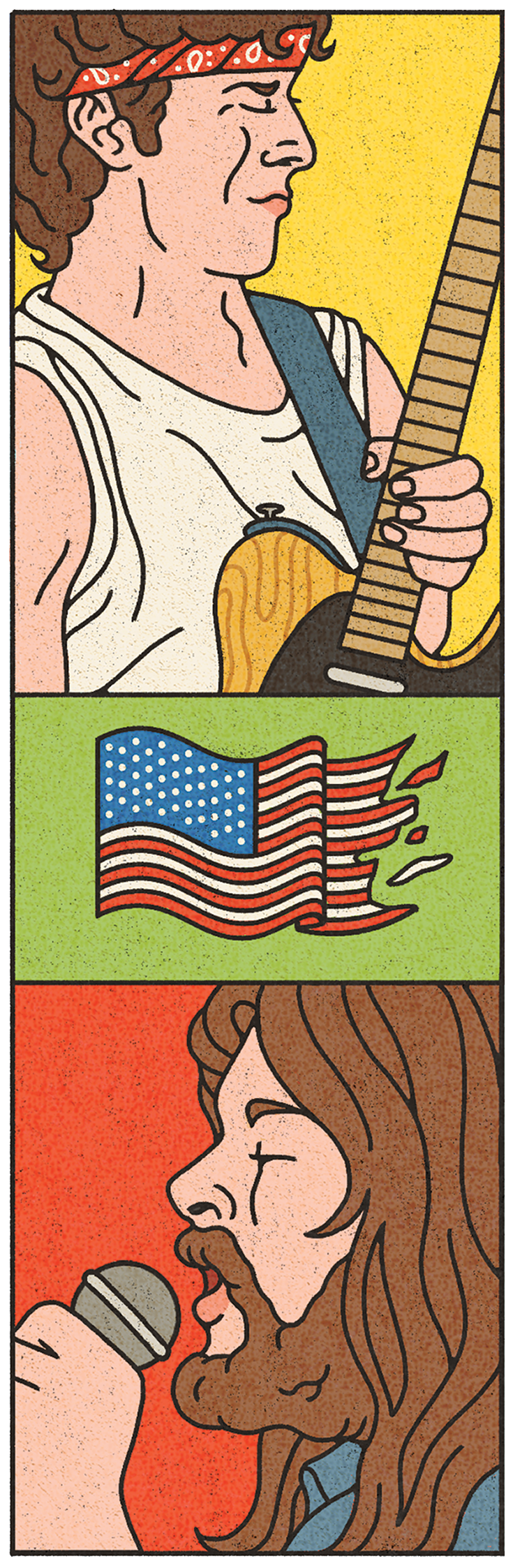
Mellencamp quashed the Reagan camp’s effort, but decades later such unauthorized uses keep occurring. In 2022, Petty’s estate wrote a cease-and-desist letter to Kari Lake, who included his song “I Won’t Back Down” in a video she posted on social media when she was refusing to concede the Arizona governor’s race. Donald Trump, who rose to political prominence questioning the citizenship of Barack Obama, used “Born in the U.S.A.” at rallies during his 2016 presidential run. The chorus of a song filled with indelible images of American decline—
Down in the shadow of the penitentiary
Out by the gas fires of the refinery
I’m 10 years burnin’ down the road
Nowhere to run, ain’t got nowhere to go
—was pressed into service to score nativist points.
In her new history, Won’t Back Down: Heartland Rock and the Fight for America, the music journalist Erin Osmon sets out to recover heartland rock’s progressive potency, and to illuminate how the musicians behind the genre dedicated themselves to improving the lot of ordinary Americans. Although most heartland rockers emerged in the 1970s and flourished in the 1980s, they were deeply influenced by the legacy of the 1960s, inheriting from those years a romantic belief in rock and roll as a force for psychic and social transformation. In the second half of the decade, rock festivals such as Woodstock and Monterey came to be seen as movement happenings as much as musical ones, and stars including Bob Dylan and the Beatles were cast as generational spokespeople whether they liked it or not. When nearly half a million people descended on Bethel, New York, in August 1969, a lot of them earnestly believed that the music they listened to could be a key to a better future.
By the time that Springsteen burst into superstardom with the 1975 album Born to Run, that dream had mostly died, its demise brought about (depending on the telling) by the Rolling Stones’ Altamont disaster, or the overdoses of Jimi Hendrix and Janis Joplin and Jim Morrison, or maybe just Led Zeppelin. This might explain why so much early coverage hailed the young Boss as a savior. “I saw rock and roll future and its name is Bruce Springsteen,” the critic Jon Landau gushed after taking in a Springsteen show in 1974. (Shortly after writing those famous words, Landau put away his typewriter to co-produce Born to Run, ultimately becoming Springsteen’s manager.) At the zenith of heartland rock’s popularity, it maintained its connection to ’60s-era utopianism, even as the country’s rightward lurch imperiled such bleeding-heart optimism. (The dominant rock genre of the 1990s, grunge, would take a far more cynical view of the world.)
Heartland rockers were idealists, but they weren’t radicals. They made big-tent music that sweet-talked more than it proselytized. It reached across the ideological spectrum in a way that seems unimaginable today, through both its sentimental songwriting and its small-c-conservative musical aesthetics: irresistible riffs, swelling choruses, unpretentious chord changes. Heartland rock, Osmon writes, was “the sound of a time when political disagreement didn’t separate families and neighbors.” That is probably an overstatement. Still, the music flourished on terrestrial radio and music-video television, two venues for mass musical experiences whose power has diminished drastically in the streaming era. The era of heartland rock was one of the last times when artists and audiences looked to enormously popular music as a vehicle for change. Osmon’s book is a welcome opportunity to revisit that idea and perhaps take it more seriously.
Osmon’s cast of characters sometimes sprawls to confounding breadth, but her linchpin figures are Springsteen, Mellencamp, Seger, and Petty. Springsteen’s Born to Run is a foundational heartland-rock text, from its spectacularly cinematic opener, “Thunder Road,” inviting us to go out riding “tonight to case the promised land,” to its nine-and-a-half-minute closing track, the Jersey street epic “Jungleland.” Seger’s multiplatinum Night Moves, buoyed by its hit title song, came out in 1976. Tom Petty and the Heartbreakers’ breakthrough was 1979’s Damn the Torpedoes, which included the future classics “Refugee” and “Don’t Do Me Like That.” Mellencamp achieved megastardom in 1982 with American Fool and its singles “Jack & Diane” and “Hurts So Good.”
Heartland rock tended to be more circumspect than the socially conscious pop of the previous decades. Certain heartland rockers—Mellencamp especially—did take on issues of race, but little in the music’s canon approaches the righteous indignation of earlier anti-racist screeds, such as Neil Young’s “Southern Man” and “Alabama,” and the music’s artists and audiences were overwhelmingly white. (An old joke has it that Clarence Clemons, the late saxophone player for Springsteen’s E Street Band, was the only Black person who’s ever attended a Springsteen concert.) Osmon notes that critics called the music working-class rock before heartland rock came into vogue; the terms are sometimes treated as interchangeable, but heartland rock is in much wider use. Maybe that’s because the “working class” in these songs didn’t really resemble the nation’s actual working class: Heartland rock has a lot to say about white kids driving cars (or fooling around in the back seat of them), but not much about Black teenagers slinging burgers. And it wasn’t always clear that the subjects of the songs were working-class at all. The protagonist of Seger’s “Against the Wind” is pretty bummed out, but the song’s line about his “deadlines and commitments” has always struck me as white-collar, and you’d be hard-pressed to find a line in “Jack & Diane” that says they’re from the wrong side of the tracks.
For an exemplary heartland-rock anthem, one could do worse than the song that Osmon chose for her book’s title, Petty’s 1989 hit “I Won’t Back Down.” Its opening verses are carefully understated, set to a cozy bed of keyboard pads and churning rhythm guitar, but once we hit the chorus, the recording explodes. There are soaring layers of harmony vocals, a glistening 12-string-guitar part, driving drum fills that speed the song forward. And Petty’s voice is direct and instantly unforgettable: “Hey, baby / There ain’t no easy way out,” he belts. “I will stand my ground / And I won’t back down.” As a fist-pumping paean to resolve, it’s tough to beat.
But what is “I Won’t Back Down” about ? Damned if I know: The song is incredibly vague. The most detail that we get about the song’s narrator is that he lives “in a world that keeps on pushin’ me around.” We could be listening to a left-wing protester standing up to the cops, or a small-government conservative raging against the bureaucratic nanny state, or a teenager arguing with his parents. Or maybe he’s simply a guy whose girlfriend is trying to break up with him, and he’s fighting to save the relationship—the “baby” that the chorus addresses certainly lends itself to this reading.
And yet the vagueness is part of what makes the song endure. Of course Kari Lake hears herself in “I Won’t Back Down,” because everyone does. Most great songs aren’t great because of what they’re about; they’re great because of how they make us feel. Heartland rock had big sounds and sometimes big ideas, but what it really specialized in was big feelings.
None of this diminishes the political commitments of the artists Osmon writes about, all of whom strove to live up to the ideals that their music gestured toward. The “fight for America” in the book’s subtitle might mean sticking up for the fans—battling a record label to keep records inexpensive, as Petty did, and playing midsize markets so as to keep ticket and travel prices down, which Mellencamp insisted on. Springsteen became an advocate for veterans, Seger for autoworkers. Mellencamp simply refused all corporate sponsorships. Globe-spanning benefit concerts and blockbuster charity singles boomed in the ’80s, and heartland-rock artists were fixtures at these affairs. In 1985 alone, Tom Petty and the Heartbreakers performed at Live Aid, Springsteen donated growly vocals to U.S.A. for Africa’s “We Are the World,” and Mellencamp co-founded Farm Aid, an annual music festival that continues to this day and has raised more than $90 million.
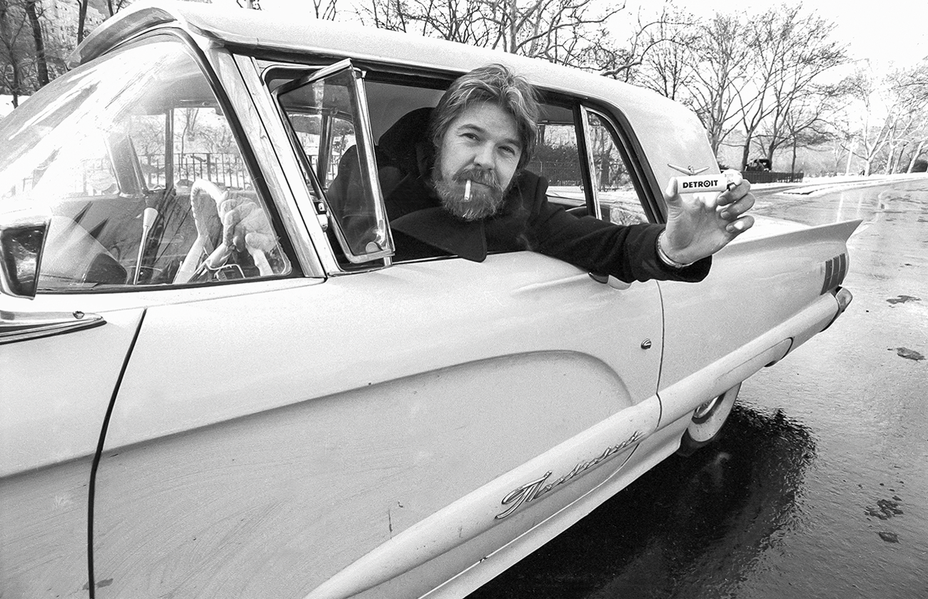
Osmon is particularly keen on resuscitating Seger, an artist who often gets short shrift in standard rock histories. A galvanic performer and graceful songwriter, Seger came out of Detroit in the late ’60s as a purveyor of barn-burning blues rock. By the beginning of the 1980s, though, he’d found his greatest successes with country-inflected blue-eyed-soul ballads like “Night Moves” and “Against the Wind,” as well as the prom staple “We’ve Got Tonite.” In 1983, his 1978 recording “Old Time Rock and Roll” enjoyed a second life when it was featured in the underwear dance sequence in Tom Cruise’s star-making hit, Risky Business, one of the great depictions of uncorked adolescence.
Seger’s music also seems to have been less conducive to the sort of right-wing political co-optation that has persistently befallen Springsteen’s, Petty’s, and Mellencamp’s work. The willful mishearing of “Born in the U.S.A.,” “Pink Houses,” and other songs might partly be attributed to their sound: The bellowed choruses and clattering power chords sometimes drown out a finer-tuned political message. Heartland rock’s penchant for nostalgia might also play a role. The music’s evocation of simpler times when men were men, teenage girls were both innocent and horny, and cars were made in Michigan has a natural appeal for the MAGA movement.
And sometimes the music does traffic in the kinds of clichés about middle-American purity of spirit that have long been a hallmark of conservative rhetoric. Whatever the staunchly liberal Mellencamp intended to convey in songs such as “Pink Houses” and “Small Town,” the ambiguity of the writing makes them ripe for misuse. Osmon points out that Mellencamp’s music has recently been covered by right-leaning country artists, including Trump supporters such as Jason Aldean and Luke Bryan.
Still, the pinnacles of the heartland-rock canon continue to thrill us in unexpected ways. Petty died in 2017, leaving behind a body of music so rich and distinctive that it overflows a genre history like Osmon’s. His early work with the Heartbreakers had an affinity with the more cutting-edge sounds of punk and new wave; the term pop punk probably comes from the New York Times critic John Rockwell’s write-up of a Petty performance at the Bottom Line in 1977. In the ’80s, Petty’s music was certainly classified as heartland rock but was far more influenced by the dreamy psychedelia of the Beatles and the Byrds than most other music in the genre.
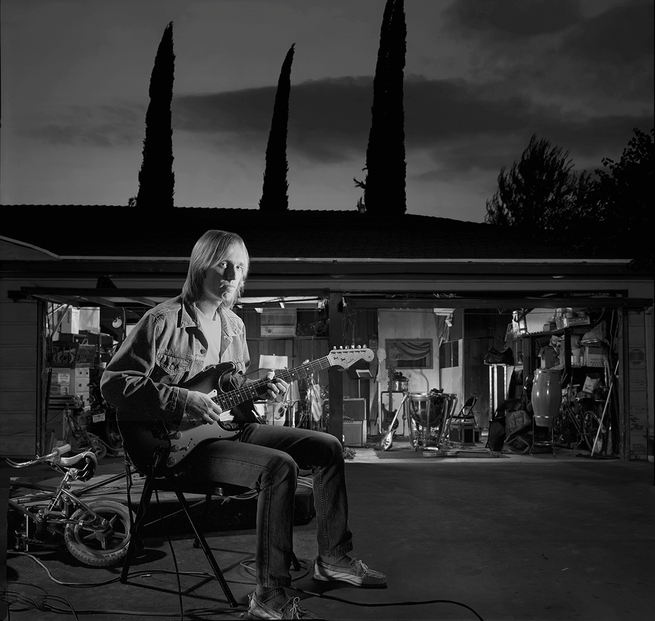
Through it all, he wrote incredible songs. His 1976 recording “American Girl” is undergoing a revival, thanks to a heart-racing needle drop at the end of Paul Thomas Anderson’s One Battle After Another, where it breathes its 50-year-old energy into a new image of teenage exhilaration and political rebellion. The first time I saw Anderson’s film in the theater and that chiming, buzzing guitar riff began pouring out of the speakers, I almost couldn’t believe my ears: It was such an audacious choice, and a perfect one. Maybe “American Girl” is heartland rock, maybe it’s pop punk, or maybe it’s just rock and roll. Or maybe it’s all of those things and still defies categorization, as the best American music always has.
This article appears in the June 2026 print edition with the headline “Glory Days.”
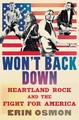
When you buy a book using a link on this page, we receive a commission. Thank you for supporting The Atlantic.