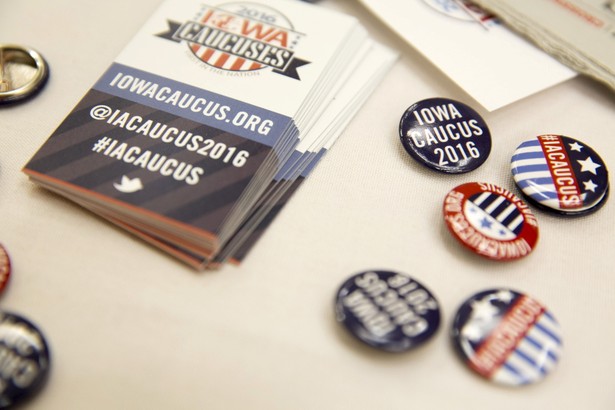
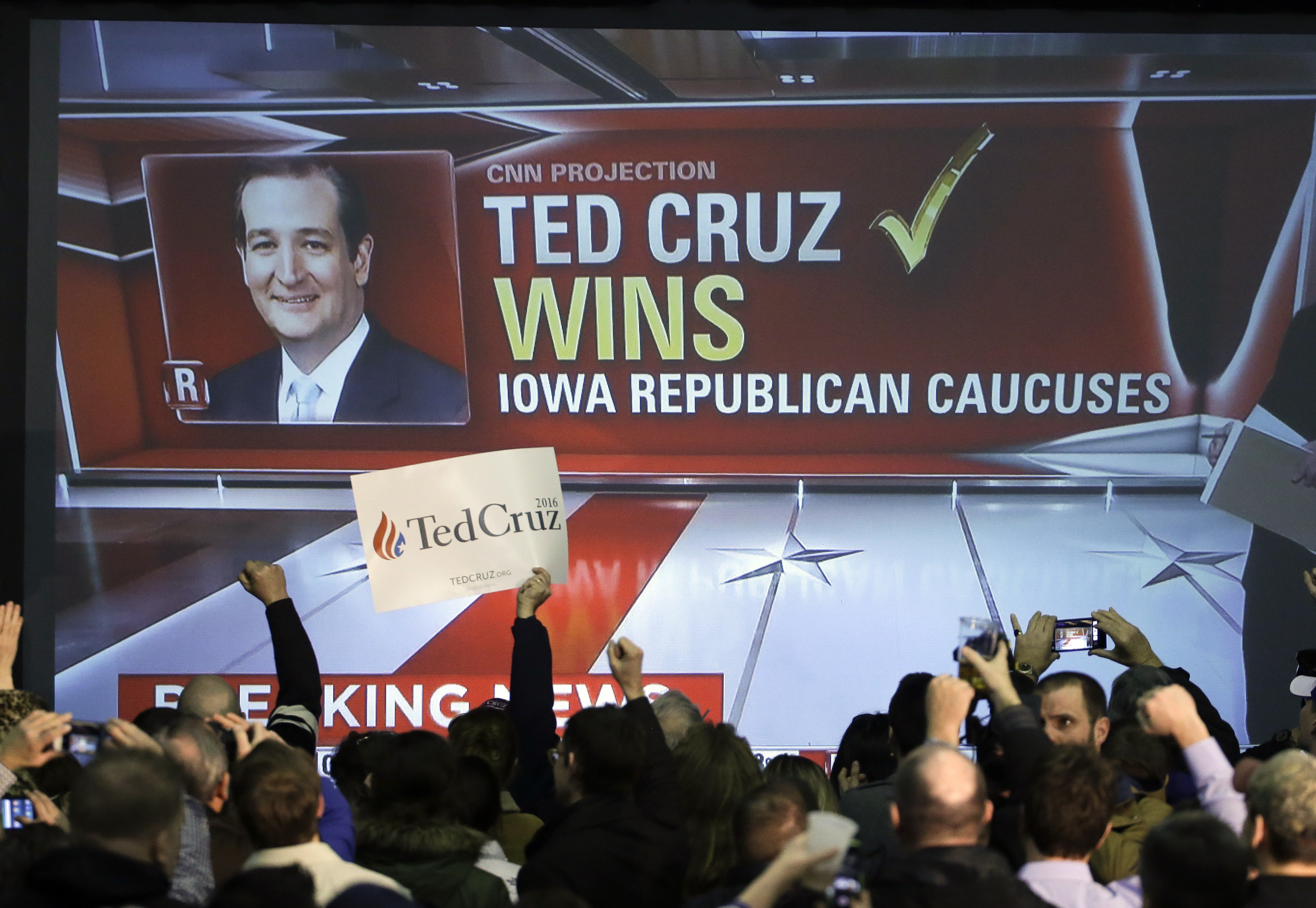
The fight is on. Iowa only made things more interesting tonight by refusing to coronate anyone or to hand New Hampshire a template. On the right, Ted Cruz officially won Iowa, Marco Rubio unofficially won, and Donald Trump is still a force in the race. Meanwhile, John Kasich and Chris Christie have been sitting on the bench in New Hampshire ready to pounce. And on the left, a dead heat between the Democratic candidates means that Hillary Clinton and Bernie Sanders are still going to have to duke it out going forward.
They will get their chance this Wednesday, February 3, when CNN hosts a New Hampshire town hall for the two Democrats. And then on February 6 in Manchester, the Republicans will hold their eighth debate on ABC. The Atlantic’s politics staff will be covering and live-blogging both events as well as the primary itself.
So join us as we wade even deeper into election season. It probably can’t get any weirder. (Right?)
Next on the schedule: the New Hampshire primary on February 9. Jeb Bush, John Kasich, and Chris Christie skipped tonight’s theatrics in the heartland, in favor of continuing their campaigns in New Hampshire. During a speech earlier this evening, Marco Rubio suggested he is heading there overnight, and Carly Fiorina tweeted about 30 minutes ago that she was boarding a plane to the Granite State. For Kasich and Christie in particular, that primary could be a make-or-break contest for their campaigns. Christie told the state’s voters earlier today that “for the next eight days, you are the most powerful people in the world.”
A final tech update: Another declaration of victory tonight comes from Microsoft, which says that the outages on the GOP reporting website was the result of the two parties’ overwhelmed servers—and not its own technology. “The mobile apps for both parties have been working without issue,” the company says.
Summing up the night for Republicans: a huge win for Ted Cruz, a significant loss for Donald Trump, a heartening finish for Marco Rubio, and a devastating loss for Jeb Bush, who should get out of the race.
How close is the Democratic race? Clinton leads right now, 603-600. Yahoo Newsis reporting that in at least two precincts, when voters deadlocked, officials had to resort to the designated tie-breaker method—a coin flip. Hillary Clinton won both tosses. The delegate shares in which the results are reported are complicated, but it's entirely plausible that if those two coin flips had been won by Bernie Sanders, he’d have a 602-601 lead right now.
It’s well known that Republican Party leaders do not want Ted Cruz to win the nomination. But it’s still notable that the statement from Republican National Committee Chairman Reince Priebus tonight didn’t even congratulate Cruz or mention the Republican results in Iowa; Priebus spoke only of Democrats and what he called “an unmitigated disaster” for their party.
Sanders sounded an awful lot like Ted Cruz just now. He said tonight’s results send a message to the political establishment, the economic establishment, and “by the way, to the media establishment.”
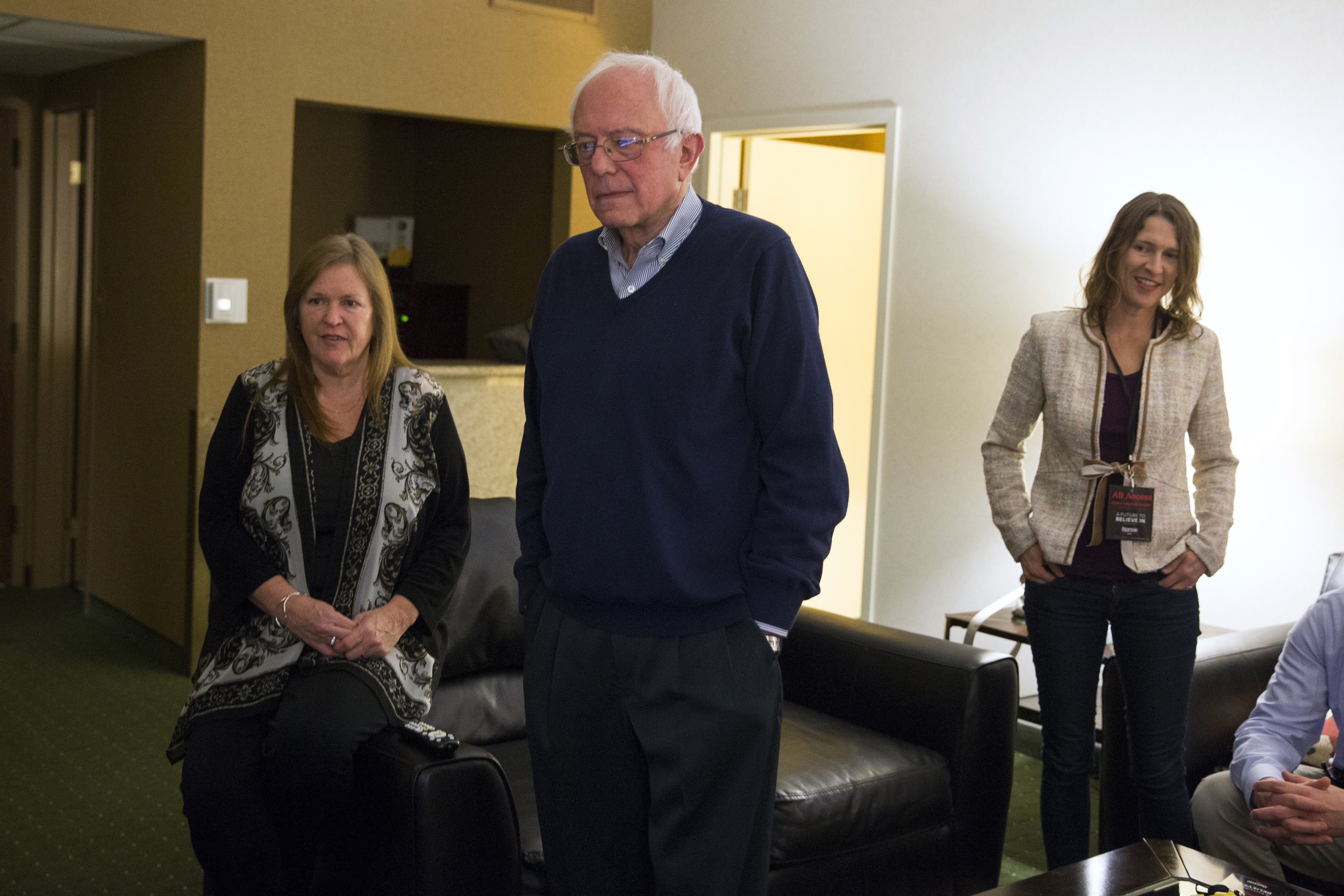
Bernie Sanders emphasizes what an underdog he has been. “We were taking on the most powerful political organization in the United States of America … We are in a virtual tie.”
Cruz is now inviting Reagan Democrats to return to the Republican Party, but it’s a tough sell when he’s running ads explicitly criticizing any politician who would dare strike a deal with a Democrat.
Clinton: “Here’s what I want you to know: It is rare that we have the opportunity we do now to have a real contest of ideas. To really think hard about what the Democratic Party stands for and what we want the future of out country to look like.” The thing is, just a couple months ago, she was hoping that this would be a contest about her vision of the Democratic Party versus whoever the Republicans would put up. Now she has got the tough task of running against Bernie Sanders first instead. She looks like she might pull off a tight win in Iowa, but she starts far behind him in New Hampshire.
Hillary Clinton appears in Iowa with Bill and Chelsea standing in the camera shot behind her. CNN cut away from Ted Cruz to cover her.
“I am a progressive who gets things done for people,” Clinton says. Unlike her campaign, she has not explicitly declared victory in the Iowa caucus yet.
It’s a remarkable night in Iowa. Who would have looked at the Republican horserace a few years ago and picked a couple of candidates with Hispanic roots—Ted Cruz and Marco Rubio—to win and show? But there’s also history on the Democratic side of the aisle tonight. Bernie Sanders isn’t the first Jewish candidate for president. He has been preceded by others, most recently Joe Lieberman. But by splitting the delegates from Iowa tonight, win or lose, he has already become the most successful Jewish candidate for the highest office in the United States. Mazal tov!
Was it the “full Grassley” that sealed it for Cruz? Or a “victory for the grassroots”? It sure wasn’t the media or the Washington establishment or the lobbyists, according to Cruz, who is also quick to point out that his win was the largest in Republican Iowa primary history. Iowa has proclaimed to the world: “Morning is coming.”
Marco Rubio’s surprisingly strong finish tonight has cheered many Republicans, displeased by the choice between Trump and Cruz. But my colleague Peter Beinart warns that, far from a triumph of the establishment, Rubio’s success is a testament to how deeply Donald Trump has reshaped the race: “Trump may have lost in Iowa but Trumpism won. The fact that the moderate in the GOP race is now peddling a version of The Donald’s message testifies to how profound his effect has been. And it’s not likely to dissipate anytime soon.”
Just talked to some Trump supporters at his party in West Des Moines. A woman named Dianne Beilstein told me she had no doubt he would still win the nomination. “Iowans are so conservative, and Donald Trump is flashy,” she said. “He’s from New York—some people here don’t relate to that.”
Candidate speeches are quickly rolling in now. The latest, from Rand Paul, was sunny. A smiling Paul told his backers that “tonight is the beginning”—he’s not dropping out tonight, or anytime soon, it seems. Paul has maintained for weeks now that his campaign is just as viable as those of the top-polling candidates, and Iowa hasn't changed his mind.
Martin O’Malley announces he’s out, as anticipated: “The people have made their choice tonight. ... I am suspending this presidential bid. But I am not [ending] this fight.” He struck a characteristically impassioned tone: “Thank you for allowing me to make this offering out of love.”
Even just a month ago, it would have been surprising to hear a Republican candidate acknowledge that anyone other than Hillary could be the Democratic nominee—she has always been their perfect and inevitable foil. But tonight, both Marco Rubio and Trump talked about taking down “Hillary or Bernie” in the general election.
Rubio’s hope, by speaking first and speaking as if he has won, seems to be that lots of Republicans around the country will hear him giving a victory speech and decide they like the sound of that.
The fact that Rubio can deliver this as a victory speech is proof of the genius of his campaign’s “3-2-1” spin—the idea that he would place third in Iowa, second in New Hampshire, and win South Carolina. That spin took such firm hold that he’s just acting like third really is a win.
What’s left to watch for tonight? Sure, there’s the Democratic result, but as I scroll through Twitter, the real question for many people seems to be: When will Donald Trump tweet? As he slides to a second-place finish, the Donald’s famed feed is eerily silent.
Marco Rubio’s intro here was almost identical to the first words Barack Obama uttered upon winning the Iowa caucuses in 2008. “They said this day would never come,” Obama said then. Of course, he actually won the caucus that year...
Rubio’s speech is already somewhat surreal: He’s speaking like he has won, even though he placed third. There are shades, perhaps, of Bill Clinton declaring himself “the Comeback Kid” in 1992—after a second-place finish in New Hampshire!
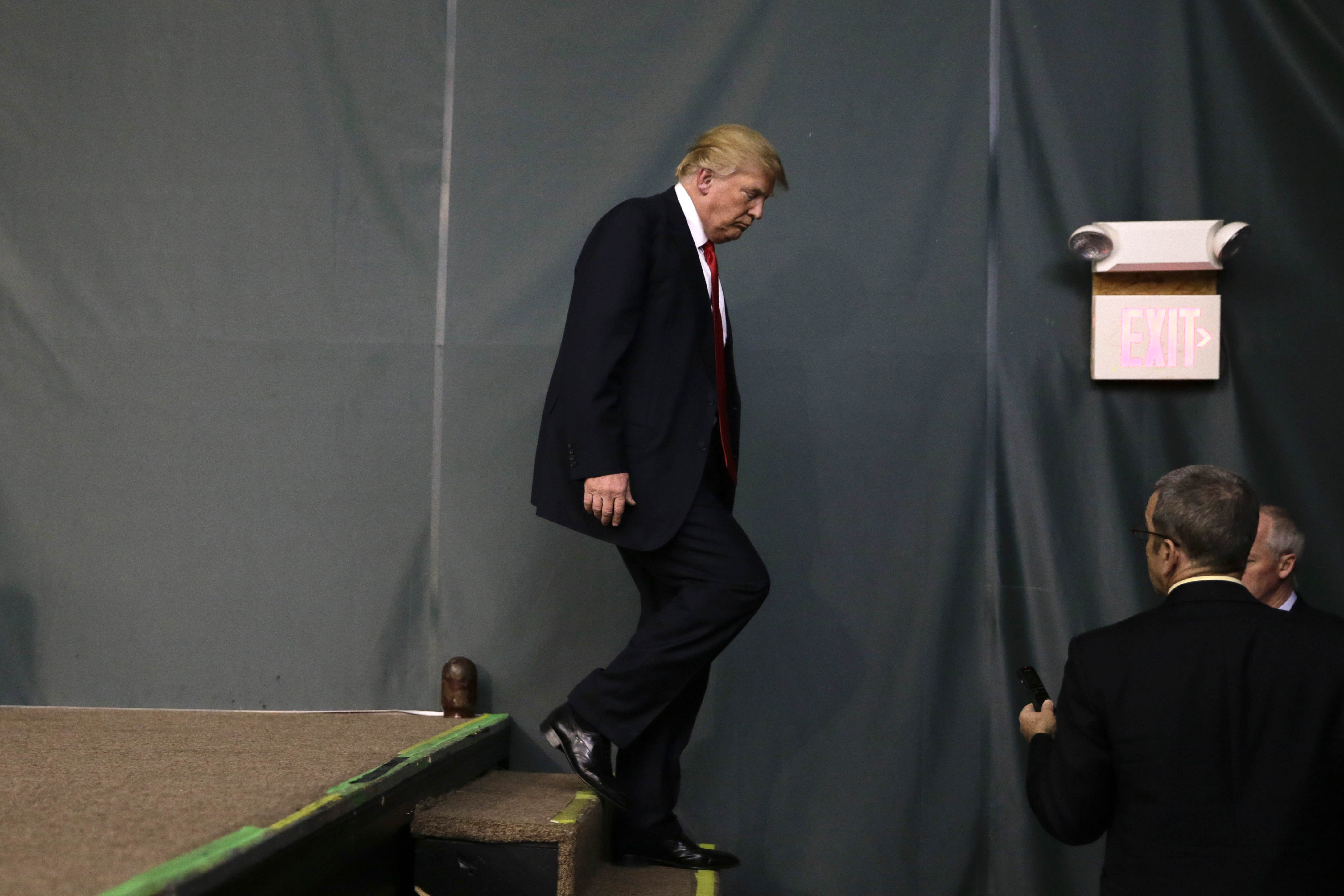
The problem with branding yourself as the winningest winner who is going to win so much that winning will get tiresome? A second-place finish is awfully dissonant. What will Donald Trump say?
Here at the suburban Des Moines hotel where Trump is holding his caucus watch party, a big boo went up when CNN called Iowa for Cruz. (The TVs here are, naturally, not tuned to Fox.)
As they have leading up to the Iowa caucuses, the governors in the race are seeing single digits tonight. Jeb Bush stands at 3 percent, Kasich is at 2 percent, and Christie is at 2 percent. It has been a difficult race for governors, who have been drowned out by the outsiders or senators. In the past, governors in pursuit of the Oval Office have fared well. As I noted last year, after Jimmy Carter, three of the next four presidents were likewise onetime governors. But in 2012, former Massachusetts Governor Mitt Romney lost to Obama.
And tonight, former Arkansas governor Mike Huckabee has suspended his campaign.
Andrea Mitchell reports that the Clinton campaign is now “declaring victory.” This isn’t usually how it works, but this is important in light of what happened on the GOP side in 2012: The vote may be so close that nobody emerges the clear winner, and Clinton wants her name to be the headline winner, even if the results aren’t certified. In 2012, Mitt Romney had “won” on caucus night by seven votes, but officially, Rick Santorum ended up winning by 34 votes. With 84 percent of precincts reporting, Clinton is barely ahead: 50.0 percent to 49.3 percent. But because the Iowa Democratic vote is merely an allocation of delegates, it is, for all intents and purposes, a tie.
It’s amazing how quickly the narrative is crystallizing that Trump is over. Don’t get me wrong: This is bad news for Trump, whose brand is based on winning. This was Trump’s first big test, and he failed it. But the road to Iowa is paved with failed predictions that Trump was donezo, finished, over, toast. It might be wise to avoid definitive judgments about what his showing means down the road—as tempting and clear as it seems now
As I saw on the debate circuit in college, Ted Cruz is not one to be underestimated. He won Iowa; think that’s as far as he’ll get, like Santorum last cycle? No way. I’d bet a lot of machine-gun bacon that there’s a big, well-organized plan for what’s next.
The GOP establishment has got to be pretty excited about Marco Rubio's unexpected surge in Iowa tonight, based on early returns. Meanwhile, what does Trump say and do if he loses? Remember, this is a candidate whose pitch is all about how he'll give Americans so much winning that they won't even be able to handle all that winning.
The Trump schadenfreude at this moment is suffocating, from all sides. Republicans, Democrats, and nonaligned pundits alike are crowing at Trump’s failure to deliver on his promise and inability to get voters to the caucuses. On one level, this is the natural pile-on whenever a front-runner gets taken down, but I think there’s also an element of the political class striking back: Trump made them (us) all seem like chumps, and his slippage now seems like a sort of vindication for the old conventional wisdom. But keep in mind: At the moment, Trump is still a solid second, and he heads to New Hampshire with a yuuuge lead in the polls—even if faltering in Iowa takes a bite out of that.
My colleague Clare Foran raised a good point earlier about O’Malley’s significance tonight. Ahead of today’s contest, he suggested he wouldn’t tell supporters which candidate they should back instead of him once he dropped out. “Many” of his backers planned to just go home if his candidacy isn’t viable, O’Malley told Politico.
What’s the state of the race at this hour? First, on the Republican side, everything’s coming up Cruz. Despite early assumptions that strong turnout would be good for Donald Trump, Ted Cruz is soaring, with a lead of several thousand votes and around 28 percent of the vote so far. Trump is second at 25 percent, with Marco Rubio at 22—a solid finish that’s raising eyebrows—and Ben Carson at 10 percent. No one else has more than 5 percent. On the Democratic side, Hillary Clinton retains an edge, but it has gotten extremely close, with just a couple of percentage points separating them: 51-49. Martin O’Malley is currently at 0 percent, and reportedly will suspend his campaign tonight.
Far from the Iowa precincts, there’s another contest underway tonight: the National Magazine Awards, affectionately known as the “Ellies.” If the Ellies are the magazine industry’s version of the Oscars, then Magazine of the Year is the equivalent of Best Picture. We’re still waiting to see who will win the Iowa caucuses, but we’re delighted to announce that The Atlantic has been named Magazine of the Year.
Tonight, one has to wonder—as many political scientists have since cable television’s rise—how useful the horserace-style coverage of poll results actually is to viewers. Anyone keeping an eye on CNN, for example, has probably noticed that each time a correspondent has reported early poll results, Jake Tapper has chimed in to remind viewers that most of these early results are essentially meaningless.
Some good news for Marco Rubio: Politico reports that Senator Tim Scott of South Carolina will endorse the GOP candidate on Tuesday. That could give Rubio a leg up in South Carolina, where Scott wields political clout. In the meantime, Rubio is trailing Cruz and Trump in early returns out of Iowa. CNN has him at 19 percent compared with 27 percent for Trump and 30 percent for Cruz
Marco Rubio’s campaign desperately wants to beat expectations tonight, as do his many allies in the GOP establishment who believe he is now the party’s best chance in the general election. But what is a good night for Rubio? Does it have to be second place, displacing either Trump or Cruz? Or could it be just a strong third, perhaps topping the 20 percent threshold that he has struggled to reach in polls? Well, right now he’s at 18.9 percent (with 17 percent reporting)—right on that bubble.
If you’re wondering which channel to watch right now, take note: Talking-head commentary isn’t your only option. CSPAN’s three channels are streaming precinct meetings in Iowa. Original-flavor CSPAN and CSPAN2 are showing a Republican caucus in Boone County, and CSPAN2 is showing a Democratic caucus in Polk County, in a Des Moines high school. It’s cool to be able to see the caucusing in action, in real life. (Or as close to IRL as most Americans will get.)
There’s a lot of pressure on Microsoft and InterKnowlogy, the companies that built a new reporting platform for the Iowa Democratic and Republican parties. With help from the companies, the parties trained hundreds of precincts on how to report results through a smartphone app, which would then be reported in real time on the party and news websites. So far, the public Democratic site has held up, but less than an hour after the caucuses began, the Republican site at iagopcaucuses.com began having intermittent outages, with viewers getting messages that the services were unavailable.
Another question looming over the Iowa caucuses tonight is who evangelicals will coalesce behind. Thus far, reports indicate that evangelicals are breaking between Trump and Cruz. A poll earlier this month found that, nationally, 37 percent of white evangelical Republican supporters back Trump compared with Cruz, who stood at 20 percent.
But as my colleague Jonathan Merritt noted earlier today, the split is not unordinary. As he put it: “Many in the media have flat-out missed it, but there is a growing divide between ordinary evangelicals and evangelical leaders.” How that will culminate tonight remains to be seen.
Marco Rubio and his family pray at a caucus site earlier tonight. Paul Sancya / AP
Surprising no one, it’s already looking like a tough night for Martin O’Malley. CNN is reporting early results showing the Democratic presidential long shot is registering 0 percent compared with Hillary Clinton’s 53 percent and Bernie Sanders’s 47 percent . If O’Malley doesn’t get traction that could actually make him more relevant due to the way the caucuses work. As my colleague Nora Kelly explained, if a Democratic candidate fails to reach a certain threshold of support at a caucus, their fans will have the option to defect to a Democratic rival. Fearing that this might benefit Sanders, Clinton’s campaign has trained Iowa caucus leaders to push supporters over to O’Malley in instances where it might strategically choke off support for Sanders.
Because the Democratic caucuses count people standing in various corners of a room instead of secret ballots, the results are coming in a bit quicker on their side. With 17 percent reporting, Clinton has a 53 percent to 47 percent lead. It probably also helps that they have three candidates rather than the crowd running on the GOP side.
Donald Trump in his closing remarks: “We’re not going to be losing anymore… We can’t be defending the world anymore. South Korea, we defend. Germany, we defend. Japan, we defend. Saudi Arabia, we defend."
On the Republican side, 54 percent of caucus-goers have caucused before, while 45 percent have not, according to early entrance polls from CNN. Among the more experienced attendees, 25 percent prefer Senator Ted Cruz. Though that’s only by a small margin.) Trump clocks in at 23 percent support and Marco Rubio, who’s hoping for a third-place finish is at 22 percent. Among the novices, Trump commands a strong lead, at 33 percent, with Rubio next at 21 percent. It’s helpful to remember that like their exit-poll brethren, entrance polls aren’t a sure thing.
I wonder how many Ben Carson voters will wind up supporting Donald Trump. On one hand, he’s the other outsider in the race. On the other hand, fans of Dr. Carson’s soft-spokenness and relative humility could hardly find a more starkly different temperament and affect as the New York billionaire.Ben Carson in final remarks to his supporters: “We Americans must be proud of who we are. We cannot give away our values for the sake of political correctness.”
The early-entrance polls are in, providing insight on Iowa caucus goers. The numbers are still fluid, but so far, on the Democratic side, 60 percent of respondents backing Hillary Clinton say they’ve attended a caucus before, whereas 58 percent of Bernie Sanders’s supporters say they have not. This is what’s unnerving for the Clinton campaign. The race between Clinton and Sanders has tightened in recent weeks, and Sanders appears to have persuaded voters, who traditionally don’t caucus, to come out tonight.
The education split on the GOP side is, well, yuuuge: 18 percent have postgraduate degrees; 18 percent are high school or less. The former rank Cruz, Rubio, and then Trump—but The Donald has 42 percent of the latter.
One thing to watch tonight will be the vote-counting itself: Republicans were embarrassed in 2012 when the man who claimed victory on caucus night, Mitt Romney, turned out to have lost the contest to Rick Santorum by 34 votes when the results were certified days later. This year, both parties have partnered with Microsoft on a new vote-reporting app, with the promise of faster, more accurate results. But as we saw on Election Night 2012 with the Romney campaign’s infamous ORCA program, election software has a bit of a checkered history, and there have already been rumblings by the Sanders campaign about turning such an important function over to a corporation that might have ulterior motives. I wrote in more detail about the new technology last month.
In strange, early-evening news, Ben Carson is reportedly planning to leave Iowa before we know tonight’s results. He'll be traveling to his home in Florida, where he’ll stay for “some R&R,” reports CNN’s Chris Moody. He is expected to emerge on Thursday, when he’ll be attending the National Prayer Breakfast at the Washington Hilton in D.C. It’s fitting that Carson, whose unorthodox and disorganized campaign has sagged since its autumn high, is returning to the breakfast this week. That’s where he rose to national prominence in 2013 for knocking political correctness—now a primary buzzword—and the Obama administration in a speech in front of the president. Perhaps he’s hoping a good showing at the breakfast could mean more to his campaign than stumping in New Hampshire? Moody reports he's planning to stick it out in the race “no matter” the results.
CNN is reporting “unusually high” turnout at GOP caucus sites, but no entrance polls have been submitted yet. If that turns out to be the case, it would speak to Donald Trump’s ability to mobilize first-time voters. In the last election cycle, more than 121,000 Iowans voted in the Republican caucuses, according to The Washington Post. Caucus-goers are typically more active in their respective parties. High turnout would be significant for Trump. But it’s equally important for Bernie Sanders who has also worked to appeal to nontraditional voters.
After an incumbent president and a milquetoast challenger last time around, America deserves 2016: an anti-establishmentarian, at times vaudevillian, pundit-confounding race for the ages.
It started in March with Ted Cruz, who was the first to announce his candidacy and who called on “courageous conservatives” to join him. But it was dozens of conservative competitors who joined him, making the Republican field so unwieldy that “undercard” is now part of America’s political lexicon. Hillary Clinton announced with a video that made her seem downright warm and Jeb Bush announced with a speech that deftly deployed his fluent Spanish—tactics both have since abandoned. And then there’s Donald Trump, who literally hired a crowd to populate his announcement speech, cheer for his xenophobia, and pretend to support his candidacy. How far the nation has come.
Tonight, the good people of Iowa will take Americans one step closer to detangling the dizzying array of contenders: Huckabee, Santorum, Bush, Rubio, Paul, Fiorina, Christie, Kasich, Carson, O’Malley, Sanders, Clinton. (The sheer volume of ads these Iowans have consumed astonishes the mind.) To make the night even more exciting, The Atlantic has a brand-new, shiny toy: a delegate tracker—to help you sort through all the rural, urban, educated, not educated, and evangelical votes—powered by live caucus results.
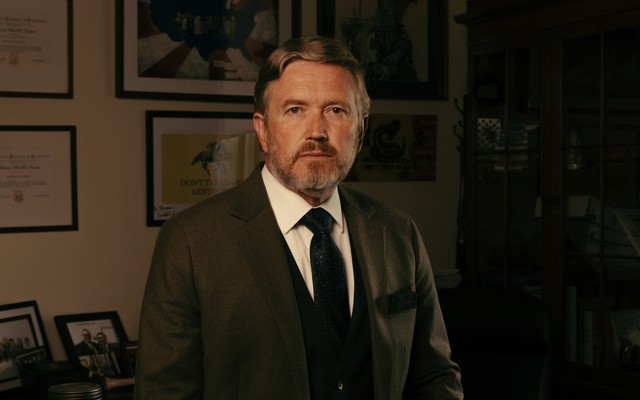
Thomas Massie is one of the few Republicans who is unafraid of President Trump.
Representative Thomas Massie, the renegade Kentucky Republican who fiercely guards his political independence, doesn’t love being on President Trump’s bad side. He would prefer not to have the president’s allies spend millions to defeat him in a primary. In fact, if Massie had his way, he’d be working for Trump right now.
In his telling, in the weeks after the 2024 presidential election, the two men talked about Massie, a farmer who champions raw milk, becoming Trump’s agriculture secretary. Massie had formally endorsed Trump late in the campaign, offering to help him win over libertarians who might be tempted to stay home or vote third party in key battlegrounds. Trump had been appreciative, and the two had chatted by phone to hash out the timing of the endorsement announcement. “Just tweet it. I’ll retweet you,” Trump had told him.
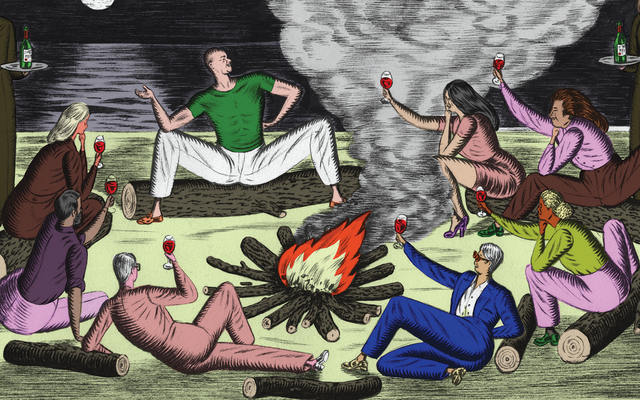
For the richest men on Earth, everything is free and nothing matters.
At the end of Paul Thomas Anderson’s 2007 movie, There Will Be Blood, Daniel Day-Lewis’s oil-baron character, old now and richer than Croesus, beats Paul Dano’s preacher to death with a bowling pin. Dano’s Eli Sunday, a nemesis of Day-Lewis’s Daniel Plainview during his seminal, wealth-building years, has come to sell Plainview the oil-rich land that he once coveted. But Plainview doesn’t need the land anymore, because—as he explains in one of the most famous monologues in modern cinema—he has sucked out all the oil hidden beneath it from an adjoining property, like a milkshake.
Desperate for money, Eli begs for a loan. Instead, Plainview chases him around a bowling alley and murders him with great enthusiasm. Once it’s over, a butler comes to see what all the noise was about. “I’m finished,” Plainview yells.
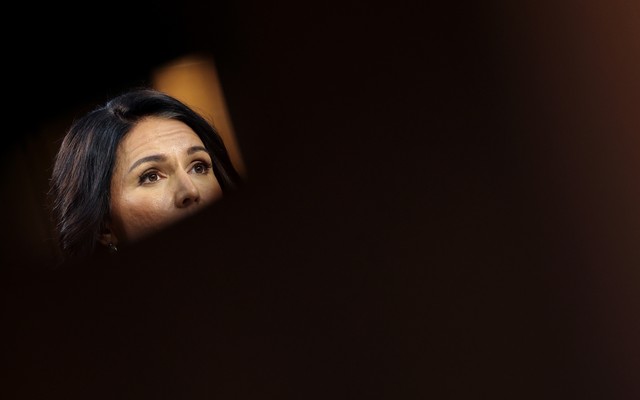
Her irrelevance during a war suggests that America doesn’t need a director of national intelligence.
The Trump administration is running a war with a skeleton crew, a small group of insiders and officials whose official roles seem to matter less than their loyalty to Donald Trump. When the president was making his decision to go to war with Iran, he met in mid-February with Israeli Prime Minister Benjamin Netanyahu. Other people in the room included White House Chief of Staff Susie Wiles; the secretaries of State and Defense, Marco Rubio and Pete Hegseth; and CIA Director John Ratcliffe.
During this crucial meeting, Vice President Vance was out of town. Also missing? Director of National Intelligence Tulsi Gabbard, the person who is in charge of the entire U.S. intelligence community, and who is technically Ratcliffe’s superior. When the war began, the White House put out a picture of Gabbard and Vance meeting with a few Cabinet officials in the Situation Room, looking like they’d been sent to the kids’ table at a wedding.
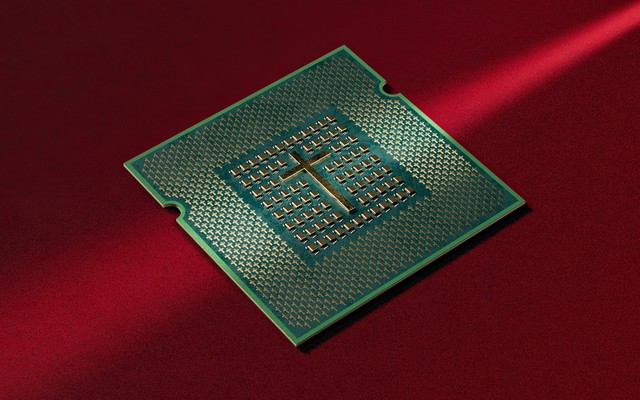
Priests and theologians want to shape the future of AI. Big Tech is listening.
In 1633, Galileo Galilei stood in the convent of the Santa Maria sopra Minerva church in Rome, where a tribunal of Catholic authorities forced him to “abjure, curse, and detest” his belief that the sun—not Earth—was the center of the universe.
Almost four centuries later, in 2016, the Vatican invited a group of the world’s most prominent technologists to the same church to discuss AI ethics. That was the start of the Minerva Dialogues, annual closed-door conferences in Rome that have become the centerpiece of a decade-long exchange between Silicon Valley and the Catholic Church.
The Valley and the Vatican seem like strange bedfellows: The oldest institution in the world meets secular upstarts bent on creating godlike technology. When the venture capitalist Reid Hoffman first attended the dialogues, he told me he was struck by the portraits lining the walls that depicted Catholic inquisitors like those who persecuted Galileo. “It feels a little bit weird to be walking in voluntarily past these,” he remembers thinking.
In a recent story, the Atlantic staff writer Sarah Fitzpatrick writes about how FBI Director Kash Patel’s colleagues are alarmed by what they describe as erratic behavior and excessive drinking. Sources told Fitzpatrick that, on multiple occasions, members of his security detail had trouble waking Patel because he was seemingly intoxicated. Last year, Fitzpatrick reports, a request was made for “breaching equipment,” normally used by SWAT teams to break into buildings, because Patel had been unreachable behind locked doors.
Patel called the story a “lie” and earlier this week sued The Atlantic for defamation. When asked about it at a press conference Tuesday, he said, “I can say unequivocally that I never listen to the fake-news mafia. And when they get louder, it just means I’m doing my job.”
This article was featured in the One Story to Read Today newsletter. Sign up for it here.
Maybe you’ve seen photos of Tehran in the 1970s, just before the Islamic Revolution: images of young women going to work in miniskirts, of couples making out in parks while wearing bell-bottoms, of people at pools in bikinis. It looks like Paris or Milan or Los Angeles. But in 1979 the revolution happened, and now Tehran looks like something from an earlier century.
Sometimes I think that our whole world has become kind of like that—going backwards in time. The religious movements thriving in today’s secularized age are the traditionalist ones that dissent from large parts of contemporary culture—not only the Shiite Islam of post-revolution Iran, but Orthodox Judaism and conservative Catholicism. Young Americans are flooding into Eastern Orthodox churches.
A New York Times podcast hosted Hasan Piker and a New Yorker staff writer for a discussion of lawbreaking, which they both endorsed as resistance to tyranny.
The late political scientist James C. Scott endorsed what he called “anarchist calisthenics”—the regular practice of small acts of lawbreaking and disobedience. Jaywalk at an empty intersection. Have a beer in the park. Smuggle a pudding cup past the TSA agents. The point, Scott said, was to keep the civic muscles strong. Without constant reinforcement, these muscles will atrophy, and when real tyranny arrives, the flabby citizen will be powerless to resist. Scott particularly enjoyed telling Germans to get their reps in, because their grandparents had not.
On Wednesday a New York Times podcast hosted the Twitch streamer Hasan Piker and the New Yorker staff writer Jia Tolentino for a discussion of lawbreaking, which they both endorsed not as a habit of mind but as resistance to actual tyranny, today. They agreed that shoplifting from grocery stores such as Whole Foods is laudable, because (as Tolentino says, without evidence) “every major grocery chain” steals from workers and customers. Streaming services—they specifically name Spotify, which carries the Times podcast—are bad for creators and, they say, worthy of being ripped off. Piker said he would steal cars, “if I could get away with it.” Channeling Abbie Hoffman, Tolentino encourages people to steal from her own employer, The New Yorker, but does not explain which high crimes David Remnick has committed to earn this comeuppance.
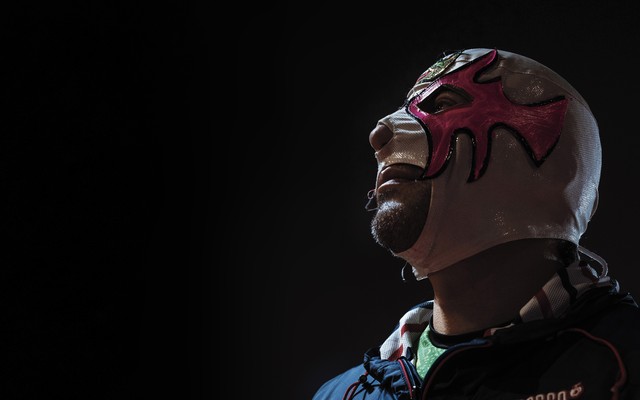
A Mexican athlete said he was kidnapped and forced to compete for his life in a tournament of gangs. But was he actually playing a different game?
They arrived suddenly—five white vans, identical and unmarked, blocking the street.
It was February 9, 2023, and Mauricio Morales was leading a group of migrants he had found at a bus station through Mexico City’s San Rafael neighborhood. Mau, as his friends called him, had told the migrants he could help them at the nearby refugee camp where he worked. They had just crossed a busy boulevard and were making their way down a side street when the five large utility vans lurched to a stop in front of them.
Men with machine guns, wearing tactical gear, spilled out and started barking orders and threats: ¡Entren todos!¡Ahora mismo, hijos de puta! Were they police? Military? Mau couldn’t tell, and there was no time to ask for identification. Within seconds, the migrants were being shoved into the vans. When Mau tried to resist, something hard hit him on the head, and he fell to the ground. As he was loaded into the back of one of the vans, he heard gunshots. He thought of his mother. If this is the end, he remembers thinking before he lost consciousness, please let her be okay.
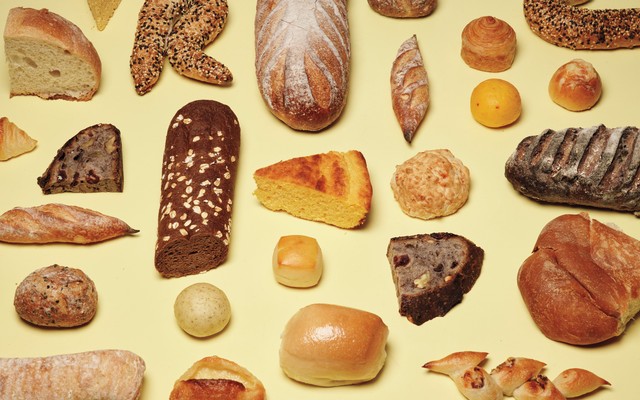
Thirteen thousand miles. Infinite contenders. One beautiful loaf.
This article was featured in the One Story to Read Today newsletter. Sign up for it here.
Here is the promise you and I must cling to across the thousands of words that follow: At some point within this text, I will reveal to you what—after 555 responses, 13,000 miles of travel, and months of monomaniacal research—I have determined to be the best free restaurant bread in America. I will not attempt to slither to the moral high ground, arguing that best is a meaningless measure, or insisting that all bread is dear in its own way. Even if you attempt to betray me—for instance, by merely scanning the text that follows for the phrase Here it is: the best free restaurant bread in America—I will uphold my end of the bargain.
Silicon Valley venture capitalists are wining and dining 18-year-olds.
This article was featured in the One Story to Read Today newsletter. Sign up for it here.Updated at 8:22 a.m. ET on April 25, 2026.
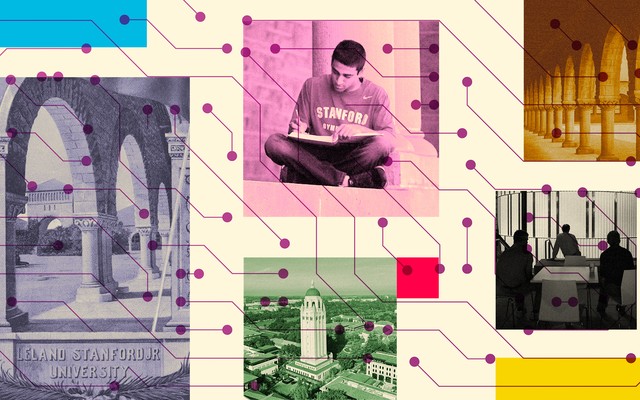
When I was a freshman at Stanford University, I learned to shotgun a beer from a guy in a frat. Soon after, he dropped out and started an AI company. Six months later, it was valued at more than $1 billion.
For most students, Stanford is a normal competitive school, where people go to class and coffee shops and fall in love and freak out over finals. But a select few attend something else: a Stanford inside Stanford, where venture capitalists pursue 18- and 19-year-olds, handing out mentorships and money and invites to yacht parties in an attempt to convert promise into profit.