Contents | April 2001
In This Issue (Contributors)
More on books from The Atlantic Monthly.
The Atlantic Monthly | April 2001
New & Noteworthy
The Danger Tree
by David Macfarlane
Walker and Company, 320 pages, $13.95
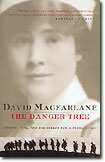 amily lore provides the author of this wide-ranging family memoir an interesting lens through which to view the history of Newfoundland—or is it the other way around? In tracing the rise and fall of the proud and hopeful Goodyears, tracking their mysteries and filling their silences, David Macfarlane examines the way world history and personal history intersect, and does so in fast-moving chapters as intimate as parlor gossip. Three brothers die in the trenches of World War I. Three others survive to shape the island, their fortunes tied—like those of all its inhabitants—to its natural poverty, ingrained fecklessness, and uncertain political position, caught between Britain and Canada yet with its own romantic notions of independence. Though the business they form grows into a prominent concern, the brothers agree on nothing, and their lofty dreams—like their country's—ultimately fall victim to circumstances that more-realistic folk might have predicted.
This is a memory book, circling its subjects, making striking connections between the public and the private, the strange and the commonplace. Events separated by decades neatly dovetail to illuminate each other, often with gently comic or ironic effect, for the story of the Goodyears and Newfoundland is one of youthful ambitions meeting sometimes ugly realities. To deliver the past, Macfarlane gives himself free rein, choosing the tools of the historian, the memorialist, or the novelist at will, and if the combination sometimes feels uncomfortable and stagy (especially in the sections where he takes on the soon-to-be-killed soldiers' points of view), the feeling is fleeting. The book doesn't follow a plodding chronological order but hopscotches smartly across the past century, without ever eluding the reader. Each chapter chases digressions and weaves leitmotifs around stolid grandfathers and sentimental aunts, the narrative pivoting on charged images: the fire-ravaged interior of the island, for example, resembles the hell of no-man's land. The comparison is apt and earned, and typical of the book's pleasures. Macfarlane moves the reader through time and meaning nimbly, his improvised structure brilliantly pointing up how the past weighs on the present, and the larger movements of history on individual lives.
—Stewart O'Nan
Copyright © 2001 by The Atlantic Monthly Group. All rights reserved.
The Atlantic Monthly; April 2001; New & Noteworthy - 01.04; Volume 287, No. 4; page 104-108.