The Rabbi Who Negotiated With the Terrorist
What I learned about my faith from a hostage crisis at a Texas synagogue
This article was featured in the One Story to Read Today newsletter. Sign up for it here.
Shabbat is a precious oasis after six fast-moving, multitasking days. Leading Friday-night services as the senior rabbi at Central Synagogue in Manhattan never feels like work; it fills me with a buoyant Sabbath spirit. The rest of my Shabbat includes lively meals with friends and family that linger until sundown. Shabbat is a sacred luxury; it releases me from errands, email, and exercise, and gives me the freedom of knowing that there is nothing else I should be doing beyond communing with people I love.
But one Saturday morning—January 15, 2022—nothing went as usual. I had broken my no-phone rule to check on my parents; my father had COVID, and my mother was worried. As I listened to Dad catalog his symptoms, a call came in from a Texas number I didn’t recognize.
At first I ignored the call, assuming that whoever it was could wait. But my phone transcribes the first part of any voice message, and when I glanced at the screen, the words unspooling were hard to believe: Rabbi. Gunman. Says he has bombs.
“JACOB!” I yelled to my husband. He came running. I hung up on my parents and played the voicemail: “This is Rabbi Charlie Cytron‑Walker. I am the rabbi of Beth Israel in Colleyville, Texas. This is not a joke. There is an actual gunman here and he wants to speak to you. Will you please call us back at this number?” He repeated: “This is not a joke.”
I did not know the rabbi, but a quick internet search revealed that he had graduated from the same seminary as I had, a few years after me, and was indeed leading a congregation in Colleyville. The news said nothing about trouble at a Dallas‑area synagogue.
It felt too surreal to be true, but I called the head of security at my synagogue; he urged me to call back the Texas number and said he would alert our security partners.
Jacob stood beside me as a second set of ears, and called 911 at the same time. On my third try, someone picked up in Texas. “Hello, this is Rabbi Charlie Cytron‑Walker.”
“This is Angela Buchdahl returning your call. Are you okay?” I asked, feeling foolish for even asking.
“Not really,” he said. “There is a gunman here holding four of us hostage. He wants to talk to you. Would you please speak with him?”
The gunman’s voice came on: taut and agitated, with a cadence that lurched from overwrought to coolly detached. He issued a chilling warning: “You should know: I love death more than you love life. Do you hear that?” He repeated that phrase many times on the call: “I love death more than you love life.”
He told me he’d been born in Pakistan, grown up in England, and traveled to Texas on a mission. “You are an influential rabbi,” he said. “I need you to use your influence and do as I say.” He’d been searching for the chief rabbi of America, and decided I was the closest thing.
If you knew my story, you’d know how ironic this was. For most of my life, I had had to convince others that I was Jewish, let alone a “real” rabbi.
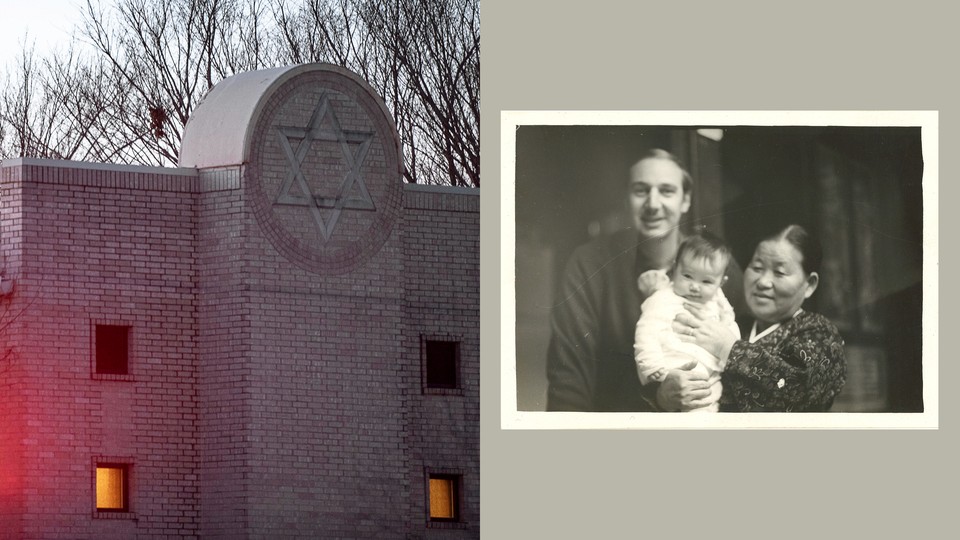
My Jewish American father met my Korean Buddhist mother in Seoul in 1965. Despite (or because of) their enormous differences, they fell in love and married. I was born in 1972, the year that the first female rabbi in America was ordained. We immigrated to America in the mid‑1970s, just as the Reform movement—a quintessentially American brand of liberal Judaism—changed its attitude and policies toward interfaith families like mine from outright rejection to outreach and inclusion. It’s not an exaggeration to say that had I been born even a decade earlier, my very existence as a female Korean American Reform rabbi would not have been possible.
When my family left Korea, we moved to Tacoma, Washington, my father’s hometown, and immediately joined Temple Beth El. My parents chose Judaism for me and my sister, Gina, not as a renunciation of my mother’s Buddhism but as an embrace of my father’s extended family. It was also, my mother believed, a way to connect us to the community and become American. I remember Dad telling me over and over that we fully belonged: “There is no such thing as half‑Jewish,” he’d declare, as if to convince himself. “You are 100 percent Jewish. You are also 100 percent Korean. And 100 percent American. You are all of it.”
But I didn’t always feel that way.
When I first felt pulled to become a rabbi, it didn’t feel like a “call.” More like a gasp: What? Me? A rabbi?
The first tug, at age 10, came through Jewish music: a vocalization of longing, release, pain, and praise that bypassed the intellect and rang through every nerve ending in my body. When I sang Jewish songs and prayers, I came alive and felt like God heard me. The sense of belonging was visceral, corporeal.
Then, at 16, I had a transformative reaction to Jewish study. When I was first guided through a page of Talmud—with its core text in the middle, surrounded by centuries of commentary in the margins—ancient questions felt relevant, prescient. “How did they know?” I would ask of the sages who lived millennia before me. Once I realized that a rabbi’s job was to immerse herself in this ongoing conversation, it became the only thing I wanted to do.
But the path to the rabbinate was far from clear for a mixed‑race girl from Tacoma. I didn’t even know until I ventured into the wider world that traditional Jewish law defined Jewish identity through matrilineal descent. Even Reform Jews, who had recently adopted patrilineal descent as sufficient, took one look at my face and questioned how I could possibly be a real Jew. Without a Jewish mother, most Jews would not see me as legally Jewish.
“Don’t worry,” a friend assured me while I was studying in Israel. “You can always convert.” But the idea of converting to become what I had been all my life was more than an insult. It felt like a repudiation. I called my mother, using up five expensive long‑distance minutes in unintelligible heaves of crying. “I don’t know why I keep fighting for this,” I said, sobbing. “I don’t have a Jewish name; I don’t have a Jewish face. No one would even notice or care; I could just stop being Jewish right now.”
My mother paused, absorbing my pain, and responded simply, “Is that really possible?”
Her question took me aback. It wasn’t until my mother posed that naked question—can you actually stop being a Jew?—that I realized my Jewishness was not superficial, but bone deep. Judaism penetrated the way I thought and shaped the way I moved through the world. I couldn’t stop being Jewish any more than I could stop being Korean or stop being a woman. It is wholly who I am.
I became the first Asian American to be ordained as a cantor in 1999 and the first to be ordained as a rabbi in 2001. Thirteen years later, I was made the senior rabbi of the historic Central Synagogue in Manhattan, with one of the largest memberships in the world—a position that exceeded my wildest rabbi dreams. But I never stopped butting up against the boundaries of belonging. When I was in the running for the job, the headline in The Jewish Press (a Brooklyn-based Orthodox newspaper) read: “It’s Official: You Can Be a Non‑Jewish Rabbi.” This belief has at times been said to my face, and it continues to show up in various media. My only response is to continue to do what I do.
I don’t know how the gunman in Texas settled on Central Synagogue, or on me. Perhaps he knew the prominent Central Mosque in London, and believed that the word Central made us first among synagogues—when all it was ever meant to denote was the congregation’s location in Midtown Manhattan. Here, at last, was one person who didn’t look at me and wonder if I was really a Jew; he thought I was The Rabbi of Rabbis in America. But this recognition, which I had sought my whole life, was now more curse than blessing.
He knew that I had connections, he said: “You have a lot of power; I saw you in a picture with President Obama. I see you also play guitar and sing.” He added, “What I need requires a woman’s touch.”
I looked at my husband, unnerved by the random collection of facts this dangerous stranger had researched. The room felt suddenly small; I paced without meaning to, willing my voice to stay even.
I would learn later that this man, a 44‑year‑old British citizen, had arrived at the temple that chilly Saturday morning and knocked on its locked glass door. Rabbi Cytron‑Walker let him in and offered him a cup of tea and a seat in the sanctuary. It was a quiet morning, mid‑pandemic, and most congregants were joining by livestream; only a handful showed up in person. When the rabbi started the Shabbat service and turned his back to the pews, he heard a distinctive click. The visitor had a gun.
Jacob had reached 911, and was transferred to a dispatcher in Colleyville. He kept the dispatcher on the line to listen as the gunman spoke through my speakerphone: “I have a backpack with bombs that could blow up the synagogue,” he warned me. “There are many more bombs in Brooklyn and New York City that I could detonate and hurt a lot of people.” He continued, “But if you do exactly as I say, no one needs to get hurt. Do you understand?”
I answered yes, hoping that I could do whatever he was about to ask of me.
“There is a federal facility about 20 minutes from here,” he said. “There is a prisoner there, Dr. Aafia Siddiqui. She is my sister, and she was unfairly framed. She has been sitting in federal prison for 18 years—suffering, raped. You, as a woman, can understand why she needs to get out. You need to use your connections, make some phone calls, and get her out of that prison and bring her here to the synagogue. It’s only 20 minutes away. You have one hour to get this done. Do you understand?”
“Yes. I will do this right away,” I lied, my heart sinking. There was absolutely no way a federal prison would release anyone. I would not be able to deliver on his demand, but I figured the longer I could make him believe that I could, the more time I could buy for the hostages’ rescue.
“You don’t want any of these nice people to be hurt, right?” he said. “They have children. Jeff, do you have kids?” he called out.
I heard a voice in the background say, “Yes, I have children.”
I imagined the panic of the children and families of the people at the synagogue, captive to this man’s delusions of Jewish power.
The gunman turned his attention back to me. “You bring my sister here to the synagogue. Then nobody has to get hurt. You have one hour.”
Blood pounded in my head and I found it hard to breathe. After hanging up, I turned my attention to the 911 dispatcher in Colleyville. Because the Shabbat service in Colleyville was being livestreamed, people from the community had already flooded the line with frantic calls. The dispatcher there sounded a little overwhelmed, admitting that there were only three others at their local site. Hostage‑taking by a terrorist was not part of their usual protocol.
This dispatcher had heard the gunman’s demands through my speakerphone—the only outside call he made—and she asked that I stay on the line and wait for the FBI hostage‑negotiation team to get on. Never had soothing hold music felt more incongruous.
While I waited, I learned that Aafia Siddiqui was one of the most notorious female terrorists on American soil, known to prosecutors as “Lady al‑Qaeda.” She had become a radical cause célèbre; both the Islamic State and the Taliban had offered to trade American prisoners in exchange for her release. Siddiqui was indeed being held in a federal facility in Fort Worth, just a few miles from the synagogue, but she was not the gunman’s sister. (In fact, when the FBI called her in the midst of this crisis, she refused to speak with the gunman at all.)
While I was on hold, the gunman called again. It had been almost an hour. I didn’t answer—what could I possibly say? I asked the dispatcher what I should do. “Why don’t you call him back?” she suggested in a cheery Texas accent. “All four of us here know what’s going on, so you can just call any one of us when you’re done.”
I was pretty certain this was not what the FBI would have suggested. I’d seen the movies: Where was the phalanx of federal agents with headsets? Where was the roomful of audio equipment? Still, I dialed the number back. The gunman didn’t waste any time: “What progress have you made?” I tried to assure him that I had called all of the right people, that we were taking concrete steps, and that he should not do anything rash.
I desperately wanted to buy more time, so I confided that I didn’t have as much influence as he thought. “Nonsense,” he countered. “Every Jew has influence, and you definitely do.”
Every Jew has influence. Assertions about Jews running the world have long been a hallmark of anti-Semitic conspiracy theories. Now this ugly trope was being hurled at me while four lives hung in the balance. “I am running out of patience,” he snapped. “And you are running out of time.”
I have never simultaneously felt so responsible and so powerless. I could not bear the thought that my own misstep might trigger the worst. I called the dispatcher back and relayed the second call. By now it was 1 p.m. When I hung up, I burst into tears.
I had been planning to spend lunch with my regular Shabbat crew, at whose table my family and I had gathered every week for years. Maintaining the ritual felt suddenly essential—a small way to defy this dangerous man. All I could do was wait for law enforcement or the gunman to call my cellphone anyway. So Jacob and I headed across town.
When I arrived at my friends’ table, they could see immediately that something was wrong. I recounted the terrifying conversations as they listened, stunned. It wasn’t until 3:30 that the FBI called me back and wanted to know my whereabouts. Soon after, eight grim‑faced FBI agents and NYPD officers descended on my friends’ apartment.
I replayed the original voicemail message and relayed the two conversations with as much detail as I could remember. They were satisfied with how I had answered the calls and ordered me to not pick up if the gunman called again. They explained that negotiators in Texas were attempting to manage further contact and that I should stand by for updates. They then accompanied me and Jacob home. I wondered, fleetingly, whether we might be targeted, too—whether the stranger’s dossier also held our address—but there was no specific threat. Still, they insisted on posting a guard.
The night wore on with no word about the hostages. I kept imagining their families’ terror and could already envision the heartbreaking headlines. Around 10:30 p.m., we learned—along with the rest of the world, from the Texas governor’s Twitter account—that the hostages were free. The gunman was dead.
A few days later, I spoke with Rabbi Cytron‑Walker. I was impressed and inspired by his unflagging equilibrium, clarity, and generosity of heart. He walked me through the endgame: Hours into the ordeal, when the gunman took his finger off the trigger and shifted his stance, the rabbi threw a chair and yelled for the hostages to run—and they did. Law enforcement entered after that, and the gunman was shot. The rabbi credited the training he and his congregants had received only months before on what to do with an active threat. How to choose a seat near an exit. How to create a distraction and move. The training did not make them fearless. It made them ready.
Above all, in our conversation as well as in interviews with the press, the rabbi rejected any suggestion that he should have refused to welcome the unknown visitor, citing the Jewish mandate to “welcome the stranger because we were once strangers.” He was saddened and angry that the gunman had taken advantage of his hospitality, and that now synagogues would have to increase security. But he insisted that we not use this incident to justify demonizing the outsider.
My own team at Central was understandably shaken. The lay leadership insisted that I be escorted on my short walk home every day by a guard. I felt silly, yet also reassured. I kept hearing the gunman’s voice in my head at night and asking myself whether I could have done more to speed the hostages’ release and end their ordeal. I kept returning to his chilling promise that he was prepared to die: “I love death more than you love life.”
He was right that Jews prize life above all else. Jewish law’s highest priority is the preservation of human life; it trumps any other religious rule. That can sound obvious—until you encounter someone who does not share it. I thought about the rabbi’s courage, what it must have been like to call his children during the standoff and hear the fear in their young voices. He risked himself to save his congregants, and now rabbis all over the country were wondering if they would manage to do the same.
“Go forth from your land, from your birthplace, from your father’s house, to the land I will show you … and you shall be a blessing” (Genesis 12:1).
Those were God’s words to Abraham 5,000 years ago, when God instructed Abraham and his wife Sarah to leave everything behind—home, family, safety, way of life—to follow God to some unknown place. Only when they crossed over the River Euphrates and became strangers in an unknown land could they give birth to a new people, my people, known as the Hebrews. Our name literally translates to “those who cross over.” The descendants of Abraham have been boundary crossers ever since.
Our biblical master narrative is the story of being strangers in Egypt, enslaved and then saved, captive and then freed. The Jewish people retell this story every year at our Passover seders; we remind ourselves that we were the stranger in our daily prayers; in the Sabbath blessing over wine; and in countless laws in the Torah. On Yom Kippur, we recite these words: “Do not oppress the stranger, for you know the heart of a stranger; you were strangers in the land of Egypt.” This is the history and the heritage that Rabbi Cytron-Walker was honoring when he opened his synagogue doors—and the commandment the terrorist exploited in seeking to enter.
Of course, the story of Jews as the other is not just biblical history. Jews have lived as outsiders around the world. We have thrived as strangers everywhere from Babylon to Brooklyn; we have survived the Crusades, pogroms, and the concentration camps. It is the backdrop of everything we are.
For years I felt apologetic for all the ways that I felt like an outsider in the Jewish community, for all that I didn’t know as a Jew. But ultimately, I realized that feeling like a stranger was the most Jewish thing about me. When we understand what it feels like to be an outsider, we cultivate a radical compassion for others who have been marginalized or dismissed. We stumble upon the blessings that come from inhabiting the heart of a stranger.
Was the rabbi in Texas wrong to open the door? My heart splits even asking this question. But the Torah’s most repeated command is to love the stranger because we were strangers. We can’t be naive, and we may have to be more vigilant, but we cannot stop being who we are—a people who choose to welcome others; a people who choose life.
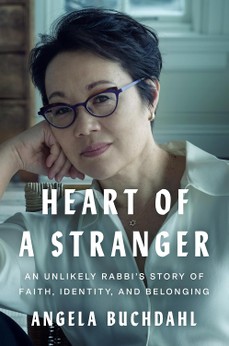
This article was excerpted from Angela Buchdahl’s forthcoming memoir, Heart of a Stranger: An Unlikely Rabbi's Story of Faith, Identity, and Belonging.