The Theory That Explains Everything About the Trump Documents Case
And so much else about Donald Trump’s unusual presidency
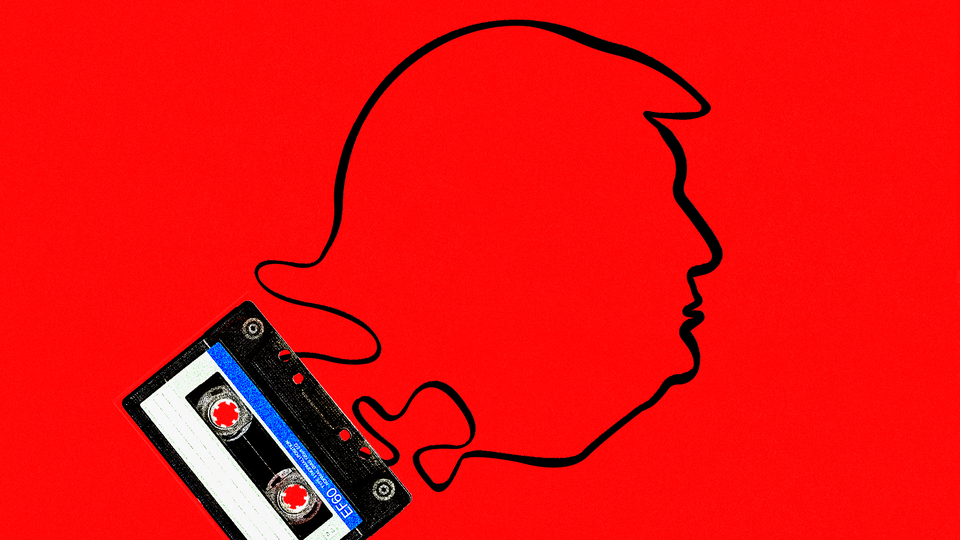
Donald Trump is not an articulate speaker, but he is an effective one, because he understands the power of the spoken word and deftly wields tone and inflection. One reason the tape of him boasting about sexual assault was such a bombshell was that you could actually listen to Trump saying it all in his inimitable manner. What if there had been tapes of his conversations with FBI Director James Comey? Or his attempt to extort Ukrainian President Volodymyr Zelensky—a phone call in which implication seemed so important but is impossible to capture on the page? Or of his conversation with Kevin McCarthy on January 6?
These are idle questions, but they are helpful for thinking about a recording of Trump talking about classified documents, obtained by CNN and published last night. In the recording, Trump discusses a document he says was a plan produced by the Defense Department for attacking Iran. He describes it as “highly confidential … secret information” and says that he could have declassified it as president—contra his public insistence that he did. A transcript of almost all of the audio was made public in the federal indictment of Trump earlier this month, so most of the substance is not new. Yet hearing Trump say it in his own voice is a more real and visceral experience, undermining the former president’s defense and perhaps illuminating his motivations.
Other than the redaction of “Iran,” the two things omitted from the conversation in the indictment are echt Trump. In one aside, he jokes that Hillary Clinton would have sent such classified material to Anthony Weiner, “the pervert.” The irony of Trump mocking Clinton’s mishandling of classified material while mishandling classified material was apparently not lost on Special Counsel Jack Smith, who included several Trump remarks criticizing Clinton during the 2016 campaign in the indictment. The second is one final line at the end, where Trump orders, “Hey, bring some, uh, bring some Cokes in please.” The tape does not make clear to whom he is speaking, but the man who often has that task is Walt Nauta—the aide who is charged with several felonies alongside Trump.
Trump hasn’t tried to deny that he had the conversation transcribed in the indictment, so the tape doesn’t knock out any of his defenses. He has claimed that the rustling documents audible in this tape were just newspaper clippings, which doesn’t make any sense with what he says, though the recording itself doesn’t provide evidence in either direction. Last night on his social-media site, Trump inexplicably and without elaboration called the recording “an exoneration.”
More broadly, Trump’s defense strategy, such as it is, hasn’t really been to deny that he had classified documents. Instead, he’s pursued a (flimsy) political argument that he is being unfairly targeted. Yet an enigma remains: Why was Trump so insistent on holding on to the sensitive documents? He’s never been all that interested in policy questions. He doesn’t seem to want them for a presidential memoir. But even after the federal government threatened him with prosecution, he continued to seek ways to hide documents, leading to 37 felony charges.
This mystery has led to fevered speculation about, for example, Trump trying to sell sensitive material for his own profit. Neither the indictment nor any other known evidence supports this. But listening to the tape reinforces a different understanding. Trump is incapable of separating his own individual feuds—in this case, with Chairman of the Joint Chiefs of Staff Mark Milley—from matters of state and national security. The former president reverses the old feminist mantra: For Trump, the political is personal.
He has regularly demonstrated this tendency, in both directions. On the one hand, he has conflated his own interests and the government’s—whether that is demanding personal loyalty from civil servants, or using the government to direct money and business to his private ventures. On the other, he never seemed to grasp the importance of his position. As president, he shot from the hip, not recognizing that while an outlandish statement he made as a TV star might land him on the front page of the New York Post, an outlandish statement he made as president could rupture alliances or foment violence.
In the case of the classified documents, both forms are at play. Trump refuses to recognize that records from his administration could possibly belong to the federal government rather than him. And he hoarded the documents for use in settling personal scores against government employees.
At the time of the recording in this case, a New Yorker article had reported that Milley worried Trump would attack Iran in the last days of his administration. Trump brandished what he said was a plan to attack Iran in order to claim that Milley, and not he, was the real warmonger. What was interesting about the document to Trump was not that it was classified and thus illicit (though he knew that, as he demonstrated), nor that it was substantively interesting. The only reason Trump cared was that he could maybe use it for settling scores.
Once you start looking for the political-as-personal dynamic, you can find it everywhere in the story. It explains why Trump mixed ephemera like newspaper clippings and golf clothing in with some of the most sensitive government documents. It perhaps explains why he thought nothing of storing his stuff in a Mar-a-Lago bathroom. And it explains why he was so peevish about anybody looking in his boxes. “I don’t want anybody looking, I don’t want anybody looking through my boxes, I really don’t, I don’t want you looking through my boxes,” Trump told one of his lawyers, according to notes the lawyer kept.
That’s relatable. Who wants somebody rifling through the personal materials related to the grudges he keeps? Taking what Trump says at face value is usually unwise. But in this case, he may have really meant exactly what he said. The only problem is, those materials weren’t his to begin with.