Biden Is Making a Trumplike Mistake at the Border
Sending troops to deter migrants is unlikely to be effective this time, either.
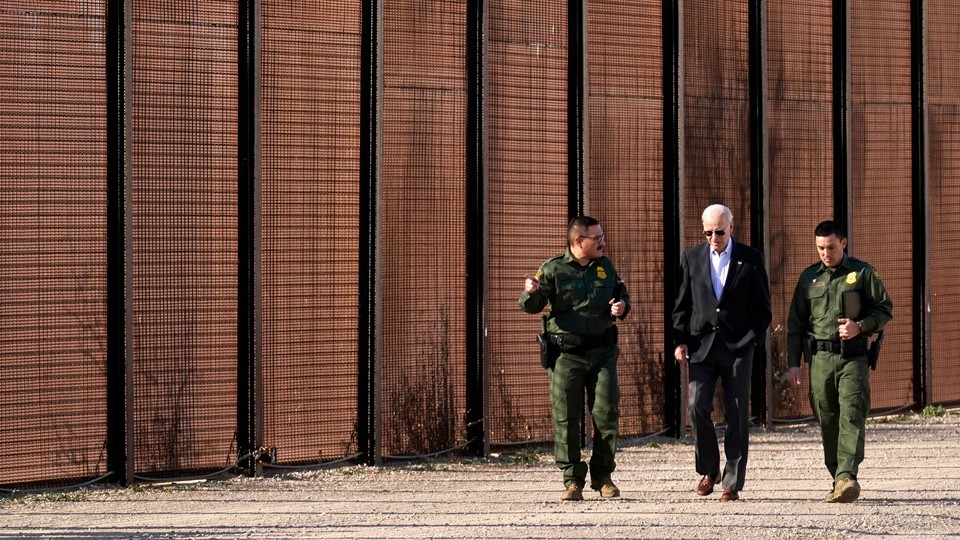
In most ways, the Joe Biden administration represents a radical break with the Donald Trump presidency that came before it—in policy, style, and tactics.
But not in every way. Although Biden and Trump view the southern border of the United States differently, they have both wrestled with the same problem of unauthorized migrants crossing the border and noisy public opposition to it. So that’s why the White House is dispatching 1,500 active-duty members of the military to the southern border.
The impetus is the looming end of Title 42, a pandemic-era health rule that allows the government to deport unauthorized immigrants much faster than normal. The administration, and many outside observers, expect that with the rule gone, more people will attempt to cross the border. Sending troops serves a few purposes: It provides extra man power to assist with processing a new wave of asylum seekers; news of a military deployment might deter some would-be border crossers; and it gives Biden something to point to as a concrete action on border security when he’s criticized as soft on immigration.
Such a deployment echoes a favorite Trump technique. The former president repeatedly dispatched troops to the border, whether with orders to build his border wall or to block a mostly imaginary “caravan” of immigrants supposedly headed to the border just ahead of the 2018 election.
Like many journalists, I criticized Trump for treating the military as a prop for political purposes. Past presidents, including Barack Obama and George W. Bush, sent the National Guard to assist with border security, but active-duty units of the military are subject to more stringent restrictions on American soil. As I wrote in May 2019, Trump “dispatched thousands of troops to the border, but under the U.S. laws the president invoked, the military can’t enforce immigration laws, so instead service members went to the border, assisted with some construction, and then sat around bored and hot for a few weeks before being withdrawn.”
Biden’s move smacks of political posturing too. Though immigration experts disagree about the most effective ways to deter unauthorized crossings, and to what extent such tactics matter compared with “push” factors that drive migrants to leave their home, it’s hard to believe that sending a couple of battalions is going to serve as a massive deterrent, especially because they won’t be conducting enforcement operations themselves.
The White House is caught in a political vise, partly of its own making. Administration officials understand that immigration remains a potent political issue for Republicans, so they want to appear tough. But they can’t appear too tough, because some small but influential factions of the Democratic coalition favor looser borders, and because Biden promised to do things differently from Trump. That precludes him taking aggressive action, and leaves him with the choice of taking symbolic steps such as this deployment.
Even if Biden wanted to do more, though, his options would be limited. He and Trump both faced the same problem: The president has only so many levers to pull under existing law. Legislation sets bounds not only for what purpose the military can serve but also for handling asylum claims and many other elements of immigration. When presidents have tried to evade those limits, as Trump did to build the wall, they have been stymied by the courts.
Congress could change the rules, but after years of failing to strike a deal on immigration, it’s not even bothering to try these days. The outline of a grand bargain has always been clear—tighter enforcement of illegal immigration, looser rules around legal immigration—but no appetite exists for this in Congress now. Republicans are largely uninterested in reforming legal immigration, and Democrats are not willing to accept tougher security without getting something in return.
That leaves Biden, who wants more legal immigration, to adopt the same tactics as Trump, who didn’t. He’s likely to get the same results too: no significant impact on border crossings, minimal political cover, and a lot of bored, hot soldiers.