There Will Always Be More Drugs
Even if we could get a handle on conventional drugs, there would be new ones.

A trillion dollars deep and arguably no further forward, the war on drugs continues to meet new fronts. Only recently have designer drugs taken hold in forms that effectively mimic the physiologic effects of the substances we've spent decades and lives and fortunes to eliminate. The target moves perpetually faster. Vaughan Bell at The Guardian writes that almost daily new designer substances seem to be appearing in online marketplaces. In the last year in the U.K. alone there were 73 new psychoactive synthetic drugs found on the market.
At that rate demand should easily outpace capacities for detection, much less effective prohibition. Bell writes:
These drugs have hit the headlines under names such as Spice, K2, mephedrone and M-Cat, but there are hundreds more. They are sold euphemistically as "bath salts", "incense" or "research chemicals", and don't get regulated, at least not at first, because they are labeled as "not for human consumption." Unlike previous generations of legal highs that were about as recreational as a slap in the face, they actually work. They get you high.
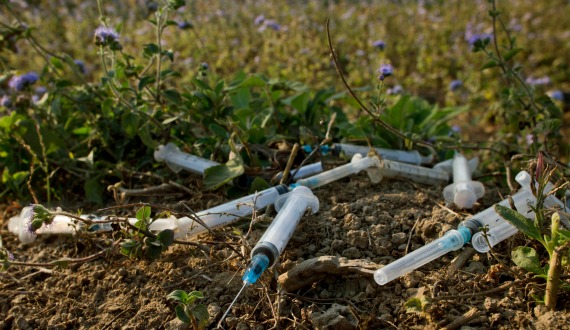
Britain has taken to preemptively banning suspicious substances like Benzo Fury and NBOMe before they've been proven to be harmful (or safe), at least temporarily while they can be tested. In the U.S. they can go unregulated until people start falling over or eating one another.

Is it the militant prohibition of traditional drugs that drives addicts and abuse-prone people into the market for "not for human consumption" chemicals? Sure. It's also a root of violence and warfare. Still to condemn the drug war as a battle that cannot be won is not a new or useful insight -- though valid when defining victory in terms of bad guys arrested or substances confiscated. Beneficial metrics of progress are those that reinforce maximizing well-being and minimizing loss in a world of which drugs will always be a part.