-
![]()
Adam Maida / The Atlantic What I Learned While Hunting Humans
And how our drone policy led to the deaths of seven children
-
![]()
Susan Walsh / AP Trump Put Milley in an Impossible Position
The general stayed inside the lines—barely. The real problem is that he was in that situation at all.
-
-
![]()
Getty / Adam Maida / The Atlantic The Third Revolution in Warfare
First there was gunpowder. Then nuclear weapons. Next: artificially intelligent weapons.
-
![]()
Adam Ferguson Ask Us What We’ve Seen
American service members reflect on their time in Afghanistan.
-
![]()
Cedric von Niederhausern / The Atlantic American Spies Are Fighting the Last War, Again
When the Cold War ended, the intelligence community failed to adapt. Today it faces a similar challenge.
-
![]()
Adam Maida / The Atlantic What I Learned While Eavesdropping on the Taliban
I spent 600 hours listening in on the people who now run Afghanistan. It wasn’t until the end of my tour that I understood what they were telling me.
-
![]()
Shah Marai / AFP / Getty Why the Afghan Army Folded
America has historically struggled to train foreign militaries.
-
-
![]()
Ben Brody ‘How Does One Process Defeat?’
A letter to a civilian who deployed to Afghanistan
-
![]()
Adam Maida / The Atlantic Why Isn’t the Military Mandating COVID-19 Vaccines?
Service members need to be protected against the coronavirus. This isn’t a close call.
-
![]()
Al Drago / Bloomberg / Getty What Is Happening to Our Apolitical Military?
Remarks by America’s most senior military officer mark the latest step in the continued erosion of relations between the armed forces and their civilian leaders.
-
![]()
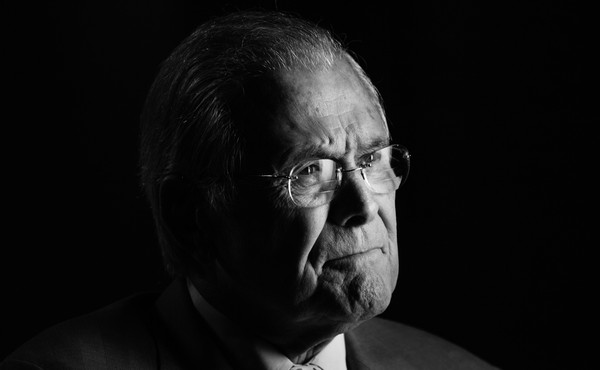
David Hume Kennerly / Getty How Rumsfeld Deserves to Be Remembered
America’s worst secretary of defense never expressed a quiver of regret.
-
![]()
Paolo Pellegrin / Magnum Photos The Fairy Tale America Likes to Tell Itself
The country believes that its policies are like a pendulum, swinging back and forth over a moderate middle ground. But since 9/11, that pendulum has been stuck.
-
-
![]()
Patrick T. Fallon / AFP / Getty I Felt More Welcome in Combat Than I Did on Base
A poor command climate can make women feel unsupported and alone.
-
![]()
Charles Ommanney / Getty General Override
After years of deferring to the uniformed military on major decisions, presidents are pushing back.
-
![]()
Illustration by Mike McQuade* American Special Ops Forces Are Everywhere
They’ve become a major military player—and maybe a substitute for strategic thinking.
-
![]()
Jehad Nga / The New York Times / … The Moment Britain’s Army Knew It Was Lost
In 2008, a dramatic failure in Iraq finally set the force on a path of improvement.
-
![]()
Chip Somodevilla / Getty What Happens to the Space Force Now?
President Biden is inheriting one of Trump’s pet projects.
-
-
![]()
Peter van Agtmael / Magnum The Forgotten People Fighting the Forever War
A devastating incident in Afghanistan shows the perils of relying on Special Operations alone to fight the nation’s battles.
-
![]()
Mark Makela / Getty The Secret Service Is Bracing for Dangerous Times
Any chance of a normal security environment for the president-elect evaporated during the Capitol siege.
-
![]()
JEWEL SAMAD / AFP / Getty Extremists Don’t Belong in the Military
The factors that divide Americans today pose a greater threat to the country than any foreign adversary does.