-
![]()
Joseph Prezioso / AFP / Getty Treat the Attack on the Capitol as Terrorism
Failing to do so simply because most of the rioters are white and regard themselves as “patriots” would be deeply unjust.
-
![]()
Shutterstock / The Atlantic America’s Second-Worst Scenario
So far, cumulative acts of civic virtue have saved the republic. But the constitutional order is still in danger.
-
-
![]()
The Atlantic The Other Tragedy of January 6
One hundred and forty-seven Republican members of Congress voted to sustain a delusion in the American mind.
-
![]()
Shutterstock / The Atlantic 4 Ways to Prevent a Future Insurrection
The country will not survive this twice.
-
![]()
Getty / The Atlantic Don’t Overreact to the Capitol Riots
While punishing insurrection, Americans should guard against the unjust and the counterproductive.
-
![]()
Scott Olson / Getty Why the Rioters Thought They Could Get Away With It
Trump told supporters that loyalty to his cause is more important than fidelity to the law, and they took his message to heart.
-
![]()
Getty / The Atlantic The Capitol Rioters Weren’t ‘Low Class’
The business owners, real-estate brokers, and service members who rioted acted not out of economic desperation, but out of their belief in their inviolable right to rule.
-
-
![]()
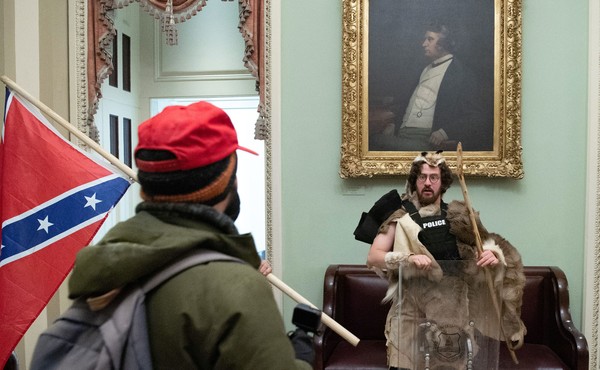
SAUL LOEB / AFP/ Getty What Those Animal Pelts Tell Us About the Future of the Far Right
The seditionist frontiersmen of the Capitol riot certainly meant to send a message through their clothing. But what was it?
-
![]()
The Atlantic Daily: A Time for Consequences
As the shock of last week’s Capitol attack wears off, the conversation shifts to repercussions.
-
![]()
Shutterstock / The Atlantic The Gun-Rights Movement Fed America’s Insurrectionist Fever Dreams
The NRA and its allies have argued for years that citizens need to arm themselves for a fight against tyranny.
-
![]()
Getty/Johanna Goodman Worst Revolution Ever
Attacking the U.S. Capitol is not an act of patriotism. Obviously.
-
![]()
Shay Horse / NurPhoto / Getty It Was Supposed to Be So Much Worse
And the threat to the U.S. government hasn’t passed.
-
-
![]()
John Moore / Getty ‘Secure the Capitol’ Misses the Point
More roadblocks and police officers won’t stop the next attempted coup.
-
![]()
Shannon Stapleton / Reuters The Superhero Fantasies of Trump’s Mob
The insurrectionists have been sold a fiction, and their costumes warp the works that inspired them.
-
![]()
Saul Loeb / AFP / Getty The Inaction of Capitol Police Was by Design
The spectacle of Wednesday’s tepid police response to riotous mobs shocked many. But the passivity is not some surprising anomaly—it is the status quo.
-
![]()
Win McNamee / Getty A Christian Insurrection
Many of those who mobbed the Capitol on Wednesday claimed to be enacting God’s will.
-
![]()
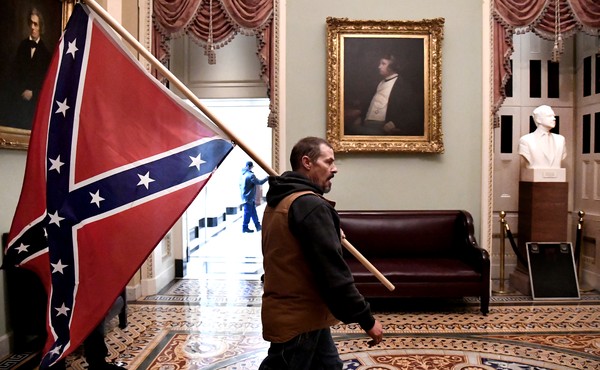
Mike Theiler / Reuters The Whole Story in a Single Photo
An image from the Capitol captures the distance between who we purport to be and who we have actually been.
-
-
![]()
The Atlantic The Capitol Riot Was an Attack on Multiracial Democracy
True democracy in America is a young, fragile experiment that must be defended if it is to endure.
-
![]()
OLIVIER DOULIERY / AFP / Getty Republicans Own This Insurrection
Responsibility for the storming of the Capitol extends well beyond Trump.
-
![]()
Leah Millis / Reuters The Sun Is Up. Impeach and Convict.
What can we take away from yesterday’s coup attempt?