-
![]()
Morteza Nikoubazl / Reuters Iran Isn’t Nazi Germany
The idea that Iranian leaders seek another Holocaust is at the emotional core of opposition to the nuclear deal. Is it true?
-
![]()
Susan Walsh / AP Obama on the Iran Deal: The ‘Strongest Nonproliferation Agreement Ever Negotiated’
The president’s speech is part of a broad push by the administration to persuade Congress and the public.
-
-
![]()
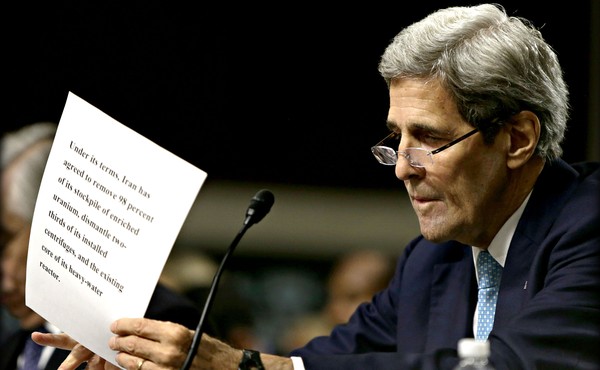
Carlos Barria / Reuters John Kerry on the Risk of Congress ‘Screwing’ the Ayatollah
In an interview, the U.S. secretary of state argues that rejecting the nuclear pact will confirm the Iranian leader's anti-American suspicions, deal a devastating blow to a diplomatic breakthrough, and increase the likelihood of war.
-
![]()
Reuters Why the Iran Deal’s Critics Will Probably Lose
Will the nuclear agreement take effect? Consider who’s supporting and opposing it.
-
![]()
Gary Cameron / Reuters 9 Reasons to Support the Iran Deal
It’s impossible to “solve” the Iranian nuclear threat. This agreement is the next best thing.
-
![]()
Charles Dharapak / AP An Iran-Deal Skeptic Becomes a Supporter
California Representative Adam Schiff, the ranking Democrat on the House Intelligence Committee, has decided to come out in favor of the nuclear agreement.
-
![]()
Jim Bourg / Reuters The Real Test of the Iran Deal
The agreement doesn’t guarantee that Tehran will never produce nuclear weapons—because no agreement could do so.
-
-
![]()
Reuters The Iran Deal and the Rut of History
Has the Obama administration’s pursuit of new beginnings blinded it to enduring enmities?
-
![]()
Lucas Jackson / Reuters The Big Hole in the Iran Debate
In most discussions of the nuclear deal, the word "Iraq" never comes up. That’s insane.
-
![]()
Caren Firouz / Reuters The Confused Person’s Guide to the Iran Deal
How the Arab Street views the agreement, in one simple diagram
-
![]()
Kevin Lamarque / Reuters How Congress Can Improve the Iran Nuclear Deal
Blocking the agreement poses risks, but legislators can use their role to extract commitments that address key concerns.
-
![]()
Library of Congress / Wikimedia Why History Gives Obama the Benefit of the Doubt on Iran
U.S. presidents of both parties have often shown better judgment in knowing when to accept diplomatic solutions than in choosing to go to war.
-
-
![]()
U.S. State Department / Reuters The Right (and Wrong) Questions to Ask About the Iran Agreement
The deal is done. What can be done to clean up the mess?
-
![]()
Ronald Zak / AP The Cash-Strapped Agency at the Heart of the Iran Deal
Enforcing the agreement falls to the IAEA, whose budget is the size of the San Diego police department’s.
-
![]()
Morteza Nikoubazl / Reuters Is There a Viable Alternative to the Iran Deal?
Three Atlantic writers debate the merits of the nuclear agreement.
-
![]()
Leonhard Foeger / Reuters Was the Iran Deal Worth It?
Obama has secured an admirable agreement, but at tremendous cost.
-
![]()
Baz Ratner / Reuters Israeli Opposition Leader: Iran Deal Will Bring Chaos to the Middle East
Isaac Herzog, foreign-minister-in-waiting, believes Israel is endangered by the Vienna agreement.
-
-
![]()
Alex Brandon / AP What the Next U.S. President Should Do With the Iran Deal
Don’t scrap the agreement—improve it.
-
![]()
Chuck Burton / AP The Past Goes On Trial in North Carolina
A federal court considers whether ballot laws deliberately attempted to suppress the black vote.
-
![]()
Gali Tibbon / Reuters Where Iran Is Considered a Top Threat—and Where It Isn't
Mapping what concerns people most around the world