-
![]()
How Many Shades of Grey Are There, Really?
Roy G. Biv: An Exceedingly Surprising Book About Color offers trivia, insights, and opinions about hues.
-
![]()
Controlling the Space-Time Continuum, With Art
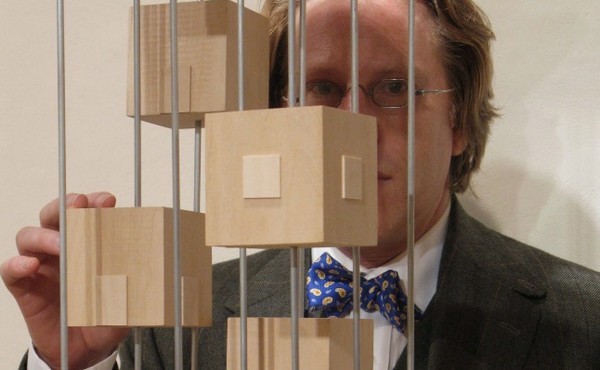
For just $19.99, Jonathan Keats will sell you a one-pound lead bar that he says slows down time (by less than a nanosecond).
-
-
![]()
When Anarchy Ruled the Funny Pages
A new, large-format book captures the dawn of comics, when the medium had no rules and its messages were surprisingly irreverent.
-
![]()
Pentagram The Lost Art of the McCarthy Hearings
"They looked so evil I had to draw them."
-
![]()
Jeff Dawson/Lester Public Library How a Type Museum Rewrote Its Fate
The passion and generosity of font fans helped save Wisconsin's Hamilton Wood Type when it was forced to leave its historic factory building.
-
![]()
Steve Pellegrino When Toy Guns Looked Like They Could Kill
Packaging for fake firearms from the '50 and '60s blended striking realism and cartoonish imagery—and, for people who grew up in the era, induces deep nostalgia.
-
![]()
The Uncredited Collaboration Behind The New Yorker's Iconic 9/11 Cover
Within hours of the attack, Françoise Mouly and Art Spiegelman went to work to create the famous black-on-black image—that almost didn't happen.
-
-
![]()
NYC The Designer Who Sells the City That Never Sleeps
Under Bloomberg, Willy Wong has headed up an aggressive visual campaign to boost New York City's image abroad and at home.
-
![]()
KIND Healthy Snacks The Appetizing Aesthetics of a KIND Bar
Radical transparency comes to snack-wrapper design.
-
![]()
Unit Editions The Grand Passions and Radical Dogmas Held in a Typography Book
Type Only offers a dazzling, diverse history of images made with words.
-
The Pursuit of Imperfection: Why Some People Collect Broken Antiques
"Make-do" repairs tell you about an item's owner, use, and times.
-
The Magazine as 'Portable Museum'
Each issue of Vintage is a pop-up book, treasure trove, and cultural-history course.
-
-
The Writing on Mexican Walls Isn't Graffiti—It's 'Vernacular Branding'
A new book documents the tradition, commerce, and politics of colorful bardas de baile.
-
Maurice Sendak, Mao Zedong, and the Man Who Collects Them
Justin Schiller's extraordinary career as an art collector has his New York gallery divided down the middle: half illustrations from kids' books, half Chinese propaganda.
-
What Happens to Places That Were 'the Center of the World for Two Weeks'?
A new book shows how cities' Olympic facilities become eyesores—or essential.
-
Sukkah City: Revisiting the Crazy, High-Concept, Temporary Jewish Huts of NYC
A documentary shows how a 2010 design contest became "probably the largest non-Orthodox, non-Israel centered public expression of Jewish life in the history of New York."
-
Nick Cave's Art About Everything Now Seems Like It's Everywhere
An exhibit in Denver feels like the sculptor-painter-puppeteer-costume designer's coronation.
-
-
When Black People's Images Are Used to Fight Colonial, Chinese, and Soviet Wars
A new University of Pennsylvania exhibit reveals the ironies embedded in heroic portrayals of Africans and African-Americans in mass propaganda over the years.
-
The Improbable Resurrection of a Quirky, Once-Popular, Art Deco Font
The distinctive Metro typeface was created by one of the world's most influential designers in the '20s, but is only now being revived and reinterpreted for the digital age.
-
The Museum That Turned Its Lobby Into a Flea Market
New York's Museum of Arts & Design recent "Take One / Leave One" exhibit showed what happens when the visitors get to play curator.