Food Is Cheap
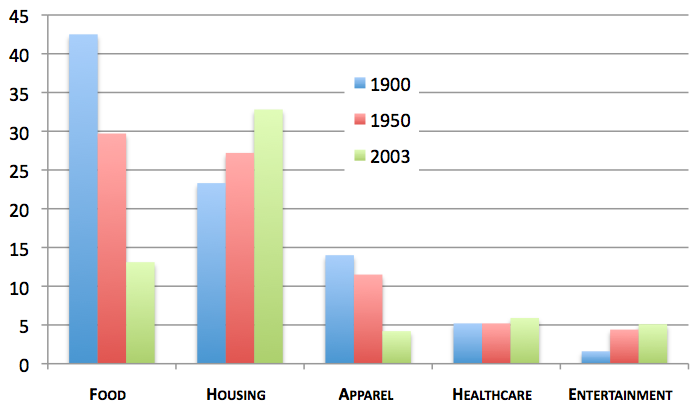
The Atlantic's Money Report -- a look at the history of U.S. work and spending -- wraps up this week, sadly, but there are a few cool nuggets I want to share before we're back to our regularly scheduled programming around here.

This morning I summed up the last 100 years in family spending this way: "A century ago, we spent more than half our money on food and clothes. Today, we spend more than half of our money on housing and transportation. Our ambitions turned from bread and shirts to ownership and highways."
I want to make one more point from the BLS survey I consulted, "100 Years of U.S. Consumer Spending." It's about food. In 1950, the average farmer fed about 20 people. In 2000, he feeds more than 120. The agriculture sector is a marvel of economic efficiency. There are downsides to the farmland's insatiable quest for productivity. But the bottom line for most families is that our wages have grown much faster than the price of food.
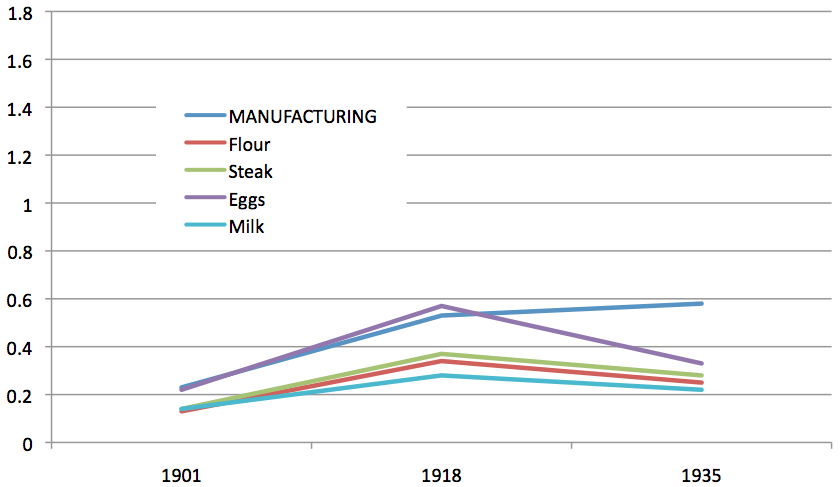 ... then, bam, the post-WWII economic boom sends middle class wages skyrocketing while farmers get better and better at consolidating, mechanizing, and productivity-boosting. As a result, middle class wages zoom ahead of food prices, and the cost of feeding ourselves falls and falls in real terms.
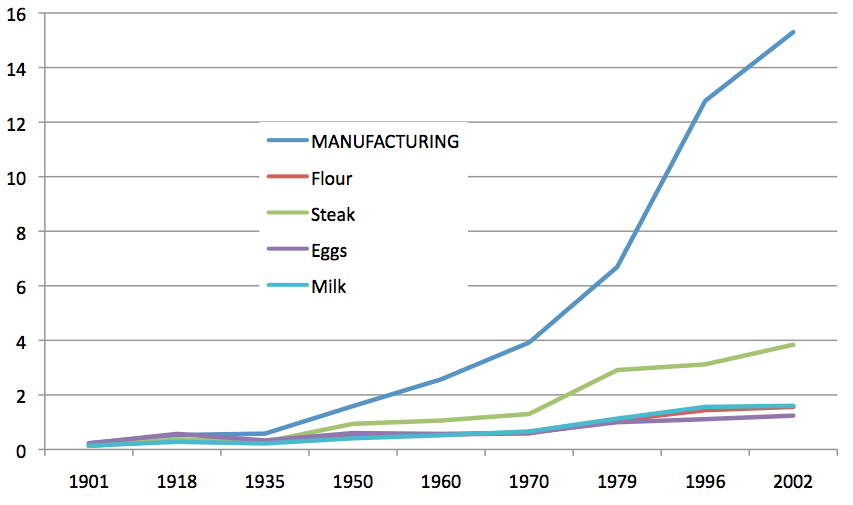 And that goes a long way toward explaining how food fell from 40+% of the budget to 10% of the budget in 100 years.