A Worthy Heir to David Foster Wallace and Thomas Pynchon
In Wellness, Nathan Hill recounts a love story, but also much, much more.

We live in an overwhelmed age when attention spans are short, distractions are many, and a lot of people, even dedicated book lovers, find their entertainment and occasional enlightenment in the latest TV series, whether it be Succession or The White Lotus. It takes grit and a certain amount of single-mindedness on the part of a novelist to write against this tide and treat literature as a potent category unto itself, apart from the demands of the marketplace or the restless spirit of potential readers.
I have been thinking about this lately because of my own experience with a decade-long book group mostly composed of writers and editors, types who are ostensibly receptive to the demands and complexities—and length!—of ambitious novels. And yet, they are all fiercely resistant to reading fiction that is more than, say, 350 pages, citing a lack of time as the main reason. I have no argument with this feeling; I spend far too many hours clicking around the internet checking out expensive clothes on sale. Still, even while navigating breathlessly busy routines, and with scant leisure time, people in Victorian times found the interior space to read capacious novels such as those by Charles Dickens and George Eliot—novels that went on and on, creating numerous pivotal events and fashioning idiosyncratic characters, bringing news of the larger universe as well as alternative modes of being. It may well be that such expansive works of fiction, in this time of information overload and incessant podcasts, no longer have the primacy they once had and no longer fill our need to hear about other people and places the way they once did. What we get instead are recursive autofiction and slivers of novels that aim not to encompass as much as possible, but to explore small tracts of interior landscape.
That Nathan Hill comes charging onto this depleted fictional scene with Wellness, a behemoth of a novel (624 pages, or nearly 19 hours of audio, if that is your pleasure), is all the more noteworthy as a result. The book swarms with characters, ideas, and sociological evocations, taking place over several decades: At one level, it is the straightforward up-and-down-and-up-again story of a relationship between two lonely souls, Jack Baker and Elizabeth Augustine, but it detours to reflect on the art market, real estate, interior design, parenting, sex, and many other topics. Hill, whose 2016 debut novel, The Nix, was as epic in scope as Wellness, is more reminiscent of the aforementioned Victorian novelists, with their energy and range, than he is of contemporary ones.
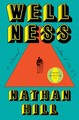
Hill’s ambition put me in mind of two other 20th-century novelists, Thomas Pynchon and David Foster Wallace, but Hill is less gnomic than the former and more humane than the latter. Wallace has always struck me as a show-off about what he knows, delighting in the arcane for its own sake. And Pynchon is a bit like a brainy scoutmaster, taking his readers along all of the highways and byways he’s discovered, initiating them into his vision of the universe. Hill brings more humility to his enterprise, a sense that there are things that he will never succeed in tracking down despite his diligent sleuthing. And his book makes a better case than I’ve come across in a long time for the uniquely transporting experience of reading a long, digressive novel bursting with ideas and observations.
Hill keeps his lofty intentions under his hat; only after one is well into the novel does one begin to realize that there are tales within tales, such as Elizabeth’s amoral robber-baron family legacy, that keep popping up ingeniously around the main narrative, gradually imbuing it with ever greater complexity. Wellness begins with a rom-com-like love story set in 1993, in Chicago. We are introduced to Jack, who is studying photography at the School of the Art Institute, and Elizabeth, a bookworm and polymath (with five majors under her belt) at DePaul University; they watch each other, unobserved, through apartment windows across an alley. They both idealize the other, projecting glamorous images from the bits and pieces of each other’s life they pick up on, as well as from their deflated sense of themselves. Elizabeth views Jack as “a man so defiant and passionate [that he] would never be interested in a girl as conventional, as conformist, as dull and bourgeois as her.” Jack, meanwhile, is busy creating his own scenario of rejection: “She’s exactly the kind of person—cultured, worldly—that he came to this frightening big city to find. The obvious flaw in the plan, he realizes now, is that a woman so cultured and worldly would never be interested in a guy as uncultured, as provincial, as backward and coarse as him.”
The couple finally meet at a local venue known for alt-rock music, where Jack approaches Elizabeth despite the fact that she’s on a date with a classmate who has spent the night lecturing her about esoteric bands and his collection of “sacred records that almost nobody else had heard of or properly appreciated.” Hill is excellent on the look and feel of such places, describing a lead singer who wears “thick plastic sunglasses and what looks to be a ruffled baby-blue tuxedo shirt from the seventies—conspicuously uncool, which of course makes it really cool,” and who “says ‘Thank you, Chicago!’ as if he’s talking to a sold-out Soldier Field and not a dozen people in a dive bar hiding from the cold.” Jack and Elizabeth fall easily into step with each other, sharing secrets, a love of deep-fried Twinkies, and an overriding wish to escape the shadows of their pasts—“their families, their mislaid childhoods, their whole ugly evolution. They are in Chicago to become orphans.”
From this rather standard opening, the novel swoops around, driven by the author’s adrenaline and curiosity about seemingly everything. It moves backwards—to Jack and Elizabeth’s very different but equally traumatic family histories—and forward, to their life together as a more and more incompatible married couple, circa 2008, with a young son named Toby, whom Elizabeth anxiously hovers over, far from her “fantasy of quality parenting.” Hill frequently stops to offer up sociological nuggets, describing a picture-perfect kitchen that Elizabeth covets, “where all the dishes matched, where there were no greasy streaks on any surfaces…. It was a kitchen that seemed designed more for reflection and meditation than actual food prep.” Or he provides chunks of information, diving into the history of condensed milk (interesting) or, as it may be, algorithms and websites (less interesting).
Elizabeth works at a very meta-sounding lab called Wellness started by a psychology professor at DePaul, which studies clients’ responses to placebos and simulated experience. Jack, meanwhile, teaches photography and continues to take desolate photos of landscapes that, we will learn, emanate from his experience growing up in an emotionally sterile family in Kansas, where a prairie fire set by his father accidentally killed his sister. Elizabeth becomes more and more alienated from him, sleeping in a separate bedroom, where she takes up with a vibrator, and suggesting that they try polyamory; she has decided that their meet-cute story is “just another highly embellished placebo, just a fiction they both believed because of how good and special it made them feel.” Jack tries ever more desperately to please her, to no avail, only to come up against her resistance to being lumped together with him even in the most basic of locutions: “It was one of her pet peeves, that thing that happens to couples when they stop saying ‘I’ in favor of ‘We,’ as if they’d developed a shared couple-brain, a consciousness that was not quite either one of them but somehow abstractly both of them. Their togetherself.”
Because of Hill’s desire to hold up all of contemporary culture, including farmers’ markets, book groups, and neural networks, to the light of his edifying and witty perspective, Wellness intermittently slides into too-muchness, with the longueurs this inevitably entails. (The novel concludes with an eight-page bibliography, as if Hill felt the need to document his facts—a touch that one can find charming or irritating or both.) There are moments when even the most appreciative reader, like myself, will find herself stuck in the hyper-articulateness of the novel (in my case, it was page 463) and wish it would just move on. And it is indeed possible that this extraordinary book might have been improved if someone had edited it down a bit and lost, say, 100 or so pages. But in the end, this is just a quibble.
It can be a bit disconcerting, even disorienting, to go from short, undemanding novels to Hill’s take on as much of the world as possible, and to his desire to link incongruous details and events in inventive ways. The fine details of Jack’s childhood, for instance, dovetail unexpectedly with his view of the purpose of art, which is to evoke an absence rather than a presence, and his investment in remaining part of the family he has brought into being, even when it seems no longer to hold together. From the first paragraphs on, it is clear that we are in the hands of a gifted stylist and an original thinker on whom, as Henry James had it, nothing is lost. This is Hill’s conjuring of Jack as Elizabeth initially sees him: “His hair is a few years past clean-cut and now falls in oily ropes over his eyes and down to his chin. His fashions are fully apocalyptic: threadbare black shirts and black combat boots and dark jeans in urgent need of patching. She’s seen no evidence that he owns a single necktie.”
Although there are whole sections of Wellness in which the thread that pulls along the romance at the heart of the novel seems to fray almost to the point of disappearing, Jack and Elizabeth’s relationship survives many detours as well as many setbacks and disappointments, emerging intact if imperfect, having evolved into a complex and poignant comment upon the always-fragile creation of intimacy: “Behind curtains, this, he thinks, is what lovers do—they are alchemists and architects; pioneers and fabulists; they make one thing another; they invent the world around them. So he says, ‘Yes I believe you,’ and she smiles. She stretches. She touches his face, and makes it splendid.” All of which is to say that I read Hill’s novel with excitement and close to a sense of disbelief that there is still a writer out there who is intrigued by amplitude and by what fiction can do if pushed far enough. You just have to find the hours to read it in, which might mean skipping a new TV series or two.
When you buy a book using a link on this page, we receive a commission. Thank you for supporting The Atlantic.