Return to the April A&E Preview cover page.
S P E C I A L A D V E R T I S I N G S E C T I O N
Arts & Entertainment Preview | April 2001 | Sponsored by Chrysler

 by Bob Blumenthal and Charles M. Young
Out From the Shadows
| 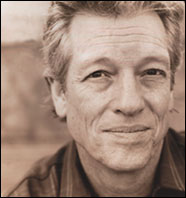 |
John Hammond
|
John Hammond has been putting out albums every couple of years since 1962. The man surely knows how to sing, giving his forceful baritone a rollicking sneer that perfectly suits the social commentary inherent in the gutbucket blues that has been his primary interest from the beginning. But after thirty-nine years, what do you do for new material? Well, you could turn to Tom Waits, one of America's sharpest and most prolific songwriters. On Wicked Grin (Virgin/Pointblank) Hammond sings twelve Waits compositions, plus one traditional gospel tune (the enchanting final cut, "I Know I've Been Changed"), and he really adds something to the repertoire: namely, his vocal cords. When Waits sings, his rasp and quaver can get so heavy that it's difficult to discern the melody. Hammond has somehow preserved his voice over the decades, and its effect on Waits's lyrics is to shine a spotlight on a stage previously hidden in shadows. The shadows were beautiful and mysterious and appropriate to the material, but suddenly with Hammond you're seeing these stark hallucinations of the decaying urban landscape mixed with finely etched character portraits. The effect is a marvelous introduction to both artists. Nobody has strung images together with Waits's skill since Bob Dylan in his "Subterranean Homesick Blues" days, and nobody has illuminated those images better than Hammond. The band—simple, sweaty, guitar-oriented, bluesy—is also terrific. —C.M.Y.
Fitting Tributes
Having just turned thirty, saxophonist Chris Potter can claim as much achievement and ongoing promise as any former jazz wunderkind. Championed by Marrian McPartland as a high school student and hired by bebop legend Red Rodney while still a teenager, Potter absorbed tradition early, then kept expanding his scope. His status among the most demanding musicians is confirmed by recent affiliations with Dave Holland, Dave Douglas, and Steely Dan; and Gratitude, Potter's first album for Verve, summarizes his gifts for making tricky meters flow and complex harmonies cohere. Gratitude contains compositions in tribute to departed and living idols, yet Potter is too canny and inspired to grow enslaved to this—or any—concept. The tenor sax, his primary horn, opens with fitting allusions to John Coltrane and Joe Henderson, takes more liberties as it nods to the likes of Sonny Rollins, and delivers an iconoclasm all its own in homage to Lester Young. Other performances stretch further, with Ornette Coleman evoking a gentle reverie featuring Chinese wood flute and soprano sax, and Coleman Hawkins remembered with a conversational "Body and Soul" whispered by bassist Scott Colley and Potter on bass clarinet. Tender soprano sax for Wayne Shorter and explosive alto for Charlie Parker are closer to the sources without any sacrifice of personality. Colley, Kevin Hays, and Brian Blade form the rhythm section, and share Potter's conviction that a knowledge of jazz's diverse past plus open ears yields a most articulate jazz present. —B.B.
Diamond in the Rough
Recording at home has become almost as cheap as writing poetry at home, which means there are more creators than consumers. And rightly so, because like every other art form, most of it is terrible. But some of it isn't, achieving a certain diamond-in-the-rough, folk art originality that can flower only outside the entertainment conglomerates. One such diamond in the very rough is Pete LaBonne, whose Meditation Garden (Sonic Trout) has numerous charms that transcend the savage-beast quality of the recording. Those charms include lots of highly musical hooks, which make the listener wonder what he could do in a first-rate studio as opposed to the dirt-floor cabin in upstate New York where he lives and records. Another charm is the arrangements, which are cubistically reminiscent of Captain Beefheart and His Magic Band. Most charming is LaBonne's sense of humor, which is laugh-out-loud funny when he parodies sensitive folksingers ("Days of Yore") or reminisces about his father making unwanted suggestions to his teenage rock-and-roll band ("Trophy Bowler"). He also achieves true political incorrectness, unlike the vast majority of comedians who claim such a stance: "If you're gonna do the driving, I'm gonna do the drinking / If you're gonna do the drinking, baby, I'm gonna do the drinking too." One can hope that tune ("The Drivin") doesn't become a big hit while still guffawing at its dead-on portrait of low-rent alcoholism.
—C.M.Y.
Bob Blumenthal, jazz critic for The Boston Globe, won the 2000 GRAMMY® for album notes.
Charles M. Young reviews music for Playboy and other publications and for Allmusic.com.
Photograph of John Hammond: Jay Blakesberg.
Copyright © 2001 by The Atlantic Monthly Group. All rights reserved.