
J U L Y 1 9 9 8

AMERICAN FLAMINGO
by Greg Pape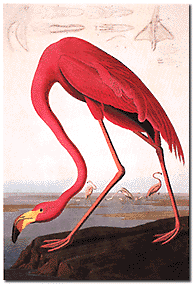
 Hear Greg Pape read this poem (in RealAudio).
(For help, see a note about the audio.)
Also by Greg Pape:
Fog (1999)
Return to:
An Audible Anthology
Poetry Pages
I know he shot them to know them.
I did not know the eyes of the flamingo
are blue, a deep live blue.
And the tongue is lined with many small
tongues, thirteen, in the sketch
by Audubon, to function as a sieve.
I knew the long rose-pink neck,
the heavy tricolored down-sweeping bill,
the black primaries.
But I did not know the blue eye
drawn so passionately by Audubon
it seems to look out, wary, intense,
from the paper it is printed on.
--what
Is man but his passion?
asked Robert Penn Warren. In the background
of this sketch, tenderly subtitled Old Male,
beneath the over-draping feathered
monument of the body, between the long
flexible neck and the long bony legs
covered with pink plates of flesh,
Audubon has given us eight postures,
eight stunning movements in the ongoing
dance of the flamingos.
Once at Hialeah in late afternoon
I watched the satin figures of the jockeys
perched like bright beetles on the backs
of horses pounding down the home
stretch, a few crops whipping
the lathering flanks, the loud flat
metallic voice of the announcer fading
as the flamingos, grazing the pond water
at the far end of the infield, rose
in a feathery blush, only a few feet
off the ground, and flew one long
clipped-winged ritual lap
in the heavy Miami light, a great
slow swirl of grace from the old world
that made tickets fall from hands,
stilled horses, and drew toasts from the stands
as they settled down again
like a rose-colored fog on the pond.
Greg Pape, a professor of English at the University of Montana, is the author of Storm Pattern (1992) and Sunflower Facing the Sun (1992).
Copyright © 1998 by The Atlantic Monthly Company. All rights reserved.
The Atlantic Monthly; July 1998; American Flamingo; Volume 282, No. 1; page 81.
 |
 |
 |
 |
 |
 |