


Return to the Table of Contents.
A U G U S T 1 9 9 7


A Flashback featuring articles from the beginning of the century and from the 1990s.
Are Americans in a mean mood toward immigrants? A panel of experts engage in a roundtable discussion.
An index of Atlantic Monthly articles and features on immigration.
Related link:
A Web site hosted by this map;'s creators -- an organization that provides access to data and information on human interactions in the environment.
 PUBLIC attention has largely been focused on the influx of Hispanic immigrants
to the United States, but non-Hispanic immigrants have accounted for about two
thirds of all those entering the country legally of late.
PUBLIC attention has largely been focused on the influx of Hispanic immigrants
to the United States, but non-Hispanic immigrants have accounted for about two
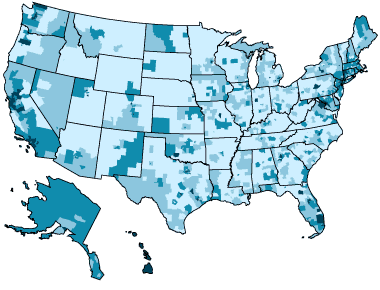
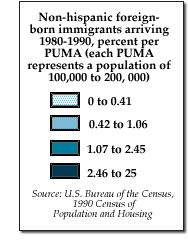
thirds of all those entering the country legally of late. The map above, broken into Public Use Microdata Areas (PUMAs), shows the settlement patterns of the non-Hispanic foreign-born -- a primarily Asian group -- who were among the nearly 10 million legal and illegal immigrants to enter the United States during the 1980s. The Philippines was the country of origin for the largest non-Hispanic group to enter, boosting the immigrant Filipino population to 1.4 million by 1990. At least half of those who have immigrated from Korea, Vietnam, China, and India have arrived since 1980.
Unexpected pockets of "other immigrants" include Lawton, Oklahoma, in Comanche County, where the German- and Korean-born wives and children of active and retired servicemen reside at or near Fort Sill Army Post. Today 10,500 of those who have retired from the Army and nearly 20,000 of their family members live within 100 miles of Fort Sill.
The "heartland" of southwest Kansas is another pocket, in part owing to Vietnamese and Laotian immigrants who found work during the 1980s in the meat-packing plants located there. And in Marathon County, Wisconsin, thousands of Southeast Asian refugees found new homes when church congregations and individuals sponsored their resettlement in the aftermath of the Vietnam War.
In some rural areas foreign students account for much of the diversity. Tippecanoe County, in Indiana, for example, is home to Purdue University, where the number of foreign students, particularly from China and India, has grown steadily, to nearly 3,000 last year.
-- Allan Reeder
Copyright © 1997 by The Atlantic Monthly Company. All rights reserved.
The Atlantic Monthly; August 1997; The Other Immigrants; Volume 280, No. 2; page 69.
 |
 |
 |
 |
 |
 |